Lady Wu
also called 吴夫人、太妃、武烈皇后 · –202
Not to be confused with Lady Wu (吴氏, ?–245) — Lady Wu was Shu Han empress and empress dowager; the novel depicts her cautiously taking part in court debates.
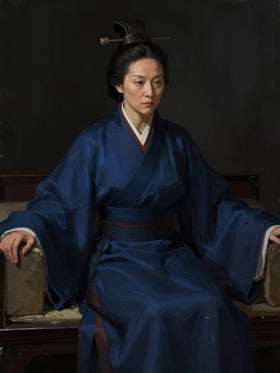
Lady Wu, Sun Jian’s wife and mother of Sun Ce and Sun Quan, aided young Sun Quan; the novel adds policy and guardianship roles.

Life
In the novel: 4 chapters · In the Records: 5 volumes
Life?–202
202 CE (Jian'an 7)
- Life event
- Death
On the boards
Compare with someone →Where this person ranks on each board.
Historical Record
Lady Wu was the wife of Sun Jian and the mother of Sun Ce and Sun Quan. The Records of the Three Kingdoms says that she was originally from Wu and later moved to Qiantang. She lost her parents when she was young and lived with her younger brother, Wu Jing. Hearing of her exceptional beauty and talent, Sun Jian came to seek her hand in marriage. Lady Wu’s relatives thought Sun Jian rash and cunning, and planned to refuse him. She urged them not to bring disaster upon themselves over the sake of one daughter, and said that if misfortune befell her after the marriage, it would be fate. The marriage therefore went ahead, and she later bore four sons and a daughter. The historical account thus portrays her as sizing up the situation and willingly taking a risk at a decisive moment in the marriage negotiations.
After Sun Quan took charge of the family’s affairs in his youth, Lady Wu helped manage military and state matters, greatly benefiting the political situation. In the seventh year of Jian’an, as she lay dying, she summoned Zhang Zhao and others and entrusted them with arrangements for what was to follow. After her death, she was buried with Sun Jian at Gaoling. The main text of the Records of the Three Kingdoms records her death in the seventh year of Jian’an; the Zhulin, cited in Pei Songzhi’s commentary, offers a different date—either the twelfth or thirteenth year of Jian’an—based on examination records. Thus, the main biography and the material cited in Pei’s commentary give different accounts of the year of her death. The Records of the Three Kingdoms also records the death of Sun Quan’s mother, Lady Wu, likewise dating it to the seventh year of Jian’an.
In the Novel
Romance of the Three Kingdoms retains her identity as Sun Jian’s principal wife and the mother of Sun Ce and Sun Quan, while portraying her as an elder who could influence decisions about succession and state affairs. When Sun Ce, gravely ill, entrusted Jiangdong to others, she worried that Sun Quan was too young. Sun Ce reassured her that his younger brother was skilled at appointing worthy and capable men, and also charged her with instructing Sun Quan. Here, the historical account of Sun Quan taking charge of the family’s affairs in his youth and Lady Wu assisting with military and state matters is expanded into a scene of a son making a deathbed charge to his mother; the dialogue and specific details are the novel’s invention.
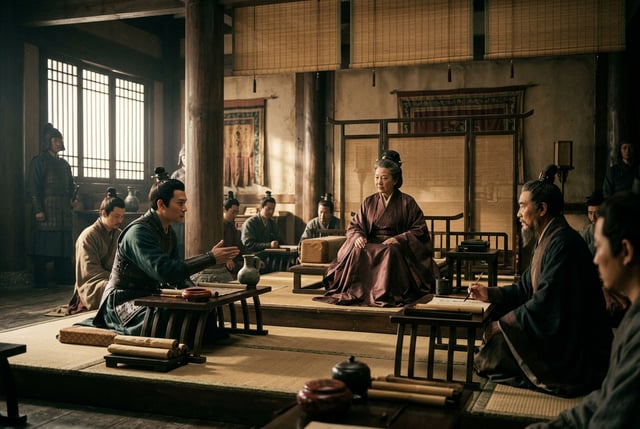
The novel also has her take part in deliberations when Sun Quan faces Cao Cao’s envoy, who demands that he send a hostage. She orders Zhou Yu and Zhang Zhao to confer, then praises Zhou Yu’s proposal not to send a hostage, and Sun Quan consequently refuses Cao Cao’s envoy. The Records of the Three Kingdoms does not record this discussion; it is a literary portrayal in the novel of her political judgment.
The novel has her summon Zhou Yu and Zhang Zhao to entrust Sun Quan to their care as she lies dying, and instruct Sun Quan to honor the two men as teachers and treat their families well. She also recounts a dream in which the moon and sun entered her embrace, expressing her hopes for her descendants’ prominence. The Records of the Three Kingdoms records that she summoned Zhang Zhao and others on her deathbed and entrusted them with arrangements for what was to follow, but does not give the novel’s detailed deathbed dialogue or account of the auspicious dream.
Another striking thread in the novel is her repeated efforts to persuade Sun Ce not to kill Gan Ji, and her urging him to perform rites to avert calamity when he falls ill. Sun Ce does not believe in spirits, while his mother, distressed by her son’s haggard appearance, secretly arranges prayers and rites. These episodes advance the dramatized account of the Death of Sun Ce through her portrayal as a mother protecting her child and revering the supernatural; they do not appear in the historical accounts. (Unique to the novel)
Key Relationships
- Sun Jian: Husband. The historical account says that Sun Jian sought Lady Wu’s hand after hearing of her beauty and talent. Although her relatives initially wanted to refuse, she urged them to accept the proposal, and later bore four sons and a daughter.
- Sun Ce: Eldest son. The novel has Sun Ce, gravely ill, hand his seal and ribbons of office to Sun Quan and ask his mother to guide the new ruler. Lady Wu is both anxious about her son’s condition and the recipient of his charge. (Unique to the novel)
- Sun Quan: Second son and successor to the family’s affairs in Jiangdong. The historical account says that his mother helped manage military and state matters when he took charge in his youth; the novel adds scenes in which she takes part in deliberations over refusing to send a hostage to the court and entrusts Sun Quan to others on her deathbed.
- Wu Jing: Younger brother. The historical account says that Lady Wu lived with Wu Jing in her youth and that he was connected with her move to Qiantang.
- Zhang Zhao and Zhou Yu: Senior officials entrusted with assisting Sun Quan. The historical account only says that Lady Wu summoned Zhang Zhao and others on her deathbed and entrusted them with arrangements for what was to follow; the novel also includes Zhou Yu in her charge and adds her specific instructions that Sun Quan respect both men as teachers.
Signature Scenes
- Urging the family to accept Sun Jian’s proposal: Her relatives want to refuse because they consider Sun Jian rash and cunning, but Lady Wu believes that rejecting the marriage could bring disaster and urges them to accept. Rather than passively awaiting others’ arrangements, she assesses the risks and steers her family’s decision.
- Assisting the young Sun Quan: When Sun Quan first takes charge of the family’s affairs, she helps manage military and state matters. On her deathbed, she also summons Zhang Zhao and others and entrusts them with arrangements for what is to follow, showing that her concern extends from the family’s continuity to the stability of the regime.
- Advising against killing Gan Ji and entrusting Sun Quan on her deathbed: The former shapes her image in the novel as a mother who protects her child and believes in the supernatural; the latter portrays her as a witness to the transfer of power in Jiangdong. Both are additions in the novel and should not be conflated with the historical account. (Unique to the novel)
- Posthumous honors: The novel says that after Sun Quan Proclaims Himself Emperor, he posthumously honored his mother as Empress Wulie; the historical material cited here also notes that she was honored in the first year of Huanglong.
Quotes
10 lines in the books · 3 featured
「吾本吳人,幼亡父母,與弟吳景徙居越中。後嫁與孫氏,生四子。長子策生時,吾夢月入懷。後生次子權,又夢日入懷。卜者云:『夢日月入懷者,其子必貴。』不幸策早喪,今將江東基業付權。望公等同心助之,吾死不朽矣!」
These words sum up Lady Wu's life course and vest great hope in Sun Quan, carrying important historical significance.
「汝事子布、公瑾以師傅之禮,不可怠慢。吾妹與我共嫁汝父,則亦汝之母也,吾死之後,事吾妹如事我。汝妹亦當恩養,擇佳婿以嫁之。」
These words embody Lady Wu's teaching of Sun Quan and her far-sighted planning for the family, shaping her image of virtue and wisdom.
「何愛一女以取禍乎?如有不遇,命也。」
Drawn from official history, these words display Lady Wu's grasp of the greater good and political foresight, unbound by trifles.
- Family
- Lord & vassal
History vs. novel
8 points · 5 novel-only
| History | Novel |
|---|---|
| Sun Jian's Marriage ProposalNovel embellishes | |
Lady Wu's relatives disliked Sun Jian for being frivolous and sly, and planned to reject the marriage proposal. Lady Wu persuaded them not to invite disaster by doing so, and they eventually agreed to the marriage. vol. 50 | Lady Wu recalled marrying into the Sun family and bearing four sons. She added that she had dreamed of the moon and sun entering her bosom when Sun Ce and Sun Quan were born, and that a diviner had said her sons were destined for high rank. ch. 38 |
| Dreams of the Sun and Moon Entering Her BosomNovel embellishes | |
The Records of Supernatural Searches states that when Lady Wu was pregnant with Sun Ce, she dreamed the moon entered her bosom, and when pregnant with Sun Quan, she dreamed the sun entered her bosom. Sun Jian believed this foretold the prosperity of their descendants. vol. 50 | As she lay dying, Lady Wu recalled her dreams of the moon and the sun. The novel also adds a diviner's prediction that children conceived in dreams of the sun and moon entering one's bosom would surely attain high rank. ch. 38 |
| Urging Sun Ce Not to Kill Gan JiNovel only | |
| — | Sun Ce wanted to kill Gan Ji, but Lady Wu repeatedly urged him not to, saying that Gan Ji had treated people's illnesses and was revered by both soldiers and commoners. Sun Ce nevertheless remained determined to get rid of Gan Ji. ch. 29 |
| Gan Ji's Apparitions and Rituals to Avert MisfortuneNovel only | |
| — | Gan Ji's figure appeared repeatedly, and Sun Ce consequently became gravely ill. Lady Wu believed this misfortune had been brought on by Gan Ji's wrongful execution. She urged Sun Ce to do good deeds and perform rites to avert disaster, and arranged for him to go to the Yuqing Abbey to pray. ch. 29 |
| Heartache at Sun Ce's Sickly AppearanceNovel only | |
| — | Sun Ce was gaunt and haggard from illness. Seeing him, Lady Wu wept and said that he had lost his looks. The novel uses this moment to portray her worry and affection for her son. ch. 29 |
| Sun Ce Entrusts Sun Quan to Her CareNovel only | |
| — | As he lay dying, Sun Ce handed his seal and ribbons of office to Sun Quan, entrusting his mother with guiding his younger brother. He said Sun Quan's abilities were ten times his own and advised him to consult Zhang Zhao on domestic affairs and Zhou Yu on external matters. ch. 29 |
| Refusing to Send a Son to Attend CourtNovel only | |
| — | Cao Cao demanded that Sun Quan send his son to attend court. Lady Wu summoned Zhou Yu and Zhang Zhao to discuss the matter and agreed with Zhou Yu's recommendation not to send the boy for the time being. Sun Quan then refused the envoy. ch. 38 |
| Final Instructions on Entrusting Sun QuanNovel embellishes | |
The Records of the Three Kingdoms states that, as Lady Wu lay dying, she summoned Zhang Zhao and the others and entrusted Sun Quan's future to them. She was later buried with Sun Jian at Gaoling. vol. 50 | The novel relates that when Lady Wu was gravely ill, she summoned Zhou Yu and Zhang Zhao and entrusted Sun Quan to them. She instructed Sun Quan to honor the two men as teachers and mentors, and to treat his maternal aunt and younger sister well. ch. 38 |
- Sun Jian's Marriage ProposalNovel embellishes
- History
Lady Wu's relatives disliked Sun Jian for being frivolous and sly, and planned to reject the marriage proposal. Lady Wu persuaded them not to invite disaster by doing so, and they eventually agreed to the marriage.
vol. 50
- Novel
Lady Wu recalled marrying into the Sun family and bearing four sons. She added that she had dreamed of the moon and sun entering her bosom when Sun Ce and Sun Quan were born, and that a diviner had said her sons were destined for high rank.
ch. 38
- Dreams of the Sun and Moon Entering Her BosomNovel embellishes
- History
The Records of Supernatural Searches states that when Lady Wu was pregnant with Sun Ce, she dreamed the moon entered her bosom, and when pregnant with Sun Quan, she dreamed the sun entered her bosom. Sun Jian believed this foretold the prosperity of their descendants.
vol. 50
- Novel
As she lay dying, Lady Wu recalled her dreams of the moon and the sun. The novel also adds a diviner's prediction that children conceived in dreams of the sun and moon entering one's bosom would surely attain high rank.
ch. 38
- Urging Sun Ce Not to Kill Gan JiNovel only
- Novel
Sun Ce wanted to kill Gan Ji, but Lady Wu repeatedly urged him not to, saying that Gan Ji had treated people's illnesses and was revered by both soldiers and commoners. Sun Ce nevertheless remained determined to get rid of Gan Ji.
ch. 29
- Gan Ji's Apparitions and Rituals to Avert MisfortuneNovel only
- Novel
Gan Ji's figure appeared repeatedly, and Sun Ce consequently became gravely ill. Lady Wu believed this misfortune had been brought on by Gan Ji's wrongful execution. She urged Sun Ce to do good deeds and perform rites to avert disaster, and arranged for him to go to the Yuqing Abbey to pray.
ch. 29
- Heartache at Sun Ce's Sickly AppearanceNovel only
- Novel
Sun Ce was gaunt and haggard from illness. Seeing him, Lady Wu wept and said that he had lost his looks. The novel uses this moment to portray her worry and affection for her son.
ch. 29
- Sun Ce Entrusts Sun Quan to Her CareNovel only
- Novel
As he lay dying, Sun Ce handed his seal and ribbons of office to Sun Quan, entrusting his mother with guiding his younger brother. He said Sun Quan's abilities were ten times his own and advised him to consult Zhang Zhao on domestic affairs and Zhou Yu on external matters.
ch. 29
- Refusing to Send a Son to Attend CourtNovel only
- Novel
Cao Cao demanded that Sun Quan send his son to attend court. Lady Wu summoned Zhou Yu and Zhang Zhao to discuss the matter and agreed with Zhou Yu's recommendation not to send the boy for the time being. Sun Quan then refused the envoy.
ch. 38
- Final Instructions on Entrusting Sun QuanNovel embellishes
- History
The Records of the Three Kingdoms states that, as Lady Wu lay dying, she summoned Zhang Zhao and the others and entrusted Sun Quan's future to them. She was later buried with Sun Jian at Gaoling.
vol. 50
- Novel
The novel relates that when Lady Wu was gravely ill, she summoned Zhou Yu and Zhang Zhao and entrusted Sun Quan to them. She instructed Sun Quan to honor the two men as teachers and mentors, and to treat his maternal aunt and younger sister well.
ch. 38
Events
Events (4)
Battles and events the texts place this person in, by date.
Places
- Moved to
- LiyangRecords
Continue
Sun Quan Refuses to Send His Son to the Wei Court
Relationship timeline7 entries ▸
History · vol. 50
Novel · ch. 7
- Sun Jian§12
Spouse
principal wife; gave birth to four sons, Sun Ce, Sun Quan, Sun Yi, and Sun Kuang
Novel · ch. 29
- Sun Ce§15
Child
mother and son; advised against killing Gan Ji, and also ordered a ritual to be held at the Yuqing Temple to avert calamity
Novel · ch. 38
Novel · ch. 98
- Sun Quan§16
Kin
was posthumously honored as Empress Wu Lie (Sun Quan’s mother)
Inner monologues · AI-generated3 monologues ▸
- Throughout my life, I, Lady Wu, was a woman of Wu. I lost my father when I was young, and once moved with my younger bro
- I often think that, as a mother, what troubles me is not merely a son’s passing joys and sorrows, but also the consequen
- I, Lady Wu, was originally from Wu. Later, my family moved to Qiantang. I lost my parents when I was young and depended