Sun Quan's Faction · Colonel Who Upholds Deliberation
Zhang Hong
courtesy name 子纲 · 153–212
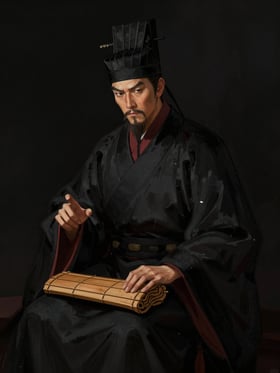
Zhang Hong, a key adviser to Sun Ce and Sun Quan, was known for repeated remonstrances and urging Sun Quan to move the capital to Moling.

Life
In the novel: 6 chapters · In the Records: 3 volumes
Life153–212
195 CE (Xingping 2)
- Sun Quan's Faction
- Cao Wei· Undated
- Hatched: dated by chapter
- Life event
On the boards
Compare with someone →Where this person ranks on each board.
Historical Record
Zhang Hong, courtesy name Zigang, was from Guangling. As a young man, he traveled to the capital to study, entered the Imperial Academy, and studied the Book of Changes, the Book of Documents, the Han Odes, and the classics of ritual and the Spring and Autumn period. After returning to his home commandery, he was recommended as a Maocai, but declined appointments from the offices of state. Later, he fled the turmoil to Jiangdong. When Sun Ce was establishing his enterprise, Zhang Hong joined his service. Sun Ce nominated him as Commandant of Righteous Counsel, and he took part in strategic discussions alongside Zhang Zhao and others. When Sun Ce campaigned against Danyang, he went to the front lines in person. Zhang Hong earnestly urged him not to take reckless risks, arguing that the safety of the commander-in-chief was bound up with the fate of the whole army. His words showed his readiness to offer frank remonstrance.
In the fourth year of Jian'an, Sun Ce sent Zhang Hong to Xu with a memorial, and Zhang Hong remained there as Attendant Censor. After Sun Ce's death, Cao Cao considered taking advantage of the mourning to attack Jiangdong. Zhang Hong remonstrated that attacking during another's mourning went against ancient principles and that, if the campaign went badly, it would only breed enmity. Cao Cao took his advice, memorialized Sun Quan as General Who Attacks Rebels and Administrator of Kuaiji, and appointed Zhang Hong Commandant of the Eastern Part of Kuaiji. After Sun Quan took over the government, Zhang Hong helped draft memorials, letters, and diplomatic correspondence, and often offered tactful advice at banquets. During the campaign against Hefei, he opposed Sun Quan's plan to lead a light cavalry charge in person. The following year, he again urged Sun Quan to suspend military campaigns for a time, develop production, and appoint the worthy while extending favor. Sun Quan accepted his advice and called off the expedition.
Zhang Hong later served as Sun Quan's Chief Clerk and recommended moving the capital to Moling; Sun Quan accepted the proposal. While returning to Wu on orders to bring his family back, Zhang Hong fell seriously ill. Before his death, he wrote a letter admonishing his son that a ruler should restrain personal feelings, humbly accept remonstrance, appoint the worthy, and govern the state through virtue. Zhang Hong died at the age of sixty. Sun Quan wept as he read the letter. Zhang Hong composed more than ten works, including poems, rhapsodies, inscriptions, and elegies, and was skilled in regular and seal script. He also exchanged letters with Kong Rong.
In the Novel
Romance of the Three Kingdoms portrays Zhang Hong as a civil official at Sun Ce and Sun Quan's side, adept both at strategy and at remonstrance. The novel has Zhou Yu recommend the “Two Zhangs” to Sun Ce, who personally visits to recruit them, after which Zhang Hong takes up the post of Commandant of Righteous Counsel and adviser. This specific account of the personal visit and recruitment belongs to the novel; the historical biographies only record that Zhang Hong joined Sun Ce when he was establishing his enterprise and was nominated as Commandant of Righteous Counsel. During the confrontation with Yan Yu at Fengqiao, the novel has Zhang Hong again urge Sun Ce not to underestimate the enemy or expose himself to a hail of arrows and stones; Han Dang then goes out to fight. This scene gives concrete form on the battlefield to Zhang Hong's cautious and prudent character. Although the historical biographies record that Zhang Hong once advised Sun Ce not to act recklessly, they do not mention the Fengqiao episode.
The novel also has Sun Ce send Zhang Hong to Xu Chang to present captured spoils, where Cao Cao praises Sun Ce as a formidable rival. After Sun Ce's death, Zhang Hong again urges Cao Cao not to attack Wu during the mourning period, is ordered to carry an official seal back to Jiangdong, and recommends Gu Yong. The substance of his advice to Cao Cao accords with the historical biographies, but the linked details of presenting spoils, carrying the seal, and recommending Gu Yong are the novel's elaboration of his life. During Sun Quan's reign, the novel depicts Zhang Hong receiving guests from all quarters and taking part in government affairs. After Sun Quan suffers a setback due to underestimating the enemy, Zhang Hong speaks frankly, urging the commander-in-chief to restrain his courage and keep the larger picture in mind. This post-battle remonstrance echoes the meaning of his advice in the historical biographies, while the novel gives it a specific military context. Finally, the novel has Zhang Hong leave a sorrowful letter urging Sun Quan to move the capital to Moling before he dies of illness. The recommendation to move the capital accords with the historical record, but the scene of his urging the move in a final letter is unique to the novel.
Key Relationships
Zhang Hong and Sun Ce were not only adviser and ruler but also partners in whom Sun Ce could place his trust and who could speak frankly to him. Zhang Hong took part in planning Sun Ce's enterprise, and when Sun Ce went on campaign, he urged him to take care of himself as commander-in-chief. His relationship with Sun Quan continued in the roles of Chief Clerk and ruler: Zhang Hong took part in drafting documents and handling government affairs, and repeatedly remonstrated on matters such as launching campaigns and personally entering battle. Sun Quan was willing to heed his advice, and wept when he read Zhang Hong's final letter. Zhang Zhao, like Zhang Hong, was a trusted adviser to Sun Ce, and the two took part together in deliberations for the Sun family's regime. The novel further depicts the Two Zhangs as recommended by Zhou Yu and jointly receiving scholars, but this specific recruitment scene is unique to the novel. Zhang Hong exchanged letters with Kong Rong; the historical biographies say that Kong Rong and others were on friendly terms with him. Zhang Hong also wrote to praise Yu Fan's learning. His son, Zhang Xuan, carried on the family tradition of learning. The historical biographies describe Zhang Xuan as upright and morally distinguished.
Signature Scenes
The first is Zhang Hong urging Sun Ce not to enter the battle line in person. Zhang Hong points out that the commander-in-chief is the source of the army's plans and the one on whom the lives of the whole force depend, and should not take reckless risks. The novel places this remonstrance in the battlefield episode against Yan Yu at Fengqiao, turning an abstract principle of military command into a direct plea on the eve of battle. The second is his urging Cao Cao, after Sun Ce's death, not to attack during the mourning period. Zhang Hong argues from both principle and practical consequences, prompting Cao Cao to treat Sun Quan with goodwill instead. This remonstrance appears in both the historical biographies and the novel. The third is his proposal that Sun Quan move the capital to Moling. The historical biographies record that Zhang Hong proposed establishing the capital at Moling and that Sun Quan later accepted. The novel instead places the proposal in a sorrowful final letter and has Sun Quan read it amid a crisis, heightening its dramatic effect as a kind of dying injunction.
Quotes
7 lines in the books · 3 featured
「乘人之喪而伐之,既非義舉;若其不克,棄好成讎。不如因而善遇之。」
This line embodies Zhang Hong's ideals of benevolence and righteousness, counseling Sun Quan not to exploit another's peril.
「夫兵者凶器,戰者危事也。今麾下恃盛壯之氣,忽強暴之虜,三軍之眾,莫不寒心,雖斬將搴旗,威震敵場,此乃偏將之任,非主將之宜也。願抑賁、育之勇,懷霸王之計。」
This line advises that a commander should possess the designs of a king or hegemon rather than the reckless valor of a common man, shaping Zhang Hong's image as a strategist.
「自古有國有家者,咸欲修德政以比隆盛世,至於其治,多不馨香。非無忠臣賢佐暗於治體也,由主不勝其情,弗能用耳。夫人情憚難而趨易,好同而惡異,與治道相反。《傳》曰:『從善如登,從惡如崩』,言善之難也。人君承奕世之基,據自然之勢,操八柄之威,甘易同之歡,無假取於人;而忠臣挾難近之術,吐逆耳之言,其不合也,不亦宜乎!(雖)則有釁,巧辯緣間,眩於小忠,戀於恩愛,賢愚雜錯,長幼失敘,其所由來,情亂之也。故明君悟之,求賢如饑渴。受諫而不厭,抑情損欲,以義割恩,上無偏謬之授,下無冀之望。宜加三思,含垢藏疾,以成仁覆之大。」
This line delves into the relationship between ruler and minister and the way of governing a state, carrying profound philosophical significance.
- Family
- Friends
- Other
Who is Zhang Hong connected to?
Pick someone to see how many steps lie between them and Zhang Hong.
History vs. novel
6 points · 2 novel-only
| History | Novel |
|---|---|
| Advising Sun Ce not to take risksNovel embellishes | |
When Sun Ce campaigned against Danyang, he personally joined the ranks. Zhang Hong urged him not to recklessly put himself in danger, but to take care of himself to steady the troops. vol. 53 | When attacking Yan Baihu, Sun Ce wanted to lead the troops into battle himself. Zhang Hong urged him to take care; although Sun Ce praised the advice, he still believed that if a commander did not personally face danger, his soldiers would be unwilling to give their lives for him. ch. 15 |
| Cao Cao treats Sun Quan generouslyNovel embellishes | |
After hearing of Sun Ce’s death, Cao Cao wanted to attack Wu while it was in mourning. Zhang Hong urged him to treat Sun Quan generously. Cao Cao followed his advice and appointed Sun Quan General Who Attacks the Caitiffs. vol. 53 | Cao Cao wanted to seize the lands south of the Yangtze while Sun Ce was newly dead. Zhang Hong urged him to treat Sun Quan well. Cao Cao accepted the advice and ordered Zhang Hong to take a seal to Jiangdong. ch. 29 |
| Advocating surrender before ChibiNovel only | |
| — | Before the Battle of Chibi, Zhang Hong visited Zhou Yu together with Zhang Zhao, Gu Yong, and Bu Zhi. They declared their support for surrendering to Cao Cao and questioned the motives of Lu Su and Zhuge Liang in urging a fight. ch. 44 |
| Advising Sun Quan at HefeiNovel embellishes | |
After the siege of Hefei dragged on without success, Zhang Hong suggested surrounding the city while leaving one side open. Later, when Sun Quan planned to lead light cavalry in a sudden attack, Zhang Hong warned him not to rashly expose himself to arrows and stones. Sun Quan listened and called it off. vol. 53 | Grieving the death of Song Qian, Sun Quan wept bitterly. Zhang Hong urged him not to rely on courage and underestimate the enemy, but to make the strategy of a hegemon his priority. Sun Quan admitted his mistake and promised to mend his ways. ch. 53 |
| Contents of the final letterSources disagree | |
Before his death, Zhang Hong left a letter urging the ruler to seek worthy men, welcome remonstrance, curb his desires, and judge private favors by the principles of righteousness. vol. 53 | The novel says that after Zhang Hong died of illness, he left a sorrowful letter urging Sun Quan to move the capital to Moling, claiming that its mountains and rivers bore the aura of an emperor. ch. 61 |
| Recommending Gu YongNovel only | |
| — | After returning to Jiangdong, Zhang Hong recommended Gu Yong to Sun Quan. Sun Quan appointed Gu Yong and had him take charge of the prefectural administration. ch. 29 |
- Advising Sun Ce not to take risksNovel embellishes
- History
When Sun Ce campaigned against Danyang, he personally joined the ranks. Zhang Hong urged him not to recklessly put himself in danger, but to take care of himself to steady the troops.
vol. 53
- Novel
When attacking Yan Baihu, Sun Ce wanted to lead the troops into battle himself. Zhang Hong urged him to take care; although Sun Ce praised the advice, he still believed that if a commander did not personally face danger, his soldiers would be unwilling to give their lives for him.
ch. 15
- Cao Cao treats Sun Quan generouslyNovel embellishes
- History
After hearing of Sun Ce’s death, Cao Cao wanted to attack Wu while it was in mourning. Zhang Hong urged him to treat Sun Quan generously. Cao Cao followed his advice and appointed Sun Quan General Who Attacks the Caitiffs.
vol. 53
- Novel
Cao Cao wanted to seize the lands south of the Yangtze while Sun Ce was newly dead. Zhang Hong urged him to treat Sun Quan well. Cao Cao accepted the advice and ordered Zhang Hong to take a seal to Jiangdong.
ch. 29
- Advocating surrender before ChibiNovel only
- Novel
Before the Battle of Chibi, Zhang Hong visited Zhou Yu together with Zhang Zhao, Gu Yong, and Bu Zhi. They declared their support for surrendering to Cao Cao and questioned the motives of Lu Su and Zhuge Liang in urging a fight.
ch. 44
- Advising Sun Quan at HefeiNovel embellishes
- History
After the siege of Hefei dragged on without success, Zhang Hong suggested surrounding the city while leaving one side open. Later, when Sun Quan planned to lead light cavalry in a sudden attack, Zhang Hong warned him not to rashly expose himself to arrows and stones. Sun Quan listened and called it off.
vol. 53
- Novel
Grieving the death of Song Qian, Sun Quan wept bitterly. Zhang Hong urged him not to rely on courage and underestimate the enemy, but to make the strategy of a hegemon his priority. Sun Quan admitted his mistake and promised to mend his ways.
ch. 53
- Contents of the final letterSources disagree
- History
Before his death, Zhang Hong left a letter urging the ruler to seek worthy men, welcome remonstrance, curb his desires, and judge private favors by the principles of righteousness.
vol. 53
- Novel
The novel says that after Zhang Hong died of illness, he left a sorrowful letter urging Sun Quan to move the capital to Moling, claiming that its mountains and rivers bore the aura of an emperor.
ch. 61
- Recommending Gu YongNovel only
- Novel
After returning to Jiangdong, Zhang Hong recommended Gu Yong to Sun Quan. Sun Quan appointed Gu Yong and had him take charge of the prefectural administration.
ch. 29
Events
Events (5)
Battles and events the texts place this person in, by date.
Battles
Other events
Places
- Native of
- GuanglingRecords
Continue
Sun Ce's Pacification of Jiangdong
Relationship timeline7 entries ▸
History · vol. 53
- Sun Ce§3
Advised
Pledged allegiance to Sun Ce; served as a staff officer with the rank of Colonel of Correct Admonitions, accompanied him in the campaign against Danyang, and offered remonstrance
Friend
Were close at court
- Sun Quan§4
Advised
was chief clerk and accompanied the campaign against Hefei; repeatedly admonished Quan to avoid venturing out rashly
Child
father and son (son of Zhang Hong)
Novel · ch. 29
- Cao Cao§39
Advised
Remonstrated, “To attack someone while he is in mourning is not a righteous act … it would be better to take the opportunity to treat him well.”
Novel · ch. 53
- Sun Quan§24
Advised
urged Quan not to "rely on the vigor of youth and look lightly upon a formidable enemy," but to restrain his courage and keep in mind a plan for kingly hegemony; Quan acknowledged his mistake
Novel · ch. 61
- Sun Quan§24
Advised
Chief Clerk; pleaded illness and returned home, where he died of illness; left a sorrowful letter urging relocation to Moling
Inner monologues · AI-generated3 monologues ▸
- I, Zhang Hong, styled Zigang, am gravely ill and near death. I have been ordered to return to Wu to bring my family, but
- Ce sent me to deliver a memorial to Xu, where I was kept on as an Attendant Censor. Serving among the court officials, I
- I am Zhang Hong, courtesy name Zigang, from Guangling. I recall that when I was young, I left my home to study in the ca