Geng Ji
–218
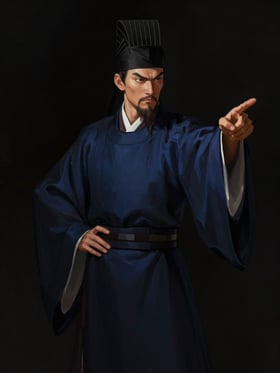
Geng Ji, a Han court official, joined Ji Ben and Wei Huang in attacking Xu; the novel depicts him cursing Cao Cao before execution.

Life
In the novel: 1 chapter · In the Records: 1 volume
Life?–218
218 CE (Jian'an 23)
Appearances
- Life event
- Death
On the boards
Compare with someone →Where this person ranks on each board.
Historical Record
In the first month of Jian’an 23 (218), Geng Ji, then serving as Minister of the Household, rebelled alongside Ji Ben, the Han court’s Chief Imperial Physician, and Wei Huang, an Attendant Censor, among others. They attacked Xu and set fire to the camp of Wang Bi, Chief Clerk to the Chancellor. Cao Cao left Wang Bi in command of the troops and overseeing affairs in Xu, and Geng Ji and the others sought to use this opportunity to launch their operation. Wang Bi and Yan Kuang, Commandant of Agriculture for Yingchuan, put down the revolt, and Geng Ji and the others were executed. The Annotation to the Records of the Three Supports, cited in Pei’s commentary, says that Geng Ji’s courtesy name was Jixing, that he had earned a fine reputation from a young age, and that he had once served as a clerk in the Chancellor’s office. Cao Cao held him in high regard; he was later promoted to Attendant and Acting Minister of the Household. Geng Ji conspired with Jin Yi, Wei Huang, Ji Ben, Ji Miao, and Ji Mu, intending to kill Wang Bi, seize the emperor, attack Wei, and give support to Liu Bei in the south. During the operation, Ji Miao and the others led a motley force of more than a thousand men, including household retainers, in a night raid. Jin Yi sent people to act as inside agents, and Wang Bi was wounded by an arrow; he later died of his injuries. The attackers failed because Wang Bi escaped and their forces dispersed at daybreak. The historical record says only that Geng Ji and the others were suppressed and executed; it does not record his specific words or actions before execution.
In the Novel
Chapter 69 of Romance of the Three Kingdoms portrays Geng Ji as a Han official driven to anger by Cao Cao’s usurpation of imperial prerogatives and growing intent to seize the Han throne. The novel says that his courtesy name was Jixing and that he was from Luoyang; he had formerly served as a clerk in the Chancellor’s office and was later promoted to Attendant and Minister of the Household. He was on close terms with Wei Huang. After first discussing the matter privately with Wei Huang, he conspired with Jin Yi, Ji Miao, Ji Mu, and others, planning to act in coordination with an outside force on the night of the Lantern Festival, kill Wang Bi, seize command of the troops, take control of the emperor, and contact Liu Bei to campaign against Cao Cao. These specific conversations, the plan to act during the Lantern Festival, and the suspicions among the conspirators are novelistic elaborations; the Records of the Three Kingdoms gives no such details.
The novel depicts Geng Ji leading his household retainers in an attack on Wang Bi’s camp. After being wounded by an arrow, Wang Bi escaped, and Cao Xiu, Xiahou Dun, and others led troops to suppress the revolt. Geng Ji and Wei Huang were captured while trying to break through. Taken to the execution ground, Geng Ji continued to denounce Cao Cao loudly. Even as the executioner thrust a knife into his mouth, he kept cursing until he died. The Records of the Three Kingdoms records that he was defeated and executed, but does not include this account of his defiant execution; his loyalist words and the details of his final moments are therefore creations of the novel.
Key Relationships
Geng Ji joined the revolt with Ji Ben and Wei Huang and was a central figure in the rebellion. The historical account explicitly records his office as Minister of the Household and says that he fought against Wang Bi’s side and was ultimately suppressed and executed. Material cited in Pei’s commentary also names Jin Yi as a conspirator, saying that he was on good terms with Wang Bi and arranged for inside agents; Ji Miao and Ji Mu took part in the night raid. The historical account records that Geng Ji intended to kill Wang Bi, seize the emperor, and give support to Liu Bei in the south.
The novel further emphasizes Geng Ji’s longstanding friendship with Wei Huang, portraying Jin Yi as first being sounded out and then joining the conspiracy. It also depicts Geng Ji leading his household retainers and coordinating the operation with the Ji brothers. In the novel, Geng Ji curses Cao Cao at the moment of his execution, presenting him as an unyielding loyalist of the Han house; the specific curses and the detail of the executioner trying to silence him are unique to the novel.
Signature Scenes
The key scene in the historical account is Geng Ji and the others attacking Wang Bi’s camp at night. Wang Bi is wounded by an arrow and escapes, after which the attackers engage the forces led by Yan Kuang. The operation fails, and Geng Ji is executed. Pei’s commentary adds that Wang Bi died of his wounds more than ten days later, and explains that the attackers dispersed at daybreak, bringing the raid to an end in failure.
In the novel, the Lantern Festival lights provide a dramatic backdrop for the night raid: Geng Ji leads his men in an attack on the camp, and Wang Bi, wounded by an arrow, flees to Jin Yi’s residence. There, the household mistakes him for someone else, and he hears, “Has that scoundrel Wang Bi been killed?” Realizing that there are inside agents, he turns to Cao Xiu to report what has happened. Xu then goes up in flames, the balance of attack and defense shifts, and Geng Ji is captured while trying to break through. He dies after cursing loudly at the execution ground. This entire sequence—the mistaken response at the door, the Lantern Festival arson, and the execution scene—is unique to the novel; the historical account records only the night raid, Wang Bi’s wound, and the suppression and execution of Geng Ji and the others.
In the sources
Where the books name Geng Ji
History · vol. 1Records of the Three Kingdoms
二十三年春正月,漢太醫令吉本與少府耿紀、司直韋晃等反,攻許,燒丞相長史王必營,〈《魏武故事》載令曰:「領長史王必,是吾披荊棘時吏也。…
Read the whole paragraph
二十三年春正月,漢太醫令吉本與少府耿紀、司直韋晃等反,攻許,燒丞相長史王必營,〈《魏武故事》載令曰:「領長史王必,是吾披荊棘時吏也。忠能勤事,心如鐵石,國之良吏也。蹉跌久未辟之,捨騏驥而弗乘,焉遑遑而更求哉?故教辟之,已署所宜,便以領長史統事如故。」〉必與潁川典農中郎將嚴匡討斬之。〈《三輔決錄注》曰:時有京兆金禕字德禕,自以世爲漢臣,自日磾討莽何羅,忠誠顯著,名節累葉。覩漢祚將移,謂可季興,乃喟然發憤,遂與耿紀、韋晃、吉本、本子邈、邈弟穆等結謀。紀字季行,少有美名,爲丞相掾,王甚敬異之,遷侍中,守少府。邈字文然,穆字思然,以禕慷慨有日磾之風,又與王必善,因以閒之,若殺必,欲挾天子以攻魏,南援劉備。時關羽彊盛,而王在鄴,留必典兵督許中事。文然等率雜人及家僮千餘人夜燒門攻必,禕遣人爲內應,射必中肩。必不知攻者爲誰,以素與禕善,走投禕,夜喚德禕,禕家不知是必,謂爲文然等,錯應曰:「王長史已死乎?卿曹事立矣!」必乃更他路奔。一曰:必欲投禕,其帳下督謂必曰:「今日事竟知誰門而投入乎?」扶必奔南城。會天明,必猶在,文然等衆散,故敗。後十餘日,必竟以創死。《獻帝春秋》曰:收紀、晃等,將斬之,紀呼魏王名曰:「恨吾不自生意,竟爲羣兒所誤耳!」晃頓首搏頰,以至於死。《山陽公載記》曰:王聞王必死,盛怒,召漢百官詣鄴,令救火者左,不救火者右。衆人以爲救火者必無罪,皆附左;王以爲「不救火者非助亂,救火乃實賊也」。皆殺之。〉
Novel · ch. 69Romance of the Three Kingdoms
…建安二十三年春正月,耿紀與韋晃密議曰:「操賊奸惡日甚,將來必為篡逆之事。…
Read the whole paragraph
時有一人姓耿,名紀,字季行,洛陽人也;舊為丞相府掾,後遷侍中少府,與司直韋晃甚厚;見曹操進封王爵,出入用天子車服,心甚不平。建安二十三年春正月,耿紀與韋晃密議曰:「操賊奸惡日甚,將來必為篡逆之事。吾等為漢臣,豈可同惡相濟?」韋晃曰:「吾有心腹人,姓金,名褘,乃漢相金日磾之後,素有討操之心;更兼與王必甚厚。若得同謀,大事濟矣。」耿紀曰:「他既與王必交厚。豈肯與我同謀乎?」韋晃曰:「且往說之,看是如何。」
Novel · ch. 69Romance of the Three Kingdoms
…耿紀問是何人。褘曰:「太醫吉平之子:長名吉邈,字文然;次名吉穆,字思然。…
Read the whole paragraph
褘曰:「吾有心腹二人,與操賊有殺父之仇,現居城外,可用為羽翼。」耿紀問是何人。褘曰:「太醫吉平之子:長名吉邈,字文然;次名吉穆,字思然。操昔為董承衣帶詔事,曾殺其父。二子逃竄遠鄉,得免於難。今已潛歸許都。若使相助討賊,無有不從。」耿紀、韋晃大喜。金褘即使人密喚二吉。須臾,二人至。褘具言其事。二人感憤流淚,怨氣沖天,誓殺國賊。金褘曰:「正月十五日夜間,城中大張燈火,慶賞元宵。耿少府、韋司直,你二人各領家僮,殺至王必營前;只看營中火起,分兩路殺入;殺了王必,逕跟我入內,請天子登五鳳樓,召百官面諭討賊。吉文然兄弟於城外殺入,放火為號,各要揚聲,叫百姓誅殺國賊,截住城內救軍;待天子降詔,招安已定,便進兵殺奔鄴郡擒曹操,即發使齎詔召劉皇叔。今日約定,至期二更舉事,勿似董承自取其禍。」五人對天說誓,歃血為盟,各自歸家,整頓軍馬器械,臨期而行。
Quotes
5 lines in the books · 3 featured
「操賊奸惡日甚,將來必為篡逆之事。吾等為漢臣,豈可同惡相濟?」
This line lays bare Cao Cao's ambition to usurp the Han, reflecting Geng Ji's loyalist stance toward the dynasty.
「奈天數如此,不得不然耳!」
"Such is the will of Heaven" reflects the helplessness and desolation of individual fate in a chaotic age.
「曹阿瞞,吾生不能殺汝,死當作厲鬼以擊賊!」
Geng Ji's curse against Cao Cao before his death displays his unyielding loyalty and martyr's integrity.
- Friends
- Enemies
Who is Geng Ji connected to?
Pick someone to see how many steps lie between them and Geng Ji.
Combat
On the field
Duels, kills and executions as the texts tell them, counted separately for the Records and the Romance.
Records
- Duels
- 0W 0L 0D
DeathKilled by Wang BiStruck down · Juan 1
Romance
- Duels
- 0W 0L 0D
DeathKilled by Xiahou DunExecution · Ch. 69
- RecordsJuan 1Struck downWang BiYan KuangLost「必與潁川典農中郎將嚴匡討斬之」
- RomanceCh. 69Struck downWang BiWon「正遇耿紀,一箭射中肩膊」
- RomanceCh. 69ExecutionXiahou DunLost「劊子手以刀搠其口,流血滿地,大罵不絕而死」
Events
Events (1)
Battles and events the texts place this person in, by date.
Other events
- 218Rebellion of Geng Ji and Wei Huang at XuInstigator
Places
- Died at
- XuchangRecords
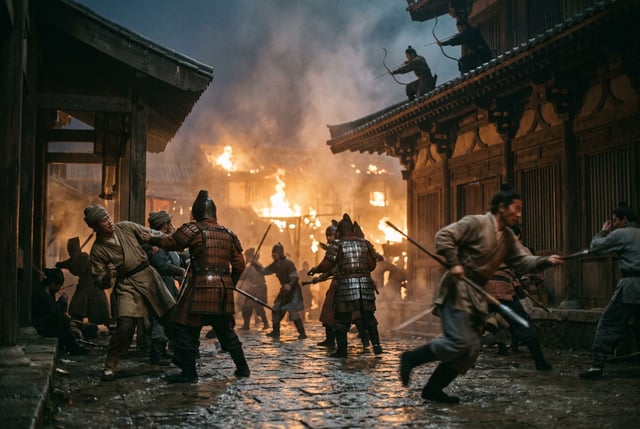
Continue
Rebellion of Geng Ji and Wei Huang at Xu
Relationship timeline2 entries ▸
Inner monologues · AI-generated1 monologue ▸
- I am Geng Ji, courtesy name Jixing, from Luoyang. I recall that I once served as an aide in the Chancellor’s office, and