
Background
Liu Bei's Elevation to King of Hanzhong follows narratively from the victory in the Hanzhong Campaign: Liu Feng, Meng Da, Wang Ping, and others captured the commanderies of Shangyong, while Shen Dan and the others surrendered after Cao Cao had abandoned Hanzhong. Liu Bei then pacified the region and rewarded the troops. This sequence links military expansion, local submission, and political elevation in a chain of cause and effect: first gaining territory and winning popular support, then having his courtiers propose an honorific title. This makes his rise in personal authority appear not as something he abruptly seized for himself, but as a response to the new situation. However, the cited passage comes from Chapter 73 of Romance of the Three Kingdoms and should be treated as a political scene fashioned by the novel, not as a direct record of the entire historical process.
The novel constructs its argument for Liu Bei’s legitimacy in three layers: “the will of Heaven, the people’s support, and the campaign against the rebels.” Zhuge Liang cites Cao Cao’s “usurpation of power” and the people’s lack of a “true ruler,” describes Liu Bei as “renowned throughout the realm for his benevolence and righteousness,” and stresses that he already controls “the two provinces of Yi,” thereby framing his elevation as a response to Heaven’s mandate and the people’s wishes, and as a means of punishing the traitor to the Han. The key point is not simply the pursuit of a higher title, but the conversion of a regional regime’s strength into a political claim made in the name of the Han: Liu Bei’s expansion of power is presented as a restoration of order, not as a private ambition to replace the Han dynasty. Its persuasive force derives from the combination of moral prestige, a territorial base, and the rhetoric of restoring the Han.
Main Figures
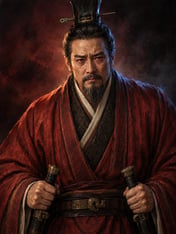
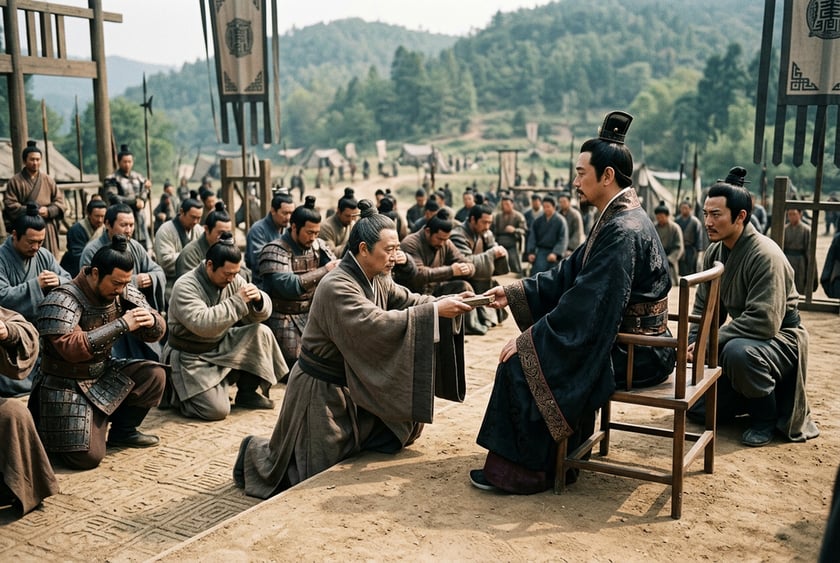
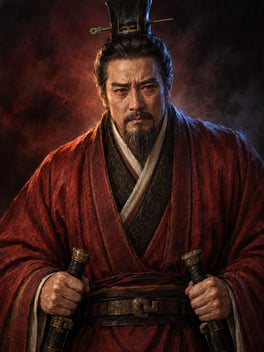
Liu Bei is the central figure in the ceremony and the bearer of its legitimacy narrative. The novel first says that the generals wish to elevate him but dare not submit the proposal directly, so they inform Zhuge Liang instead. Zhuge Liang then brings Fa Zheng and others to meet Liu Bei, who refuses repeatedly before accepting. This arrangement deliberately presents a procedure of “initiation from below, with the ruler himself showing reluctance”: supporters make the proposal first, the advisers seize the opportunity, and the ruler gives his consent at the end. This makes Liu Bei appear not to have actively usurped power, while portraying his acceptance as a political decision made after collective entreaties.
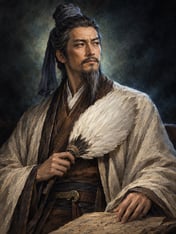
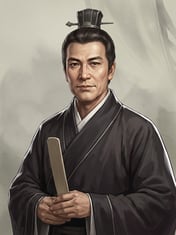
In the narrative, Zhuge Liang serves both as a strategic adviser and as the architect of the process. He judges that “the decision has already been made” and turns military gains into a political agenda. Fa Zheng takes part in urging Liu Bei to accept the title and in the ceremony; his subsequent appointment as Director of the Secretariat shows that the meritorious officials not only lend nominal support but are also incorporated into the new regime’s bureaucracy. Xu Jing invites Liu Bei to ascend the altar and is later appointed Grand Preceptor, serving as a symbol of ritual authority and prestige. Their roles differ: Zhuge Liang represents the coordination of state affairs, Fa Zheng the counsel of a close adviser, and Xu Jing the courtly appearance of the accession ceremony. In this way, the novel constructs a political core combining decision-making, implementation, and ritual endorsement.
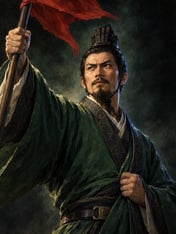
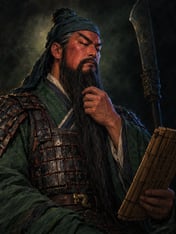
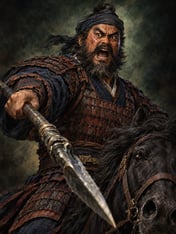
Guan Yu, Zhang Fei, Zhao Yun, Ma Chao, Huang Zhong, and other generals, as well as Wei Yan and Liu Shan, are also incorporated into the new order: Liu Shan is made heir apparent, the generals receive titles, and Wei Yan is appointed Administrator of Hanzhong. Guan Yu later objects to the ranking of the “Five Tiger Generals” and refuses to accept his seal, showing that official ranks and titles are not a neutral list of rewards, but involve seniority, personal closeness, and degrees of honor. Fei Shi invokes the examples of Liu Bang and Han Xin to persuade Guan Yu, stressing that their shared cause and brotherly bonds should take precedence over disputes about titles. The novel thus both shows how rewards can consolidate a group of meritorious followers and exposes the sensitivity of status allocation within the alliance.
Core Issues
The first core issue is how strength acquires legitimacy. The elevation comes after expansion and submission: Liu Bei already has the two provinces of Yi and the newly acquired territories as his political base. But land and troops alone cannot automatically win broad recognition. The novel therefore depicts the courtiers urging his elevation, the selection of an auspicious day and construction of an altar, the presentation of the crown, seals, and ribbons, and the officials’ formal congratulations. The ceremony is not merely an embellishment of military victory; it translates control on the ground into a recognizable order of titles: who rules, who inherits, and what office each person holds are all reaffirmed through ritual.
The second issue is the tension between the name of the Han house and a regional regime. Liu Bei styles himself King of Hanzhong, and the novel has him submit a memorial to Xu, showing that his status must still be expressed within the nominal order of the Han dynasty rather than through a simple declaration that he is founding a new dynasty. At the same time, Liu Bei has become a king, named an heir apparent, and appointed important civil and military officials, presenting the structure of a relatively complete regional regime. This creates a dual political language: externally, the legitimacy of the Han house justifies the campaign against Cao Cao; internally, the royal title, official appointments, and arrangements for succession establish a functioning political center. The cited passage does not provide the full memorial, so its precise wording or the response from Xu cannot be determined from it.
The third issue is the consolidation of the meritorious-follower alliance. Appointments and titles recognize contributions, assign duties, and bring generals into a shared political framework. Yet Guan Yu’s resistance to being ranked alongside Huang Zhong shows that distinctions of honor could threaten the alliance’s unity. Fei Shi’s reply does not deny the importance of rank; instead, it seeks to recast the dispute as a division of roles within a shared cause, urging Guan Yu to put his relationship with Liu Bei and their common fate first. The novel therefore does not portray the conferment of titles as an administrative act without friction. It shows that political integration must continually address questions of rank, seniority, and personal closeness.
Political Consequences
Among the immediate consequences shown in the novel, Liu Bei’s elevation clarifies the structure of his regime: Liu Shan becomes heir apparent, Zhuge Liang takes charge of major military and state affairs, Fa Zheng and Xu Jing enter senior offices, important generals receive titles, and Wei Yan is assigned to Hanzhong. The effect is to bring the military strength and network of personnel built during the war into a system of titles and offices centered on the king. The appointment of an Administrator of Hanzhong in particular links the newly acquired strategic region to a specific responsibility for governance. However, the passage records only the appointment, so it does not establish how effective local administration was in practice.
Externally, sending an envoy to Xu with a memorial means that Liu Bei’s kingship is not merely an internal celebration, but also a political declaration calling for a response from outside. It makes public the shift in power following the struggle for Hanzhong and expresses Liu Bei’s position in the name of the Han house. But the passage provided only introduces the words “the memorial said” and contains no text of the memorial or reply from Xu. Any judgment about whether this declaration was recognized or what diplomatic consequences it had must therefore remain cautious.
A deeper consequence is that the new order must continually maintain its internal cohesion. Official appointments and noble titles can reduce the risk that contributions go unrecognized, but they can also invite comparisons and resentment; Guan Yu’s reaction is the example the novel uses to illustrate this danger. Fei Shi persuades him to accept the arrangement by invoking historical precedents, showing that political leaders must do more than bestow titles: they must also offer explanations that make those titles acceptable. Liu Bei’s elevation to King of Hanzhong was therefore both a consolidation of power and the beginning of a new phase in alliance management: offices, military command, and personal honor still had to be reconciled.
Counterfactual Analysis
If Liu Bei had not accepted the title of King of Hanzhong at this point, and had continued to act only as a kinsman of the Han imperial house, a general, or a local leader, he might have temporarily avoided disputes over legitimacy triggered by taking the title of king. But this would also have weakened the political consolidation the novel emphasizes. The newly acquired territories and forces that had surrendered still needed to be incorporated into a stable order, and the courtiers’ support needed a clear institutional outlet. Without a royal title, an heir apparent, and an arrangement of offices, the alliance of meritorious followers might have lacked a sufficiently clear common goal. Conversely, if Liu Bei had elevated himself too early, without the backdrop of military victory, local submission, and the courtiers’ support, the title might have been more readily interpreted as an expression of personal ambition. This analysis is based on the sequence deliberately arranged by the novel, not an assertion about what actually happened in history.
Another possibility would have been to adopt a more restrained system of rewards and avoid placing five generals on the same tier, thereby reducing Guan Yu’s resentment over rank. But this would not guarantee a more stable alliance. If Guan Yu had been placed conspicuously above the others, that might have satisfied his desire for honor, but other generals could have felt that their achievements were being slighted. If the hierarchy of titles had been reduced, the contributions made during the war might have lacked public recognition. The dispute depicted in the novel shows that political ranking has no cost-free solution; what matters is whether differences can be explained in terms of a shared cause, personal relationships, and historical precedents. The material provided is insufficient to reach a definite conclusion here about whether Guan Yu ultimately accepted the arrangement or how it affected subsequent military and political developments.
Overall, in the narrative of Romance of the Three Kingdoms, Liu Bei’s elevation to King of Hanzhong is a pivotal moment in the conversion of military victory into political status: the courtiers’ entreaties provide a collective form, Han rhetoric supplies resources for legitimacy, ceremony and official appointments lend an institutional appearance, and rewards seek to preserve the military alliance. The episode demonstrates the capacity to build a regional regime while also leaving unresolved questions of succession, rank, and external recognition. The most prudent conclusion as a reading of political history is not that this ceremony made Liu Bei’s power completely secure, but that the novel portrays his accession as an important attempt at institutionalization while also hinting at the cost of consolidation.