Liu Zhang's faction · Assistant
Wang Lei
–211
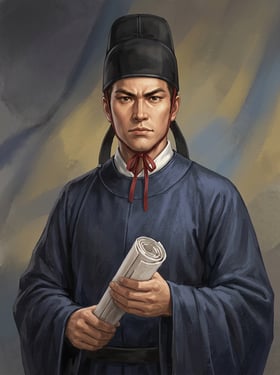
Wang Lei was of a fierce and unyielding temper, daring to remonstrate to the death.
Life
In the novel: 1 chapter · In the Records: 1 volume
Life?–211
211 CE (Jian'an 16)
- Meeting at FuchengFuWitness
Appearances
- Liu Zhang's faction· Undated
- Life event
- Death
On the boards
Compare with someone →Where this person ranks on each board.
Who they were
Character profile
- Character
- Wang Lei was of a fierce and unyielding temper, daring to remonstrate to the death.
- Anecdotes
- Wang Lei once served as an Attendant Officer and was a man of Guanghan. He hung himself upside down at the city gate, holding up his memorial of remonstrance, and in the end dashed himself to death.
Historical Record
Wang Lei was an attendant official from Guanghan under Liu Zhang’s regime. The Records of the Three Kingdoms records that Zhang Song urged Liu Zhang to form friendly relations with Liu Bei and suggested inviting Liu Bei into Shu. Liu Zhang accepted the proposal and sent Fa Zheng there; he also ordered Fa Zheng and Meng Da to send troops to assist Liu Bei. At this time, Chief Clerk Huang Quan argued the advantages and disadvantages, while Wang Lei “hung himself upside down at the gate of the province to remonstrate,” opposing Liu Zhang’s welcoming of Liu Bei by hanging upside down at the provincial gate. Liu Zhang did not heed the remonstrances of Huang Quan and Wang Lei, and still ordered his territories to provide for Liu Bei. Liu Bei was received when he entered the region. The Records of the Three Kingdoms briefly notes only that Wang Lei remonstrated by hanging upside down and that Liu Zhang did not accept his advice; it gives no details of what he said, what happened to him afterward, or how his life ended.
In this account, Wang Lei and Huang Quan were both opposed to welcoming Liu Bei, but they remonstrated in different ways: Huang Quan explained the advantages and disadvantages, while Wang Lei expressed his opposition through an extreme and striking act of self-remonstration. As far as the historical biography shows, the core of Wang Lei’s action was to warn against Liu Zhang’s decision. Liu Zhang ultimately still welcomed Liu Bei as planned, and Wang Lei’s remonstrance failed to change the situation.
In the Novel
Chapter 60 of Romance of the Three Kingdoms expands the brief historical account into a sustained story of remonstrating unto death. In the novel, Wang Lei is an attendant official before Liu Zhang’s tent. When Liu Zhang decides to follow Zhang Song’s advice and welcome Liu Bei into Yi Province, Wang Lei opposes him to his face, declaring that Liu Bei’s entry into Shu would become “a grave danger at the heart of the realm,” and warning that once summoned, western Sichuan would be difficult to preserve. Liu Zhang rebukes Wang Lei and orders him carried out, then still orders Fa Zheng to set out.
The novel also has Wang Lei hang upside down from the city gate when Liu Zhang leaves the city, holding a memorial of remonstrance in one hand and a sword in the other, threatening to cut the rope himself and dash himself to death. After reading the memorial, Liu Zhang flies into a rage. Wang Lei ultimately cuts the rope and crashes to the ground, dead. In this way, the novel heightens the Records of the Three Kingdoms account of his “hanging himself upside down at the gate of the province to remonstrate” into a portrayal of a fierce struggle ending in death, and adds specific words of remonstrance, the act of holding a sword to take his own life, and his death. These details belong to the novel’s portrayal; the Records of the Three Kingdoms does not record them.
Wang Lei’s opposition is also set amid the disputes involving Zhang Song, Huang Quan, and others: Zhang Song advocates relying on Liu Bei to resist Cao Cao and Zhang Lu, while Huang Quan and Wang Lei each urge Liu Zhang to refuse for different reasons. The novel further uses Wang Lei’s remonstrating unto death to highlight Liu Zhang’s refusal to heed loyal advice, and casts a tragic omen over the decision to welcome Liu Bei into Yi Province.
Key Relationships
- Liu Zhang: Wang Lei was an attendant official from Guanghan under Liu Zhang, and his remonstrance concerned whether Liu Zhang should welcome Liu Bei into Shu. The historical record says Liu Zhang did not accept Wang Lei’s advice and still arranged to receive Liu Bei; the novel specifically depicts Liu Zhang rebuking and dismissing Wang Lei, and then refusing to change his decision to welcome Liu Bei even after Wang Lei hangs himself at the city gate in remonstration unto death.
- Huang Quan: Both men belonged to Liu Zhang’s side and opposed welcoming Liu Bei. The historical record says Huang Quan argued the advantages and disadvantages, while Wang Lei hung himself upside down at the provincial gate to remonstrate; the novel also has Huang Quan try to dissuade Liu Zhang first, with Wang Lei continuing to press his remonstrance afterward.
- Zhang Song and Liu Bei: Zhang Song urged Liu Zhang to form friendly relations with Liu Bei and welcome him into Yi Province, while Wang Lei opposed this decision. In the novel, the conversations in which Zhang Song urges Liu Bei to seize Yi Province and then advises Liu Zhang to summon Liu Bei as an ally are specific elaborations unique to the novel; the historical biography only records Zhang Song urging Liu Zhang to maintain relations with Liu Bei and the subsequent welcoming of Liu Bei.
Signature Scene
Wang Lei’s most representative scene in the historical record is his “hanging himself upside down at the gate of the province to remonstrate”: he hangs upside down at the provincial gate to dissuade Liu Zhang from welcoming Liu Bei, but Liu Zhang does not accept his advice. This is the action confirmed by the historical biography; the Records of the Three Kingdoms does not say that he took his own life as a result, nor does it preserve the contents of his memorial.
The novel rewrites this scene as a public remonstration unto death before Yuqiao Gate: Wang Lei hangs upside down from the city gate, holding a memorial of remonstrance and a sword, and declares that if his advice is not accepted, he will cut the rope himself. He then cuts the rope and crashes to the ground, dead. Through physical action, this scene drives political remonstrance to a dramatic climax of martyrdom. It is a plot element unique to the novel and should not be conflated with the brief historical account.
Both accounts present Wang Lei as opposing Liu Zhang’s welcoming of Liu Bei, but they emphasize different things: the historical record briefly notes his remonstrance and Liu Zhang’s refusal to heed it, while the novel gives him explicit words of warning and an ending in which he makes his convictions clear through his death.
In the sources
Where the books name Wang Lei
History · vol. 31Records of the Three Kingdoms
…璋主簿黃權陳其利害,從事廣漢王累自倒縣於州門以諫,璋一無所納,敕在所供奉先主,先主入境如歸。…
Read the whole paragraph
璋聞曹公徵荊州,已定漢中,遣河內陰溥致敬於曹公。加璋振威將軍,兄瑁平寇將軍。瑁狂疾物故。 〈臣松之案:魏台訪「物故」之義,高堂隆答曰:「聞之先師:物,無也;故,事也;言無復所能於事也。」〉璋復遣別駕從事蜀郡張肅送叟兵三百人並雜御物於曹公,曹公拜肅為廣漢太守。璋復遣別駕張松詣曹公,曹公時已定荊州,走先主,不復存錄松,松以此怨。會曹公軍不利於赤壁,兼以疫死。松還,疵毀曹公,勸璋自絕,〈《漢書春秋》曰:張松見曹公,曹公方自矜伐,不存錄松。松歸,乃勸璋自絕。習鑿齒曰:昔齊桓一矜其功而叛者九國,曹操暫自驕伐而天下三分,皆勤之於數十年之內而棄之於俯仰之頃,豈不惜乎!是以君子勞謙日昃,慮以下人,功高而居之以讓,勢尊而守之以卑。情近於物,故雖貴而人不厭其重;德洽群生,故業廣而天下愈欣其慶。夫然,故能有其富貴,保其功業,隆顯當時,傳福百世,何驕矜之有哉!君子是以知曹操之不能遂兼天下者也。〉因說璋曰:「劉豫州,使君之肺腑,可與交通。」璋皆然之,遣法正連好先主,尋又令正及孟達送兵數千助先主守禦,正遂還。後松復說璋曰:「今州中諸將龐羲、李異等皆恃功驕豪,欲有外意,不得豫州,則敵攻其外,民攻其內,必敗之道也。」璋又從之,遣法正請先主。璋主簿黃權陳其利害,從事廣漢王累自倒縣於州門以諫,璋一無所納,敕在所供奉先主,先主入境如歸。先主至江州北,由墊江水〈墊音徒協反。〉詣涪,〈音浮。〉去成都三百六十里,是歲建安十六年也。璋率步騎三萬馀人,車乘帳幔,精光曜日,往就與會;先主所將將士,更相之適,歡飲百馀日。璋資給先主,使討張魯,然後分別。 〈《吳書》曰:璋以米二十萬斛,騎千匹,車千乘,繒絮錦帛,以資送劉備。〉
Novel · ch. 60Romance of the Three Kingdoms
…璋視之,乃帳前從事官王累也。累頓首言曰:「主公今聽張松之言,自取其禍。」…
Read the whole paragraph
又一人阻曰:「不可!不可!」璋視之,乃帳前從事官王累也。累頓首言曰:「主公今聽張松之言,自取其禍。」璋曰:「不然。吾結好劉玄德,實欲拒張魯也。」累曰:「張魯犯界,乃癬疥之疾;劉備入川,乃心腹之大患。況劉備世之梟雄,先事曹操,便思謀害;後從孫權,便奪荊州。心術如此,安可同處乎?今若召來,西川休矣!」璋叱曰:「再休亂道!玄德是我同宗,他安肯奪我基業?」便教扶二人出。遂命法正便行。法正離益州,逕取荊州,來見玄德。參拜已畢,呈上書信。玄德拆封視之。書曰:
Novel · ch. 60Romance of the Three Kingdoms
…人報「從事王累,自用繩索倒弔於城門之上,一手執諫章,一手仗劍,口稱如諫不從,自割斷其繩索,撞死於此地。」…
Read the whole paragraph
次日,上馬出榆橋門。人報「從事王累,自用繩索倒弔於城門之上,一手執諫章,一手仗劍,口稱如諫不從,自割斷其繩索,撞死於此地。」劉璋教取所執諫章觀之。其略曰:
Quotes
3 lines in the books · 2 featured
「不可!不可!」
Wang Lei's classic opening line remonstrating with Liu Zhang, highly recognizable.
「張魯犯界,乃癬疥之疾;劉備入川,乃心腹之大患。況劉備世之梟雄,先事曹操,便思謀害;後從孫權,便奪荊州。心術如此,安可同處乎?今若召來,西川休矣!」
It precisely predicts the harm of Liu Bei's entry into Shu, displaying his far-sighted vision.
Family, lords and rivals
1 relationships

Who is Wang Lei connected to?
Pick someone to see how many steps lie between them and Wang Lei.
History vs. novel
6 points · 1 novel-only
| History | Novel |
|---|---|
| Official TitleNovel embellishes | |
The histories identify Wang Lei as an Officer of Guanghan and record that he hung himself upside down at the provincial office gate to remonstrate; they do not call him an Attendant Officer before the tent. vol. 31 | The novel calls Wang Lei an Attendant Officer before the tent and depicts him stepping forward to stop Liu Zhang from welcoming Liu Bei. ch. 60 |
| Remonstrating While Hanging Upside DownHistory only | |
Wang Lei hung himself upside down at the provincial office gate to urge Liu Zhang not to welcome Liu Bei into Shu. vol. 31 | — |
| Words of Direct RemonstranceNovel only | |
| — | Wang Lei kowtowed and spoke, calling Liu Bei's Takeover of Yi Province a grave threat close at hand, and warning Liu Zhang by citing Liu Bei's past conduct. ch. 60 |
| Reason for OppositionNovel embellishes | |
The histories record only that Wang Lei hung himself upside down to remonstrate; they do not preserve the specific reasons he gave. vol. 31 | The novel adds that Wang Lei opposed welcoming Liu Bei into Yi Province on the grounds that Zhang Lu posed a lesser threat, while Liu Bei posed a greater one. ch. 60 |
| Liu Zhang's ResponseNovel embellishes | |
Liu Zhang did not heed the advice of Wang Lei and Huang Quan, and still ordered people to provide for Liu Bei and welcome him. vol. 31 | Liu Zhang rebutted Wang Lei, stressing that Liu Bei was of the same clan and would not seize his realm, and ordered people to escort Wang Lei out. ch. 60 |
| Outcome of the RemonstranceNovel embellishes | |
Wang Lei's remonstrance was not heeded. The Records of the Three Kingdoms then records Liu Bei entering the territory, but does not explain what became of Wang Lei afterward. vol. 31 | The novel says that after Wang Lei was escorted out, Liu Zhang still ordered Fa Zheng to go and invite Liu Bei; it does not relate what happened to Wang Lei afterward. ch. 60 |
- Official TitleNovel embellishes
- History
The histories identify Wang Lei as an Officer of Guanghan and record that he hung himself upside down at the provincial office gate to remonstrate; they do not call him an Attendant Officer before the tent.
vol. 31
- Novel
The novel calls Wang Lei an Attendant Officer before the tent and depicts him stepping forward to stop Liu Zhang from welcoming Liu Bei.
ch. 60
- Remonstrating While Hanging Upside DownHistory only
- History
Wang Lei hung himself upside down at the provincial office gate to urge Liu Zhang not to welcome Liu Bei into Shu.
vol. 31
- Words of Direct RemonstranceNovel only
- Novel
Wang Lei kowtowed and spoke, calling Liu Bei's Takeover of Yi Province a grave threat close at hand, and warning Liu Zhang by citing Liu Bei's past conduct.
ch. 60
- Reason for OppositionNovel embellishes
- History
The histories record only that Wang Lei hung himself upside down to remonstrate; they do not preserve the specific reasons he gave.
vol. 31
- Novel
The novel adds that Wang Lei opposed welcoming Liu Bei into Yi Province on the grounds that Zhang Lu posed a lesser threat, while Liu Bei posed a greater one.
ch. 60
- Liu Zhang's ResponseNovel embellishes
- History
Liu Zhang did not heed the advice of Wang Lei and Huang Quan, and still ordered people to provide for Liu Bei and welcome him.
vol. 31
- Novel
Liu Zhang rebutted Wang Lei, stressing that Liu Bei was of the same clan and would not seize his realm, and ordered people to escort Wang Lei out.
ch. 60
- Outcome of the RemonstranceNovel embellishes
- History
Wang Lei's remonstrance was not heeded. The Records of the Three Kingdoms then records Liu Bei entering the territory, but does not explain what became of Wang Lei afterward.
vol. 31
- Novel
The novel says that after Wang Lei was escorted out, Liu Zhang still ordered Fa Zheng to go and invite Liu Bei; it does not relate what happened to Wang Lei afterward.
ch. 60
Combat
On the field
Duels, kills and executions as the texts tell them, counted separately for the Records and the Romance.
Stratagems
Plans this person devised or saw through, as the texts tell them.
- Romance
- 0 carried out · 0 worked · 0 turned down · 1 seen through
- RomanceLead Bei into ShuDeceptionSaw throughCh. 60「主公何不遣使結好,使為外援?可以拒曹操張魯矣」
Events
Events (2)
Battles and events the texts place this person in, by date.
Other events
- 211Meeting at FuchengWitness
- 212Liu Bei's Takeover of Yi Province
Continue
Meeting at Fucheng
Relationship timeline1 entry ▸
Novel · ch. 60
- Liu Zhang§25
Advised
kowtowed and remonstrated against it; later hung upside down at the city gate, holding a remonstrance, cut the rope himself, and fell to his death
Inner monologues · AI-generated1 monologue ▸
- I, Wang Lei, was merely an aide in Yi Province. What troubled me was not my own honor or disgrace, but whom the governor