Records
Yuan Shao's army won
- Commanders
- Gongsun Zan's armyGongsun Zan
Vol. 8「紹軍廣川,令將麴義先登與瓚戰,生禽綱。瓚軍敗走勃海」
192 CE (Chuping 3) · Jieqiao
In 192 (the third year of Chuping), Yuan Shao and Gongsun Zan fought a decisive battle around Jieqiao in Jizhou. Yuan Shao’s officer Qu Yi routed Gongsun Zan’s cavalry with elite infantry and powerful crossbows. Yan Gang, whom Gongsun Zan had appointed Inspector of Jizhou, was captured alive by Qu Yi (Pei’s commentary, citing the Yingxiong Ji, says he was killed in battle). Gongsun Zan retreated in defeat, and Yuan Shao thereby secured his control of Jizhou. The Records of the Three Kingdoms does not give the year of the Battle of Jieqiao, but both the Hou Hanshu and the Zizhi Tongjian date it to the spring of the third year of Chuping. According to the “Biography of Gongsun Zan” in the Records of the Three Kingdoms, Gongsun Zan’s younger brother Gongsun Yue fought alongside Sun Jian against Zhou Ang, whom Yuan Shao had sent, and was killed by a stray arrow. Gongsun Zan blamed Yuan Shao and sent troops to garrison Panhe. To seek a reconciliation, Yuan Shao yielded the seal of office of the Administrator of Bohai to Gongsun Zan’s cousin Gongsun Fan. But Gongsun Fan led troops from Bohai to help Gongsun Zan defeat the Yellow Turbans in Qing and Xu, further strengthening Gongsun Zan’s forces; he then advanced to Jieqiao. Pei’s commentary, citing the Yingxiong Ji, records the battle: the two armies clashed twenty li south of Jieqiao. Gongsun Zan formed more than thirty thousand infantry into a square formation, with more than five thousand cavalry on each flank and the Baima Yicong in the center. Yuan Shao sent Qu Yi’s eight hundred men to lead the assault, supported on either side by a thousand powerful crossbows, while he himself followed with tens of thousands of infantry. Seeing that Qu Yi had few troops, Gongsun Zan sent his cavalry charging in to trample them. Qu Yi’s men crouched motionless behind their shields; only when the enemy horsemen had come within several dozen paces did they spring up together and attack, loosing their crossbows in unison. The Yingxiong Ji says they killed Yan Gang and more than a thousand armored soldiers on the spot (the main text says Yan Gang was captured alive), then pursued the enemy to Jieqiao, routed Gongsun Zan’s rear guard, and tore down the gate of his camp. Yuan Shao himself had unsaddled his horse and was resting in the rear when more than two thousand fleeing cavalrymen surrounded him. Tian Feng urged him to take shelter behind an empty wall, but Yuan Shao threw down his helmet and refused, driving off the enemy horsemen with the powerful crossbows kept in his tent. Chapter 7 of Romance of the Three Kingdoms combines this battle with the clash at Panhe. It has Yan Liang and Wen Chou command the archers and crossbowmen on the two flanks, and adds episodes in which Zhao Yun rescues Gongsun Zan and kills Qu Yi, and Liu Bei, Guan Yu, and Zhang Fei arrive to join the fight
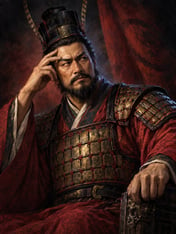 Yuan ShaoCommanderTalk to me
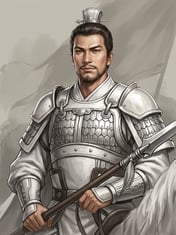 Gongsun ZanCommanderTalk to me
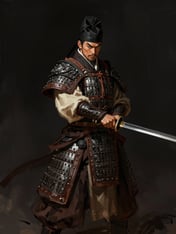 Yan GangKilled in actionTalk to me
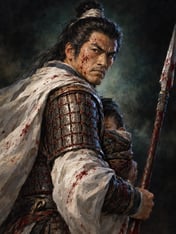 Zhao YunLivedWarriorTalk to me
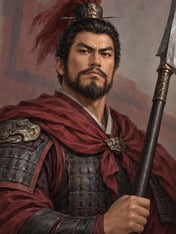 Wen ChouWarrior
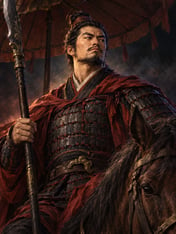 Yan LiangWarriorTalk to me
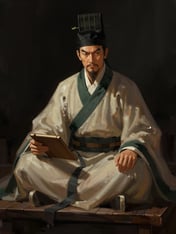 Tian FengAdvisorTalk to me
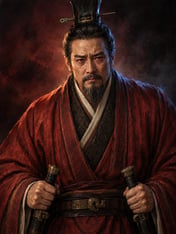 Liu BeiLivedWarriorTalk to me
Who won, as each book tells it; commanders as the text names them.
Records
Yuan Shao's army won
Vol. 8「紹軍廣川,令將麴義先登與瓚戰,生禽綱。瓚軍敗走勃海」
Romance
Gongsun Zan's army won
Ch. 7「卻說袁紹輸了一陣,堅守不出」
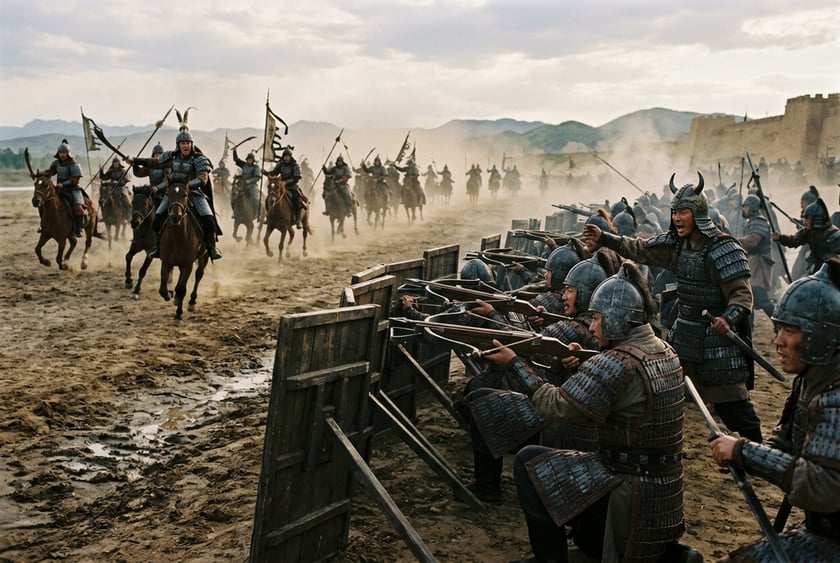
Scene
Gongsun Zan’s cavalry charge toward the enemy ranks. Qu Yi’s men crouch motionless behind their shields, then spring up as the cavalry draw near and unleash a volley of powerful crossbow bolts.
Featured people: Gongsun Zan
Continue
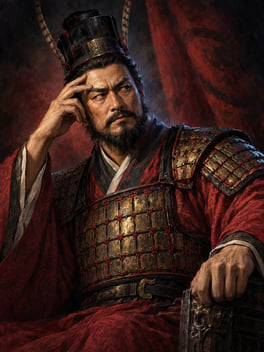
In golden helmet and golden armor, brocade robe and jade belt, he sat his horse before the ranks.
1914 people in common
1904 people in common
1944 people in common
1944 people in common
2004 people in common
2014 people in common
2014 people in common
2074 people in common
After the coalition against Dong Zhuo fell apart, a confrontation between Yuan Shao and Gongsun Zan quickly took shape in Hebei. Yuan Shao rose to prominence as Administrator of Bohai, then forced Han Fu to surrender Jizhou. Han Fu later died by suicide at Zhang Miao’s residence, consumed by suspicion and fear. Yuan Shao’s adviser Ju Shou had meanwhile drawn up a blueprint for unifying Hebei: first secure Qing Province, then destroy Zhang Yan of the Black Mountain bandits, and finally march north to eliminate Gongsun Zan, bringing four provinces under his control and contending for supremacy. Gongsun Zan was the toughest obstacle in this plan.
Gongsun Zan had long fought the Wuhuan and others in You Province, where he was renowned for his cavalry. The immediate cause of the break between the two sides was a dispute between Yuan Shu and Yuan Shao over Yu Province. Yuan Shu sent Gongsun Yue to join Sun Jian in attacking Zhou Ang, whom Yuan Shao had appointed. Gongsun Yue was killed by a stray arrow, and Gongsun Zan held Yuan Shao responsible. Yuan Shao tried to win Gongsun Fan, Gongsun Zan’s younger cousin, by offering him the post of Administrator of Bohai. Instead, Gongsun Fan went over to Gongsun Zan and helped him decisively defeat the Yellow Turban forces in Qing and Xu provinces. According to the Records of Heroes, after his victory Gongsun Zan returned to his garrison at Guangzong and replaced the local administrators throughout Jizhou on his own authority; the senior officials of Jizhou opened their gates and rallied to him in droves. For Yuan Shao, this was no longer a border clash: his power base was being hollowed out from within by his rival, and he had to take the field in person.
The Romance of the Three Kingdoms gives a different account of the cause in Chapter Seven. On his way back, Gongsun Yue was shot dead by men who falsely claimed to be retainers of Dong Zhuo. Convinced that Yuan Shao had plotted the killing, Gongsun Zan raised troops to avenge him. The two armies faced each other on opposite banks of the Pan River, trading insults across a bridge. Then Wen Chou charged onto the bridge in pursuit of Gongsun Zan, only for a young general to emerge from behind a slope and come to his rescue, announcing himself as Zhao Yun of Changshan.
According to the Records of Heroes, Gongsun Zan drew up his forces twenty li south of Jieqiao. More than thirty thousand infantry formed a central square formation, with over five thousand cavalry on each wing. His elite White Horse Volunteers formed the core, divided into two groups: the left group shot to the right and the right group to the left. Their banners and armor shone brightly. This formation relied on cavalry as its main striking force, with the infantry square providing stability. The outcome would be decided by the charge of the cavalry on the wings and the White Horse Volunteers.
Yuan Shao’s deployment was a direct counter to it. Qu Yi led eight hundred men as the vanguard, supported by a thousand powerful crossbows, while Yuan Shao personally commanded tens of thousands of infantry drawn up behind them. Qu Yi had spent many years in Liang Province and was familiar with the Qiang people’s way of fighting; his men were all fierce, seasoned troops. This was a mixed infantry-and-crossbow force specifically designed to counter cavalry charges.
The novel retains the figure of eight hundred archers, but also has Yan Liang and Wen Chou each lead a thousand archers and crossbowmen on one wing, shooting across at Gongsun Zan’s two forces. Gongsun Zan’s side has Yan Gang at the vanguard, while Gongsun Zan himself sits astride his horse on the bridge. The Records of the Three Kingdoms does not mention Yan Liang and Wen Chou taking part.
The first key decision was Gongsun Zan’s. Seeing that Qu Yi had few men, he sent his cavalry straight into a charge, underestimating the infantry position. Qu Yi’s soldiers lay motionless behind their shields, then sprang up together when the cavalry was only a few dozen paces away, raising a cloud of dust and shouting as they attacked head-on, while the crossbows loosed volley after volley. At the final stage of a high-speed charge, cavalry are least able to change direction. The dense bolts coming straight at them, combined with the counterattack, nearly nullified all their advantages. In this clash, Yan Gang was captured alive by Qu Yi (the Records of Heroes says he was killed in the thick of battle), and more than a thousand armored soldiers were slain.
The second key point was the pursuit across the battlefield. Qu Yi did not stop where he was, but pursued the enemy all the way to Jieqiao, routed the rearguard that Gongsun Zan had turned back to fight, then made straight for his main camp and tore down its gate. This relentless pursuit gave Gongsun Zan no chance to reform his lines, and the rout spread from the vanguard to the whole army.
The third key point came at Yuan Shao’s side. Believing victory was assured, Yuan Shao dismounted and unsaddled his horse more than ten li from Jieqiao. He had with him only several dozen powerful crossbows and over a hundred guards armed with halberds. Suddenly, more than two thousand of Gongsun Zan’s fleeing cavalry appeared and surrounded him in several ranks. Tian Feng urged him to take shelter behind an empty wall, but Yuan Shao threw his helmet to the ground and declared that a true man would sooner die in battle. The guards fired their crossbows wildly. The enemy cavalry did not realize that Yuan Shao himself was surrounded, and gradually withdrew; Qu Yi then arrived to reinforce him. This episode shows that even in a great victory, a commander’s carelessness can undo the entire result. The novel keeps the scene of Yuan Shao throwing down his helmet and refusing to take shelter behind the empty wall, but makes the man who reaches him Zhao Yun, while Yan Liang and a large force arrive to lift the siege.
After the Battle of Jieqiao, Gongsun Zan withdrew to Bohai and returned to Jicheng with Gongsun Fan. He built a separate small city to the southeast of the main city, putting him within close reach of Liu Yu, the Governor of You Province. Relations between the two grew increasingly tense. Gongsun Zan’s offensive in Jizhou came to an end, and he turned instead to contesting Liu Yu’s authority within You Province, eventually killing him in 193. Yuan Shao, meanwhile, seized the opportunity to turn back, suppress the rebellion in Wei Commandery and the Black Mountain forces, and reestablish his garrison at Ye. The following year, the court sent Zhao Qi to Hebei to mediate, and the two sides temporarily ceased hostilities.
Qu Yi, the chief architect of this victory, was later killed by Yuan Shao for becoming arrogant and overbearing on the strength of his achievements. In the novel, however, Zhao Yun kills Qu Yi with a thrust of his spear amid the chaos, and Liu Bei, Guan Yu, and Zhang Fei arrive from Pingyuan and fight so fiercely that Yuan Shao drops his treasured sword. These episodes were added to bring figures who would later become part of Shu Han into the story of the earlier wars; they are not recorded in the Records of the Three Kingdoms.
The war between Yuan Shao and Gongsun Zan continued for years, until Gongsun Zan set himself on fire at Yijing in 199. Chapter Eighteen of the novel has Cao Cao secretly encourage Yuan Shao to attack Gongsun Zan so that Cao Cao can focus on his eastern campaign against Lü Bu. This underscores the place of the northern conflict in the wider struggle for the Central Plains: it tied down Yuan Shao and gave Cao Cao time to consolidate his position at leisure south of the Yellow River.
If Gongsun Zan had not rashly charged the enemy line with his cavalry, but had used his infantry square to hold the front while sending his cavalry around to Yuan Shao’s rear, the outcome might have been very different. Yuan Shao’s rear was poorly guarded, and two thousand fleeing cavalry nearly trapped him. If a complete, organized cavalry force had launched a planned raid, Yuan Shao’s position would have been extremely dangerous.
Had Yuan Shao lost at Jieqiao, the senior officials of Jizhou had already sided with Gongsun Zan, and Yuan Shao might well have lost the entire province, retreating to Bohai or even Henei. In that case, Gongsun Zan would have become the hegemon of Hebei, and his alliance with Yuan Shu and Tao Qian would have attacked Cao Cao from north and south. The Battle of Guandu would never have come about. The significance of the Battle of Jieqiao lies precisely in the fact that it preserved the foundation from which Yuan Shao would later dominate Hebei.