Overview
Bowang was a county under Nanyang Commandery in Jing Province during the Eastern Han. It lies at present-day Bowang Town, southwest of Fangcheng County, Nanyang, Henan. After Emperor Xian moved the capital to Xu County, Cao Hong once led a separate campaign against Liu Biao, defeating Liu Biao’s subordinates at Wuyang, Yinye, Duyang, Bowang, and other places.
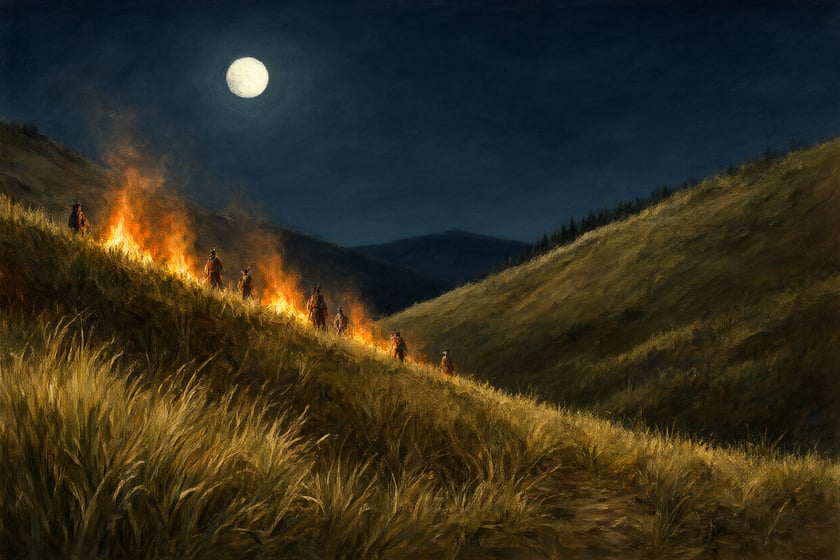
After Liu Bei sought refuge with Liu Biao, he stationed his troops at Xinye. Liu Biao sent him to Bowang to resist Xiahou Dun, Yu Jin, and others. The two sides were locked in a stalemate for a long time. Liu Bei laid an ambush in advance, then one morning set fire to his own camp and pretended to retreat. Xiahou Dun and the others pursued with their forces, fell into the ambush, and were defeated. According to the Biography of Li Dian, Liu Bei’s northern incursion this time reached Ye. Li Dian, who accompanied the army, urged Xiahou Dun not to pursue, saying that the enemy’s retreat for no apparent reason must be a ruse; the roads to the south were narrow and the vegetation dense, making pursuit inadvisable. Xiahou Dun ignored him and pursued with Yu Jin, but they were unsuccessful. Only after Li Dian arrived to relieve them did Liu Bei withdraw. In this battle, Zhao Yun captured Xiahou Lan alive. Xiahou Lan was an old acquaintance from Zhao Yun’s hometown. Zhao Yun asked Liu Bei to spare his life and recommended him for his knowledge of the law; Xiahou Lan was then appointed military justice officer.
Differences Between History and Fiction
Romance of the Three Kingdoms calls this place “Bowang Slope” and depicts the battle as Zhuge Liang’s first military campaign after entering public life: Xiahou Dun and Yu Jin lead their troops to Bowang Slope. The novel portrays the battle as Zhuge Liang’s first use of troops after entering public life, defeating the enemy with an ambush and a fire attack. According to the Records of the Three Kingdoms, Liu Bei himself set the ambush and burned the camp, and the account of the battle makes no mention of Zhuge Liang.