Lu Zhi
courtesy name 子干 · –192
Not to be confused with Lu Zhi (鲁芝, 190–273) — Lu Zhi, Cao Wei's sima under Cao Shuang, rode to him on hearing of the crisis; Romance has him and Xin Chang break out through the gates.
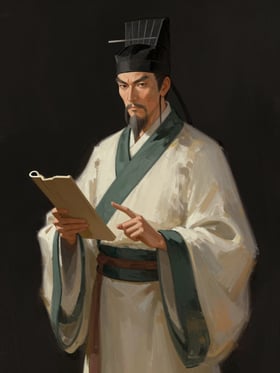
Lu Zhi (Zigan), a late Han general, opposed Dong Zhuo’s deposition of the emperor; the novel adds teacher-student and palace-coup episodes.

Life
In the novel: 3 chapters · In the Records: 4 volumes
Life?–192
184 CE (Zhongping 1)
- Yellow Turban RebellionCommander
- Battle of GuangzongGuangzongCommander
- Life event
On the boards
Compare with someone →Where this person ranks on each board.
Historical Record
Lu Zhi, courtesy name Zigan, was from Zhuo County, Zhuo Commandery. In his youth, he studied under Ma Rong and was a fellow student and friend of Zheng Xuan. He was resolute and principled, with a desire to serve the world. He would not curry favor for acceptance, nor readily answer summonses from the provincial and commandery authorities. During the Jianning era, he was summoned to serve as a Gentleman Erudite. He later became Administrator of Jiujiang, but left office due to illness; in time, he was appointed Attendant-in-Chief and then Minister over the Masters of Writing. After Zhang Jue’s uprising, Lu Zhi served as General of the Northern Central Army and campaigned against the Yellow Turbans. He was convicted after suffering a military defeat, but soon returned to office as Minister over the Masters of Writing. After the Ling Emperor died, Zhang Rang and the others seized the young emperor and fled toward Xiaopingjin. Lu Zhi, sword in hand, rebuked Zhang Rang and the others, forcing them to lay down their weapons and weep as they apologized. Zhang Rang and the others then killed themselves. The sources describe Lu Zhi as stepping forward amid the crisis, using both the threat of force and verbal reprimands against the captors.
After Dong Zhuo took power, he proposed deposing the young emperor and enthroning the Prince of Chenliu. Most of the assembled officials dared not respond, but Lu Zhi countered by citing historical precedents: Taijia had been banished and the King of Changyi deposed, but each case had clear grounds. The emperor at the time was young and had committed no fault, so his case could not be compared with theirs. Dong Zhuo was furious and wanted to kill Lu Zhi, but Attendant Cai Yong intervened, and Lu Zhi was spared. Later, he left office due to old age and frequent illness, and lived in seclusion on Jundu Mountain in Shanggu. He died in the third year of Chuping. Records cited in Pei Songzhi’s annotations also attest to his learning, conduct, and reputation: when Cao Cao passed through Zhuo Commandery on a northern campaign, he called Lu Zhi “renowned throughout the realm, and a model for Confucian scholars,” and ordered his tomb repaired and a sacrifice performed.
In the Novel
Romance of the Three Kingdoms portrays Lu Zhi as a Confucian general who could both lead troops against the Yellow Turbans and speak out fearlessly. The novel says that he led troops to besiege Zhang Jue at Guangzong. Liu Bei, who had once studied under him, brought Guan Yu, Zhang Fei, and five hundred men to assist. Lu Zhi kept Liu Bei at his tent to await orders, then sent him to Yingchuan to gather news of the fighting. This teacher-student connection is based on the historical biography’s account that, in his youth, Liu Bei “studied together with Gongsun Zan and others under their fellow commandery native Lu Zhi, former Administrator of Jiujiang.” But the specific events of Liu Bei going to Guangzong, awaiting orders, and being sent on a mission are novelistic elaborations.
The novel also gives a particularly dramatic account of Lu Zhi being taken away in a prison cart: Zuo Feng failed to extort a bribe from him, then falsely accused him of building high ramparts and refusing to fight, so the court sent Dong Zhuo to replace him as commander. Later, Huangfu Song submitted a memorial on his behalf, and Lu Zhi was reinstated. These events appear in the novel and should not be simply equated with the historical account of his being convicted after a defeat in the campaign against the Yellow Turbans and then returning to office as Minister over the Masters of Writing. Regarding He Jin’s summons of Dong Zhuo to the capital, the novel has Lu Zhi warn Dong Zhuo in advance that he was “kind in appearance but cruel at heart.” When his warning went unheeded, Lu Zhi resigned. During the palace coup, he is shown wielding a halberd to drive off Duan Gui and rescue Empress Dowager He. Later, in the debate at Wenming Garden over whether to depose the emperor, the novel expands the historical account of Lu Zhi’s opposition into a dramatic scene in which he argues face-to-face with Dong Zhuo, who draws his sword to kill him, before Peng Bo and Wang Yun intervene to defuse the crisis.
Key Relationships
Dong Zhuo: In the historical record, Lu Zhi was a Minister over the Masters of Writing who opposed Dong Zhuo’s plan to depose the emperor. His frank opposition angered Dong Zhuo, but Cai Yong intervened and saved him from death. The novel also has Lu Zhi advise He Jin against summoning Dong Zhuo to the capital and publicly challenge Dong Zhuo at Wenming Garden; these events, as well as the specific details of his rescue, are literary inventions.
Liu Bei: The historical biography records that, at age fifteen, Liu Bei studied under Lu Zhi together with Liu Deran and Gongsun Zan. The novel goes further, having Liu Bei seek out his teacher at Guangzong and serve under his command. Their meeting on the battlefield and the specific military orders are unique to the novel.
Cai Yong: The historical record says that Cai Yong persuaded Dong Zhuo not to kill Lu Zhi, saving him from execution. Zhang Jue: Lu Zhi was appointed General of the Northern Central Army and ordered to campaign against Zhang Jue; he was convicted after suffering a military defeat. Lu Yu: Lu Zhi was Lu Yu’s father, and Lu Yu was orphaned at a young age.
Signature Scenes
The debate over the deposition at court: Citing Yi Yin’s banishment of Taijia and Huo Guang’s deposition of the King of Changyi as precedents, Dong Zhuo argued for deposing the young emperor. Lu Zhi pointed out that each precedent arose from particular circumstances, whereas the emperor at the time was young and had committed no fault; those cases therefore did not justify deposing him. Dong Zhuo flew into a rage and wanted to kill Lu Zhi, but Cai Yong intervened. The scene presents Lu Zhi as a man who used the classical histories to debate affairs of state and uphold his duty as a minister.
Rebuking the captors with a sword during the palace coup: The historical biography records that when Zhang Rang and the others fled with the young emperor as their captive, Lu Zhi took up his sword and rebuked them, compelling them to lay down their weapons and apologize. The novel instead has him wield a halberd in the palace to drive off Duan Gui and rescue Empress Dowager He—an episode specific to the novel.
The meeting between teacher and student at Guangzong and the release from the prison cart: The novel says that Liu Bei brought his men to join Lu Zhi and was ordered to go to Yingchuan. On his way back, he saw his teacher being carried in a prison cart. Liu Bei was shocked, and Lu Zhi explained how Zuo Feng had falsely accused him. The novel uses the episode to juxtapose the bond between teacher and student with Lu Zhi’s grievance at being framed. The prison cart, Zuo Feng’s attempted extortion, and Liu Bei’s meeting with Lu Zhi on the road are all unique to the novel.
Quotes
5 lines in the books · 3 featured
「我圍張角,將次可破;因角用妖術,未能即勝。朝廷差黃門左豐前來體探,問我索取賄賂。我答曰:『軍糧尚缺,安有餘錢奉承天使?』左豐挾恨,回奏朝廷,說我高壘不戰,惰慢軍心;因此朝廷震怒,遣中郎將董卓來代將我兵,取我回京問罪。」
Exposes how eunuch domination in the late Eastern Han bred corruption and ruined the state.
「植素知董卓為人,面善心狠;一入禁庭,必生禍患。不如止之勿來,免致生亂。」
Foretells that bringing Dong Zhuo into the capital will breed disaster, displaying his foresight.
「明公差矣:昔太甲不明,伊尹放之於桐宮。昌邑王登位方二十七日,造惡三千餘條,故霍光告太廟而廢之。今上雖幼,聰明仁智,並無分毫過失。公乃外郡刺史,素未參與國政,又無伊、霍之大才,何可強主廢立之事?聖人云『有伊尹之志則可,無伊尹之志則篡也。』」
Citing the classics, he vehemently denounces Dong Zhuo's deposing and enthroning of emperors, manifesting his loyalty and righteousness.
- Family
- Friends
- Enemies
- Teacher & student
- Other
Who is Lu Zhi connected to?
Pick someone to see how many steps lie between them and Lu Zhi.
History vs. novel
7 points · 4 novel-only
| History | Novel |
|---|---|
| StudiesNovel embellishes | |
The Records of the Three Kingdoms says that Lu Zhi once studied under Ma Rong alongside Zheng Xuan, recording his scholarly background but making no mention of Liu Bei having studied under Lu Zhi. vol. 22 | The Romance says that when Liu Bei traveled to study at the age of fifteen, he studied under Lu Zhi and became friends with Gongsun Zan and others. ch. 1 |
| Troop Strength at GuangzongNovel only | |
| — | The Romance describes Lu Zhi leading fifty thousand troops in a standoff at Guangzong against Zhang Jue’s force of one hundred and fifty thousand, with neither side gaining the upper hand. ch. 1 |
| Zuo Feng’s SlanderNovel only | |
| — | The Romance says that Lu Zhi refused the eunuch Zuo Feng’s demand for a bribe, whereupon Zuo Feng falsely accused him of building high ramparts and refusing to fight. The court sent Dong Zhuo to replace him and escort him back to the capital to face charges. ch. 1 |
| Counsel Against DepositionNovel embellishes | |
Historical accounts record that when Dong Zhuo proposed deposing the young emperor, Lu Zhi cited the precedents of Taijia and the King of Changyi in rebuttal. Dong Zhuo angrily sought to kill him, but Lu Zhi was spared after Cai Yong intervened. vol. 6 | The Romance also depicts Lu Zhi openly opposing Dong Zhuo’s deposition, but elaborates that he rebuked Dong Zhuo for lacking the talents of Yi Yin and Huo Guang. Dong Zhuo drew his sword to kill him, but Peng Bo and Wang Yun stepped in to dissuade him. ch. 3 |
| Counsel Against Summoning Dong ZhuoNovel only | |
| — | The Romance says that Lu Zhi and Zheng Tai together urged He Jin not to summon Dong Zhuo to the capital, predicting that Dong Zhuo’s entry into the imperial palace would bring disaster. He Jin ignored them, so the two resigned and left. ch. 3 |
| Rescuing Empress Dowager HeNovel only | |
| — | The Romance says that even after resigning, Lu Zhi donned armor and took up a spear. In the palace, he shouted down Duan Gui as he seized Empress Dowager He, and rescued the empress dowager. ch. 3 |
| Rebuking Zhang RangHistory only | |
Accounts of Lu Zhi cited in historical records say that when Zhang Rang and the others abducted the young emperor and fled, Lu Zhi confronted them with his sword and forced them to lay down their weapons, weep, and beg forgiveness. vol. 22 | — |
- StudiesNovel embellishes
- History
The Records of the Three Kingdoms says that Lu Zhi once studied under Ma Rong alongside Zheng Xuan, recording his scholarly background but making no mention of Liu Bei having studied under Lu Zhi.
vol. 22
- Novel
The Romance says that when Liu Bei traveled to study at the age of fifteen, he studied under Lu Zhi and became friends with Gongsun Zan and others.
ch. 1
- Troop Strength at GuangzongNovel only
- Novel
The Romance describes Lu Zhi leading fifty thousand troops in a standoff at Guangzong against Zhang Jue’s force of one hundred and fifty thousand, with neither side gaining the upper hand.
ch. 1
- Zuo Feng’s SlanderNovel only
- Novel
The Romance says that Lu Zhi refused the eunuch Zuo Feng’s demand for a bribe, whereupon Zuo Feng falsely accused him of building high ramparts and refusing to fight. The court sent Dong Zhuo to replace him and escort him back to the capital to face charges.
ch. 1
- Counsel Against DepositionNovel embellishes
- History
Historical accounts record that when Dong Zhuo proposed deposing the young emperor, Lu Zhi cited the precedents of Taijia and the King of Changyi in rebuttal. Dong Zhuo angrily sought to kill him, but Lu Zhi was spared after Cai Yong intervened.
vol. 6
- Novel
The Romance also depicts Lu Zhi openly opposing Dong Zhuo’s deposition, but elaborates that he rebuked Dong Zhuo for lacking the talents of Yi Yin and Huo Guang. Dong Zhuo drew his sword to kill him, but Peng Bo and Wang Yun stepped in to dissuade him.
ch. 3
- Counsel Against Summoning Dong ZhuoNovel only
- Novel
The Romance says that Lu Zhi and Zheng Tai together urged He Jin not to summon Dong Zhuo to the capital, predicting that Dong Zhuo’s entry into the imperial palace would bring disaster. He Jin ignored them, so the two resigned and left.
ch. 3
- Rescuing Empress Dowager HeNovel only
- Novel
The Romance says that even after resigning, Lu Zhi donned armor and took up a spear. In the palace, he shouted down Duan Gui as he seized Empress Dowager He, and rescued the empress dowager.
ch. 3
- Rebuking Zhang RangHistory only
- History
Accounts of Lu Zhi cited in historical records say that when Zhang Rang and the others abducted the young emperor and fled, Lu Zhi confronted them with his sword and forced them to lay down their weapons, weep, and beg forgiveness.
vol. 22
Events
Events (3)
Battles and events the texts place this person in, by date.
Battles
- 184Battle of GuangzongCommander
Other events
- 184Yellow Turban RebellionCommander
- 189Dong Zhuo's Coup
Places
- Was at
- GuangzongRomance
- Governed
- Jiujiang CommanderyRecords
Continue
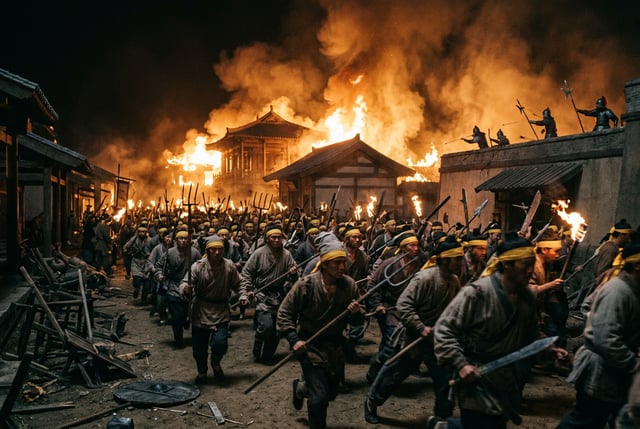
Yellow Turban Rebellion
Relationship timeline3 entries ▸
Novel · ch. 3
- He Jin§5
Advised
tried to dissuade him from summoning Dong Zhuo—"I have long known what kind of person Dong Zhuo is: pleasant in appearance but cruel at heart"; when he was not heeded, he resigned and left
- Duan Gui§10
Enemy
Drove off Duan Gui—“Duan Gui, rebel, how dare you abduct the Empress Dowager!”—and rushed to rescue Empress He from danger
- Dong Zhuo§15
Rival
Cited the stories of Yi Yin and Huo Guang to argue, “Without Yi Yin’s intentions, it would have been usurpation”; Zhuo drew his sword and tried to kill him
Inner monologues · AI-generated1 monologue ▸
- I am Lu Zhi, courtesy name Zigan. The times are pressing, and what is at stake is no longer merely one city or one army,