Dong Zhuo's Faction · Palace Attendant
Cai Yong
courtesy name 伯喈 · 132–192
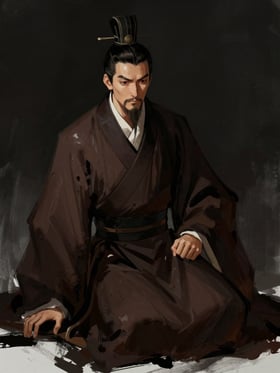
Cai Yong, a noted scholar of the late Han, urged Dong Zhuo to spare Lu Zhi and mentored younger men; the novel says he died mourning Dong Zhuo.
Life
In the novel: 6 chapters · In the Records: 3 volumes
Life?–192
Appearances
By chapter (9)
Novel
- 1
- 4
- 9
- 29
- 40
- 71
Records
- 6
- 21
- 52
- Dong Zhuo's Faction
- Hatched: dated by chapter
On the boards
Compare with someone →Where this person ranks on each board.
Historical Record
Cai Yong, courtesy name Bojie, was a court official and man of letters renowned for his talent and learning in the late Han. When Dong Zhuo plotted to depose the young emperor and install the Prince of Chenliu instead, Lu Zhi cited precedent in opposition. Dong Zhuo flew into a rage, but Cai Yong, then serving as Palace Attendant, pleaded on Lu Zhi’s behalf and saved him from execution. This episode shows that, even at the side of a powerful man, Cai Yong once interceded for a colleague. The sources do not record him taking part in the deliberations over the deposition and enthronement.
Cai Yong’s reputation also rested on his learning and his discernment of talent. The Records of the Three Kingdoms recounts that when Wang Can first arrived in Chang'an, Cai Yong was astonished at the sight of him, hurried out to welcome him with his shoes on backward, and declared that Wang Can’s talent surpassed his own. He even said that all the books and writings in his home could be entrusted to Wang Can. This account shows Cai Yong’s regard for the abilities of the younger generation, as well as the considerable fame he enjoyed among men of letters at the time. After returning from Shuofang, he also avoided enmity by taking refuge in Wu, where Gu Yong studied the zither and calligraphy under him. Cai Yong thought highly of Gu Yong, predicted that he would achieve great things, and gave him his own name, “Yong.”
His scholarly influence is also reflected in the biographies of his pupils: Ruan Yu studied under Cai Yong as a youth, and Lu Cui also learned from him. These accounts sketch a celebrated late Han scholar distinguished by his talent, his teaching lineage, and his discernment of character. However, in the Records of the Three Kingdoms passages provided here, the accounts of Cai Yong focus on court affairs, personal associations, and teaching; they do not give a detailed account of his life from beginning to end.
In the Novel
The Romance of the Three Kingdoms portrays Cai Yong as a distinguished scholar who speaks frankly, dares to remonstrate, and remains true to his feelings and principles. The novel says that while serving as a Gentleman of the Palace, he submitted a memorial about ominous portents, directly linking such signs as rainbows and hens transforming into roosters to “women and eunuchs meddling in government.” Empress Cao Jie seized on the matter to frame him, and he was dismissed to the countryside. The memorial about the portents and the episode in which he was framed are part of the novel’s narrative; they do not appear in the Records of the Three Kingdoms material provided here.
After Dong Zhuo seized power, the novel depicts him threatening to exterminate Cai Yong’s family and forcibly summoning him to court. Within a month, Cai Yong was repeatedly promoted and made Palace Attendant. The episode emphasizes how power in a time of upheaval could coerce a renowned scholar, and how Cai Yong was drawn into Dong Zhuo’s service against his will. This account of his forced recruitment comes from the novel and should not be conflated with the fragmentary biographical record.
The novel’s most tragic scene comes after Dong Zhuo is killed, when Cai Yong throws himself over the corpse and weeps. He explains that he is not betraying the Han; he is merely grateful for Dong Zhuo’s recognition of his abilities. He then asks to be tattooed and have his feet cut off as punishment, so that he may atone for his offense and continue compiling the history of the Han. Wang Yun refuses and orders him imprisoned and strangled. Ma Ridi intervenes, praising Cai Yong as a peerless talent and a man long known for his filial conduct, but still cannot save him. By setting gratitude for recognition against the integrity expected of a Han official, this episode heightens Cai Yong’s tragic image. Both his mourning Dong Zhuo and his execution by Wang Yun are inventions of the novel.
The novel also uses the story of Cai Yong welcoming Wang Can with his shoes on backward and praising his exceptional talent to portray Cai Yong’s ability to recognize talent. This accords with the Records of the Three Kingdoms, though the novel embellishes the episode with details about Wang Can reading inscriptions on steles and reconstructing a game of go. The novel further claims that Cai Yong was on good terms with Cao Cao, and recounts that Cai Yong could recite the riddle inscribed on Cao E’s stele from memory and that Cao Cao ransomed Cai Yan after she was captured. These accounts of Cai Yong’s friends and family come from the novel, not the historical materials included here.
Key Relationships
- Lu Zhi: Dong Zhuo flew into a rage over the dispute about the deposition and enthronement, and Cai Yong pleaded on Lu Zhi’s behalf, saving him from death. The historical account presents Cai Yong as coming to his aid in a moment of danger.
- Wang Can: Cai Yong recognized his talent, welcomed him with his shoes on backward, and offered him the books and writings in his home. The novel makes the scene more dramatic.
- Gu Yong: Gu Yong studied the zither and calligraphy under Cai Yong. Cai Yong praised his prospects and gave him the name “Yong.”
- Ruan Yu and Lu Cui: Both are recorded as having studied under Cai Yong, attesting to his role as a teacher.
- Dong Zhuo: The historical account says Cai Yong once urged Dong Zhuo not to execute Lu Zhi. The novel, by contrast, depicts Cai Yong as forced into Dong Zhuo’s service and later weeping at his death out of gratitude for his recognition. (The mourning of Dong Zhuo and Cai Yong’s execution as a result appear only in the novel.)
- Cao Cao and Cai Yan: Cai Yong’s friendship with Cao Cao, Cai Yan’s being his daughter, and her ransom and return to Han territory appear in the novel. (These details appear only in the novel.)
Signature Scenes
- Pleading for Lu Zhi: Dong Zhuo flew into a rage because Lu Zhi opposed the deposition of the emperor. Cai Yong spoke up on Lu Zhi’s behalf, and Lu Zhi escaped harm. In the historical account, Cai Yong was not a driving force behind Dong Zhuo’s plans to depose and install an emperor; rather, he pleaded for a colleague before a powerful man.
- Welcoming Wang Can with shoes on backward: When the young Wang Can arrived, Cai Yong hurried out to greet him with his shoes on backward and declared himself inferior to this younger scholar. The scene distills Cai Yong’s literary reputation and his gift for recognizing talent.
- Teaching Gu Yong the zither and calligraphy: Cai Yong took refuge in Wu to avoid enmity. Gu Yong studied the zither and calligraphy under him, won his approval, and received the name “Yong,” illustrating the passing down of knowledge from teacher to pupil.
- Weeping for Dong Zhuo and dying: The novel has Cai Yong weep aloud over Dong Zhuo’s corpse and offer to accept punishment in order to continue compiling the history of the Han. Wang Yun ultimately has him executed. The scene places gratitude and political loyalty in sharp conflict and forms the tragic climax of the novel’s portrayal. (This scene appears only in the novel.)
Lines
- 演 ch.9 §17→ Wang Yun📍 Chang'an
「邕雖不才,亦知大義,豈肯背國而向卓?只因一時知遇之感,不覺為之一哭,自知罪大。願公見原:倘得黥首刖足,使續成漢史,以贖其辜,邕之幸也。」
- 演 ch.40 §22
「此子有異才,吾不如也。」
- Family
- Lord & vassal
- Friends
- Enemies
- Teacher & student
- Other
Who is Cai Yong connected to?
Pick someone to see how many steps lie between them and Cai Yong.
History vs. novel
7 points · 5 novel-only
| History | Novel |
|---|---|
| Pleading on Lu Zhi's BehalfHistory only | |
When Dong Zhuo proposed deposing the young emperor, Lu Zhi argued against it on principle. Dong Zhuo grew angry and wanted to kill him, but Cai Yong intervened on his behalf, and Lu Zhi was spared. vol. 6 | — |
| Candid Remonstrance on OmensNovel only | |
| — | The novel depicts Cai Yong, serving as a Gentleman of the Palace Secretariat, submitting a memorial arguing that omens and calamities stemmed from eunuch interference in government. After Empress Cao Jie caught sight of the memorial, she used an incident to frame him, and Cai Yong was sent back to his home in the countryside. ch. 1 |
| Dong Zhuo Summons Cai YongNovel only | |
| — | After Li Ru recommended Cai Yong, Dong Zhuo summoned him. Cai Yong initially refused to obey, but Dong Zhuo threatened to exterminate his family, so he went. ch. 4 |
| Three Promotions in One MonthNovel only | |
| — | After Cai Yong answered the summons, Dong Zhuo was delighted and promoted him three times within a month, appointing him Attendant and treating him with great favor. ch. 4 |
| Welcoming Wang Can with His Shoes on BackwardNovel embellishes | |
After Emperor Xian moved west, Wang Can arrived in Chang'an. Hearing that he was outside, Cai Yong put on his shoes backward to welcome him, praised his talent, and said he would give him the books and writings in his home. vol. 21 | The novel also depicts Cai Yong welcoming the young Wang Can with his shoes on backward and saying that Wang's talent surpassed his own. It further adds that Wang Can could memorize anything at a glance and reconstruct chess games, among other abilities. ch. 40 |
| Weeping at Dong Zhuo's DeathNovel only | |
| — | After Dong Zhuo was killed, the novel depicts Cai Yong weeping out of gratitude for Dong Zhuo's recognition of his talent. Wang Yun said he should not shed tears for a traitor; Cai Yong admitted his guilt and asked to be punished to atone for it. ch. 9 |
| Wang Yun Orders Cai Yong's DeathNovel only | |
| — | Ma Midi and others pleaded for Cai Yong, but Wang Yun feared that if Cai Yong took up his brush to write history, he would leave behind criticism. He nevertheless ordered Cai Yong to be strangled in prison. ch. 9 |
- Pleading on Lu Zhi's BehalfHistory only
- History
When Dong Zhuo proposed deposing the young emperor, Lu Zhi argued against it on principle. Dong Zhuo grew angry and wanted to kill him, but Cai Yong intervened on his behalf, and Lu Zhi was spared.
vol. 6
- Candid Remonstrance on OmensNovel only
- Novel
The novel depicts Cai Yong, serving as a Gentleman of the Palace Secretariat, submitting a memorial arguing that omens and calamities stemmed from eunuch interference in government. After Empress Cao Jie caught sight of the memorial, she used an incident to frame him, and Cai Yong was sent back to his home in the countryside.
ch. 1
- Dong Zhuo Summons Cai YongNovel only
- Novel
After Li Ru recommended Cai Yong, Dong Zhuo summoned him. Cai Yong initially refused to obey, but Dong Zhuo threatened to exterminate his family, so he went.
ch. 4
- Three Promotions in One MonthNovel only
- Novel
After Cai Yong answered the summons, Dong Zhuo was delighted and promoted him three times within a month, appointing him Attendant and treating him with great favor.
ch. 4
- Welcoming Wang Can with His Shoes on BackwardNovel embellishes
- History
After Emperor Xian moved west, Wang Can arrived in Chang'an. Hearing that he was outside, Cai Yong put on his shoes backward to welcome him, praised his talent, and said he would give him the books and writings in his home.
vol. 21
- Novel
The novel also depicts Cai Yong welcoming the young Wang Can with his shoes on backward and saying that Wang's talent surpassed his own. It further adds that Wang Can could memorize anything at a glance and reconstruct chess games, among other abilities.
ch. 40
Combat
On the field
Duels, kills and executions as the texts tell them, counted separately for the Records and the Romance.
- RomanceCh. 9ExecutionWang YunLost「命將蔡邕下獄中縊死」
Events
Events (2)
Battles and events the texts place this person in, by date.
Other events
Places
- Was at
- Chang'anRecords
- Taishan CommanderyRecords
- Died at
- Chang'anRecords
Continue
Lu Zhi
Friend
Relationship timeline5 entries ▸
History · vol. 6
- Lu Zhi§6
Friend
Yong persuaded Zhuo, and Zhi was spared
History · vol. 21
- Wang Can§4
Student
Cai Yong saw him and found him remarkable, hurried to welcome him with his shoes on backward, called him the grandson of a prince, and promised to give him books from his family collection
Novel · ch. 1
Betrayer
was framed by Empress Cao Jie, convicted on another charge, and sent back to the countryside
Novel · ch. 9
- Dong Zhuo§17
Lord
“a feeling of having been recognized and appreciated at that time”—knelt over his corpse and wept bitterly
Novel · ch. 40
- Wang Can§22
Student
Put on his shoes backward to welcome him, praised his exceptional talent, and said, “I am not his equal”
Inner monologues · AI-generated1 monologue ▸
- At court, Dong Zhuo used the Son of Heaven’s youth and inability to preside over the ancestral temples as his pretext fo