Liu Biao's faction · Advisor
Wang Can
courtesy name 仲宣 · 177–217
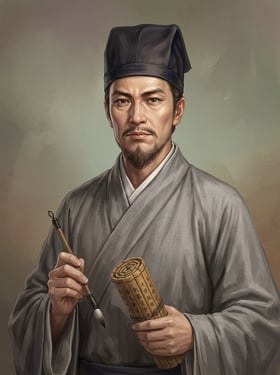
Wang Can's appearance did not match his reputation, and he was frail of body; in childhood he was short of stature. He was thin and weak in looks and short in build.

Life
In the novel: 4 chapters · In the Records: 2 volumes
Life177–217
208 CE (Jian'an 13)
210 CE (Jian'an 15)
217 CE (Jian'an 22)
- Great Epidemic of the 22nd Year of Jian'anYeKilled in action
Allegiance
- Cao Wei
- Liu Biao's faction· Undated
- Hatched: dated by chapter
- Life event
- Death
List all 2 stops
On the boards
Compare with someone →Where this person ranks on each board.
Who they were
Character profile
- Appearance
- Wang Can's appearance did not match his reputation, and he was frail of body; in childhood he was short of stature. He was thin and weak in looks and short in build.
- Character
- Wang Can was easygoing in character, of strong memory, skilled at mental calculation, quick in literary thought, and able to complete a composition as soon as he set brush to paper. Widely learned and retentive, he could recite what he had seen but once; his prose was the finest of its age, yet he was impetuous in temperament and eager to outdo others.
- Manner of speech
- Wang Can was profoundly learned, answering every question with ease; his argumentation was vigorous, forceful, and well-grounded.
- Life
- Wang Can was a native of Gaoping in Shanyang; his great-grandfather and grandfather were both among the Three Excellencies of the Han, and his father served as Chief Clerk to He Jin. He followed Emperor Xian in the westward move to Chang'an, and later attached himself to Liu Biao in Jing Province. Wang Can persuaded Liu Cong to submit to Cao Cao, and was afterward appointed by Cao Cao as an Aide to the Chancellor, granted the rank of Marquis Within the Passes, and promoted to Libationer of the Army's Counsel; after the state of Wei was founded, he was made Palace Attendant. In the spring of the twenty-second year of Jian'an, Wang Can died of illness while on campaign against Wu, aged forty-one. His two sons were implicated in the Case of Wei Feng's Conspiracy and executed, and Wang Can's line was thereby cut off.
- Anecdotes
- Wang Can was foremost among the Seven Masters of Jian'an, and was praised by Cai Yong as possessing extraordinary talent. He served as Palace Attendant of Wei, employed alongside He Qia and Du Xi, and once took part in the deliberations to honor Cao Cao as King of Wei.
Historical Record
Wang Can, courtesy name Zhongxuan, was from Gaoping, Shanyang. He came from a prominent Han dynasty family: his great-grandfather Wang Gong and grandfather Wang Chang had both attained the rank of one of the Three Excellencies, while his father, Wang Qian, served as chief aide to the General-in-Chief He Jin. When Emperor Xian moved west, Wang Can settled in Chang'an. Hearing that he had come to visit, Cai Yong hurried out to greet him with his shoes on backward. Seeing how young and slight he was, the guests were all astonished. Cai Yong, however, praised his exceptional talent, said that he himself was no match for him, and offered to entrust him with the books and writings in his home. At the age of seventeen, Wang Can was summoned by the Situ and then appointed by imperial decree as a Gentleman of the Yellow Gate, but he took up neither post because of the turmoil in the western capital. He later went to Jing Province to seek refuge with Liu Biao. Because Wang Can was unimpressive in appearance, physically frail, and easygoing in temperament, Liu Biao did not think highly of him.
After Liu Biao’s death, Wang Can urged Liu Cong to submit to Cao Cao, and Liu Cong accepted his advice. Cao Cao summoned him to serve as an aide in the Chancellor’s office and granted him the title of Marquis Within the Passes; he was later appointed Libationer in the Office of Military Strategy. After the Kingdom of Wei was established, he was appointed Palace Attendant. Wang Can was widely learned and had an excellent memory, and he was familiar with the old rites and precedents. By the end of the Han, the old ceremonial practices had fallen into disarray. When Wei established its institutions, Wang Can was often responsible for overseeing the work. Pei Songzhi’s annotations also record that Wang Can, as Palace Attendant of Wei, knew the old regulations for jade pendants, and that they were later made again according to his knowledge.
The biographies illustrate his memory by recounting how he could recite an inscription after seeing it once and could accurately recreate a Go game after the board had been disturbed. They also say that he was skilled at calculation and could compose a piece as soon as he put brush to paper. His works, including poems, rhapsodies, treatises, and discourses, numbered nearly sixty. He was close to Xu Gan, Chen Lin, Ruan Yu, Ying Yang, and Liu Zhen, and was also a celebrated literary figure of the Jian’an period. In the twenty-first year of Jian’an, Wang Can accompanied Cao Cao on the campaign against Wu. The following spring, he died of illness while on the way, at the age of forty-one. His two sons were later implicated in the Case of Wei Feng's Conspiracy and executed, leaving Wang Can without descendants.
In the Novel
Romance of the Three Kingdoms retains the image of Wang Can as a child who visited Cai Yong and won recognition for his exceptional memory and talent, and portrays him as an honored guest in Liu Biao’s circle. The historical biographies say only that Liu Biao did not think highly of Wang Can; the novel, by contrast, depicts him as being treated with greater respect in Jing Province, a clear difference between the accounts.
The novel gives particular attention to Wang Can’s urging Liu Cong to submit to Cao Cao. When Cao Cao’s army was at the gates, Wang Can supported the arguments of Fu Xun and Kuai Yue, urging Liu Cong not to hesitate on the grounds that Cao Cao’s forces were powerful and his strategies numerous, while Jing Province could not withstand him. Liu Cong ultimately surrendered Jing Province. After Cao Cao accepted his surrender, Wang Can and Fu Xun were both granted the title of Marquis Within the Passes. The historical record confirms that Wang Can urged Liu Cong to submit to Cao Cao and was granted the title, but the novel dramatizes the crisis, the debate over surrender, and the ceremony of submission.
The novel also has Wang Can present a laudatory poem at the Bronze Sparrow Terrace alongside Wang Lang, Zhong Yao, Chen Lin, and others, and depicts him discussing the elevation of Cao Cao to King of Wei with Du Xi, Wei Ji, and He Qia. These specific scenes belong to the novel’s narrative and are not recorded in the Records of the Three Kingdoms.
Key Relationships
- Cai Yong: Cai Yong recognized Wang Can’s talent, hurried out to greet him with his shoes on backward, and offered him the books and writings in his collection. This is an important early testament to Wang Can’s reputation.
- Liu Biao and Liu Cong: Wang Can once sought refuge with Liu Biao. After Liu Biao’s death, he urged Liu Cong to submit to Cao Cao, and Liu Cong accepted his advice. The novel turns this into a face-to-face appeal amid the crisis at Xiangyang and emphasizes that Fu Xun, Kuai Yue, and Wang Can were of one mind.
- Cao Cao: Cao Cao summoned Wang Can to serve as an aide in the Chancellor’s office, granted him a title, and appointed him Libationer in the Office of Military Strategy. After the Kingdom of Wei was established, Wang Can served as Palace Attendant and helped oversee institutions.
- Jian’an literati: Wang Can was close to Xu Gan, Chen Lin, Ruan Yu, Ying Yang, and Liu Zhen, and belonged to the literary circle of his time.
- Descendants: Wang Can’s two sons were implicated in the Case of Wei Feng's Conspiracy and executed, bringing the Lady Wang line to an end.
Signature Scenes
- Cai Yong hurries out to greet him: When the young Wang Can went to visit Cai Yong, Cai hurried out to welcome him with his shoes on backward. The guests were astonished by Wang Can’s small stature, but Cai Yong declared that he had exceptional talent. The novel also retains this story and adds the guests’ doubts about Cai Yong’s respectful treatment of him. (The scene as elaborated in the novel)
- Urging Liu Cong to submit to Cao Cao: The historical record says that Wang Can urged Liu Cong to submit to Cao Cao and that Liu Cong accepted his advice. The novel expands this into a debate over surrender as Cao Cao’s army approaches, with Wang Can persuading Liu Cong to decide by stressing the relative strength of the two sides and Cao Cao’s growing power.
- Memory and literary talent: Wang Can could recite an inscription after reading it, reconstruct a Go game after the board had been disturbed, calculate skillfully, and compose as soon as he put brush to paper. These accounts give vivid shape to his image as a writer with an exceptional memory.
- Death on the road and lack of descendants: He died of illness at the age of forty-one while accompanying the army on its campaign against Wu. His sons were later implicated in the Wei Feng case and executed, a tragic end to his family line.
- Poem at the Bronze Sparrow Terrace and discussion of the elevation to King of Wei: The novel depicts Wang Can participating in praise of Cao Cao and in discussions of his elevation to King of Wei. Neither scene is recorded in the Records of the Three Kingdoms. (Exclusive to the novel)
Quotes
4 lines in the books · 2 featured
「將軍自料比曹公何如?」
This line is the crux of Wang Can's counsel to Liu Cong to surrender, embodying his politically shrewd sense of the times.
「曹公兵強將勇,足智多謀。擒呂布於下邳,摧袁紹於官渡,逐劉備於隴右,破烏桓於白狼:梟除蕩定者,不可勝計。今以大軍南下荊襄,勢難抵敵。傅、蒯二君之謀,乃長策也。將軍不可遲疑,致生後悔。」
This passage analyzes Cao Cao's strength in detail, displaying Wang Can's outstanding strategic judgment.
- Friends
- Teacher & student
- Other
Who is Wang Can connected to?
Pick someone to see how many steps lie between them and Wang Can.
History vs. novel
8 points · 3 novel-only
| History | Novel |
|---|---|
| Cai Yong Welcomes Wang Can by Putting on His Shoes BackwardNovel embellishes | |
When Cai Yong heard that Wang Can had arrived at his gate, he put on his shoes backward to go out and welcome him. Seeing that Wang Can was young and short, he praised him for his exceptional talent and said that all the books and writings in his household should be entrusted to him. vol. 21 | The novel also depicts Cai Yong putting on his shoes backward to welcome Wang Can and praising his exceptional talent, while adding the guests’ astonished reactions. ch. 40 |
| Reconstructing a Game of Go After One ViewingNovel only | |
| — | The novel says that Wang Can could memorize an inscription on a roadside stele after seeing it once, reconstruct a disrupted game of Go after watching someone play, and was also skilled in mathematics, highlighting his remarkable memory and intelligence. ch. 40 |
| Liu Biao’s Treatment of Wang CanSources disagree | |
Wang Can fled the turmoil and sought refuge with Liu Biao, who did not value him highly because of his unattractive appearance, frail constitution, and easygoing temperament. vol. 21 | The novel says that after Wang Can fled to Jingxiang, Liu Biao treated him as an honored guest, contrary to the histories’ account that he was not highly regarded. ch. 40 |
| Urging Liu Cong to Submit to Cao CaoNovel embellishes | |
After Liu Biao’s death, Wang Can urged Liu Cong to submit to Cao Cao, saying that Cao Cao was exceptionally capable and that surrender would preserve the clan. Liu Cong accepted his advice. vol. 21 | Wang Can likewise urged Liu Cong to surrender, but the novel lists Cao Cao’s specific achievements, such as capturing Lü Bu and defeating Yuan Shao. It also has Liu Cong first say that he must inform his mother, after which Lady Cai appears and voices her approval. ch. 40 |
| Counsel at the Banquet on the Han RiverHistory only | |
At a banquet Cao Cao held by the Han River, Wang Can raised his cup and praised him for gathering heroes and employing both civil and military talent, declaring this to be the way of the Three Kings. vol. 21 | — |
| Offering Poems in Praise of Cao CaoNovel only | |
| — | The novel depicts Wang Can, Wang Lang, Zhong Yao, Chen Lin, and other civil officials presenting poems that praise Cao Cao’s achievements and virtue, implying that he should be granted the title of king. Cao Cao responds that he fears losing his military command and being harmed as a result. ch. 56 |
| Debating Whether to Honor Cao Cao as King of WeiNovel only | |
| — | The novel depicts Wang Can, Du Xi, Wei Kai, and He Qia discussing whether to honor Cao Cao as King of Wei. After Xun You opposes the proposal, he dies of grief and indignation. Cao Cao gives him a grand burial and abandons the plan. ch. 66 |
| Wang Can’s Impatient TemperamentHistory only | |
Du Xi met with Cao Cao alone late at night, and Wang Can grew restless, pressing him to reveal what the two had discussed. He Qia laughed and advised him that he need only attend to Cao Cao during the day and had no reason to worry. vol. 23 | — |
- Cai Yong Welcomes Wang Can by Putting on His Shoes BackwardNovel embellishes
- History
When Cai Yong heard that Wang Can had arrived at his gate, he put on his shoes backward to go out and welcome him. Seeing that Wang Can was young and short, he praised him for his exceptional talent and said that all the books and writings in his household should be entrusted to him.
vol. 21
- Novel
The novel also depicts Cai Yong putting on his shoes backward to welcome Wang Can and praising his exceptional talent, while adding the guests’ astonished reactions.
ch. 40
- Reconstructing a Game of Go After One ViewingNovel only
- Novel
The novel says that Wang Can could memorize an inscription on a roadside stele after seeing it once, reconstruct a disrupted game of Go after watching someone play, and was also skilled in mathematics, highlighting his remarkable memory and intelligence.
ch. 40
- Liu Biao’s Treatment of Wang CanSources disagree
- History
Wang Can fled the turmoil and sought refuge with Liu Biao, who did not value him highly because of his unattractive appearance, frail constitution, and easygoing temperament.
vol. 21
- Novel
The novel says that after Wang Can fled to Jingxiang, Liu Biao treated him as an honored guest, contrary to the histories’ account that he was not highly regarded.
ch. 40
- Urging Liu Cong to Submit to Cao CaoNovel embellishes
- History
After Liu Biao’s death, Wang Can urged Liu Cong to submit to Cao Cao, saying that Cao Cao was exceptionally capable and that surrender would preserve the clan. Liu Cong accepted his advice.
vol. 21
- Novel
Wang Can likewise urged Liu Cong to surrender, but the novel lists Cao Cao’s specific achievements, such as capturing Lü Bu and defeating Yuan Shao. It also has Liu Cong first say that he must inform his mother, after which Lady Cai appears and voices her approval.
ch. 40
- Counsel at the Banquet on the Han RiverHistory only
- History
At a banquet Cao Cao held by the Han River, Wang Can raised his cup and praised him for gathering heroes and employing both civil and military talent, declaring this to be the way of the Three Kings.
vol. 21
- Offering Poems in Praise of Cao CaoNovel only
- Novel
The novel depicts Wang Can, Wang Lang, Zhong Yao, Chen Lin, and other civil officials presenting poems that praise Cao Cao’s achievements and virtue, implying that he should be granted the title of king. Cao Cao responds that he fears losing his military command and being harmed as a result.
ch. 56
- Debating Whether to Honor Cao Cao as King of WeiNovel only
- Novel
The novel depicts Wang Can, Du Xi, Wei Kai, and He Qia discussing whether to honor Cao Cao as King of Wei. After Xun You opposes the proposal, he dies of grief and indignation. Cao Cao gives him a grand burial and abandons the plan.
ch. 66
- Wang Can’s Impatient TemperamentHistory only
- History
Du Xi met with Cao Cao alone late at night, and Wang Can grew restless, pressing him to reveal what the two had discussed. He Qia laughed and advised him that he need only attend to Cao Cao during the day and had no reason to worry.
vol. 23
Events
Events (3)
Battles and events the texts place this person in, by date.
Other events
- 208Liu Cong's Surrender to Cao CaoWitness
- 210Bronze Bird Terrace Inauguration CeremonyWitness
- 217Great Epidemic of the 22nd Year of Jian'anKilled in action
Places
- Was at
- Chang'anRecords
Continue
Last scene: Great Epidemic of the 22nd Year of Jian'an
Relationship timeline8 entries ▸
History · vol. 21
- Liu Cong§4
Advised
After Biao died, Can urged Biao's son Cong to submit to the Grand Ancestor
- Xu Gan§6
Friend
was on friendly terms with Xu Gan, Chen Lin, Ruan Yu, Ying Yang, and Liu Zhen
- Chen Lin§6
Friend
friends among their contemporaries, the Seven Scholars of Jian'an
- Ruan Yu§6
Friend
friends among their contemporaries, the Seven Scholars of Jian'an
Friend
friends among their contemporaries, the Seven Scholars of Jian'an
- Liu Zhen§6
Friend
friends among their contemporaries, the Seven Scholars of Jian'an
Novel · ch. 40
- Liu Cong§23
Advised
listed Cao Cao’s achievements in defeating Lü Bu, Yuan Shao, Liu Bei, and the Wuhuan, urging him to surrender quickly
Novel · ch. 66
- Cao Cao§17
Advised
Duan 17 discussed honoring Cao as King of Wei with Du Xi, Wei Kai, and He Qia
Inner monologues · AI-generated1 monologue ▸
- I am Wang Can, courtesy name Zhongxuan. I recall that when Emperor Xian moved west, Chang'an was beset by troubles, and