Records
Yuan Shao's army won
- Commanders
- Yuan Shao's armyYuan Shao
- Gongsun Zan's armyGongsun Zan
Vol. 8「紹設伏擊,大破之,復還守」
199 CE (Jian'an 4) · Yijing
In the fourth year of Jian’an (199), Yuan Shao attacked Gongsun Zan at Yijing. Gongsun Xu and Guan Jing were also on Gongsun Zan’s side. The campaign ended with Gongsun Zan’s defeat by Yuan Shao; the cited account says that Cao Cao later received word that “Gongsun Zan had already been defeated by Yuan Shao”. Afterward, Gongsun Zan’s power was wiped out, and Yuan Shao further consolidated his control over You Province and northern Hebei, shifting the balance of power among the forces in the north.
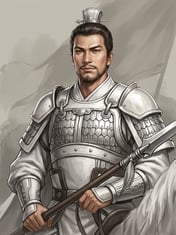 Gongsun ZanKilled in actionTalk to me
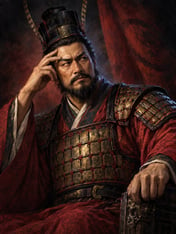 Yuan ShaoCommanderTalk to me
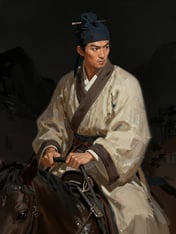 Gongsun XuWarrior
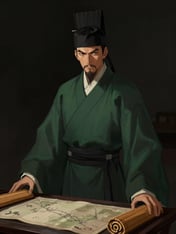 Guan JingAdvisorTalk to me
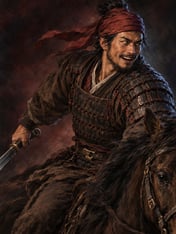 Zhang YanWarriorTalk to me
Who won, as each book tells it; commanders as the text names them.
Records
Yuan Shao's army won
Vol. 8「紹設伏擊,大破之,復還守」
Romance
Yuan Shao's army won
Ch. 21「瓚無路走,先殺妻子,然後自縊,全家都被火焚了」
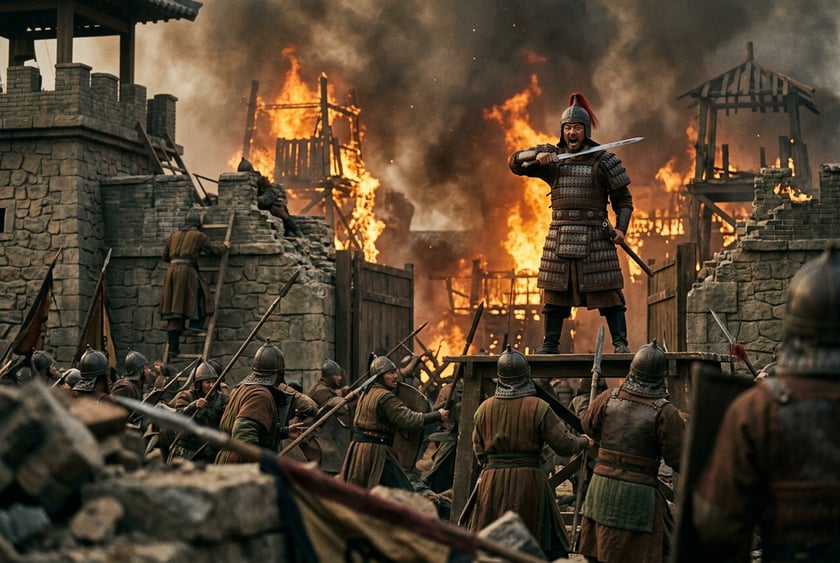
Scene
Yuan Shao’s army storms into Yijing. Clad in armor amid the raging flames, Gongsun Zan draws his sword and kills himself as the city falls.
Featured people: Gongsun Zan
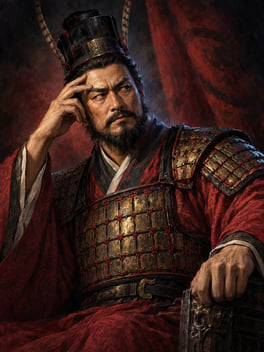
Continue
In golden helmet and golden armor, brocade robe and jade belt, he sat his horse before the ranks.
1922 people in common
1912 people in common
1902 people in common
1991 person in common
2001 person in common
2001 person in common
2011 person in common
1971 person in common
The strategic significance of the Battle of Yijing should first be considered in light of what the historical sources can confirm. The available citation is not a battlefield record, but a report in Chapter 21 of Romance of the Three Kingdoms: while Cao Cao and Liu Bei are drinking, Man Chong reports that “Gongsun Zan has already been defeated by Yuan Shao.” This at least shows that, in the novel’s narrative, Yuan Shao’s military advantage over Gongsun Zan is portrayed as sufficient to change the situation. But it does not explain the cause or duration of the fighting, or where it took place, so the full course of the campaign cannot be reconstructed from this sentence alone.
The question places the fighting in 199 and sets it against the background of Gongsun Zan's Control of Youzhou. This permits a limited strategic assessment: the outcome between Gongsun Zan and Yuan Shao was not merely a matter of victory or defeat in a local engagement, but also concerned the shifting balance of power between them in the north. This, however, is a strategic interpretation of the background stipulated in the question, not a description of the fighting supplied directly by the citation. The available material is insufficient to establish the size of either side’s forces, their supply conditions, or the political situation within You Province at the time.
From the perspective of campaign analysis, “deployment” usually includes troop positions, directions of attack, the placement of strongholds, supply routes, and the use of reserves. The cited passage provides none of these. It names only Gongsun Zan and Yuan Shao, and reports the outcome as “defeated” through Man Chong. It therefore cannot support claims that Yuan Shao used a siege, a direct assault, a blockade of supplies, or a feigned retreat, nor can any such tactic be presented as an established fact about the battlefield.
The question’s references to Gongsun Xu, Guan Jing, and Zhang Yan offer leads for understanding the possible military and political relationships involving Gongsun Zan’s side. But the citation does not mention any of the three, or say whether they took part, what positions they held, or what actions they took. A cautious analysis of deployments should treat these names as questions requiring verification, rather than automatically turning a list of people into a military order of battle. In particular, labels such as “warrior” or “strategist” supplied by the question cannot, by themselves, establish their specific command authority or battlefield positions.
The first key decision is how to interpret the summary report that Gongsun Zan “has been defeated by Yuan Shao.” It may refer to the loss of a single battle, or it may be a shorthand for a series of military setbacks and their eventual outcome; the novel does not elaborate. To equate the sentence directly with a decisive battle on a specific day and at a specific place would be to mistake gaps created by narrative compression for details of military history. An analyst may therefore discuss the decisions Gongsun Zan faced as his position deteriorated, but cannot claim to know when he chose to hold his ground, break out, or seek aid.
The second decision concerns information and judgment. The novel has Man Chong gather intelligence on Yuan Shao and report back to Cao Cao. This shows that the message’s role in the narrative is to inform Cao Cao, Liu Bei, and the reader that Gongsun Zan has been defeated; it does not show how Gongsun Zan’s side obtained intelligence, assessed the enemy, or coordinated its commanders. The analysis one can draw is that the chain of information shaped how outsiders understood the situation, not that either side actually suffered defeat because of a misjudgment. Without additional historical sources, any specific claims about Guan Jing urging battle, Zhang Yan sending reinforcements, or Gongsun Xu receiving orders should be clearly marked as unverified.
The most limited conclusion supported by the citation is that the novel’s report portrays Gongsun Zan as defeated by Yuan Shao. This does not necessarily conflict with the question’s statement that the “campaign outcome is unknown”: the former is an assessment of the situation in a single literary text, while the latter cautions that this brief report cannot confirm the campaign’s scope, the details of its final outcome, or its historical reliability. In other words, it is acceptable to report that “Romance of the Three Kingdoms says Gongsun Zan had been defeated by Yuan Shao,” but not to state without qualification that “historical evidence proves how Gongsun Zan was defeated in the Battle of Yijing.”
The citation also does not say what became of Gongsun Zan, his subordinates, or the forces in Youzhou after the defeat, nor does it explain how Yuan Shao dealt with his victory. The campaign’s impact on the balance of power in the north can therefore be described only as potential, not as confirmed by this passage: if Yuan Shao did in fact gain a decisive advantage, Gongsun Zan’s political and military room for maneuver would necessarily have contracted. But this is only a conditional inference and cannot take the place of independent research into subsequent events. For modern military history writing, distinguishing between “repercussions in the narrative” and “verifiable historical consequences” is more important than filling in an apparently complete ending.
Counterfactual analysis should not pretend to know the deployments that the Records of the Three Kingdoms does not record. A more cautious approach is to frame the questions conditionally: if Gongsun Zan still had access to outside aid and secure supplies, might prolonging his resistance have changed Yuan Shao’s assessment of the costs? If those conditions no longer held, might continuing to hold out instead have accelerated the disintegration of his power? The available citation cannot answer either question, since it gives no account of Gongsun Zan’s resources or the price Yuan Shao paid for victory; it offers only the report of the outcome, “has been defeated.”
Likewise, one can imagine that if Gongsun Xu, Guan Jing, or Zhang Yan had taken part in providing aid, coordinating forces, or organizing a retreat, the options available to Gongsun Zan’s side might have been different. But this is only a research hypothesis prompted by the list of figures in the question, and cannot be presented as an action that actually took place. A counterfactual with real explanatory value must first establish the forces involved, the terrain, the timeline, and the alliances, then compare the costs and benefits of different decisions. Given the only available citation, the most reliable conclusion remains limited: the novel records Yuan Shao defeating Gongsun Zan, but provides no material sufficient to reconstruct the details of the Battle of Yijing.