Overview
Huarong Road was a land route in Huarong County, Nan Commandery, Jing Province, during the Eastern Han dynasty. The old county seat of Huarong is southwest of present-day Qianjiang, Hubei Province, and the road ran roughly through the marshlands around present-day Jianli and Qianjiang. In the thirteenth year of Jian'an (208), after Cao Cao was defeated at Chibi and an epidemic spread through his army, he had no choice but to lead his troops northward in retreat. The route he took was Huarong Road.
History
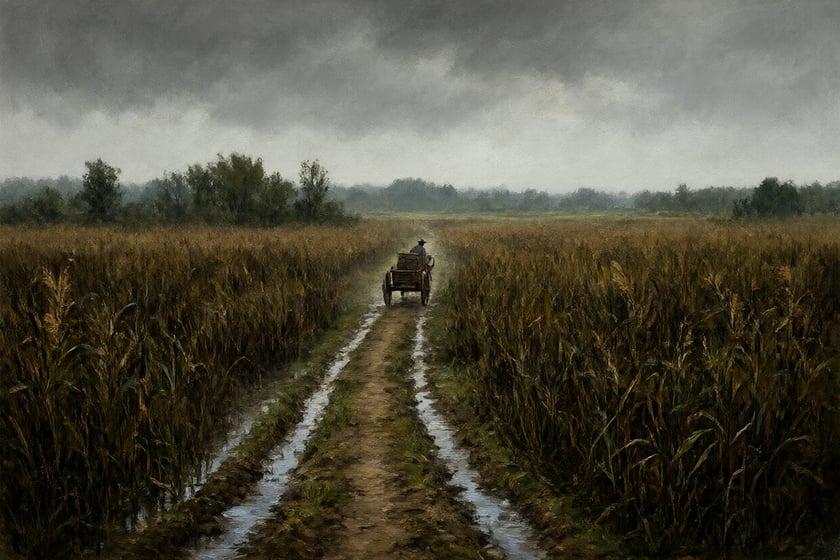
Pei Songzhi’s annotation, citing the Shanyang Gong Zaiji, records that after Liu Bei burned Cao Cao’s warships, Cao Cao led his troops back on foot along Huarong Road. They encountered mud that made the road impassable, and a strong wind began to blow. He ordered his weaker soldiers to carry grass and fill the road so that the cavalry could pass. These soldiers were trampled by men and horses and sank into the mud; many died. Once the army had escaped the perilous terrain, Cao Cao was delighted. He told his generals that Liu Bei was a rival equal to himself, but had been a step too slow in his plans: had Liu Bei set fire to the road sooner, Cao Cao and his men would have been wiped out. Liu Bei then set fire to it, but by then it was too late.
Differences Between History and Fiction
The Romance of the Three Kingdoms presents Huarong Road as the dramatic climax of the Battle of Red Cliffs. In the novel, Zhuge Liang predicts that Cao Cao will surely take Huarong Road. He makes Guan Yu pledge to carry out his orders, then has him pile firewood on a high mountain beside the narrow Huarong path and raise smoke to lure Cao Cao there. Guan Yu then takes Guan Ping, Zhou Cang, and five hundred sword-bearing guards to lie in ambush on Huarong Road. When Cao Cao reaches a fork in the road, he hears that the narrow path is more than fifty li shorter than the main road, but that it is narrow and dangerous. Seeing smoke rising from the narrow path, he applies the principle that “what appears empty is actually full,” concludes that the ambush must be on the main road, and takes Huarong Road instead. The novel also includes the episode of filling the road: after the rain, the mud makes travel difficult, so Cao Cao orders strong soldiers to carry earth and bundles of brushwood to fill the road, and orders Zhang Liao, Xu Chu, and Xu Huang to supervise them with drawn swords.
After Guan Yu blocks Cao Cao, he remembers Cao Cao’s kindness to him and his own passage through five gates while slaying their generals. Seeing Cao Cao’s troops terrified and on the verge of tears, he cannot bear to kill them, so he checks his horse and clears the way, letting Cao Cao and his generals pass. He later lets Zhang Liao go as well. When Cao Cao escaped danger, only twenty-seven horsemen remained with him. Nearing Nan Commandery at nightfall, he finally met Cao Ren, who had come to meet him. The Records of the Three Kingdoms does not record Guan Yu intercepting Cao Cao at Huarong Road and letting him go. According to the Shanyang Gong Zaiji, Cao Cao was trapped by mud and strong winds on Huarong Road; the account makes no mention of an ambush, and Liu Bei’s subsequent attempt to set fire to the road came too late.