Cao Wei · Prince of Juancheng
Cao Zhi
courtesy name 子建 · 192–232
Not to be confused with Cao Zhi (曹志, ?–288) — Cao Zhi, son of Cao Zhi and a member of the Cao Wei imperial house, inherited the title of Prince of Chen Si and was later enfeoffed as Prince of Jibei.
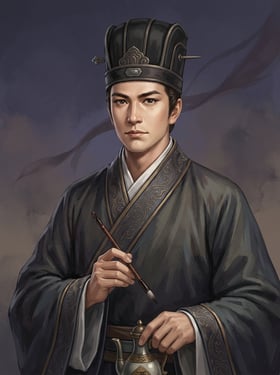
Cao Zhi was easygoing by nature, indifferent to dignified bearing, acting as he pleased without polishing his self-presentation, and drinking without restraint. Quick-witted and skilled at composition, he was once greatly loved by Cao Cao, but later Cao Cao came to distrust his cleverness; moreover he was addicted to wine, wild and unrestrained, and presumed upon his talent to indulge himself. He often nursed resentment, feeling that he held a keen instrument yet had no place to wield it.

Life
In the novel: 7 chapters · In the Records: 14 volumes
Life192–232
210 CE (Jian'an 15)
213 CE (Jian'an 18)
4 more events
217 CE (Jian'an 22)
219 CE (Jian'an 24)
220 CE (Huangchu 1)
Allegiance
- Cao Wei
- Hatched: dated by chapter
- Life event
- Death
List all 3 stops
On the boards
Compare with someone →Where this person ranks on each board.
Who they were
Character profile
- Character
- Cao Zhi was easygoing by nature, indifferent to dignified bearing, acting as he pleased without polishing his self-presentation, and drinking without restraint. Quick-witted and skilled at composition, he was once greatly loved by Cao Cao, but later Cao Cao came to distrust his cleverness; moreover he was addicted to wine, wild and unrestrained, and presumed upon his talent to indulge himself. He often nursed resentment, feeling that he held a keen instrument yet had no place to wield it.
- Manner of speech
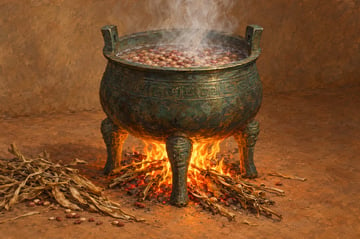
- Cao Zhi's literary talent was rich and splendid; he could answer as soon as spoken to and complete a composition the moment his brush touched paper. His memorials mostly used parallel prose in ornate array, citing the classics and pleading his own loyalty. Words flowed from his mouth ready-formed; he once used the image of "boiling beans by burning the beanstalks" to figure the mutual persecution of flesh and blood.
- Life
- In his youth Cao Zhi could already recite the Odes, the Analects, and rhapsodies and poems amounting to hundreds of thousands of words, and was skilled at composition. Cao Cao several times nearly made him his heir, but in the twenty-fourth year of Jian'an, drunk with wine, he failed to accept the command to relieve Cao Ren. After Emperor Wen ascended the throne, Cao Zhi was repeatedly re-enfeoffed, and finally died in the sixth year of Taihe, at the age of forty-one.
- Anecdotes
- Cao Zhi's writings were peerless; he once climbed the Bronze Bird Terrace and composed a rhapsody on the spot, and authored more than a hundred rhapsodies, hymns, poems, inscriptions, and miscellaneous discourses. He was Cao Cao's beloved son, and Empress Dowager Bian loved him most. He contended with Emperor Wen for the position of heir, and when the House of Wei supplanted the Han he put on mourning garb and wept in grief.
Historical Record
Cao Zhi, courtesy name Zijian, was a son of Cao Cao and Lady Bian, and the younger brother of Cao Pi and Cao Zhang. By the age of ten or more, he had memorized hundreds of thousands of words from the Book of Songs, the Analects, and works of prose and poetry, and was skilled at writing. When the Bronze Sparrow Terrace at Ye was newly completed, Cao Cao ordered his sons to ascend it and compose fu poems. Cao Zhi set brush to paper and finished his at once, greatly astonishing Cao Cao. He was easygoing by nature and paid little attention to formalities; he did not favor lavish clothing or carriages. When summoned for an audience and questioned, he often answered immediately. His talent won him favor.
In the sixteenth year of Jian’an, Cao Zhi was enfeoffed as Marquis of Pingyuan; in the nineteenth year, his fief was moved to Linzi. When Cao Cao campaigned against Sun Quan, he once ordered Cao Zhi to remain behind and guard Ye, encouraging him by recalling his own experience of becoming magistrate of Dunqiu at the age of twenty-three. Cao Zhi’s reputation for talent was great, and Ding Yi, Ding Yi, Yang Xiu, and others supported him. Cao Cao considered several times whether to make him heir. But Cao Zhi acted on impulse and without restraint, and drank without moderation, whereas Cao Pi carefully controlled and presented himself. In the end, Cao Pi was designated heir.
Cao Zhi once drove his carriage onto the imperial road and went out through the Sima Gate. Cao Cao was furious, and the officials responsible were punished. After this, Cao Cao’s favor toward Cao Zhi gradually waned. In the twenty-fourth year of Jian’an, Guan Yu besieged Cao Ren. Cao Cao appointed Cao Zhi General of the Household Who Pacifies the South and Acting General Who Conquers the Caitiffs, intending to send him to relieve the siege. Cao Zhi was drunk and unable to receive his instructions before departure, so Cao Cao abandoned the plan.
After Cao Pi took the throne, Cao Zhi was impeached for drunken insolence and for threatening an emissary. He was first demoted to Marquis of Anxiang, then transferred to the fief of Marquis of Juancheng. In the third year of Huangchu, he was made King of Juancheng; thereafter, he was successively enfeoffed at Yongqiu, Junyi, Dong’e, and other places. Cao Zhi repeatedly submitted memorials asking for a chance to prove himself, arguing for the appointment of worthy men and the bonds of kinship, and requesting that the princes be allowed to visit one another. Edicts were issued in reply, but he was never permitted to meet the emperor alone, discuss current affairs, or seek appointment. In the sixth year of Huangchu, Cao Pi passed through Yongqiu on his return from his eastern campaign, visited Cao Zhi’s palace, and increased his household allotment. In the sixth year of Taihe, Cao Zhi was enfeoffed as King of Chen, with an estate of 3,500 households. He later died of illness at the age of forty-one, leaving instructions for a simple burial.
In the Novel
Romance of the Three Kingdoms retains the image of Cao Zhi as quick-witted and outstanding in writing, while also portraying him as a favored candidate for succession in Cao Cao’s eyes. In the novel, Cao Zhi proposes building three tall terraces at the Bronze Sparrow Terrace and linking them with flying bridges, a plan Cao Cao approves. Cao Zhi’s Rhapsody on the Bronze Sparrow Terrace is then used by Kongming to provoke Zhou Yu. The line “I would seize the Two Qiaos in the southeast” becomes a literary device that prompts Zhou Yu to resolve to resist Cao Cao. This is a plot from the novel and should not be conflated with the historical account of composing a poem at the Bronze Sparrow Terrace.
The novel portrays Cao Zhi’s fall from favor in more dramatic terms: Yang Xiu advises him and drafts responses on his behalf, making Cao Cao increasingly suspicious when he learns of it. After Cao Pi takes the throne, Cao Zhi is called to account for failing to arrive promptly to mourn, and is then captured by Xu Chu and brought to Ye Commandery. Lady Bian intercedes for him, and Cao Pi orders him to compose a poem within seven steps, then gives him the theme of brotherhood and demands that he compose one on the spot. In the end, Cao Zhi is demoted to Marquis of Anxiang. The Quatrain of Seven Steps and the specific test are unique to the novel. The Records of the Three Kingdoms records Cao Zhi’s demotion, change of fief, and several later transfers, but not this test of poetic talent.
Key Relationships
Cao Zhi and Cao Pi were both brothers of the same mother and rivals for the position of heir. The historical account says that Cao Cao considered several times making Cao Zhi his heir, but because of Cao Zhi’s conduct and drinking, Cao Pi was ultimately chosen. After Cao Pi took the throne, Cao Zhi was demoted but, because of the intervention of Empress Dowager Bian, was not put to death, and was later enfeoffed as a king. The novel condenses the political conflict between the brothers into The Quatrain of Seven Steps, using “beans boiled over burning bean stalks” to express the destruction of kin by kin. This famous scene and poem appear in this material only in the novel.
Cao Zhi’s literary circle was also tied to the struggle over the succession. Ding Yi, Ding Yi, and Yang Xiu were among his supporters. The historical account explicitly says that Ding Yi and others served as his allies and that Yang Xiu associated with him. The novel goes further, depicting Yang Xiu as drafting responses for Cao Zhi and teaching him how to deal with Cao Cao, making their relationship a key cause of Cao Zhi’s loss of favor. Xing Yong once served as steward of Cao Zhi’s household. He upheld proper conduct and refused to yield, and he and Cao Zhi did not get along. Liu Zhen also wrote to Cao Zhi urging him to treat Xing Yong with due courtesy.
Defining Scenes
The Rhapsody on the Bronze Sparrow Terrace is a defining scene in Cao Zhi’s early rise to fame for his talent. The historical account says he was ordered to ascend the terrace and compose a poem, which he completed at once, greatly astonishing Cao Cao. The novel, by contrast, expands the Bronze Sparrow Terrace into a grand architectural project and makes the Rhapsody on the Bronze Sparrow Terrace serve to inflame the Sun-Liu alliance against Cao Cao.
Another scene that reveals the change in Cao Zhi’s circumstances is his drunken failure to take the opportunity to relieve Cao Ren. The historical account says Cao Cao gave him a general’s appointment and intended to send him on campaign, but Cao Zhi was too drunk to receive his orders. Cao Cao regretted this and called off the expedition. This stands in sharp contrast to The Quatrain of Seven Steps in the novel: the historical account emphasizes the mistakes, disappointments, and constraints that accompanied Cao Zhi’s talent, while the novel makes his literary skill an immediate means of escaping danger.
In his later years, Cao Zhi was repeatedly transferred between fiefs and could not obtain an audience. The historical account describes his despondency as “deep despair,” and records that he died of illness and left instructions for a simple burial. His song Zhuanpeng (“Tumbleweed”) also uses the image of drifting without a place to settle to express his hardship. The contrast between his life at the Bronze Sparrow Terrace, where he composed a poem in an instant, and his later years in a princely fief, where he had no way to secure a position, forms the deepest tragedy of Cao Zhi’s character.
Quotes
4 lines in the books · 2 featured
「願乞題目。」
This line leads into The Quatrain of Seven Steps, the concentrated expression of Cao Zhi's talent, celebrated through the ages.
「願即命題。」
This line, together with the preceding one, forms the opening of The Quatrain of Seven Steps, showing his composure and quick wit in the face of danger.
- Family
- Lord & vassal
- Friends
- Enemies
- Teacher & student
- Other
Who is Cao Zhi connected to?
Pick someone to see how many steps lie between them and Cao Zhi.
History vs. novel
8 points · 3 novel-only
| History | Novel |
|---|---|
| Left to Guard YeHistory only | |
When Cao Cao set out to campaign against Sun Quan, he left Cao Zhi to guard Ye and encouraged him with an account of his own experience at the age of twenty-three. vol. 19 | — |
| Drunk and Unable to Take CommandHistory only | |
When Cao Ren was besieged by Guan Yu, Cao Cao planned to send Cao Zhi to his relief. Cao Zhi was drunk and unable to accept the order, so Cao Cao regretted his decision and canceled the dispatch. vol. 19 | — |
| The Succession StruggleNovel embellishes | |
Cao Zhi was talented, and Cao Cao hesitated for a time over whom to name as his successor. Ding Yi, Ding Yi, and Yang Xiu supported Cao Zhi, but Cao Pi countered with his own methods and was ultimately designated heir. vol. 19 | The novel says that, following Jia Xu's advice, Cao Pi presented himself as respectful and won over the attendants. Cao Cao therefore judged Cao Zhi less sincere than Cao Pi and ultimately named Cao Pi Named Heir Apparent. ch. 68 |
| Proposal for the Bronze Sparrow TerraceNovel only | |
| — | Cao Zhi proposed building three towers at the Bronze Sparrow Terrace and linking them with flying bridges. Cao Cao praised the idea. ch. 34 |
| Yang Xiu's Advice on Leaving the CityNovel only | |
| — | Cao Cao ordered Cao Pi and Cao Zhi to leave the city, but secretly instructed the gatekeeper to stop them. Yang Xiu told Cao Zhi to claim he was acting on the king's order and to execute anyone who blocked him. Cao Zhi followed the advice, earning Cao Cao's approval; when Cao Cao learned Yang Xiu had prompted him, however, he was displeased. ch. 72 |
| Assessment of Cao Zhi on His DeathbedNovel embellishes | |
The historical account records that Cao Zhi gradually lost Cao Cao's trust because he was willful, failed to spur himself on, and drank without restraint; Cao Pi was ultimately designated heir. vol. 19 | The novel says that, as Cao Cao made his final arrangements, he described Cao Zhi as vain and insincere, and given to drunken excess, and therefore did not name him as his successor. ch. 78 |
| The Quatrain of Seven StepsNovel only | |
| — | Cao Pi ordered Cao Zhi to compose a poem on a painting within seven steps, threatening punishment if he failed. Cao Zhi composed one on the spot; the novel then says he composed another poem on the theme of brotherhood and was thereby spared death. ch. 79 |
| Enfeoffed as Prince of JuanchengHistory only | |
Cao Zhi was first reappointed as Marquis of Juancheng, and in the third year of Huangchu was made Prince of Juancheng, with a fief of 2,500 households. vol. 19 | — |
- Left to Guard YeHistory only
- History
When Cao Cao set out to campaign against Sun Quan, he left Cao Zhi to guard Ye and encouraged him with an account of his own experience at the age of twenty-three.
vol. 19
- Drunk and Unable to Take CommandHistory only
- History
When Cao Ren was besieged by Guan Yu, Cao Cao planned to send Cao Zhi to his relief. Cao Zhi was drunk and unable to accept the order, so Cao Cao regretted his decision and canceled the dispatch.
vol. 19
- The Succession StruggleNovel embellishes
- History
Cao Zhi was talented, and Cao Cao hesitated for a time over whom to name as his successor. Ding Yi, Ding Yi, and Yang Xiu supported Cao Zhi, but Cao Pi countered with his own methods and was ultimately designated heir.
vol. 19
- Novel
The novel says that, following Jia Xu's advice, Cao Pi presented himself as respectful and won over the attendants. Cao Cao therefore judged Cao Zhi less sincere than Cao Pi and ultimately named Cao Pi Named Heir Apparent.
ch. 68
- Proposal for the Bronze Sparrow TerraceNovel only
- Novel
Cao Zhi proposed building three towers at the Bronze Sparrow Terrace and linking them with flying bridges. Cao Cao praised the idea.
ch. 34
- Yang Xiu's Advice on Leaving the CityNovel only
- Novel
Cao Cao ordered Cao Pi and Cao Zhi to leave the city, but secretly instructed the gatekeeper to stop them. Yang Xiu told Cao Zhi to claim he was acting on the king's order and to execute anyone who blocked him. Cao Zhi followed the advice, earning Cao Cao's approval; when Cao Cao learned Yang Xiu had prompted him, however, he was displeased.
ch. 72
- Assessment of Cao Zhi on His DeathbedNovel embellishes
- History
The historical account records that Cao Zhi gradually lost Cao Cao's trust because he was willful, failed to spur himself on, and drank without restraint; Cao Pi was ultimately designated heir.
vol. 19
- Novel
The novel says that, as Cao Cao made his final arrangements, he described Cao Zhi as vain and insincere, and given to drunken excess, and therefore did not name him as his successor.
ch. 78
- The Quatrain of Seven StepsNovel only
- Novel
Cao Pi ordered Cao Zhi to compose a poem on a painting within seven steps, threatening punishment if he failed. Cao Zhi composed one on the spot; the novel then says he composed another poem on the theme of brotherhood and was thereby spared death.
ch. 79
- Enfeoffed as Prince of JuanchengHistory only
- History
Cao Zhi was first reappointed as Marquis of Juancheng, and in the third year of Huangchu was made Prince of Juancheng, with a fief of 2,500 households.
vol. 19
Events
Events (10)
Battles and events the texts place this person in, by date.
Battles
Other events
- 210Cao Cao Builds the Bronze Bird TerraceAdvisor
- 210Bronze Bird Terrace Inauguration CeremonyWitness
- 213Cui Yan Publicly Endorses Cao Pi as HeirWitness
- 217Succession Struggle Between Cao Pi and Cao ZhiVictim
- 217Cao Zhi's Sima Gate IncidentVictim
- 217Cao Pi Named Heir Apparent
- 219Death of Yang XiuVictim
- 220Execution of Ding Yi and Ding YiWitness
All 9
- 220The Quatrain of Seven StepsVictim
Famous objects

Places
Continue
Death of Yang Xiu
Relationship timeline10 entries ▸
History · vol. 2
- Cao Pi§35
Sibling
Marquis of Juancheng Zhi was installed as King of Juancheng
History · vol. 12
- Cui Yan§10
Kin
Zhi was married to the daughter of Yan's elder brother.
History · vol. 16
- Su Ze§12
Friend
On hearing that the Wei house had replaced Han, all donned mourning clothes and wept bitterly, matching Ze in their observance
History · vol. 19
History · vol. 20
Kin
born to Empress Dowager Bian
Novel · ch. 68
- Cao Cao§23
Kin
Third son; Cao initially wanted to make him his heir, but later suspected he was crafty
All 10
Loading…
Inner monologues · AI-generated3 monologues ▸
- Now I am made Prince of Chen, with an estate of 3,500 households. I have the title and the households, but whenever I as
- I once believed that a torrent of inspiration was enough to reveal my heart, and that my writing, which could win my fat
- I often think back to my youth. Within our household, my father, Cao Gong, grew ever more esteemed, while I was merely o