Cao Wei · Secretary
Wang Jing
courtesy name 彦纬 · –260
Not to be confused with Wang Jing (王靖) — Wang Jing, Wu's governor of Guangling, was reprimanded after a local revolt and executed when his plan to return north was exposed.
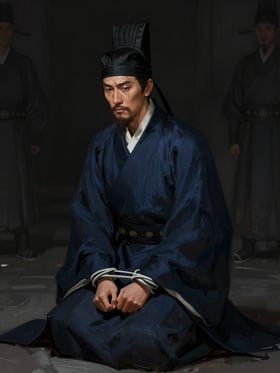
Wang Jing remonstrated with Cao Mao to move slowly and plan carefully, and would not join Wang Chen and Wang Ye in turning informer. When he was bound and thrown into prison, he knocked his head on the ground and wept, blaming himself: "An unfilial son has brought calamity upon his loving mother".

Life
In the novel: 3 chapters · In the Records: 9 volumes
Life?–260
238 CE (Jingchu 2)
255 CE (Zhengyuan 2)
- Battle of TaoxiTaoxiCommander
260 CE (Jingyuan 1)
- Cao Wei· Undated
- Life event
- Death
List all 3 stops
On the boards
Compare with someone →Where this person ranks on each board.
Who they were
Character profile
- Character
- Wang Jing remonstrated with Cao Mao to move slowly and plan carefully, and would not join Wang Chen and Wang Ye in turning informer. When he was bound and thrown into prison, he knocked his head on the ground and wept, blaming himself: "An unfilial son has brought calamity upon his loving mother".
- Manner of speech
- Wang Jing once cited the story of Duke Zhao of Lu, and swore to himself, "When the sovereign is troubled, the minister is disgraced; when the sovereign is disgraced, the minister dies".
- Life
- After the defeat at Taoxi in the second year of Zhengyuan, Wang Jing led the remnant of his troops, a hundred horsemen, in retreat to hold Didao. In the fifth year of Ganlu, when the Duke of Gaogui Village, Cao Mao, plotted to kill Sima Zhao, Wang Jing, being upright, did not report it, and afterward was arrested and imprisoned, and executed together with his family.
- Anecdotes
- Wang Jing was a native of Qinghe, who served as Inspector of Yong Province and Colonel Director of Retainers, and during the Ganlu era held the office of Master of Writing. He was reckoned, together with Xu Yun, among the famous scholars of Jizhou.
Historical Record
Wang Jing, courtesy name Yanwei, was from Qinghe and was known alongside Xu Yun as one of Jizhou’s eminent men. Cui Lin recognized and promoted him from among the common people, and Wang Jing gradually gained a reputation as a man of distinction. He served successively as provincial inspector of two provinces and as Commandant of Sili Province, and during the Ganlu era he served as a minister. Wang Jing came from a farming family. When he first became a commandery governor, his mother urged him to know when to stop once he had attained a rank worth two thousand shi, fearing that excessive success in office would bring ill fortune. Wang Jing did not heed her and continued to advance in his career. The Pei commentary also records that he once served as Administrator of Jiangxia. Cao Shuang asked him to take silk to Wu territory for trade; Wang Jing did not open the attached letter, and afterward resigned and returned home. When Cao Shuang heard of it, he did not punish him.
In the second year of Zhengyuan, Jiang Wei led an army to invade Didao, and Wang Jing, as provincial inspector of Yongzhou, went out to meet him. The Wei army suffered a crushing defeat at Taoxi. Wang Jing crossed the Tao River and withdrew into Didao city, while the remaining troops scattered. The Shu army besieged the city, and Chen Tai joined reinforcements including Deng Ai and went to lift the siege. Jiang Wei eventually withdrew, allowing the soldiers inside Didao to escape. An imperial edict mourned and consoled the soldiers killed or captured at Taoxi, stating that the casualties numbered in the thousands. The biography of Jiang Wei in the Records of the Three Kingdoms separately records that tens of thousands of Wang Jing’s troops died in the Tao River.
In the fifth year of Ganlu, Cao Mao, Duke of Gaogui Township, summoned Wang Jing, Wang Chen, and Wang Ye to the palace and told them he intended to campaign against Sima Zhao. Taking the defeat of Duke Zhao of Lu at the hands of the Ji clan as a warning, Wang Jing pointed out that the Sima clan had held power for a long time and that the palace guards were too few, urging Cao Mao to act with caution. Cao Mao nevertheless decided to proceed. Wang Chen and Wang Ye informed Sima Zhao, while Wang Jing, out of uprightness, did not go with them. Afterward, the Empress Dowager ordered the arrest of Wang Jing and his family. Wang Jing was executed, and his mother was killed as well. The Chunqiu of Han and Jin, quoted in the Pei commentary, records that when Wang Jing took his leave of his mother, she responded calmly, saying that her only fear was dying in an unworthy manner. Later, Emperor Wu of Jin issued an edict granting Wang Jing’s grandson the post of Gentleman of the Interior, praising Wang Jing for holding fast to his principles.
In the Novel
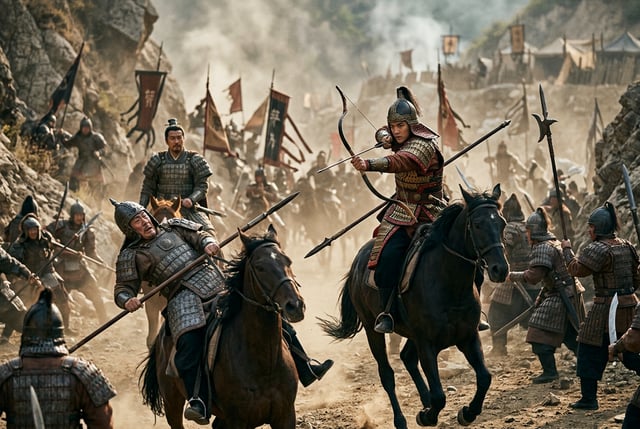
The Romance of the Three Kingdoms portrays Wang Jing as a loyal and upright Wei official who dared to offer frank remonstrance. In the Battle of Taoxi, the novel has him lead seventy thousand troops against Jiang Wei. Jiang Wei feigns retreat to lure the enemy in, while Zhang Yi and Xiahou Ba attack from both flanks, routing the Wei army. Wang Jing escapes back to Didao with only a hundred or so cavalrymen and shuts the gates to hold the city. This broadly accords with the historical account that he “withdrew to defend Didao” and then awaited reinforcements, but the novel adds tactical details such as forming up with the river behind them, luring the enemy, and attacking from both flanks, as well as a battlefield strewn with corpses for several li and more than ten thousand heads taken. These specific depictions are literary embellishments.
After the siege of Didao was lifted, the novel has Wang Jing welcome Chen Tai and Deng Ai into the city and host a banquet in their honor, then draws him into the palace events surrounding Cao Mao’s death. When Cao Mao decides to send out troops, Wang Jing again tries to dissuade him, pointing out that the palace guards are few and weak. As Cao Mao leaves the palace, Wang Jing throws himself before the imperial carriage and weeps as he remonstrates. These words and actions accord with the main historical account: Wang Jing urged Cao Mao to act cautiously and did not join Wang Chen and Wang Ye in informing against him. But the scene of Wang Jing weeping before the carriage is an addition in the novel.
After Cao Mao is killed, Wang Jing berates Jia Chong to his face and is then arrested. The novel elaborates on a scene in the Court of Judicial Review in which Wang Jing sees his mother, weeps bitterly, and blames himself, while she smiles and comforts him. It then depicts mother and son being led to execution at the eastern marketplace, with the entire city in tears. Historical accounts do record that Wang Jing and his family were arrested and that Wang Jing was executed, and they preserve the account of his mother’s calm response. The weeping exchange and the specific dramatic staging of mother and son being executed together, however, are inventions of the novel.
Key Relationships
- Cao Mao: Their relationship was that of ruler and subject. Cao Mao secretly summoned Wang Jing to discuss a campaign against Sima Zhao. Wang Jing urged him to proceed cautiously, citing the disparity in power and military strength. Wang Chen and Wang Ye chose to inform against Cao Mao, while Wang Jing did not go with them. The historical account records Wang Jing’s position; the novel further has him declare his loyalty with the words, “When the ruler is troubled, the subject is disgraced; when the ruler is disgraced, the subject dies.”
- Jiang Wei: An adversary on the Taoxi battlefield. Jiang Wei routed Wang Jing’s forces and besieged Didao; Chen Tai and the others later lifted the siege. The novel expands the defeat into a dramatic battle involving a feigned retreat and attacks from both flanks.
- His mother: She once advised Wang Jing that attaining a rank worth two thousand shi was reason enough to know when to stop, but he did not heed her. When disaster came, she remained composed. The novel turns the mother and son’s mutual comfort before execution into a scene highlighting family bonds and moral integrity.
- Chen Tai and Deng Ai: Both took part in the relief of Didao. The historical account says that Chen Tai joined forces with Deng Ai and others, compelling Jiang Wei to withdraw; the novel additionally depicts Wang Jing welcoming them into the city and hosting a banquet for them.
Signature Scenes
- Defeat at Taoxi and retreat to Didao: After losing the battle at Taoxi, Wang Jing withdrew with his remaining troops to defend Didao, where Jiang Wei laid siege to the city. The Shu army withdrew after Chen Tai and the other reinforcements arrived. The historical record remembers Wang Jing through this defeat and his experience defending the city as a frontier commander.
- Citing the old affair of Duke Zhao of Lu to admonish Cao Mao: When Cao Mao resolved to send out troops, Wang Jing reminded him that Duke Zhao of Lu had lost his state because he could not bear to act against the Ji clan. He also pointed out that the court and the people beyond it had long since submitted to the Sima clan, and that the palace guards could not be relied upon. The historical account thus portrays him as someone who spoke frankly in remonstrance despite knowing how perilous the situation was.
- Mother and son facing execution: The historical account records that Wang Jing was executed and his mother was also put to death, and the Pei commentary preserves her calm reply: “Who does not die?” The novel expands this into a full scene of mother and son meeting death with smiles as the people weep. (Unique to the novel)
Quotes
10 lines in the books · 3 featured
「不可:昔魯昭公不忍季氏,敗走失國;今重權已歸司馬氏久矣,內外公卿,不顧順逆之理,阿附奸賊,非一人也。且陛下宿衛寡弱,無用命之人。陛下若不隱忍,禍莫大焉。且宜緩圖,不可造次。」
These words display Wang Jing's clear-eyed grasp of the situation and his loyal remonstrance with Cao Mao.
「主憂臣辱,主辱臣死,敢懷二心乎?」
'When the lord is troubled the minister is disgraced; when the lord is disgraced the minister dies' is a classic tenet of the ruler-minister ethic, embodying Wang Jing's loyalty and righteousness.
「逆賊安敢弒君耶!」
This line is Wang Jing's furious denunciation in the face of Sima Zhao's regicidal atrocity, of great historical impact.
- Family
- Lord & vassal
- Enemies
- Teacher & student
- Other
Who is Wang Jing connected to?
Pick someone to see how many steps lie between them and Wang Jing.
History vs. novel
6 points
| History | Novel |
|---|---|
| Battle at the Tao RiverNovel embellishes | |
Jiang Wei and Wang Jing fought at the Tao River, and Wang Jing retreated in defeat to Didao. Chen Tai and Wang Jing agreed to intercept Jiang Wei on his way back, but Jiang Wei learned of the plan and withdrew. vol. 22 | The novel says that Wang Jing underestimated Jiang Wei, who had drawn up his troops with their backs to the river. Jiang Wei feigned defeat to lure the enemy in, then attacked from both sides with Zhang Yi and Xiahou Ba. The Wei army was routed, and Wang Jing escaped back to Didao with only a hundred cavalrymen. ch. 110 |
| Informing on Cao Mao and remaining loyalNovel embellishes | |
After Cao Mao left the palace, Wang Chen and Wang Ye hurried to inform Sima Zhao. Wang Jing refused to go with them; the histories say that he “stood firm in his integrity and did not go.” vol. 4 | Wang Chen and Wang Ye discussed going to inform on Cao Mao. Wang Jing angrily rebuked them, declaring that he would not betray Cao Mao, and the two then left on their own. ch. 114 |
| Urging him not to send troopsNovel embellishes | |
Wang Jing pointed out that Sima Zhao had held power for a long time and that the palace guards were weak, and urged Cao Mao to act with caution. Cao Mao did not heed him and still decided to act. vol. 4 | Wang Jing likewise urged Cao Mao to bide his time. When Cao Mao left the palace, Wang Jing also threw himself before the carriage and tearfully remonstrated, saying that this was like driving sheep into a tiger’s jaws. Cao Mao nevertheless insisted on setting out. ch. 114 |
| Mother and son facing executionNovel embellishes | |
When Wang Jing was arrested, he bade farewell to his mother. She remained composed and said with a smile that she would rather go to her death with him than see him die without due cause. vol. 9 | The novel says that Wang Jing saw his mother being brought in custody to the Court of Judicial Review and wept, saying that he had brought suffering upon her. The next day, mother and son faced execution smiling, and the people throughout the city wept for them. ch. 114 |
| Wang Jing’s background and official careerHistory only | |
Wang Jing, courtesy name Yanwei, was from Qinghe and was known alongside Cui Yun as one of Jizhou’s eminent men. He once served as governor of two provinces and as commandant of Sili Province, and was later executed over the affair of Cao Mao. vol. 9 | — |
| Cao Shuang’s silk transactionHistory only | |
When Wang Jing served as governor of Jiangxia, Cao Shuang once ordered him to send twenty bolts of silk to Wu for trade. Without opening the letter, Wang Jing resigned and returned home. His mother beat him fifty times for abandoning his post without authorization, and Cao Shuang did not pursue the matter further. vol. 9 | — |
- Battle at the Tao RiverNovel embellishes
- History
Jiang Wei and Wang Jing fought at the Tao River, and Wang Jing retreated in defeat to Didao. Chen Tai and Wang Jing agreed to intercept Jiang Wei on his way back, but Jiang Wei learned of the plan and withdrew.
vol. 22
- Novel
The novel says that Wang Jing underestimated Jiang Wei, who had drawn up his troops with their backs to the river. Jiang Wei feigned defeat to lure the enemy in, then attacked from both sides with Zhang Yi and Xiahou Ba. The Wei army was routed, and Wang Jing escaped back to Didao with only a hundred cavalrymen.
ch. 110
- Informing on Cao Mao and remaining loyalNovel embellishes
- History
After Cao Mao left the palace, Wang Chen and Wang Ye hurried to inform Sima Zhao. Wang Jing refused to go with them; the histories say that he “stood firm in his integrity and did not go.”
vol. 4
- Novel
Wang Chen and Wang Ye discussed going to inform on Cao Mao. Wang Jing angrily rebuked them, declaring that he would not betray Cao Mao, and the two then left on their own.
ch. 114
- Urging him not to send troopsNovel embellishes
- History
Wang Jing pointed out that Sima Zhao had held power for a long time and that the palace guards were weak, and urged Cao Mao to act with caution. Cao Mao did not heed him and still decided to act.
vol. 4
- Novel
Wang Jing likewise urged Cao Mao to bide his time. When Cao Mao left the palace, Wang Jing also threw himself before the carriage and tearfully remonstrated, saying that this was like driving sheep into a tiger’s jaws. Cao Mao nevertheless insisted on setting out.
ch. 114
- Mother and son facing executionNovel embellishes
- History
When Wang Jing was arrested, he bade farewell to his mother. She remained composed and said with a smile that she would rather go to her death with him than see him die without due cause.
vol. 9
- Novel
The novel says that Wang Jing saw his mother being brought in custody to the Court of Judicial Review and wept, saying that he had brought suffering upon her. The next day, mother and son faced execution smiling, and the people throughout the city wept for them.
ch. 114
- Wang Jing’s background and official careerHistory only
- History
Wang Jing, courtesy name Yanwei, was from Qinghe and was known alongside Cui Yun as one of Jizhou’s eminent men. He once served as governor of two provinces and as commandant of Sili Province, and was later executed over the affair of Cao Mao.
vol. 9
- Cao Shuang’s silk transactionHistory only
- History
When Wang Jing served as governor of Jiangxia, Cao Shuang once ordered him to send twenty bolts of silk to Wu for trade. Without opening the letter, Wang Jing resigned and returned home. His mother beat him fifty times for abandoning his post without authorization, and Cao Shuang did not pursue the matter further.
vol. 9
Combat
On the field
Duels, kills and executions as the texts tell them, counted separately for the Records and the Romance.
Records
- Duels
- 0W 0L 0D
DeathKilled by an unnamed handExecution · Juan 9
Romance
- Duels
- 0W 0L 0D
DeathKilled by Sima ZhaoExecution · Ch. 114
- RecordsJuan 9ExecutionLost「甘露中爲尚書,坐高貴鄉公事誅」
- RomanceCh. 114ExecutionSima ZhaoLost「王經母子含笑受刑」
Battles in command
Battles this person commanded in, with the outcome as each text tells it.
- Records
- 0W 1L 0D 0 undecided
- Romance
- 0W 1L 0D 0 undecided
- Records255Battle of TaoxiLostvs Shu armyJuan 44「大破魏雍州刺史王經於洮西,經眾死者數萬人」
- Romance255Battle of TaoxiLostvs Shu troopsCh. 110「眾將一齊奮力殺回,魏兵大敗」
Events
Events (5)
Battles and events the texts place this person in, by date.
Battles
- 238Jiang Wei's Northern ExpeditionsCommander
- 255Battle of TaoxiCommander
Other events
- 249The Sima Clan's Seizure of Power
- 260Cao Mao Rides Out in His Chariot to BattleAdvisor
- 260Ganlu IncidentVictim
Places
- Was at
- DidaoRecords
- Governed
- Sili ProvinceRecords
- JiangxiaRecords
Continue
Jiang Wei's Northern Expeditions
Relationship timeline3 entries ▸
History · vol. 4
- Cao Mao§65
Advised
urged the emperor not to act rashly; afterward, for being upright and not reporting it, [he] was arrested and handed over to the Minister of Justice
Novel · ch. 110
- Jiang Wei§15
Fights
fought at the Tao River; the formation with its back to the river was broken, and they fled in defeat to Didao
Novel · ch. 114
- Cao Mao§11
Lord
urged the emperor to proceed slowly; did not follow the proposal to confess; Zhong died at the eastern marketplace
Inner monologues · AI-generated3 monologues ▸
- I am Wang Jing, courtesy name Yanwei. Now I am held in the custody of the Minister of Justice, and my mother has been br
- I am Wang Jing, courtesy name Yanwei, from Qinghe. In my youth, I was known as a distinguished scholar of Jizhou. I late
- I am Wang Jing, courtesy name Yanwei. The materials available today do not give a detailed account of my family backgrou