Cao Wei · Minister of Works
Cui Lin
courtesy name 德儒 · –244
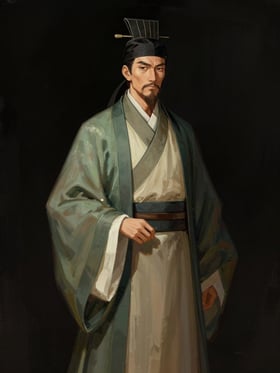
Cui Lin was a Cao Wei official known for his frugality, integrity, and rise from Sili commandant to grand minister.
Life
In the Records: 6 volumes
Life?–244
Appearances
By chapter (6)
Records
- 3
- 4
- 12
- 22
- 23
- 24
- Cao Wei· Undated
On the boards
Compare with someone →Where this person ranks on each board.
Historical Record
Cui Lin, courtesy name Deru, was from Dongwucheng in Qinghe. He was an official of Cao Wei and a younger cousin of Cui Yan. In his youth, Cui Lin was little known, and many members of his clan looked down on him. Only Cui Yan recognized his exceptional potential, calling him a man who would “come into his own late.” After Cao Cao pacified Jizhou, he appointed Cui Lin county magistrate of Wu County. His family was too poor to own a carriage or horses, so he traveled to take up his post on foot. When Cao Cao campaigned against Huguan, he asked which local official governed most virtuously. Zhang Zhi, Inspector of Bing Province, recommended Cui Lin, who was then promoted to chief clerk of Jizhou and later served as an aide in the Secretariat and as a staff officer in the Chancellor’s office. After the establishment of the state of Wei, Cui Lin gradually rose to become Palace Censor-in-Chief. When Cao Pi took the throne, he appointed him Minister of the Secretariat, and Cui Lin subsequently became Inspector of You Province.
While Cui Lin was Inspector of You Province, Wu Zhi, General of the Northern Army, commanded military affairs in Hebei. Wang Xiong, Administrator of Zhuo Commandery, believed that Cui Lin had failed to pay his respects to Wu Zhi and even warned Cui Lin’s subordinates that he might be punished for it. Cui Lin, however, refused to disrupt the frontier with formal courtesies. He believed that You Province bordered the Hu tribes and that quiet governance was essential. During his year in office, incursions along the frontier gradually ceased. Later, he was demoted to Administrator of Hejian for “failing to serve his superiors,” and many advocates of public opinion felt he had been treated unfairly.
Cui Lin later became Grand Herald, handling affairs concerning the arrival of envoys from the Western Regions. Concerned that impostors among the envoys might waste resources on escorts and receptions, he sent a letter to Dunhuang setting out his principles and citing precedents from earlier dynasties for the varying levels of hospitality shown to foreign states, so that a consistent policy could be established. After Emperor Ming took the throne, Cui Lin served successively as Minister of Palace Attendance and Colonel-Director of Retainers. In the commanderies under his jurisdiction, he abolished illegally established surplus posts. He governed with sincerity and adhered to the essentials, and people often remembered him fondly after he left office.
Cui Lin also took part in discussions of court institutions and ritual. Commenting on the performance evaluation system proposed by Liu Shao, he argued that the system of the time was not deficient; what mattered was consistent adherence to the law and appointing the right people. In a debate over sacrifices to Confucius, he also argued that the Marquis Who Honored the Sage already performed sacrifices by imperial command, and that a separate sacrificial rite should not be established for someone outside his clan. In the first year of the Jingchu era, Meng Kang recommended him for the position of chief minister, praising his loyalty, integrity, frugality, and restraint. The following year, Cui Lin was promoted from Colonel-Director of Retainers to Minister of Works and enfeoffed as Marquis of Anyang Village. The Records of the Three Kingdoms records that he was the first of the Three Excellencies to be enfeoffed as a marquis. In the fifth year of the Zhengshi era, he died and was posthumously given the title Marquis Xiao. His son, Cui Shu, inherited his title.
In the Novel
This person does not appear in the novel. The available material contains no episodes in which Romance of the Three Kingdoms or other novels portray Cui Lin, so no fictional words, deeds, battles, or dramatic conflicts with other figures can be attributed to him. Although the historical Cui Lin served through several reigns of Cao Wei and rose to the rank of Minister of Works, these events are recorded in the Records of the Three Kingdoms and cannot therefore be recast as episodes from the novel.
Key Relationships
Cui Yan was Cui Lin’s elder cousin and the person who recognized his abilities early on. When Cui Lin was young, he had no reputation, and most of his relatives thought little of him. Cui Yan, however, declared that he would one day achieve great things. Cui Lin later rose to become one of the Three Excellencies, vindicating Cui Yan’s discernment.
Cui Lin’s relationship with Wu Zhi illustrates his refusal to curry favor with a superior in exchange for security. Wu Zhi commanded military affairs in Hebei, and officials urged Cui Lin to pay him his respects. Cui Lin insisted that frontier stability came first and refused to let the formalities of private relations disrupt government affairs. He was later demoted, but many advocates of public opinion continued to sympathize with him.
Cui Lin also helped advance Wang Jing’s career. The Jin Zhu Gong Zan, quoted in Pei Songzhi’s annotations, says that Cui Lin discovered Wang Jing among ordinary people and promoted him. Wang Jing later became a renowned scholar, and people praised Cui Lin for his ability to recognize talent.
Defining Scenes
The episode that best conveys Cui Lin’s early circumstances is his journey on foot to take up his post in Wu County. When Cao Cao appointed him county magistrate, he was so poor that he had no carriage or horses and had to make the journey alone on foot. This stands in sharp contrast to his later rise to Minister of Works and echoes Cui Yan’s remark that he would “come into his own late.”
An exchange during his tenure in You Province highlights his principles. Wang Xiong reminded Cui Lin that Wu Zhi was a high-ranking official favored by the ruler and that provincial and commandery officials should all pay him their respects. Cui Lin replied that an Inspector should regard leaving the province as no more than taking off his shoes, and that he should not implicate his subordinates. He stressed that the frontier had to be guarded through quiet governance. During his year in office, raids and incursions gradually ceased; nevertheless, because he would not flatter his superiors, he was eventually transferred to serve as Administrator of Hejian.
Another scene that reflects his approach to governance is his reform of reception procedures for envoys from the Western Regions. Cui Lin did not want suspected impostors to cause needless expense, nor did he want reception standards to fluctuate arbitrarily. He therefore sent a letter to Dunhuang setting out his criteria and principles for receiving envoys, and cited precedents to establish a consistent policy. His approach was not to make a show of generosity, but to balance the state’s dignity, the burden on the frontier, and the need for orderly institutions.
- Family
- Friends
- Enemies
- Teacher & student
Who is Cui Lin connected to?
Pick someone to see how many steps lie between them and Cui Lin.
Places
- Was at
- Ji ProvinceRecords
- Governed
- Sili ProvinceRecords
- You ProvinceRecords
- Hejian StateRecords
Continue
Cui Yan
Kin
Relationship timeline3 entries ▸
History · vol. 24
- Cui Yan§9
Kin
His elder male cousin Cui Yan regarded him as exceptional (and appreciated him).
- Wu Zhi§10
Rival
Was not on speaking terms with Wu Zhi, General of the North Center
- Wang Jing§15
Student
He recognized and elevated Wang Jing from among the common people; Wang Jing later became a renowned scholar.
Inner monologues · AI-generated1 monologue ▸
- I was a late bloomer in my youth, and most people in my clan knew little of me. Only my elder cousin Cui Yan thought I w