Cao Wei · Inspector of Yangzhou
Liu Fu
courtesy name 元颖 · –208
Not to be confused with Liu Fu (柳甫) — Liu Fu, censor-in-chief under Gongsun Yuan, was sent to surrender and killed by Sima Yi in the novel; the Records of the Three Kingdoms does not mention him.
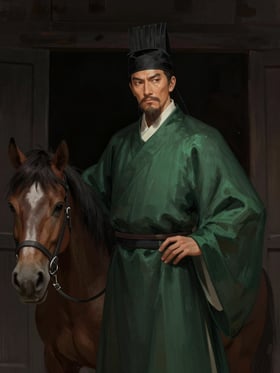
Liu Fu, Cao Cao’s Yangzhou governor, governed Hefei; in the novel, Cao Cao kills him for remonstrating.

Life
In the novel: 1 chapter · In the Records: 2 volumes
Life?–208
200 CE (Jian'an 5)
208 CE (Jian'an 13)
Appearances
By chapter (3)
Novel
- 48
Records
- 15
- 51
- Cao Wei· Undated
- Life event
- Death
List all 2 stops
- Pei StateBirthplace
- Hefei200–208Liu Fu Rides Alone to Hefei and Establishes the Provincial Administration+1 more
On the boards
Compare with someone →Where this person ranks on each board.
Historical Record
Liu Fu, courtesy name Yuanying, was from Xiang County in Pei State. At the end of the Han dynasty, he fled the turmoil and went to Yang Province. In the early Jian’an era, he persuaded Yuan Shu’s officers Qi Ji and Qin Yi to lead their followers in submitting to Cao Cao. Cao Cao valued him, and he was first summoned by the Minister over the Masses to serve as an assistant. Later, Yan Xiang, the Inspector of Yang Province, was attacked and killed by Li Shu, while Mei Qian, Lei Xu, Chen Lan, and others gathered forces in the Huai River and Yangtze River region, leaving commanderies and counties devastated. Cao Cao was occupied with dealing with Yuan Shao and believed Liu Fu could take charge of southeastern affairs, so he memorialized the court to appoint him Inspector of Yang Province.
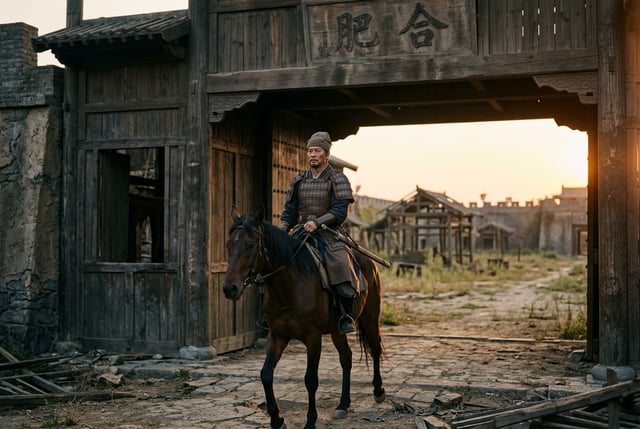
After receiving his appointment, Liu Fu rode alone to the deserted city of Hefei and established the provincial headquarters. He pacified the forces of Mei Qian, Lei Xu, and others, bringing them to stability and submission; their contributions to the court also continued without interruption. Within a few years, governance and instruction were established, and the people were content with his administration. Tens of thousands of refugees crossed the rivers and mountains to settle there. Liu Fu gathered students and established schools, expanded agricultural colonies, and repaired waterworks such as Shaobei, Rubei, Qimen, and Wutang to irrigate the rice fields, so that both the government and the people had reserves. Stability was not achieved through conciliation alone: he also strengthened the city walls and ramparts, stockpiled timber and stones, prepared large quantities of straw mats, and stored fish oil, making preparations in advance to defend the city in wartime.
Liu Fu died in the thirteenth year of Jian’an. Later, Sun Quan led an army of 100,000 to besiege Hefei for more than a hundred days. After days of heavy rain, the city walls nearly collapsed. The defenders covered them with straw mats and rain capes, and at night burned oil to illuminate the area outside the city, watching the enemy’s movements and preparing their defenses accordingly. In the end, they drove off the attacking army. The records do not say that Liu Fu personally took part in this siege, but they link the mats and rain capes used in the city’s defense to the preparations he had made during his lifetime. The people and officials of Yang Province therefore remembered him all the more, saying that his contribution to the city’s defense was no less than Dong Anyu’s defense of Jinyang. The irrigation ponds and waterworks Liu Fu had built also continued to serve their purpose.
In the Novel
Chapter 48 of Romance of the Three Kingdoms places Liu Fu at a banquet held by Cao Cao before the Battle of Chibi. The novel first identifies him as Inspector of Yang Province and a native of Xiang County in Pei State, then uses a character’s introduction to summarize his achievements in governing Hefei: establishing the provincial headquarters, gathering scattered refugees, founding schools, expanding agricultural colonies, and promoting education. It also notes that he had served Cao Cao for a long time and rendered many meritorious services. This portrayal echoes the local administrator in the historical record, but the novel shifts its focus to remonstrance and conflict between ruler and subject.
At the banquet, Cao Cao brandishes his spear and recites, “The moon is bright, the stars are sparse; the magpies fly south. Circling the trees three times, they find no branch to rest on.” Liu Fu openly points out that the lines are “inauspicious” and urges him to stop, citing the poem as his grounds. Interrupted in his drinking, Cao Cao flies into a rage and kills Liu Fu with his spear. The Records of the Three Kingdoms records that Liu Fu died in the thirteenth year of Jian’an, but contains no account of this banquet remonstrance or of Cao Cao killing him. His blunt remonstrance, angering Cao Cao, and death are therefore literary alterations to his ending in Romance of the Three Kingdoms and should not be confused with his life as recorded in history.
The next day, the novel says, Cao Cao sobers up and regrets what he has done. He weeps to Liu Fu’s son Liu Xi, saying that in his drunkenness he accidentally harmed his father, and orders that Liu Fu be buried with the honors due a Three Excellency and that soldiers escort his coffin. This remorse and lavish burial show Cao Cao regretting his actions after his outburst, while also bringing Liu Xi into the story as a bereaved son; both details belong to the novel.
Key Relationships
- Cao Cao: According to the historical record, Liu Fu once persuaded Qi Ji and Qin Yi to lead their followers in submitting to Cao Cao. Cao Cao valued him and appointed him Inspector of Yang Province to govern the southeast, making him a provincial-level official on Cao Cao’s side. In Romance of the Three Kingdoms, the two instead become ruler and subject embroiled in a bitter conflict at a banquet: Liu Fu bluntly says Cao Cao’s poem is inauspicious and is killed for it. This conflict appears only in the novel.
- Mei Qian, Lei Xu, and others: The historical record says that after taking office, Liu Fu pacified these forces and brought them to settle peacefully, showing that his governance relied not only on military campaigns but also on conciliation and development.
- Liu Xi: The historical record names Liu Fu’s son as Liu Jing and says that he carried on his father’s legacy. Romance of the Three Kingdoms calls Liu Fu’s son Liu Xi and depicts him requesting that his father’s remains be returned for burial. Liu Xi and the father-and-son burial episode appear only in the novel; the son named in the historical accounts is Liu Jing.
Signature Scenes
- Riding alone to Hefei: Liu Fu rode by himself into the deserted city and established the provincial headquarters while the situation remained unsettled. He then pacified local forces and attracted refugees. This opening scene brings his courage and administrative ability together.
- Combining agricultural colonies, waterworks, and city defenses: Liu Fu promoted education, established agricultural colonies, and repaired ponds and irrigation works to provide the people with a stable livelihood. At the same time, he strengthened the city walls and stockpiled timber, stones, straw mats, and fish oil. Later accounts of Hefei’s defenders covering the walls with mats and rain capes during a siege in heavy rain, and burning oil at night to illuminate the enemy, show the practical value of these preparations. But this does not mean that Liu Fu personally commanded the later battle.
- Remonstrating over the poem at the banquet: In the novel, while Cao Cao brandishes his spear and recites poetry, Liu Fu bluntly warns him that the lines are “inauspicious” and is immediately killed by Cao Cao’s spear. The next day, Cao Cao regrets his actions and gives Liu Fu a lavish burial. This dramatic turn from life to death appears only in Romance of the Three Kingdoms.
Lines
- 演 ch.48 §31→ Cao Cao
「大軍相當之際,將士用命之時,丞相何故出此不吉之言?」
- 演 ch.48 §31→ Cao Cao
「『月明星稀,烏鵲南飛,遶樹三匝,無枝可依。』此不吉之言。」
- Family
- Enemies
Who is Liu Fu connected to?
Pick someone to see how many steps lie between them and Liu Fu.
History vs. novel
7 points · 2 novel-only
| History | Novel |
|---|---|
| Submitting to Cao CaoHistory only | |
At the beginning of the Jian'an era, Liu Fu persuaded Yuan Shu's subordinates Qi Ji and Qin Yi to lead their followers in submitting to Cao Cao. Cao Cao valued him for this and appointed him as an aide in the Secretariat of the Minister over the Masses. vol. 15 | — |
| Assassination of Yan XiangHistory only | |
Historical records state that Li Shu, the Lujiang Governor appointed by Sun Ce, attacked and killed Yan Xiang, the Inspector of Yang Province, throwing the province into turmoil. vol. 15 | — |
| Turmoil in the Jianghuai regionHistory only | |
Mei Qian, Lei Xu, Chen Lan, and others gathered tens of thousands of followers in the Jianghuai region, leaving the commanderies and counties devastated. Cao Cao was occupied with responding to Yuan Shao. vol. 15 | — |
| Appointment as Inspector of Yang ProvinceHistory only | |
Cao Cao believed Liu Fu was capable of handling affairs in the southeast, so he submitted a memorial appointing him Inspector of Yang Province. vol. 15 | — |
| Governing Yang ProvinceNovel embellishes | |
The Records of the Three Kingdoms states that Liu Fu was appointed Inspector of Yang Province, but does not mention details such as his administration of the provincial seat, promotion of education, or the establishment of agricultural colonies. vol. 15 | The novel says that Liu Fu rose to prominence from Hefei, established the provincial seat, gathered refugees, founded schools, and widely established agricultural colonies. He served Cao Cao for many years and accomplished much. ch. 48 |
| Killed after remonstrating with a spearNovel only | |
| — | At a banquet before the Battle of Chibi, Liu Fu pointed out that Cao Cao's poem contained inauspicious lines. Cao Cao flew into a rage and stabbed Liu Fu to death with his spear. Everyone was horrified, and the banquet soon broke up. ch. 48 |
| Burial with honors after sobering upNovel only | |
| — | The next day, after sobering up, Cao Cao regretted what he had done. Liu Fu's son, Liu Xi, asked to take his father's body home for burial. Cao Cao said that he had accidentally wounded Liu Fu while drunk, ordered him buried with the honors due a Three Excellency, and dispatched soldiers to escort the coffin. ch. 48 |
- Submitting to Cao CaoHistory only
- History
At the beginning of the Jian'an era, Liu Fu persuaded Yuan Shu's subordinates Qi Ji and Qin Yi to lead their followers in submitting to Cao Cao. Cao Cao valued him for this and appointed him as an aide in the Secretariat of the Minister over the Masses.
vol. 15
- Assassination of Yan XiangHistory only
- History
Historical records state that Li Shu, the Lujiang Governor appointed by Sun Ce, attacked and killed Yan Xiang, the Inspector of Yang Province, throwing the province into turmoil.
vol. 15
- Turmoil in the Jianghuai regionHistory only
- History
Mei Qian, Lei Xu, Chen Lan, and others gathered tens of thousands of followers in the Jianghuai region, leaving the commanderies and counties devastated. Cao Cao was occupied with responding to Yuan Shao.
vol. 15
- Appointment as Inspector of Yang ProvinceHistory only
- History
Cao Cao believed Liu Fu was capable of handling affairs in the southeast, so he submitted a memorial appointing him Inspector of Yang Province.
vol. 15
- Governing Yang ProvinceNovel embellishes
- History
The Records of the Three Kingdoms states that Liu Fu was appointed Inspector of Yang Province, but does not mention details such as his administration of the provincial seat, promotion of education, or the establishment of agricultural colonies.
vol. 15
- Novel
The novel says that Liu Fu rose to prominence from Hefei, established the provincial seat, gathered refugees, founded schools, and widely established agricultural colonies. He served Cao Cao for many years and accomplished much.
ch. 48
- Killed after remonstrating with a spearNovel only
- Novel
At a banquet before the Battle of Chibi, Liu Fu pointed out that Cao Cao's poem contained inauspicious lines. Cao Cao flew into a rage and stabbed Liu Fu to death with his spear. Everyone was horrified, and the banquet soon broke up.
ch. 48
- Burial with honors after sobering upNovel only
- Novel
The next day, after sobering up, Cao Cao regretted what he had done. Liu Fu's son, Liu Xi, asked to take his father's body home for burial. Cao Cao said that he had accidentally wounded Liu Fu while drunk, ordered him buried with the honors due a Three Excellency, and dispatched soldiers to escort the coffin.
ch. 48
Combat
On the field
Duels, kills and executions as the texts tell them, counted separately for the Records and the Romance.
- RomanceCh. 48ExecutionCao CaoLost「手起一槊,刺死劉馥」
Stratagems
Plans this person devised or saw through, as the texts tell them.
- Records
- 1 carried out · 1 worked · 0 turned down · 0 seen through
- RecordsPersuade to SurrenderPersuasionWorkedagainst Yuan ShuJuan 15「說袁術將戚寄、秦翊,使率衆與俱詣太祖」
Events
Events (3)
Battles and events the texts place this person in, by date.
Battles
Other events
Famous objects
Those who met it

Places
- Native of
- Pei StateRecords
Continue
Liu Fu Rides Alone to Hefei and Establishes the Provincial Administration
Relationship timeline1 entry ▸
Novel · ch. 48
- Liu Xi§32
Child
Liu Fu was the father of Liu Xi
Inner monologues · AI-generated1 monologue ▸
- I am Liu Fu, courtesy name Yuanying, from Xiang County in Pei Commandery. The age was in turmoil, and my home district w