Cao Wei · Palace Attendant and Secretariat Clerk
He Yan
courtesy name 平叔 · c. 195–249
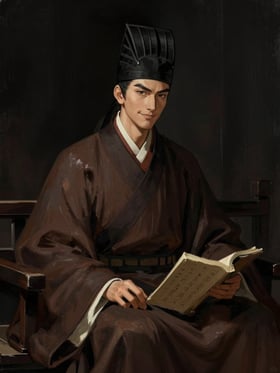
He Yan, Cao Wei figure allied with Cao Shuang, famed for talent and Daoist writings, was executed after the Incident at the Gaoping Tombs.

Life
In the novel: 2 chapters · In the Records: 7 volumes
Life195–249
239 CE (Jingchu 3)
- Cao Shuang's RegencyLuoyangAdvisor
244 CE (Zhengshi 5)
- Cao Wei· Undated
- Life event
List all 3 stops
- Nanyang195Birthplace
- Luoyang239Cao Shuang's Regency
- Mount Xingshi244Battle of Xingshi
On the boards
Compare with someone →Where this person ranks on each board.
Historical Record
He Yan, courtesy name Pingshu, was He Jin’s grandson. His mother, Lady Yin, later became a wife of Cao Cao. He Yan grew up in the palace from an early age and also married a princess. In his youth, he became known for his exceptional talent and fondness for the teachings of Laozi and Zhuangzi; he wrote On the Way and Virtue, as well as dozens of essays and rhapsodies. Pei Songzhi’s annotations also record that when Cao Cao took He Yan’s mother as his wife, he adopted He Yan as well. He Yan was particular about his clothes and often walked while admiring his reflection. These details, set against his upbringing in the palace, give him a distinctive character in the historical accounts.
During Emperor Ming’s reign, He Yan held a minor, largely inactive post. In the early Zhengshi era, he attached himself to Cao Shuang, first serving as Attendant Gentleman of the Palace Riders, then being promoted to Palace Attendant and Minister of Works, with responsibility for appointments. The histories say that after Cao Shuang took power, He Yan and Deng Yang were appointed to office again and became his trusted confidants. Pei Songzhi’s annotations criticize He Yan’s role in appointments: many of those he recommended were people with whom he had long-standing ties, and his choices were improper, partly because Deng Yang lacked impartiality and loyalty. This shows that He Yan entered the heart of power on the strength of his reputation for talent, but also left a controversial record in his handling of appointments.
He Yan was not portrayed solely as a follower of a powerful minister. Near the end of the Zhengshi era, while serving as Minister of Works, he submitted a memorial urging the ruler to choose carefully those close to him and keep his distance from flatterers and the corrupt. He also proposed that when the emperor went on excursions, ministers accompany him, giving him the opportunity to review documents, ask about government affairs, and discuss the classics. Linking the ruler’s associates to the political climate through the reasoning that “if what one practices is correct, then one’s person will be upright,” He Yan showed another side of himself: one that used the classics to address affairs of state.
After the Incident at the Gaoping Tombs in the first year of the Jia Ping era, Sima Yi took control of the court. Zhang Dang’s testimony implicated Cao Shuang and his associates, and He Yan and others were arrested. The Wei Chronicles, quoted in Pei Songzhi’s annotations, says that Sima Yi once ordered He Yan to investigate and prosecute members of Cao Shuang’s faction. He Yan exhaustively pursued the matter, hoping thereby to win a pardon. Sima Yi eventually pointed out that He Yan himself was among the “eight clans” under discussion, and had him arrested. He Yan was then executed alongside Cao Shuang and the others, and his three clans were exterminated.
In the Novel
Romance of the Three Kingdoms portrays He Yan as the foremost strategist among the “frivolous” figures in Cao Shuang’s circle. The novel has him urge Cao Shuang not to hand over supreme authority to Sima Yi. It also has him bring up Cao Zhen’s earlier clash with Sima Yi to stoke Cao Shuang’s suspicions, prompting Cao Shuang to petition for Sima Yi’s appointment as Grand Tutor so that military command could be brought back into his own hands. The Records of the Three Kingdoms does record that He Yan attached himself to Cao Shuang, served as Minister of Works, and took part in his political faction, but it does not mention his using this argument to persuade Cao Shuang to seize Sima Yi’s military authority. This stratagem is a dramatic embellishment in the novel.
The novel also uses He Yan’s discussion of the Changes and divination with Guan Lu as a key episode foreshadowing his fate. He Yan asks whether he might attain the rank of one of the Three Excellencies, then asks about a dream in which bluebottles gathered on his nose. Guan Lu warns him that his position is too exalted and that few people truly value virtue. He Yan praises Guan Lu’s concise words, while Deng Yang dismisses them as commonplace talk from an old man. Historical accounts also record this divination and Guan Lu’s warning, while the novel brings the dialogue, the characters’ expressions, and Guan Lu’s declaration after returning home that He Yan would meet a violent death into sharper focus.
In its account of the Incident at the Gaoping Tombs, the novel has He Yan leave the city with Cao Shuang and includes him on Sima Yi’s list of trusted followers to be captured and killed. After Zhang Dang implicates He Yan and others in a plot to rebel, He Yan and Cao Shuang’s faction are executed and their clans exterminated. The historical accounts likewise record Zhang Dang’s testimony implicating He Yan, He Yan’s execution, and the extermination of his three clans. Thus, the novel follows the historical record in its ending, while adding dramatic detail to the events leading up to it and their setting.
Key Relationships
- Cao Shuang: He Yan was promoted to office when Cao Shuang held power, serving as Palace Attendant and Minister of Works and overseeing appointments, and became one of Cao Shuang’s trusted confidants. After the Incident at the Gaoping Tombs, he was executed alongside Cao Shuang’s faction.
- Sima Yi: The historical accounts say that after the Incident at the Gaoping Tombs, Sima Yi dealt with members of Cao Shuang’s faction and personally pointed out that He Yan was also among those slated for execution. The novel goes further, portraying He Yan as having urged Cao Shuang to strip Sima Yi of his military authority (a detail unique to the novel).
- Guan Lu: The historical accounts say that He Yan asked Guan Lu to cast a divination, inquiring about the rank of one of the Three Excellencies and his dream of bluebottles gathering on his nose. Guan Lu used the occasion to warn him to be humble and observe propriety. The novel uses their exchange to heighten the sense that He Yan’s fortunes were about to collapse.
- Family and marriage: He Yan was He Jin’s grandson; his mother, Lady Yin, was a wife of Cao Cao, and he himself married a princess. His upbringing was closely tied to the Cao Wei court.
Signature Scenes
Advising the ruler to choose his close associates carefully. In a memorial, He Yan points out that the people and things a ruler keeps close and sees regularly will affect both his person and his government. He recommends that ministers accompany the emperor on excursions and that, during leisurely banquets and conversations, he review documents and discuss state affairs. This memorial reveals He Yan’s historical role in political debate and his concern with the meaning of the classics, in contrast to later novels, which chiefly portray him as a frivolous schemer.
Divination about bluebottles. He Yan asks Guan Lu to divine whether he might attain the rank of one of the Three Excellencies and explains his dream of bluebottles gathering on his nose. Rather than simply predicting good or ill fortune, Guan Lu urges him to beware of his high rank and influence and his insufficient respect for virtue. He Yan calls Guan Lu’s words “concise and to the point,” but Deng Yang is unimpressed. The episode appears in the historical accounts; the novel adds dramatic details about assessing appearances and discussing the matter after returning home.
Arrest after the Incident at the Gaoping Tombs. After Zhang Dang was taken into custody for questioning, his testimony implicated He Yan, Cao Shuang, and others. The historical accounts record He Yan’s arrest and execution, and the extermination of his three clans. The novel depicts Zhang Dang naming his accomplices, He Yan and the others being interrogated, and their being escorted to the execution ground. Its elaboration of the specific interrogation and execution scenes belongs to the novel’s narrative.
Quotes
10 lines in the books · 3 featured
「試為我卜一卦,可至三公否?」
This line reveals He Yan's ambition for office, a typical depiction of his character.
「連夢青蠅數十,來集鼻上,此是何兆?」
'Green flies gathering on the nose' became a literary allusion foreshadowing his political crisis, and carries cultural resonance.
「善為國者必先治其身,治其身者慎其所習。所習正則其身正,其身正則不令而行;所習不正則其身不正,其身不正則雖令不從。是故為人君者,所與游必擇正人,所觀覽必察正象,放鄭聲而弗聽,遠佞人而弗近,然後邪心不生而正道可弘也。季末闇主不知損益,斥遠君子,引近小人,忠良疏遠,便辟褻狎,亂生近暱,譬之社鼠;考其昏明,所積以然,故聖賢諄諄以為至慮。舜戒禹曰『鄰哉鄰哉』,言慎所近也,周公戒成王曰『其朋其朋』,言慎所與也。書云:『一人有慶,兆民賴之。』可自今以後,御幸式乾殿及游豫後園,皆大臣侍從,因從容戲宴,兼省文書,詢謀政事,講論經義,為萬世法。」
This memorial reflects He Yan's political views as a senior minister of Cao Wei, and holds historical significance.
- Lord & vassal
- Enemies
- Other
Who is He Yan connected to?
Pick someone to see how many steps lie between them and He Yan.
History vs. novel
7 points · 1 novel-only
| History | Novel |
|---|---|
| Adopted Son and FavorHistory only | |
The Weilüe records that when Cao Cao served as Minister over the Masses, he adopted He Yan. He Yan and Asu were both favored and treated like sons of the household; however, He Yan dressed like the crown prince, which Cao Pi disliked, calling him a “foster son”. vol. 9 | — |
| Office and AppointmentsHistory only | |
At the beginning of the Zhengshi era, Cao Shuang appointed He Yan as Attendant Gentleman of the Scattered Cavalry. He was later promoted to Palace Attendant and Minister of Works. He Yan oversaw appointments and promoted many old acquaintances. vol. 9 | — |
| Memorial on Governing the StateHistory only | |
He Yan submitted “On Governing the State Well,” arguing that the ruler should draw near to upright men and keep away from flatterers. He also advised that when ministers accompanied the emperor at banquets and outings, they should attend to government affairs and the classics as well. vol. 4 | — |
| Urging Cao Shuang to Seize Military PowerNovel only | |
| — | He Yan urged Cao Shuang not to hand over supreme power to Sima Yi, warning him by citing how Sima Yi had once made Cao Zhen suffer indignity. Cao Shuang then recommended Sima Yi for the post of Grand Tutor, leaving military power in his own hands. ch. 106 |
| Divination and BluebottlesNovel embellishes | |
He Yan asked Guan Lu to divine whether he would attain the rank of Three Excellencies, and also asked about the omen of dreaming that bluebottles had gathered on his nose. Guan Lu warned that although he held high office and great power, few around him were people of virtue, and urged him to be modest and observe propriety. vol. 29 | The Romance also depicts He Yan asking about the rank of Three Excellencies and bluebottles gathering on his nose, with Guan Lu issuing a similar warning. The novel condenses the discussion and elaborates with phrases such as “a mountain high yet not perilous”. ch. 106 |
| Ghostly Gloom and Ghostly RestlessnessNovel embellishes | |
The historical account records that Guan Lu privately described He Yan as having the aspect of “ghostly gloom” and Deng Yang as having the aspect of “ghostly restlessness,” predicting that both would meet disaster. Only after hearing that the two had been executed did his uncle believe him. vol. 29 | The Romance makes Guan Lu’s conversation with his uncle more dramatic, detailing He Yan’s withered appearance and Deng Yang’s unsteady gait, and saying that both were bound to meet a violent end sooner or later. ch. 106 |
| Investigating the Case and Being ArrestedHistory only | |
Sima Yi ordered He Yan to investigate Cao Shuang’s case. He Yan rigorously pursued the associates in hopes of securing leniency; after listing seven clans, he finally realized that he himself was among them and was immediately arrested. vol. 9 | — |
- Adopted Son and FavorHistory only
- History
The Weilüe records that when Cao Cao served as Minister over the Masses, he adopted He Yan. He Yan and Asu were both favored and treated like sons of the household; however, He Yan dressed like the crown prince, which Cao Pi disliked, calling him a “foster son”.
vol. 9
- Office and AppointmentsHistory only
- History
At the beginning of the Zhengshi era, Cao Shuang appointed He Yan as Attendant Gentleman of the Scattered Cavalry. He was later promoted to Palace Attendant and Minister of Works. He Yan oversaw appointments and promoted many old acquaintances.
vol. 9
- Memorial on Governing the StateHistory only
- History
He Yan submitted “On Governing the State Well,” arguing that the ruler should draw near to upright men and keep away from flatterers. He also advised that when ministers accompanied the emperor at banquets and outings, they should attend to government affairs and the classics as well.
vol. 4
- Urging Cao Shuang to Seize Military PowerNovel only
- Novel
He Yan urged Cao Shuang not to hand over supreme power to Sima Yi, warning him by citing how Sima Yi had once made Cao Zhen suffer indignity. Cao Shuang then recommended Sima Yi for the post of Grand Tutor, leaving military power in his own hands.
ch. 106
- Divination and BluebottlesNovel embellishes
- History
He Yan asked Guan Lu to divine whether he would attain the rank of Three Excellencies, and also asked about the omen of dreaming that bluebottles had gathered on his nose. Guan Lu warned that although he held high office and great power, few around him were people of virtue, and urged him to be modest and observe propriety.
vol. 29
- Novel
The Romance also depicts He Yan asking about the rank of Three Excellencies and bluebottles gathering on his nose, with Guan Lu issuing a similar warning. The novel condenses the discussion and elaborates with phrases such as “a mountain high yet not perilous”.
ch. 106
- Ghostly Gloom and Ghostly RestlessnessNovel embellishes
- History
The historical account records that Guan Lu privately described He Yan as having the aspect of “ghostly gloom” and Deng Yang as having the aspect of “ghostly restlessness,” predicting that both would meet disaster. Only after hearing that the two had been executed did his uncle believe him.
vol. 29
- Novel
The Romance makes Guan Lu’s conversation with his uncle more dramatic, detailing He Yan’s withered appearance and Deng Yang’s unsteady gait, and saying that both were bound to meet a violent end sooner or later.
ch. 106
- Investigating the Case and Being ArrestedHistory only
- History
Sima Yi ordered He Yan to investigate Cao Shuang’s case. He Yan rigorously pursued the associates in hopes of securing leniency; after listing seven clans, he finally realized that he himself was among them and was immediately arrested.
vol. 9
Combat
On the field
Duels, kills and executions as the texts tell them, counted separately for the Records and the Romance.
- RecordsJuan 9ExecutionLost「於是收爽、羲、訓、晏、颺、謐、軌、勝、範、當等,皆伏誅,夷三族」
Stratagems
Plans this person devised or saw through, as the texts tell them.
- Romance
- 1 carried out · 1 worked · 0 turned down · 0 seen through
- RomancePromote in Name, Demote in PracticeOtherWorkedagainst Sima YiCh. 106「司馬懿功高德重,可加為太傅」
Events
Events (3)
Battles and events the texts place this person in, by date.
Battles
- 244Battle of XingshiAdvisor
Other events
- 239Cao Shuang's RegencyAdvisor
- 249Incident at the Gaoping Tombs
Places
- Native of
- NanyangRecords
Continue
Battle of Xingshi
Relationship timeline2 entries ▸
History · vol. 9
- Cao Shuang§65
Lord
Curried favor with Cao Shuang; served as Attendant Gentleman of the Palace, was promoted to Palace Attendant and Secretariat official, and oversaw the selection of officials
Novel · ch. 106
- Cao Shuang§12
Advised
the chief of the retainers; advised Shuang not to entrust power to others; proposed appointing Yi Grand Tutor to take away his military command; served as a Secretariat Official
Inner monologues · AI-generated1 monologue ▸
- From my youth, I grew up in the palace precincts. Everywhere I went, I saw a world where ritual and power were intertwin