Cao Xiong
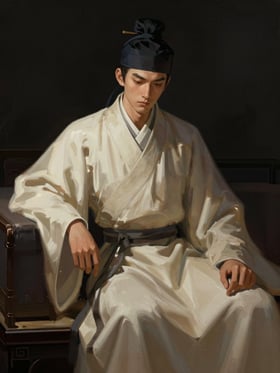
History says Cao Xiong, son of Cao Cao and Empress Dowager Bian, died young; the novel depicts him as sickly and hanging himself from fear.
Appearances
In the novel: 3 chapters · In the Records: 2 volumes
By chapter (5)
Novel
- 68
- 78
- 79
Records
- 19
- 20
On the boards
Compare with someone →Where this person ranks on each board.
Historical Record
Cao Xiong was a son of Cao Cao and Empress Dowager Bian. When listing Cao Cao’s sons, the Records of the Three Kingdoms groups Emperor Wen Cao Pi, the Prince Wei of Rencheng Cao Zhang, Chen Si Wang Cao Zhi, and Xiong, the Prince Huai of Xiao, together, and records that they were born to Empress Dowager Bian. His biography is extremely brief, saying only that Cao Xiong died young; it gives no specific date, cause of death, age, or official post. It therefore does not support any inference that he took part in political or military affairs during his lifetime.
After Cao Xiong’s death, the Wei court posthumously granted him the title Duke Huai of Xiao in the second year of Huangchu; in the third year of Taihe, he was further enfeoffed as a prince and titled Prince Huai of Xiao. In the second year of Qinglong, his son Cao Bing succeeded to the fief, with a fiefdom of 2,500 households. Cao Bing died six years later, and as he had no sons, the fiefdom was abolished. These records show that what historical accounts can confirm about Cao Xiong is chiefly that he died young, was posthumously ennobled, and was succeeded in his title by his son. The Records of the Three Kingdoms provides no account here of his temperament, health, or the circumstances of his death.
In the Novel
Romance of the Three Kingdoms retains Cao Xiong’s place in the family as a son of Cao Cao and Lady Bian, and includes him in a plot about choosing an heir during Cao Cao’s later years. The novel says that Lady Bian bore four sons: Pi, Zhang, Zhi, and Xiong. When Cao Cao assesses his sons, he says Cao Xiong is “often ill and unlikely to survive,” giving this as one reason not to appoint him; he ultimately decides that Cao Pi is fit to succeed him. This literary treatment turns the cause of Cao Xiong’s early death—which the Records of the Three Kingdoms does not explain—into frail health and an inability to shoulder the burden of succession. “Often ill and unlikely to survive” is the novel’s characterization and should not be treated as a fact recorded in the Records of the Three Kingdoms.
The novel also has Cao Pi, after Cao Cao’s death, send someone to interrogate Cao Xiong for failing to attend the funeral. The messenger reports that Cao Xiong, fearing punishment, hanged himself; Cao Pi then gives him a lavish burial and posthumously grants him the title Prince Huai of Xiao. This passage links Cao Xiong’s death to the conflict between brothers over succession, portraying him as taking his own life after being held to account. The historical account, by contrast, merely says that he “died young”; it contains no story of suicide by hanging, failure to attend the funeral, interrogation by Cao Pi, or lavish burial. The novel’s titles Marquis Huai of Xiao and Prince Huai of Xiao echo the posthumous title in the historical record, but the two accounts differ in their description of the cause of death and the circumstances of the posthumous ennoblement.
Key Relationships
- Cao Cao and Empress Dowager Bian: Cao Xiong was a son of Cao Cao, born to Empress Dowager Bian. This appears both in the genealogy of Cao Cao’s sons and in the novel’s account of Cao Cao’s family.
- Cao Pi: Cao Pi was Cao Xiong’s elder brother. The Records of the Three Kingdoms records that both were sons of Cao Cao, but says nothing of any conflict between them. The novel, however, says that after ascending the throne, Cao Pi sent someone to interrogate Cao Xiong for not attending the funeral, whereupon Cao Xiong hanged himself. (Novel only)
- Cao Bing: Cao Bing was Cao Xiong’s son. In the second year of Qinglong, he succeeded to his father’s title and received a fiefdom of 2,500 households. After Cao Bing died without a son, the fiefdom was abolished.
- Cao Zhang and Cao Zhi: Both were sons of Cao Cao and Empress Dowager Bian. The novel places Cao Xiong alongside Cao Zhang and Cao Zhi in the discussion of succession. Cao Cao describes Cao Zhang as brave but lacking in strategy, Cao Zhi as showy and lacking in sincerity, and Cao Xiong as often ill and unlikely to survive, thereby casting Cao Pi in a favorable light. (Novel only)
Signature Scenes
The novel’s most distinctive scene is set when Cao Cao, gravely ill, summons Cao Hong, Chen Qun, Jia Xu, Sima Yi, and others to entrust them with his family affairs. He assesses his sons one by one, says that Cao Xiong is often ill and unlikely to survive, and then points to Cao Pi as his successor. In this scene, Cao Xiong is portrayed in the context of the succession arrangements: he is not given a character arc through his actions or abilities, but appears as a young, sickly son being assessed. This assessment and the specific conversation about choosing an heir belong to the novel; the Records of the Three Kingdoms confirms only that Cao Xiong died young and does not record Cao Cao excluding him on grounds of health.
Another key scene occurs after Cao Xiong fails to attend Cao Cao’s funeral and is called to account by Cao Pi. The novel concludes his story with “fearing punishment, he hanged himself,” and says that Cao Pi posthumously granted him the title Prince Huai of Xiao. (Novel only) By contrast, the Records of the Three Kingdoms says that he was posthumously granted the title Duke Huai of Xiao in the second year of Huangchu and ennobled as a prince in the third year of Taihe, without linking these honors to the funeral or the cause of his death. The two accounts thus differ sharply: the historical record leaves a brief account of his early death and posthumous ennoblement, while the novel portrays Cao Xiong as a sickly figure in the succession dispute and gives him the dramatic ending of taking his own life after being called to account.
- Family
- Enemies
Who is Cao Xiong connected to?
Pick someone to see how many steps lie between them and Cao Xiong.
History vs. novel
5 points · 2 novel-only
| History | Novel |
|---|---|
| Cao Xiong's identityNovel embellishes | |
Historical records list Cao Xiong as one of Cao Cao's sons and refer to him as King Xiaohuai. vol. 19 | The novel mentions Cao Xiong when Cao Cao makes arrangements for his family on his deathbed, but does not state his title. ch. 78 |
| Birth mother and brothersNovel embellishes | |
Historical records state that Cao Xiong and Cao Pi, Cao Zhang, and Cao Zhi were all born to Empress Dowager Bian. vol. 20 | The novel also says that Lady Bian bore four sons—Cao Pi, Cao Zhang, Cao Zhi, and Cao Xiong—and lists Cao Xiong as the fourth son. ch. 78 |
| TitleHistory only | |
Historical records refer to Cao Xiong as King Xiaohuai. vol. 19 | — |
| Too sickly to be entrusted with the successionNovel only | |
| — | Cao Cao judged Cao Xiong too sickly to be entrusted with the succession, and therefore unsuited to inherit the family estate; the Records of the Three Kingdoms does not record this judgment. ch. 78 |
| Assessment of the successionNovel only | |
| — | Cao Cao assessed his sons one by one, judging Cao Zhi to be fond of wine and indulgent, and Cao Zhang brave but lacking in judgment, before concluding that Cao Pi was earnest and respectful and could inherit the family estate. ch. 78 |
- Cao Xiong's identityNovel embellishes
- History
Historical records list Cao Xiong as one of Cao Cao's sons and refer to him as King Xiaohuai.
vol. 19
- Novel
The novel mentions Cao Xiong when Cao Cao makes arrangements for his family on his deathbed, but does not state his title.
ch. 78
- Birth mother and brothersNovel embellishes
- History
Historical records state that Cao Xiong and Cao Pi, Cao Zhang, and Cao Zhi were all born to Empress Dowager Bian.
vol. 20
- Novel
The novel also says that Lady Bian bore four sons—Cao Pi, Cao Zhang, Cao Zhi, and Cao Xiong—and lists Cao Xiong as the fourth son.
ch. 78
- TitleHistory only
- History
Historical records refer to Cao Xiong as King Xiaohuai.
vol. 19
- Too sickly to be entrusted with the successionNovel only
- Novel
Cao Cao judged Cao Xiong too sickly to be entrusted with the succession, and therefore unsuited to inherit the family estate; the Records of the Three Kingdoms does not record this judgment.
ch. 78
Continue
Cao Cao
Kin
Relationship timeline3 entries ▸
Inner monologues · AI-generated1 monologue ▸
- My name is Cao Xiong, born to Empress Dowager Bian. Among my father Cao Cao’s sons, I shared the same mother as Emperor