Cao Wei · Minister over the Masses
Han Ji
c. 155–238
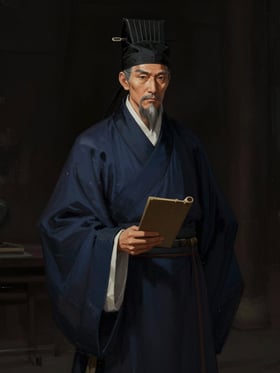
Han Ji, a Cao Wei official, devised water bellows and later served as Situ; Romance has him warn Cao Zhen not to fight.

Life
In the novel: 1 chapter · In the Records: 3 volumes
Life155–238
208 CE (Jian'an 13)
Allegiance
Appearances
By chapter (4)
Novel
- 98
Records
- 3
- 22
- 24
- Cao Wei
- Liu Biao's faction· Undated
- Yuan Shu's Faction· Undated
- Hatched: dated by chapter
- Life event
On the boards
Compare with someone →Where this person ranks on each board.
Historical Record
Han Ji, courtesy name Gongzhi, was from Duyang, Nanyang. His father and elder brother had once been falsely accused by Chen Mao, a powerful local figure from the same county, and nearly put to death. Han Ji showed no emotion outwardly. He accumulated wealth by working as a hired laborer, secretly gathered men willing to die for him, and eventually tracked down Chen Mao and offered his head at his father’s tomb, thereby making a name for himself. He was recommended as a Filial and Incorrupt candidate and summoned to serve by the Minister over the Masses, but did not take up either appointment. He later changed his name and lived in seclusion in the mountains of Luyang, distributing money and preparing food and drink to dissuade the mountain people from raiding. He also avoided summonses from Yuan Shu and Liu Biao, but later accepted Liu Biao’s appointment as Chief of Yicheng.
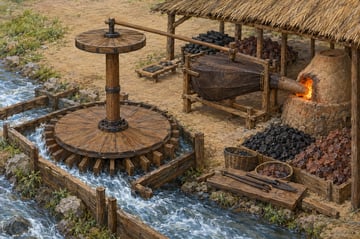
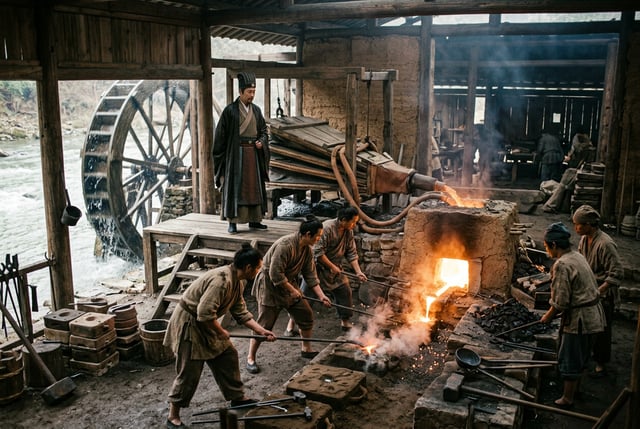
After Cao Cao pacified Jing Province, he summoned Han Ji to serve as an aide in the Chancellor’s Office. Han Ji subsequently served as Administrator of Leling and Supervising Attendant of the Foundries. He observed that the old method of smelting used horses to work the bellows and was extremely costly, so he harnessed flowing water to power a bellows system, tripling its efficiency. After seven years in office, the supply of implements was ample, and he was promoted for his achievements to Commandant of Metalworks. After Cao Pi took the throne, he enfeoffed Han Ji as Marquis of Yicheng Village. In the seventh year of Huangchu, Han Ji was appointed Minister of Ceremonies and promoted to Marquis of Nanxiang Village.
When Luoyang was first established, the ancestral temple tablets were still in Ye. Han Ji submitted a memorial requesting that the tablets of the four temples in Ye be brought back and an ancestral temple built in Luoyang, where he personally conducted the sacrifices. He upheld proper ritual and abolished improper sacrifices. In the second year of Jingchu under Emperor Ming, he was first appointed Minister over the Masses while serving as Grand Master of the Palace; he died in the fourth month of the same year and was posthumously named Marquis Gong. His final instructions called for him to be dressed in ordinary clothes and buried in the earth, emphasizing a simple funeral that would not burden or disturb the people. The Records of the Three Kingdoms states that he lived to be over eighty, praising him for holding ever more firmly to the Way in his advanced years. This episode from his later life also appears in chronicle accounts: Han Ji once went under imperial credentials to Ye to escort the spirit tablets of Emperor Gao, Emperor Tai, Emperor Wu, and Emperor Wen, and then enshrined them in the ancestral temple at Luoyang. In the second month of the second year of Jingchu, he was appointed Minister over the Masses; he died in the fourth month.
In the Novel
In chapter 98 of Romance of the Three Kingdoms, Han Ji is portrayed as the Minister of Ceremonies who delivers an imperial edict for the Wei court. As the Shu army was withdrawing, Emperor Ming sent him with imperial credentials to warn Cao Zhen not to rush into battle, ordering him to hold his position and act only after the Shu troops had departed. Han Ji left the capital on his mission, and Sima Yi saw him off outside the city, instructing him to say only that the order came from the emperor and not to reveal that the strategy of holding position had originated with him. Through this episode of delivering the edict, the novel depicts the Wei court’s caution in facing the Shu army and makes Han Ji a messenger between the emperor’s command and the frontline commander.
Historical accounts record that Han Ji did serve as Minister of Ceremonies and took part in escorting the spirit tablets and establishing the ancestral temple at Luoyang. But the Records of the Three Kingdoms does not record that he was ordered to warn Cao Zhen, nor does it mention Sima Yi seeing him off and giving him instructions. His mission with imperial credentials to deliver the edict is a fictional creation and should not be conflated with his historically attested ritual and official career.
Key Relationships
Han Ji’s relationship with Chen Mao began with the persecution of his family: Chen Mao nearly caused his father and elder brother to be convicted. Han Ji bided his time, gathered funds, and secretly recruited men willing to die for him, eventually capturing Chen Mao and offering his head at his father’s tomb. This episode made him known in his youth for both decisiveness and patience.
His ties to the Cao Wei regime began with his appointment after Cao Cao pacified Jing Province. He held a succession of local and foundry posts, then served as Minister of Ceremonies and Minister over the Masses under Cao Pi and Cao Rui. His water-powered bellows innovation advanced foundry work, while his temple duties reflected his responsibilities in matters of ritual. Together, these experiences form the main outline of his service at the Wei court. In the novel, he delivers Emperor Ming’s edict warning Cao Zhen, while Sima Yi privately instructs him on how to relay the message. This relationship between the court and the army appears only in Romance of the Three Kingdoms.
Signature Episodes
First, Han Ji harnessed flowing water to power a bellows system. The old smelting method consumed many horses to work the bellows, while switching to human labor was also costly. By using a steady current to build a water-powered bellows, he tripled the efficiency of the old method, demonstrating practical technological innovation.
Second, he oversaw the escorting of the spirit tablets and the construction of the ancestral temple at Luoyang. Historical accounts say Han Ji requested that the tablets in Ye be brought to Luoyang and personally conducted the sacrifices. A chronicle account also describes him going under imperial credentials to escort the tablets and enshrine them in the temple. This episode shows how his official duties were bound up with the establishment of ritual institutions.
Third, in the novel, he goes under imperial credentials to warn Cao Zhen to hold his position and not fight. Han Ji delivers Emperor Ming’s edict, while Sima Yi sees him off outside the city and instructs him to keep the source of the strategy secret. The result is a dramatic scene centered on military judgment and the delivery of an imperial command; this episode is unique to Romance of the Three Kingdoms.
Family, lords and rivals
1 relationships
Who is Han Ji connected to?
Pick someone to see how many steps lie between them and Han Ji.
History vs. novel
8 points · 2 novel-only
| History | Novel |
|---|---|
| Chen Mao's RevengeHistory only | |
Han Ji's father and elder brother were falsely accused by Chen Mao and nearly put to death. He secretly built up his strength, captured Chen Mao, and offered his head in sacrifice to his father, thereby making a name for himself. vol. 24 | — |
| Winning Over the Mountain PeopleHistory only | |
Han Ji spent his entire fortune preparing cattle and wine, then invited the mountain people's chief to discuss the advantages and disadvantages. In the end, the people were won over and did no harm. vol. 24 | — |
| Avoiding Yuan Shu and Liu BiaoHistory only | |
To avoid Yuan Shu's summons, Han Ji moved to Shandu. When Liu Biao sent a courteous invitation, he fled to Chanling; only later, fearing Liu Biao's anger, did he accept an appointment as magistrate of Yicheng. vol. 24 | — |
| Inventing the Water-Powered Blast FurnaceHistory only | |
While serving as Supervising Official of Metallurgy, Han Ji harnessed flowing water to build a water-powered blast furnace, which was three times as effective as the old method. During his seven years in office, he ensured that equipment was well stocked and was promoted to Commandant of Finance. vol. 24 | — |
| Relocating the Ancestral TempleHistory only | |
Luoyang had been rebuilt, but the ancestral temple's spirit tablets were still in Ye. Han Ji submitted a memorial requesting that they be brought to Luoyang and a temple built there, and personally oversaw the four seasonal sacrifices. He upheld proper rites, abolished improper sacrifices, and made many corrections. vol. 24 | — |
| Warning Cao ZhenNovel only | |
| — | Emperor Ming of Wei accepted Sima Yi's advice and sent Han Ji, Grand Commandant of Ceremonial, bearing imperial authority to warn Cao Zhen to hold his position and wait until the Shu troops withdrew before attacking. ch. 98 |
| Sima Yi's InstructionsNovel only | |
| — | Sima Yi saw Han Ji out of the city and told him not to reveal that the advice had come from him. He also reminded him to urge caution when Cao Zhen pursued the enemy and not to send anyone hot-tempered. ch. 98 |
| Modest Burial at DeathHistory only | |
Han Ji left instructions to be dressed in seasonal clothing for burial and interred in the earth, and asked that the officials and people of Luoyang not be burdened with preparing funeral items. Emperor Ming of Wei praised his frugality and concern for the people. vol. 24 | — |
- Chen Mao's RevengeHistory only
- History
Han Ji's father and elder brother were falsely accused by Chen Mao and nearly put to death. He secretly built up his strength, captured Chen Mao, and offered his head in sacrifice to his father, thereby making a name for himself.
vol. 24
- Winning Over the Mountain PeopleHistory only
- History
Han Ji spent his entire fortune preparing cattle and wine, then invited the mountain people's chief to discuss the advantages and disadvantages. In the end, the people were won over and did no harm.
vol. 24
- Avoiding Yuan Shu and Liu BiaoHistory only
- History
To avoid Yuan Shu's summons, Han Ji moved to Shandu. When Liu Biao sent a courteous invitation, he fled to Chanling; only later, fearing Liu Biao's anger, did he accept an appointment as magistrate of Yicheng.
vol. 24
- Inventing the Water-Powered Blast FurnaceHistory only
- History
While serving as Supervising Official of Metallurgy, Han Ji harnessed flowing water to build a water-powered blast furnace, which was three times as effective as the old method. During his seven years in office, he ensured that equipment was well stocked and was promoted to Commandant of Finance.
vol. 24
- Relocating the Ancestral TempleHistory only
- History
Luoyang had been rebuilt, but the ancestral temple's spirit tablets were still in Ye. Han Ji submitted a memorial requesting that they be brought to Luoyang and a temple built there, and personally oversaw the four seasonal sacrifices. He upheld proper rites, abolished improper sacrifices, and made many corrections.
vol. 24
- Warning Cao ZhenNovel only
- Novel
Emperor Ming of Wei accepted Sima Yi's advice and sent Han Ji, Grand Commandant of Ceremonial, bearing imperial authority to warn Cao Zhen to hold his position and wait until the Shu troops withdrew before attacking.
ch. 98
- Sima Yi's InstructionsNovel only
- Novel
Sima Yi saw Han Ji out of the city and told him not to reveal that the advice had come from him. He also reminded him to urge caution when Cao Zhen pursued the enemy and not to send anyone hot-tempered.
ch. 98
- Modest Burial at DeathHistory only
- History
Han Ji left instructions to be dressed in seasonal clothing for burial and interred in the earth, and asked that the officials and people of Luoyang not be burdened with preparing funeral items. Emperor Ming of Wei praised his frugality and concern for the people.
vol. 24
Combat
On the field
Duels, kills and executions as the texts tell them, counted separately for the Records and the Romance.
- RecordsJuan 24ExecutionChen MaoWon「遂追呼尋禽茂,以首祭父墓」
Stratagems
Plans this person devised or saw through, as the texts tell them.
- Records
- 1 carried out · 1 worked · 0 turned down · 0 seen through
- RecordsFeign Submission While Secretly Recruiting Death-DefiersDeceptionWorkedJuan 24「曁陽不以為言,庸賃積資,陰結死士」
Events
Events (2)
Battles and events the texts place this person in, by date.
Battles
Other events
- 208Han Ji's Introduction of Water-Powered Iron SmeltingInstigator
Famous objects
Places
- Native of
- NanyangRecords
Continue
Han Ji's Introduction of Water-Powered Iron Smelting
Relationship timeline1 entry ▸
History · vol. 24
- Chen Mao§3
Enemy
His father and elder brother were falsely accused by Chen Mao and nearly sentenced to death; later pursued and captured Mao, and offered his head at his father's tomb
Inner monologues · AI-generated1 monologue ▸
- When the imperial order arrived, I was already over eighty and had long held office as Grand Master of Splendid Happines