Lü Bu's faction · General
Wei Xu
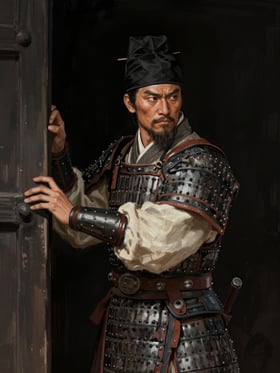
Wei Xu served Lü Bu; history links him to Chen Gong’s capture, while the novel has him help capture Lü Bu before Yan Liang kills him.

Life
In the novel: 6 chapters · In the Records: 2 volumes
Life?–?
198 CE (Jian'an 3)
- Lü Bu Raids XiaopeiXiaopeiWarrior
199 CE (Jian'an 4)
- Trial at White Gate TowerXiapiInstigator
200 CE (Jian'an 5)
- Battle of BomaBaimaKilled in action
- Lü Bu's faction
- Cao Wei
- Hatched: dated by chapter
- Life event
- Death
List all 3 stops
On the boards
Compare with someone →Where this person ranks on each board.
Historical Record
Wei Xu was a general under Lü Bu, serving alongside Hou Cheng and Song Xian. In the third year of Jian’an, Cao Cao campaigned against Lü Bu and advanced to besiege Xiapi. After a prolonged siege failed to take the city, he diverted the Si and Yi rivers to flood it. During the siege, Lü Bu’s troops became divided in their loyalties. Wei Xu, together with Hou Cheng and Song Xian, captured and bound Chen Gong, then led his men in surrendering to Cao Cao. After Xiapi fell, Lü Bu was captured alive, and Chen Gong and others were taken prisoner. Lü Bu and Chen Gong were ultimately executed, while Wei Xu, as a surrendering general, left Lü Bu’s faction. The historical accounts also record that Wei Xu was related to Lü Bu through “marriage ties,” and that Lü Bu once transferred the troops commanded by Gao Shun to Wei Xu. Before a battle, Gao Shun was then ordered to lead the troops under Wei Xu’s command. The sources give no further details about the precise nature of this family relationship, nor do they record Wei Xu’s career or fate after his surrender.
In the Novel
Romance of the Three Kingdoms portrays Wei Xu as a general in Lü Bu’s faction who is repeatedly sent into battle, tasked with escorting Lü Bu’s family, and ultimately joins in the defection. During the clashes at Puyang, he is listed among the eight valiant generals in Lü Bu’s formation. Later, he and Song Xian divide their forces to take part in plans to repel Yuan Shu’s army, and he is ordered to march west and seize Ru and Ying. The novel also depicts him and Song Xian escorting Lü Bu’s wife, children, money, and provisions to Xiapi, and on another occasion being ordered to escort Lü Bu’s daughter to Shouchun. These campaigns, escorts, and specific military episodes flesh out the character’s actions in the novel; the historical accounts contain no corresponding details.
The novel’s most dramatic portrayal of Wei Xu is his betrayal of Lü Bu during the siege of Xiapi. He conspires with Song Xian and Hou Cheng, helping Hou Cheng steal the Red Hare and leave the city to inform Cao Cao. The next day, after Lü Bu climbs the city wall to direct the fighting, he falls asleep from exhaustion. Song Xian steals his painted halberd, and Wei Xu and Song Xian bind Lü Bu. Wei Xu then signals with a white flag, announces that Lü Bu has been captured, and opens the gates with Song Xian to let Cao Cao’s troops into the city. The historical accounts do record that Wei Xu, Hou Cheng, and Song Xian captured and bound Chen Gong and led their men in surrendering, but they do not describe the theft of the horse or halberd, Lü Bu being bound, or the gates being opened. These are dramatic inventions of the novel.
After Wei Xu surrenders to Cao Cao, the novel has him avenge Song Xian by going into battle against Yan Liang, only to be killed with a single blow. This outcome contrasts sharply with the historical accounts: the existing Records of the Three Kingdoms do not record what became of Wei Xu after his surrender, while the novel concludes his story with his death on the battlefield.
Key Relationships
- Lü Bu: Wei Xu was one of Lü Bu’s generals and, according to the historical accounts, was related to him through “marriage ties.” As Lü Bu’s faction collapsed, Wei Xu took part in capturing and binding Chen Gong and led his men in surrendering. The novel goes further, portraying him as personally capturing Lü Bu and opening the gates to Cao Cao’s troops.
- Hou Cheng and Song Xian: The historical accounts say that the three men captured and bound Chen Gong and surrendered to Cao Cao. The novel depicts them as co-conspirators in a planned defection: Hou Cheng steals the horse and sends word, Wei Xu opens the gates, and Song Xian and Wei Xu bind Lü Bu together. (Unique to the novel)
- Gao Shun: The historical accounts record that Lü Bu transferred the troops under Gao Shun’s command to Wei Xu, and that before a battle he ordered Gao Shun to lead the troops under Wei Xu’s command. This shows that command over their troops was at one point transferred between them.
- Cao Cao: During the siege of Xiapi, Wei Xu joined Hou Cheng and Song Xian in leading their men to surrender to Cao Cao. The novel fleshes out the surrender as opening the gates to admit Cao Cao’s army, and goes on to depict Wei Xu fighting Yan Liang in Cao Cao’s army. (The later episode is unique to the novel)
Signature Scenes
- The siege of Xiapi and surrender: Cao Cao besieges Xiapi for a long time, and Lü Bu’s men become divided in their loyalties. Wei Xu, together with Hou Cheng and Song Xian, captures Chen Gong and leads his men in surrendering. This is a key action by Wei Xu explicitly recorded in the historical accounts, and a turning point in the downfall of Lü Bu’s power.
- Stealing the horse, opening the gates, and capturing Lü Bu: In the novel, Hou Cheng steals the Red Hare and leaves the city to send word, while Wei Xu opens the gates to let the enemy through. Wei Xu and Song Xian then seize Lü Bu as he sleeps, bind him, and raise a white flag to open the city to Cao Cao’s troops. The scene heightens the drama of the betrayal and the city’s fall, but the specific events are not recorded in the Records of the Three Kingdoms. (Unique to the novel)
- Defeated by Yan Liang on the battlefield: The novel has Wei Xu go into battle to avenge Song Xian, only to be killed by Yan Liang after a single exchange. This brief ending appears only in the novel; it is not recorded in the Records of the Three Kingdoms. (Unique to the novel)
Quotes
4 lines in the books · 3 featured
「軍圍城下,水遶壕邊,吾等死無日矣!」
These words voice the plight of being besieged, the direct motive for Wei Xu's betrayal of Lü Bu.
「非丈夫也。不若擒布獻曹公。」
This line directly expresses Wei Xu's resolve and motive in betraying Lü Bu.
「已生擒呂布矣!」
This line marks the arrival of Lü Bu's downfall, a pivotal moment in the Romance of the Three Kingdoms.
Family, lords and rivals
1 relationships

Who is Wei Xu connected to?
Pick someone to see how many steps lie between them and Wei Xu.
Combat
On the field
Duels, kills and executions as the texts tell them, counted separately for the Records and the Romance.
- RomanceCh. 25DuelYan LiangLost1 bouts「交馬一合,照頭一刀,劈魏續於馬下」
Stratagems
Plans this person devised or saw through, as the texts tell them.
- Romance
- 1 carried out · 1 worked · 0 turned down · 0 seen through
- RomanceStealing a Horse to Gain EntryOtherWorkedagainst Lü BuCh. 19「汝二人果能獻門擒布,吾當先盜馬去見曹公」
Events
Events (8)
Battles and events the texts place this person in, by date.
Battles
- 190Campaign against Dong Zhuo
- 198Battle of Xiapi
- 200Battle of BomaKilled in action
Other events
- 189Dong Zhuo's Coup
- 194Lü Bu's Seizure of Yanzhou
- 198Lü Bu Raids XiaopeiWarrior
- 199Trial at White Gate TowerInstigator
- 200Guan Yu Slays Yan Liang
Continue
Lü Bu Raids Xiaopei
Inner monologues · AI-generated1 monologue ▸
- I am Wei Xu; no courtesy name for me is recorded here. I recall that once, under orders, I escorted Lady Yan to Shouchun