Sun Quan's Faction · General of the Front
Zhu Huan
courtesy name 休穆 · 177–238
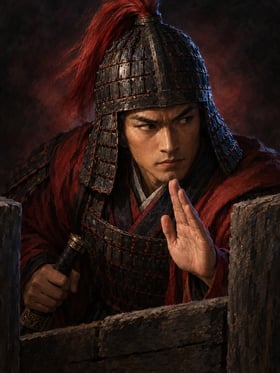
Zhu Huan was fiercely protective of his standing, unwilling to place himself below others; he made light of wealth and prized honor, had a strong memory, and cared for his subordinates. He was extremely bold and resourceful, and Sun Quan was very fond of him. Keenly set on advancing, he chafed when his strategies went unadopted, and would at times fly into a rage out of wounded pride.

Life
In the novel: 3 chapters · In the Records: 4 volumes
Life177–238
222 CE (Huangchu 3)
- Three-Pronged Campaign against WuJianglingCommander
- Battle of RuxuRuxukouCommander
228 CE (Taihe 2)
- Battle of ShitingShitingWarrior
Allegiance
- Sun Quan's Faction
- Eastern Wu
- Hatched: dated by chapter
- Life event
List all 4 stops
On the boards
Compare with someone →Where this person ranks on each board.
- Counsel Ignored: #2Romance
- Never Defeated: #2Romance
- Most Battles Won: #5Romance
- Most Generals Slain: #19Romance
11 more boards
- Most Foes Defeated: #29of 78Romance
- Most Battles: #32of 230Both
- Most Duel Wins: #33of 54Romance
- Plans That Worked: #55of 159Romance
- Master Strategists: #65of 176Records
- Longest Lived: #71of 182Records
- Most Talkative: #78of 349Records
- Best Connected: #93of 2000Records
- Died Youngest: #110of 182Records
- Overlooked by the Novel: #115of 2139Both
- Novel Embellished: #363of 2139Both
Who they were
Character profile
- Character
- Zhu Huan was fiercely protective of his standing, unwilling to place himself below others; he made light of wealth and prized honor, had a strong memory, and cared for his subordinates. He was extremely bold and resourceful, and Sun Quan was very fond of him. Keenly set on advancing, he chafed when his strategies went unadopted, and would at times fly into a rage out of wounded pride.
- Manner of speech
- In battle Zhu Huan was skilled at rousing the morale of his troops and laying out the calculus of advantage and harm, his speech often employing parallel phrasing and rhetorical questions.
- Life
- Zhu Huan was a man of Wu in Wu Commandery. When Sun Quan was still a general, he served in his headquarters, and later became chief of Yuyao. During a plague he dispatched capable officers to seek out and shelter kinfolk for treatment, winning deep affection from the gentry and common people. He once expanded a force of two thousand men to over ten thousand within a year, and campaigned against the mountain bandits of Danyang and Poyang. He succeeded Zhou Tai as commander of Ruxu, and in the Ruxu campaign of the first year of Huangwu he defeated Cao Ren, burned the enemy's forces, and took Wang Shuang alive, for which he was enfeoffed as Marquis of Jiaxing and promoted to General Who Rouses Martial Might. In the seventh year of Huangwu, together with the three commanders Lu Xun, Quan Cong, and others, he defeated Cao Xiu, who had been lured to Wan by Zhou Fang. In the first year of Huanglong he was appointed General of the Front, concurrently Governor of Qing Province, and granted the Staff of Authority. In the sixth year of Jiahe, he and Quan Cong failed in receiving Lü Xi; he beheaded the assistant-army envoy sent by Hu Zong, and afterward, pleading illness, went to Jianye for treatment. His son Zhu Yi inherited his title.
- Anecdotes
- Zhu Huan was a general of Eastern Wu, only twenty-seven years of age, who garrisoned Ruxu and greatly defeated Cao Ren. He once served as Lu Xun's left wing, and also advanced toward Hefei together with Quan Cong.
Historical Record
Zhu Huan, courtesy name Xiumu, was from Wu County, Wu Commandery. When Sun Quan was serving as a general, Zhu Huan worked in his staff office; he later became chief of Yuyao. When the area was struck by epidemics and famine, he assigned capable officials to their duties, personally sought out medicine, and distributed porridge to those in need, earning the gratitude of local officials and commoners. He was later appointed Colonel Who Quells Bandits and given command of troops recruited from scattered remnants of the armies in Wu and Kuaiji commanderies. Within a year, he had gathered ten thousand men. He also oversaw the campaigns that suppressed bandits in Danyang and Poyang, gradually rising to the rank of General of the Auxiliary Forces and receiving the title Marquis of Xincheng Pavilion. He succeeded Zhou Tai as commander at Ruxu.
In the first year of Huangwu, Cao Ren led an army to attack Ruxu. He first announced that he would attack Xianxi, luring Zhu Huan into dispatching troops elsewhere. Once the Wu forces had set out, Cao Ren changed course and pressed closer. Zhu Huan had only five thousand men under his command. He encouraged his officers by pointing to the advantages of the terrain and the city’s defenses, as well as the Wei army’s exhaustion after its long journey. He then lowered the banners and silenced the drums to feign weakness. Cao Ren’s son Cao Tai attacked the city, while Chang Diao and others sailed in oil boats to launch a separate attack on Zhongzhou. Zhu Huan personally held off Cao Tai and ordered his subordinate generals to engage the naval force. They burned the enemy camp and routed the Wei army, killing Chang Diao and capturing Wang Shuang alive. In recognition of his military achievements, Sun Quan enfeoffed him as Marquis of Jiaxing and promoted him to General Who Displays Martial Prowess. Volume 47 of the Records of the Three Kingdoms also records that Cao Ren sent Chang Diao and others across to Zhongzhou at Ruxu at dawn, while Cao Tai launched a fierce attack on Zhu Huan. Zhu Huan sent Yan Gui and others to defeat the advancing forces, after which the Wei army withdrew.
In the seventh year of Huangwu, Zhou Fang lured Cao Xiu into Wan. Zhu Huan and Quan Cong each commanded thirty thousand troops under Lu Xun’s direction. Zhu Huan reasoned that, if Cao Xiu were defeated, he would have to retreat by way of Jiashi and Guache. He proposed sending troops to block the route and capture Cao Xiu, then pressing on to take Shouchun while the army was still victorious. Lu Xun judged this inadvisable, and the plan was not carried out. When Lu Xun, Zhu Huan, and Quan Cong advanced against Cao Xiu along three routes, Zhu Huan commanded the left wing. The Wu army defeated Cao Xiu and pursued him as far as Jiashi. In the first year of Huanglong, Zhu Huan was appointed General of the Vanguard, given the governorship of Qing Province, and granted imperial authority to act independently. In the sixth year of Jiahe, he and Quan Cong went to receive Lü Xi, who intended to act as an internal accomplice. After the plot was exposed, they led their troops in retreat, bringing up the rear. During this campaign, Zhu Huan became angry because he resented Quan Cong’s proposal to divide the generals among the forces and had heard that Hu Zong was involved in overseeing the army. He killed the assistant military officer sent by Hu Zong, then claimed to be suffering from madness and went to Jianye for treatment. Sun Quan remembered his past achievements and did not punish him.
In the Novel
The Romance of the Three Kingdoms portrays Zhu Huan as a courageous and resourceful commander defending Ruxu under Sun Quan, and highlights his impassioned words on the battlefield. When Cao Ren came to attack, Zhu Huan rallied the mere five thousand defenders by declaring that “victory or defeat lies with the general, not with the number of troops,” then ordered them to lower their banners and silence the drums to lure the enemy in. The novel goes on to depict him riding out with his saber drawn and killing Chang Diao within three exchanges, after which the Wu army seized the moment to win a great victory over Cao Ren. These specific encounters and scenes of a general being slain are more dramatic than the account in the Records of the Three Kingdoms, which only says that the Wu army defeated Chang Diao and others and that Zhu Huan held off Cao Tai; it does not record Zhu Huan personally killing Chang Diao in battle.
During the Battle of Shiting, the novel has Zhu Huan offer another plan: block the two routes at Jiashi and Guiche with timber to capture Cao Xiu. Lu Xun rejects the proposal, leaving Zhu Huan resentful. Zhu Huan then follows orders to strike the Wei encampment from the rear, kill Zhang Pu, and set fires to aid the attack. The historical record does state that he proposed blocking Cao Xiu’s retreat along the routes at Jiashi and Guache, but that the proposal was not adopted; the killing of Zhang Pu and the attack on the encampment are unique to the novel.
Key Relationships
Zhu Huan served Sun Quan. He began his career working in Sun Quan’s staff office and later became a general in the Wu army. Sun Quan rewarded him for his military achievements and, after he killed a man, pardoned him in consideration of his service. His relationship with Lu Xun involved both cooperation in the same army and differences over strategy: during the Battle of Shiting, Zhu Huan commanded the left wing, and the historical record says that he proposed cutting off Cao Xiu’s retreat but that the plan was not adopted; the novel further depicts him as resentful over this. Zhu Huan and Quan Cong both commanded forces against Cao Xiu, and later joined forces again when they went to receive Lü Xi. Zhu Huan’s disagreement with Quan Cong arose from Quan Cong’s proposal to divide the generals among the forces. Cao Ren, Cao Tai, and Chang Diao were Wei opponents in the fighting at Ruxu, while Cao Xiu was the enemy commander in the campaigns at Wan and Shiting.
Signature Scenes
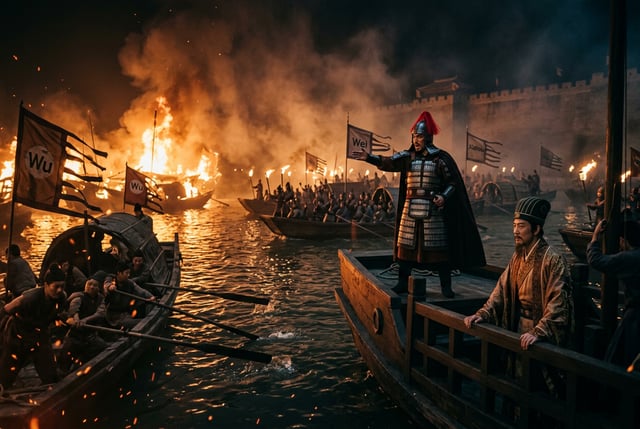
Beneath the walls of Ruxu, the Wei army bore down while Zhu Huan’s forces were few. Drawing on the advantages of the city’s defenses and the surrounding mountains and rivers, he explained how “the rested can await the weary, and the host can control the guest.” His words steadied the officers, and he then used a show of weakness to lure the enemy in. The historical record says that he personally held off Cao Tai while his subordinate generals defeated Chang Diao and others, ultimately capturing Wang Shuang and killing Chang Diao. The novel recasts this battle as a more vivid one-on-one encounter: Zhu Huan rides out and fights Chang Diao, killing him with a single stroke after three exchanges, and the Wu army then charges in pursuit of victory. (Unique to the novel)
Another scene centers on the dispute over how to pursue Cao Xiu at Shiting. Zhu Huan realized that after his defeat Cao Xiu might retreat by way of Jiashi and Guache. He proposed blocking the routes in advance and even suggested pressing on to take Shouchun. The historical record says Lu Xun did not adopt this plan. The novel, by contrast, portrays Zhu Huan as a fierce general who leads troops in a raid on the enemy camp, kills Zhang Pu, and sets it ablaze, contrasting his frustration over the rejected plan with his achievements in battle. (The killing of Zhang Pu and raid on the camp are unique to the novel)
Quotes
6 lines in the books · 3 featured
「凡兩軍交對,勝負在將,不在眾寡。諸君聞曹仁用兵行師,孰與桓邪?兵法所以稱客倍而主人半者,謂俱在平原。無城池之守,又謂士眾勇怯齊等故耳。今人既非智勇,加其士卒甚怯,又千里步涉,人馬罷困,桓與諸軍。共據高城,南臨大江,北背山陵,以逸待勞,為主制客,此百戰百勝之勢也。雖曹丕自來,尚不足憂,況仁等邪!」
This line displays Zhu Huan's military talent and strategic vision, stressing the importance of the commander.
「休本以親戚見任,非智勇名將也。今戰必敗,敗必定。走當由夾石、掛車,此兩道皆險阨,若以萬兵柴路,則彼眾可盡。而休可生虜,臣請將所部以斷之。若蒙天威,得以休自效,便可乘勝長驅,近取壽春,割有淮面,以規許、洛,此萬世一時,不可失也。」
This line embodies Zhu Huan's precise reading of the battle situation and his bold strategic conception.
「天授陛下聖姿,當君臨四海,猥重任臣,以除奸逆,臣疾當自愈。」
This line displays Zhu Huan's loyalty to Sun Quan and his optimism about his own illness.
- Family
- Lord & vassal
- Enemies
- Other
Who is Zhu Huan connected to?
Pick someone to see how many steps lie between them and Zhu Huan.
History vs. novel
8 points
| History | Novel |
|---|---|
| First AppearanceNovel embellishes | |
Zhu Huan served in Sun Quan's headquarters in his early years and later became chief of Yuyao. The Records of the Three Kingdoms does not record him appearing when worthy men were being recruited throughout Jiangdong. vol. 56 | The novel says that when Sun Quan was recruiting worthy men, Zhu Huan came to Jiangdong alongside talented men of Wu such as Kan Ze and Yan Jun, and was treated with courtesy by Sun Quan. ch. 38 |
| Relief During the Yuyao EpidemicHistory only | |
While Zhu Huan was chief of Yuyao, an epidemic and food shortage struck. He appointed capable officials, personally visited the people, and provided medicine and congee, earning deep gratitude from both officials and commoners. vol. 56 | — |
| Garrison at RuxuNovel embellishes | |
Cao Ren used a feint to distract the enemy, and Zhu Huan sent troops to Xianxi, leaving only five thousand soldiers at Ruxu for a time. He assessed the terrain and the enemy's exhaustion, then rallied his generals to meet the attack. vol. 56 | The novel also says that Zhu Huan mistakenly sent the main force to Xianxi, leaving only five thousand troops in the city, and portrays him as just twenty-seven years old, exceptionally bold and resourceful, and greatly favored by Sun Quan. ch. 85 |
| Killing Chang DiaoNovel embellishes | |
Zhu Huan's troops defeated Cao Ren's forces, killed Chang Diao, captured Wang Shuang alive, burned the enemy camp, and inflicted heavy casualties. The Records of the Three Kingdoms does not say that Zhu Huan personally killed a general. vol. 56 | The novel says that Zhu Huan rode out with his blade in hand and personally killed Chang Diao within three exchanges. The Wu army then pressed its advantage and won a great victory, capturing large quantities of weapons and warhorses. ch. 85 |
| Proposal to Block the Route at JiashiNovel embellishes | |
During the Battle of Shiting, Zhu Huan proposed sending troops to block Cao Xiu's two escape routes at Jiashi and Guache, then pressing the attack after capturing him. Sun Quan and Lu Xun discussed the proposal but did not accept it. vol. 56 | The novel also says that Zhu Huan proposed cutting off Cao Xiu's retreat and advancing on Shouchun. Lu Xun refused, saying he had other arrangements, leaving Zhu Huan displeased as he withdrew. ch. 96 |
| Covering the RetreatHistory only | |
The Wu army retreated after news of Lü Xi's surrender reached the enemy, and Zhu Huan personally brought up the rear. Li Ying, the Administrator of Lujiang, had planned to attack while the Wu army was crossing a stream, but when he saw Zhu Huan's command canopy at the rear, he dared not act. vol. 56 | — |
| Killing Subordinates in AngerHistory only | |
Zhu Huan quarreled with Quan Cong because he resented being placed under his command, then took out his anger on Hu Zong. He killed those who tried to stop him and an aide, then claimed to have gone mad and went to Jianye for treatment. vol. 56 | — |
| Stroking Sun Quan's BeardHistory only | |
After Zhu Huan recovered, Sun Quan personally saw him off. A historical account quoting the Wu Record says that Zhu Huan asked to stroke Sun Quan's beard, and Sun Quan laughed and agreed. vol. 56 | — |
- First AppearanceNovel embellishes
- History
Zhu Huan served in Sun Quan's headquarters in his early years and later became chief of Yuyao. The Records of the Three Kingdoms does not record him appearing when worthy men were being recruited throughout Jiangdong.
vol. 56
- Novel
The novel says that when Sun Quan was recruiting worthy men, Zhu Huan came to Jiangdong alongside talented men of Wu such as Kan Ze and Yan Jun, and was treated with courtesy by Sun Quan.
ch. 38
- Relief During the Yuyao EpidemicHistory only
- History
While Zhu Huan was chief of Yuyao, an epidemic and food shortage struck. He appointed capable officials, personally visited the people, and provided medicine and congee, earning deep gratitude from both officials and commoners.
vol. 56
- Garrison at RuxuNovel embellishes
- History
Cao Ren used a feint to distract the enemy, and Zhu Huan sent troops to Xianxi, leaving only five thousand soldiers at Ruxu for a time. He assessed the terrain and the enemy's exhaustion, then rallied his generals to meet the attack.
vol. 56
- Novel
The novel also says that Zhu Huan mistakenly sent the main force to Xianxi, leaving only five thousand troops in the city, and portrays him as just twenty-seven years old, exceptionally bold and resourceful, and greatly favored by Sun Quan.
ch. 85
- Killing Chang DiaoNovel embellishes
- History
Zhu Huan's troops defeated Cao Ren's forces, killed Chang Diao, captured Wang Shuang alive, burned the enemy camp, and inflicted heavy casualties. The Records of the Three Kingdoms does not say that Zhu Huan personally killed a general.
vol. 56
- Novel
The novel says that Zhu Huan rode out with his blade in hand and personally killed Chang Diao within three exchanges. The Wu army then pressed its advantage and won a great victory, capturing large quantities of weapons and warhorses.
ch. 85
- Proposal to Block the Route at JiashiNovel embellishes
- History
During the Battle of Shiting, Zhu Huan proposed sending troops to block Cao Xiu's two escape routes at Jiashi and Guache, then pressing the attack after capturing him. Sun Quan and Lu Xun discussed the proposal but did not accept it.
vol. 56
- Novel
The novel also says that Zhu Huan proposed cutting off Cao Xiu's retreat and advancing on Shouchun. Lu Xun refused, saying he had other arrangements, leaving Zhu Huan displeased as he withdrew.
ch. 96
- Covering the RetreatHistory only
- History
The Wu army retreated after news of Lü Xi's surrender reached the enemy, and Zhu Huan personally brought up the rear. Li Ying, the Administrator of Lujiang, had planned to attack while the Wu army was crossing a stream, but when he saw Zhu Huan's command canopy at the rear, he dared not act.
vol. 56
- Killing Subordinates in AngerHistory only
- History
Zhu Huan quarreled with Quan Cong because he resented being placed under his command, then took out his anger on Hu Zong. He killed those who tried to stop him and an aide, then claimed to have gone mad and went to Jianye for treatment.
vol. 56
- Stroking Sun Quan's BeardHistory only
- History
After Zhu Huan recovered, Sun Quan personally saw him off. A historical account quoting the Wu Record says that Zhu Huan asked to stroke Sun Quan's beard, and Sun Quan laughed and agreed.
vol. 56
Combat
On the field
Duels, kills and executions as the texts tell them, counted separately for the Records and the Romance.
- RecordsJuan 56Struck downChang DiaoWon「遂梟雕」
- RomanceCh. 85DuelChang DiaoWon「被桓一刀斬常雕於馬下」
- RomanceCh. 96Struck downZhang PuWon「被朱桓一刀斬於馬下」
Battles in command
Battles this person commanded in, with the outcome as each text tells it.
- Records
- 1W 0L 0D 1 undecided
- Romance
- 3W 0L 0D 0 undecided
- Records222Three-Pronged Campaign against WuUndecidedvs Wei's armyJuan 47「是月,魏軍皆退」
- Records222Battle of RuxuWonvs Wei's armyJuan 56「遂梟雕,生虜雙,送武昌,臨陳斬溺死者千餘」
- Romance222Three-Pronged Campaign against WuWonvs Wei troopsCh. 85「丕聽知三路兵敗,乃喟然嘆曰」
- Romance222Battle of RuxuWonvs Wei troopsCh. 85「曹仁大敗而退」
- Romance228Battle of ShitingWonvs Wei troopsCh. 96「今曹休大敗,魏兵喪膽」
Stratagems
Plans this person devised or saw through, as the texts tell them.
- Records
- 1 carried out · 1 worked · 1 turned down · 0 seen through
- Romance
- 1 carried out · 1 worked · 1 turned down · 0 seen through
- RecordsLure the EnemyLureWorkedagainst WeiJuan 56「桓因偃旗鼓,外示虛弱,以誘致仁」
- RecordsBlock the Return Route with Felled TimberAmbushTurned downagainst WeiJuan 56「遜以為不可,故計不施行」
- RomanceLower the Banners and Silence the DrumsLureWorkedagainst Wei troopsCh. 85「教眾軍偃旗息鼓,只作無人守把之狀」
- RomanceAmbushAmbushTurned downagainst Wei troopsCh. 96「某願與全子璜各引一軍,伏於山險,先以柴木大石塞斷其路,曹休可擒矣」
Events
Events (5)
Battles and events the texts place this person in, by date.
Battles
- 222Three-Pronged Campaign against WuCommander
- 222Battle of RuxuCommander
- 228Battle of ShitingWarrior
Other events
Places
Continue
Three-Pronged Campaign against Wu
Relationship timeline13 entries ▸
History · vol. 56
- Sun Quan§39
Lord
served in Sun Quan’s staff when Quan was a general; appointed Chief of Yuyao
- Zhou Tai§39
Rival
Succeeded Zhou Tai as commander of Ruxu
- Cao Ren§40
Fights
In the first year of Huangwu, Cao Ren came to attack Ruxu; Huan used five thousand men, concealing their flags and drums, to lure Cao Ren in; Cao Ren sent his son Tai to attack Ruxu city; Huan burned the camp and drove Tai back, beheaded Diao Sheng, and captured Wang Shuang alive
- Chang Diao§40
Fights
Huan's unit beheaded Chang Diao
- Wang Shuang§40
Fights
captured Wang Shuang alive and sent him to Wuchang
- Cao Xiu§41
Fights
In the seventh year of Huangwu, Zhou Fang of Wan lured Cao Xiu. Huan and Quan Cong served as the left and right commanders in the attack on Xiu; proposed cutting off the road at Jiashi and blocking his return route with carts, but Lu Xun rejected the plan.
- Lu Xun§41
Rival
during the campaign at Wan, Quan first discussed it with Lu Xun; Xun thought it inadvisable, so Huan's plan was not carried out
- Quan Cong§42
Rival
In the sixth year of Jiahe, went with Quan Cong to lead troops to meet Lü Xi; when the affair was exposed, the army withdrew, and Huan brought up the rear himself. Quan Cong, as commander, proposed a surprise attack; Huan was proud and ashamed to be seen among the ranks, so went to see Cong to discuss the plan, and was extremely angry
- Hu Zong§42
Enemy
Quan ordered Hu Zong to promulgate edicts and take part in military affairs; Huan, enraged and resentful, summoned Zong and wanted to hack him to death; Zong escaped, and Huan hacked his military aide to death
- Li Ying§42
Rival
Huan brought up the rear himself; Li Ying wanted to attack while they were halfway across, but saw Huan's canopy marking his authority behind them and ultimately did not launch the attack.
- Zhu Yi§48
Child
father and son (son of Zhu Huan); was appointed a Gentleman through his father’s position, and later appointed Commandant of Cavalry, taking Zhu Huan’s place in commanding the troops
All 13
Loading…
Inner monologues · AI-generated3 monologues ▸
- I, Zhu Huan, courtesy name Xiumu, was charged with defending the frontiers of Jiangdong. I have always believed that a g
- I am Zhu Huan, courtesy name Xiumu. Whenever trouble arose in the army, I first asked what would determine victory or de
- I, whose courtesy name was Xiumu, was from Wu County in Wu Commandery. Looking back on my early years, when Sun Quan was