Eastern Wu · Senior General-in-Chief
Lü Dai
courtesy name 定公 · 161–256
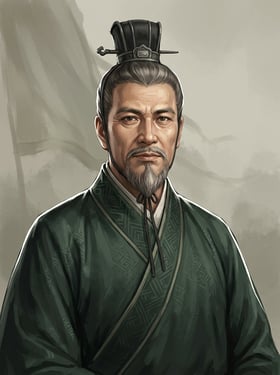
Lü Dai kept himself pure and served the public interest; his plans and strategies were often ingenious, he was loyal and valiant with principle, close to the worthy and welcoming of remonstrance. He once campaigned against the Shanyue together with Wu Can.

Life
In the novel: 1 chapter · In the Records: 9 volumes
Life161–256
226 CE (Huangchu 7)
- Lü Dai Executes Shi HuiLongbianCommander
231 CE (Taihe 5)
239 CE (Jingchu 3)
- Liao Shi's RebellionLinglingCommander
Appearances
By chapter (10)
Outlined chapters have spoken lines; tap one to read them.
Novel
- 108
Records
- 47
- 48
- 49
- 52
- 53
- 57
- 59
- 60
- 63
- Eastern Wu· Undated
- Life event
List all 4 stops
On the boards
Compare with someone →Where this person ranks on each board.
Who they were
Character profile
- Character
- Lü Dai kept himself pure and served the public interest; his plans and strategies were often ingenious, he was loyal and valiant with principle, close to the worthy and welcoming of remonstrance. He once campaigned against the Shanyue together with Wu Can.
- Life
- Lü Dai, styled Dinggong, was a native of Hailing in Guangling.
- Anecdotes
- Lü Dai held such posts as General of the Household Who Manifests Trust, Grand Administrator of Luling, Inspector of Jiaozhou, General Who Pacifies the South, General Who Guards the South, Supreme Grand General, and Grand Marshal, and was enfeoffed as Marquis of Duxiang and Marquis of Panyu. At eighty he was still vigorous and diligent, personally attending to the affairs of the king; he died in the first year of Taiping, aged ninety-six.
Historical Record
Lü Dai, courtesy name Dinggong, was from Hailing, Guangling. In his early years he served as a clerk in commandery and county offices, then fled south to escape the turmoil. After Sun Quan took charge of Wu’s affairs, Lü Dai went to serve at his headquarters. He successively held the posts of Wu chancellor and magistrate of Yuyao, and was appointed to office because his handling of government affairs met with Sun Quan’s approval. He recruited able-bodied men and took part in suppressing the rebellion of Lü He and Qin Lang in five counties, including Dongye in Kuaiji. He was later appointed General of Zhaoxin, then commanded troops in capturing three commanderies in Changsha and suppressing local resistance, after which he was promoted to Administrator of Luling.
In the first year of Yan’kang, Lü Dai succeeded Bu Zhi as Inspector of Jiaozhou. He induced Qian Bo, a bandit leader from Gaoliang, to surrender, and suppressed the rebellions of the Yulin tribal bandits and Wang Jin. For these achievements, he was promoted to General Who Pacifies the South, granted imperial authority, and enfeoffed as Marquis of Duxiang. When Sun Quan divided the administration into Guangzhou and Jiaozhou, Lü Dai became Inspector of Guangzhou. Shi Hui rejected the court’s summons, so Lü Dai led three thousand troops across the sea by night and day and advanced swiftly. Shi Hui and his brothers came out bare-chested to welcome him, but Lü Dai had them executed nonetheless. He then defeated the forces of Gan Li and Huan Zhi and again campaigned against Jiuzhen; after the campaign, he was promoted to General Who Guards the South. Pei Songzhi’s annotations in the source record that Dai Liang and others traveled with Lü Dai, and include Sun Sheng’s criticism of the ruse that led to Shi Hui’s death and of breaking faith to win merit, presenting differing assessments of Lü Dai’s actions.
In the third year of Huanglong, Lü Dai was summoned back to garrison Changsha. Later, he joined Pan Jun in suppressing unrest in Wuling and was ordered to campaign against Li Huan, Lu He, Sui Chun, Luo Li, and others. After Sui Chun surrendered, he was appointed a deputy general; the other leaders were captured or killed. After Pan Jun’s death, Lü Dai took over the administration of Jing Province’s documents. When Liao Shi rebelled, Lü Dai rushed there by night and day and put down the revolt over the course of a year. After Lu Xun’s death, Lü Dai commanded the Right Division at Wuchang and was promoted to Grand General. After Sun Liang’s accession, he was appointed Grand Marshal. Sun Quan once reproached himself because Lü Dai had spent many years in Jiaozhou without sending home money or provisions, leaving his family in hardship, and bestowed additional money, rice, cloth, and silk on him. Lü Dai was upright and served the public; he also promoted and valued Xu Yuan, who dared to speak frankly. When Xu Yuan died, Lü Dai mourned him deeply and called him a good friend.
In the Novel
Chapter 108 of Romance of the Three Kingdoms portrays Lü Dai as a senior Eastern Wu minister who, along with Grand Tutor Zhuge Ke, receives Sun Quan’s final charge. The novel describes Sun Quan falling ill from fright after strange storms and the uprooting of pines and cypresses. He summons the two men to his bedside to arrange affairs after his death, and then dies. This scene gives Lü Dai a dramatic role as a senior minister assisting in governance. However, although the supplied material from the Records of the Three Kingdoms states that Lü Dai later rose to Grand Marshal and records the period of Sun Quan’s death, it does not say that he and Zhuge Ke jointly received Sun Quan’s final charge, nor does it record the strange omens or Sun Quan’s illness from fright as depicted in the novel.
Key Relationships
Lü Dai served Eastern Wu and rose through the ranks from local official and military commander to Grand General and Grand Marshal, undertaking the long-term pacification of the south and administration of the frontier. Sun Quan repeatedly entrusted him with campaigns and garrison duties, and also reflected on the court’s failure to provide adequately for its servants when he learned that Lü Dai’s family was poor. The novel, by contrast, brings their relationship to the moment when Sun Quan entrusts his final charge to Lü Dai; this detail is unique to the novel.
He worked with Shi Kuang: Lü Dai relied on Shi Kuang to send a letter ahead, urging Shi Hui to admit his guilt. He also joined up with Dai Liang while advancing on Jiaozhi. Pei Songzhi’s annotations quote Sun Sheng’s severe moral criticism of Lü Dai for executing Shi Hui even after he had come to surrender. Thus, Lü Dai’s achievement in pacifying Jiaozhou coexists with controversy over his use of deceit and breach of faith. Lü Dai also admired Xu Yuan, allowed him to point out his failings, and mourned him as a good friend after his death. This reveals a receptive side to remonstrance alongside his toughness as a commander.
Signature Scenes
One scene shows Lü Dai leading three thousand men across the sea by night and day in a surprise attack on Jiaozhi. When someone warned him that Shi Hui’s position was deeply rooted and would be difficult to take, Lü Dai reasoned that the enemy would not expect Wu’s troops to arrive so suddenly, and urged a swift advance while they were unprepared. After Shi Hui and his brothers came out bare-chested to welcome him, Lü Dai ordered their execution. The battle swiftly changed the balance of power in Jiaozhou, but also drew criticism in Pei Songzhi’s annotations for betraying the trust of those who had surrendered.
Another scene concerns Liao Shi’s Rebellion, which spread through Lingling, Cangwu, and Yulin. Lü Dai submitted a memorial requesting permission to go himself, then rushed to suppress the revolt by night and day. The Wu court subsequently sent generals including Tang Zi to join the campaign, and it took a year to defeat the rebels. Compared with the novel’s scene of Sun Quan entrusting his final charge at his bedside, the historical account presents Lü Dai chiefly through his long record of campaigns, frontier defense, and promotions. The novel, by contrast, emphasizes his standing as a senior minister by depicting him receiving Sun Quan’s final charge.
Quotes
3 lines in the books · 2 featured
今徽雖懷逆計,未虞吾之卒至,若我潛軍輕舉,掩其無備,破之必也。稽留不速,使得生心,嬰城固守,七郡百蠻,雲合響應,雖有智者,誰能圖之?
This line displays Lü Dai's military cunning, stressing the importance of striking first and winning swiftly.
德淵,呂岱之益友,今不幸,岱復於何聞過?
This line embodies Lü Dai's valuing of friendship and his openness to accepting counsel, shaping his loyal and honest image.
- Family
- Lord & vassal
- Friends
- Enemies
- Other
History vs. novel
7 points · 1 novel-only
| History | Novel |
|---|---|
| Sun Quan Entrusts the Orphaned HeirNovel only | |
| — | The novel says that when Sun Quan was gravely ill, he summoned Zhuge Ke and Lü Dai to his bedside and entrusted them with the affairs of state before passing away. ch. 108 |
| Rose to Grand MarshalNovel embellishes | |
Historical records state that after Sun Liang ascended the throne, Lü Dai was appointed Grand Marshal; he had previously been promoted to Senior General-in-Chief. vol. 60 | The novel also calls Lü Dai Grand Marshal and places him in the scene where Sun Quan entrusts his final wishes on his deathbed, receiving the charge alongside Zhuge Ke. ch. 108 |
| Pacification of JiaozhouHistory only | |
Lü Dai was ordered to campaign against Shi Hui. He advanced by sea day and night, lured Shi Hui and his brothers out to welcome him, and then executed them. He went on to defeat the counterattack led by Gan Li, Huan Zhi, and others. vol. 60 | — |
| Campaign Against JiuzhenHistory only | |
After pacifying Jiaozhou, Lü Dai advanced into Jiuzhen and took tens of thousands of heads. He sent men to spread the influence of the state, and the kingdoms of Funan, Linyi, Tangming, and others sent envoys bearing tribute. vol. 60 | — |
| Pacification of Rebellions in Various RegionsHistory only | |
Historical records state that Lü Dai first took part in suppressing the Wuling tribes, then led several generals in putting down rebellions in various regions. After Suichun surrendered, he was appointed a Deputy General. vol. 60 | — |
| Xu Yuan’s Candid AdviceHistory only | |
Lü Dai promoted Xu Yuan to Attendant Censor. Xu Yuan often spoke frankly, pointing out his faults, but Lü Dai praised him for it. After Xu Yuan died, Lü Dai called him a good friend who had benefited him greatly. vol. 60 | — |
| Campaign Against Liao ShiHistory only | |
After Liao Shi rebelled, Lü Dai set out by night and day and pacified the rebellion over the course of a year, killing Liao Shi and his followers before returning to Wuchang. vol. 60 | — |
- Sun Quan Entrusts the Orphaned HeirNovel only
- Novel
The novel says that when Sun Quan was gravely ill, he summoned Zhuge Ke and Lü Dai to his bedside and entrusted them with the affairs of state before passing away.
ch. 108
- Rose to Grand MarshalNovel embellishes
- History
Historical records state that after Sun Liang ascended the throne, Lü Dai was appointed Grand Marshal; he had previously been promoted to Senior General-in-Chief.
vol. 60
- Novel
The novel also calls Lü Dai Grand Marshal and places him in the scene where Sun Quan entrusts his final wishes on his deathbed, receiving the charge alongside Zhuge Ke.
ch. 108
- Pacification of JiaozhouHistory only
- History
Lü Dai was ordered to campaign against Shi Hui. He advanced by sea day and night, lured Shi Hui and his brothers out to welcome him, and then executed them. He went on to defeat the counterattack led by Gan Li, Huan Zhi, and others.
vol. 60
- Campaign Against JiuzhenHistory only
- History
After pacifying Jiaozhou, Lü Dai advanced into Jiuzhen and took tens of thousands of heads. He sent men to spread the influence of the state, and the kingdoms of Funan, Linyi, Tangming, and others sent envoys bearing tribute.
vol. 60
- Pacification of Rebellions in Various RegionsHistory only
- History
Historical records state that Lü Dai first took part in suppressing the Wuling tribes, then led several generals in putting down rebellions in various regions. After Suichun surrendered, he was appointed a Deputy General.
vol. 60
- Xu Yuan’s Candid AdviceHistory only
- History
Lü Dai promoted Xu Yuan to Attendant Censor. Xu Yuan often spoke frankly, pointing out his faults, but Lü Dai praised him for it. After Xu Yuan died, Lü Dai called him a good friend who had benefited him greatly.
vol. 60
- Campaign Against Liao ShiHistory only
- History
After Liao Shi rebelled, Lü Dai set out by night and day and pacified the rebellion over the course of a year, killing Liao Shi and his followers before returning to Wuchang.
vol. 60
Combat
On the field
Duels, kills and executions as the texts tell them, counted separately for the Records and the Romance.
- RecordsJuan 49ExecutionShi HuiWon「左右因反縛以出,即皆伏誅,傳首詣武昌」
- RecordsJuan 60Struck downFei YangWon「斬式及遣諸所偽署臨賀太守費楊等」
Stratagems
Plans this person devised or saw through, as the texts tell them.
- Records
- 2 carried out · 2 worked · 0 turned down · 0 seen through
- RecordsLure Huang into Surrendering and Capture HimDeceptionWorkedagainst JiaozhiJuan 49「左右因反縛以出,即皆伏誅」
- RecordsStealthy Surprise AttackOtherWorkedagainst JiaozhiJuan 60「徽聞岱至,果大震怖,不知所出,即率兄弟六人肉袒迎岱」
Events
Events (4)
Battles and events the texts place this person in, by date.
Other events
- 226Lü Dai Executes Shi HuiCommander
- 231Pan Jun's Campaign Against the Wuxi TribesCommander
- 239Liao Shi's RebellionCommander
- 252Sun Quan's Deathbed Regency Decree
Places
- Native of
- GuanglingRecords
- Was at
- Jing ProvinceRecords
- ChangshaRecords
- WuchangRecords
- Wu CountyRecords
- LukouRecords
- Governed
- Jiao ProvinceRecords
- Guang ProvinceRecords
Continue
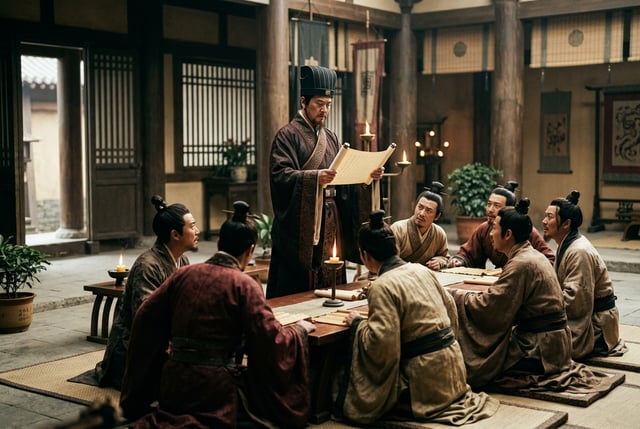
Lü Dai Executes Shi Hui
Relationship timeline6 entries ▸
History · vol. 49
- Shi Hui§32
Enemy
was ordered by imperial decree to execute him; after his execution, his head was sent to Wuchang
History · vol. 60
- Jiang Qin§25
Fights
led troops with Jiang Qin to attack Lü He and Qin Lang
- Shi Hui§28
Enemy
Submitted a memorial requesting that Hui be punished for his crimes, then led troops across the sea to attack and behead him
- Pan Jun§29
Fights
joined Grand Herald Pan Jun in attacking the non-Han peoples of Wuling
- Lu Xun§31
Friend
Succeeded Pan Jun in managing Jing Province’s documents and was at Wuchang with Lu Xun; Zhang Cheng’s letter said, “Now it is you and Master Lu.”
- Lü Kai§35
Child
Lü Dai's son, Deputy Colonel of the Army, supervising troops at Puqi
Inner monologues · AI-generated3 monologues ▸
- My name was Dai, but my courtesy name is not recorded here, so I dare not claim one without warrant. In my youth, I was
- I am Lü Dai, and my courtesy name is unknown. Now, looking back over my life, I see that much of what I experienced took
- I am Lü Dai, courtesy name Dinggong, from Hailing in Guangling. Amid the wars at the end of the Han, I left my home and