

Background
Lü Dai Executes Shi Hui, dated by the title to around Huangwu 5 (226), was not simply a local conflict. At its heart was a clash between central appointments and established local power, as Sun Quan’s regime sought to bring Jiaozhi under more direct administrative control. Citing Jiaozhi’s distance, Sun Quan divided the region at Hepu: the area north of it became Guangzhou, while the south remained Jiaozhou. He appointed Lü Dai and Dai Liang as inspectors of the two provinces, respectively, and sent Chen Shi to take over as Administrator of Jiaozhi. This division and these appointments show that the central government sought to reorganize the administrative hierarchy in the remote region. But Shi Xie’s son Shi Hui appointed himself Administrator and raised clan troops to resist Dai Liang, demonstrating that the new orders did not automatically translate into local obedience.
The conflict also unfolded within local society. Huan Lin, an official once recommended by Shi Xie, urged Shi Hui to welcome Dai Liang, but Shi Hui had him beaten to death. Huan Lin’s elder brother Zhi and Zhi’s son Fa then gathered clan troops and attacked Shi Hui. After besieging the city for several months, the two sides made peace and withdrew their forces. This episode shows that Shi Hui faced not only an appointment imposed from outside, but also resistance from local clan and official networks. Before Lü Dai advanced, armed confrontation and a temporary compromise had already emerged in the region. The central government’s subsequent intervention thus served at once to restore administrative order, punish defiance, and reshape power relations.
Main Figures
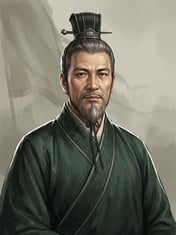
Sun Quan was the decision-maker at the center of the campaign: he altered the provincial and commandery arrangements, dispatched officials, and issued the order to execute Shi Hui. Lü Dai carried it out, traveling day and night from Guangzhou under imperial command and joining Dai Liang on the way through Hepu. Dai Liang represented the newly appointed Inspector of Jiaozhou, but Shi Hui’s refusal to receive him left him waiting at Hepu. This shows that Sun Quan did not rely solely on a routine transfer of office; he backed the administrative appointment with military force. The task of carrying it out and managing its risks, however, fell chiefly to Lü Dai.
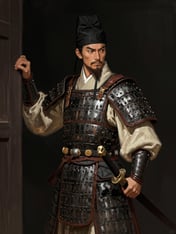
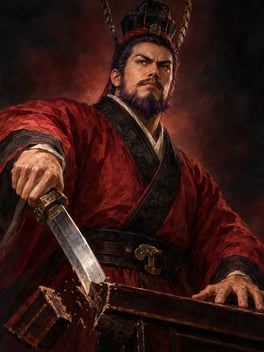
Shi Hui was the one executed, while Shi Kuang served as an intermediary through whom Lü Dai conveyed his message and urged surrender. Shi Kuang had known Lü Dai for some time. Lü Dai appointed him as an Assistant of the Master and Friends, first sending a letter to Jiaozhi explaining the stakes, then dispatching him to meet Shi Hui in person. He promised that even if Shi Hui lost his post as Administrator, he would be spared any further trouble. Shi Hui and his brothers then came out bare-shouldered to receive Lü Dai, indicating that they accepted the surrender terms conveyed through personal ties and backed by the promise of limited punishment. The following day, however, Lü Dai read out the imperial order and had his subordinates bind the Shi brothers. They were ultimately executed. The relationships among the key figures were therefore shaped not only by official positions and military orders, but also by trust, assurances, and personal ties that were exploited.
Core Issues
The first issue is how central authority reached remote regions. Sun Quan’s redrawing of provincial boundaries and appointment of inspectors and administrators asserted authority through formal institutions; Shi Hui’s self-appointment and raising of troops amounted to an open rejection of that claim. Lü Dai’s campaign gave the appointments coercive force, but it also exposed the limits of institutional reach: when a local power-holder could prevent an official from taking office, the central government might have to settle the question of sovereignty by military means before it could turn to routine administration. The text gives no details of Jiaozhi’s administration thereafter, so the execution alone cannot establish that integration had become secure.
The second issue is the credibility of political promises. Through Shi Kuang, Lü Dai conveyed that Shi Hui could lose his post as Administrator yet remain free of further trouble. After the Shi brothers came out bare-shouldered to receive him, Lü Dai instead produced the imperial order and had them executed. As the narrative presents it, the expectation created by the conciliatory approach stands in stark contrast to the final outcome. Sun Sheng’s commentary elevates the issue into a conflict between trustworthiness and political expediency: he argues that Lü Dai used the relationship of “master and friend” to communicate with the other side, inducing them to entrust themselves to him, and then destroyed them for personal gain. Sun Sheng’s view is a later moral judgment, not independent proof of Lü Dai’s motives. It does, however, show why traditional historical commentary treated the episode not merely as the suppression of a rebellion, but also as a test of a ruler’s credibility.
The third issue concerns whom the punishment targeted and where responsibility lay. The Shi brothers were executed, while Shi Yi, Shi Wei, Shi Kuang, and others were later reduced to commoner status; Shi Xie’s hostage son Xin was likewise made a commoner. Several years later, Shi Yi and Shi Wei were executed for breaking the law, while Xin died of illness. The sources thus describe differentiated treatment, rather than the wholesale elimination of the Shi clan in a single purge. They do not explain the full policy behind these later punishments or how they related to the Shi Hui case, so it would be simplistic to characterize the outcome as either clemency or a purge. The more cautious conclusion is that while Sun Quan’s regime executed those who directly resisted it, it treated other members of the family differently.
Political Consequences
The immediate consequence was the execution of Shi Hui and his brothers, whose heads were sent to Wuchang. The impasse created by Shi Hui’s refusal to admit the newly appointed officials was thus brought to an end by force. Sun Quan’s regime also sent a clear message: local powers could participate in the administrative network, but could not choose an Administrator on their own and use clan troops to defy central orders. At the same time, the damage to the government’s promises was also significant. If local leaders who submitted came to believe that accepting an offer of amnesty could still lead to execution, the central government might find it harder to win trust in future negotiations, transfers of office, or pacification efforts in frontier regions. This is a risk inferred from how the episode unfolded, not an outcome explicitly recorded in the sources.
The subsequent treatment of the family presents a more complex political picture. Not all the other members of the Shi clan were immediately executed; some were reduced to commoner status. Sun Sheng, however, used the episode to criticize Sun Quan for lacking long-term foresight and linked the Shi family’s fortunes to the loss of trust. The former is a specific punishment recorded in the sources; the latter is a historian’s moralized interpretation of its long-term political consequences. The two should not be conflated. If “the outcome is unclear” in the title refers to the long-term effectiveness of governance in Jiaozhi or whether local society was stabilized as a result, the cited passages are indeed insufficient to determine this. But if it refers to what happened to Shi Hui himself, the cited Records of the Three Kingdoms clearly states that he was executed.
Counterfactual Analysis
If Lü Dai had honored his promise that Shi Hui would face no further trouble after losing his post as Administrator, Shi Hui might have surrendered power and been spared. In the short term, this could have reduced hostility from the Shi clan and local clans, and might have made future efforts by officials to win over local powers more credible. But that would not necessarily have meant a smooth restoration of government in Jiaozhi. Shi Hui had already appointed himself Administrator and raised troops to resist Dai Liang; if he retained considerable local influence, whether the central appointment could truly be enforced would remain uncertain. Conversely, trading the lives of those who surrendered for their obedience might have averted an immediate siege and battle, but could have postponed the power struggle rather than resolved it.
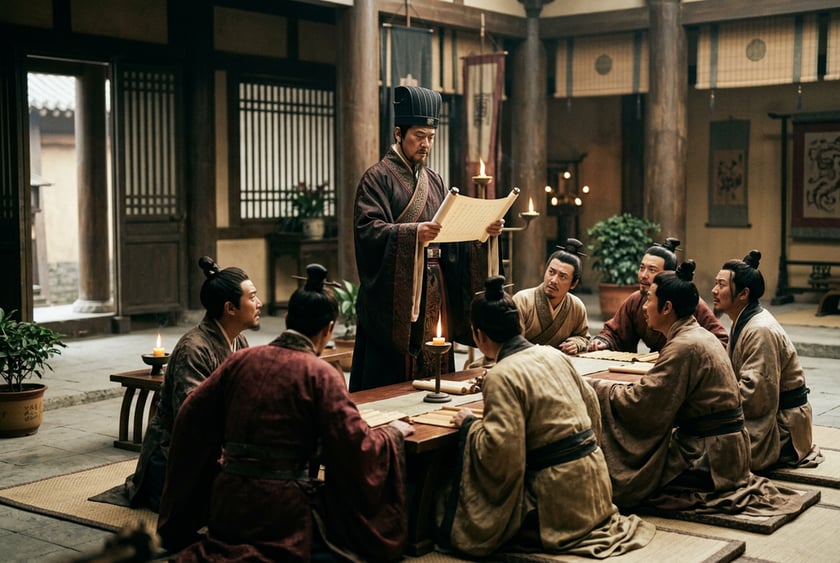
Another possibility is that Sun Quan might have adopted a clearer procedure: Dai Liang and Chen Shi would first take office and formally demand that Shi Hui relinquish power, while the penalties for defiance were publicly stipulated. Lü Dai’s troops would serve as a last resort, rather than his first creating an expectation of leniency through personal ties. In theory, such an arrangement might have reduced the appearance of a broken promise. But the Records of the Three Kingdoms provides no further information about local forces in Jiaozhi, attitudes within the Shi clan, or the level of risk Sun Quan was willing to accept, so it cannot be claimed that this approach would certainly have succeeded. The counterfactual dilemma the case leaves behind is how a frontier regime could uphold both its authority to command and its credibility: emphasizing punishment alone might win obedience at the cost of trust, while emphasizing leniency might not resolve local challenges to central appointments.