Sun Quan's Faction · Advisor
Wu Can
courtesy name 孔休 · also called 吴粲 · –245
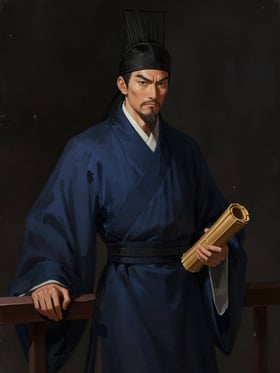
Wu Can, a Sun Wu official, was jailed and executed for upholding the rightful succession; the novel merely lists him as a Jiangdong worthy.
Life
In the novel: 1 chapter · In the Records: 6 volumes
Life?–245
Appearances
By chapter (7)
Novel
- 38
Records
- 47
- 52
- 57
- 58
- 59
- 60
- Sun Quan's Faction
- Hatched: dated by chapter
On the boards
Compare with someone →Where this person ranks on each board.
Historical Record
Wu Can, courtesy name Kongxiu, was from Wucheng in Wu Commandery and came from a humble, impoverished background. When Sun He served as county chief, Wu Can was merely a minor county clerk, but Sun He held him in high regard. Later, when Sun He became a general and was permitted to select his own subordinates, he submitted a recommendation for Wu Can to serve as assistant magistrate of Qu'e. Wu Can was subsequently promoted to chief clerk, where he earned a reputation for effective governance. Though he had risen from humble beginnings, he was already as renowned as fellow commandery natives Lu Xun and Bu Jing. When Sun Quan served as General of Chariots and Cavalry, he summoned Wu Can to serve as his registrar, and later appointed him magistrate of Shanyin and colonel of the staff. When Gu Shao served as governor of Yuzhang, he too had once elevated Wu Can from lowly circumstances and befriended him. Gu Shao’s reputation for recognizing talent and treating worthy men with respect spread through such deeds.
In the first year of Huangwu, Wu Can joined Lü Fan, He Qi, and others in leading a naval force to resist the Wei general Cao Xiu at Dongkou. During the battle, a gale struck, severing the ships’ moorings and driving the vessels adrift onto the shore. The Wei forces took the opportunity to capture Wu troops, and many others fell into the water. Some survivors clung to the remaining ships and called for help, but the other officers and soldiers feared the weight would capsize the vessels and pushed the drowning men away with their spears and halberds. Wu Can and Huang Yuan, however, ordered the men aboard to rescue them. When those around him worried that the ships might sink, Wu Can replied, “If the ships are lost, we will all die together. When people are in dire straits, how can we abandon them?” The two men saved more than a hundred people. This episode shows that, in a crisis, he would not abandon his comrades.
Later, Wu Can became governor of Kuaiji and appointed the reclusive scholar Xie Tan as his chief clerk. Xie Tan declined to take up the post, pleading illness. Wu Can urged him not to withdraw from the world, comparing him to a Yinglong, able both to bend and stretch, and to a phoenix, prized for its fine song. Afterward, Wu Can recruited troops and was appointed General Who Upholds Righteousness. Together with Lü Dai, he suppressed the Shanyue. He then returned to court, serving as colonel of the cavalry and minister of the household, before being promoted to Grand Tutor to the Heir Apparent.
In Sun Quan’s later years, the conflict between the heir apparent, Sun He, and the Prince of Lu, Sun Ba, grew more intense. Wu Can upheld the distinction between legitimate and secondary status, advocated sending Sun Ba to take up residence at Xiakou, and called for Yang Zhu to leave the capital. He also repeatedly sent news of the situation to Lu Xun, who was stationed at Wuchang. Sun Ba, Yang Zhu, and others consequently slandered him, and Wu Can was arrested and died in prison. Volume 58 of the Records of the Three Kingdoms likewise records that he was imprisoned and died for repeatedly corresponding with Lu Xun; Volume 59 lists him among those who several times expounded the distinction between the heir and a secondary son.
In the Novel
Chapter 38 of Romance of the Three Kingdoms includes Wu Can among the guests from Jiangdong whom Sun Quan welcomed and treated with courtesy, alongside Kan Ze, Yan Jun, Xue Zong, Cheng Bing, Zhu Huan, Lu Ji, Zhang Wen, Ling Tong, and others. The novel presents a collective portrait of Sun Quan welcoming men of talent and of guests and generals working together, conveying Jiangdong’s “abundance of talent.” In this passage, Wu Can is one of the literary figures honored by Sun Quan, not the central figure in the scene.
Unlike the historical accounts, which focus on his career, his rescue of men at Dongkou, and his involvement in the Struggle of the Two Palaces, the supplied passage from the novel merely lists him among Jiangdong’s worthy men; it does not elaborate on his governance, military actions, or execution. Here the novel portrays him as one member of the literary circle under Sun Quan. The specific events of his biography should instead be based on the historical accounts.
Key Relationships
Sun He was an important patron in Wu Can’s early career: he recognized Wu Can’s abilities when he was still a minor clerk and later recommended him for the post of assistant magistrate of Qu'e. Gu Shao, in turn, elevated Wu Can from among men of humble background and befriended him, demonstrating his ability to recognize talent and esteem those of modest means.
Wu Can fought Cao Xiu alongside Lü Fan and He Qi, rescued drowning soldiers with Huang Yuan, and later helped Lü Dai suppress the Shanyue. He and Lu Xun both served as officials of Sun Wu. During the Struggle of the Two Palaces, Wu Can upheld Sun He’s status as heir apparent and exchanged news with Lu Xun. This political stance ultimately led to his being slandered by Sun Ba’s faction. Romance of the Three Kingdoms, meanwhile, places him among the guests from Jiangdong whom Sun Quan treated with courtesy.
Signature Scenes
Amid the wind and waves at Dongkou, drowning men clung to the remaining ships and called for help. The soldiers aboard feared the vessels would capsize and refused to take them on. Wu Can would not abandon his comrades in distress to save the ships; he ordered the men to rescue them, saying that if the ships sank, they would all die together, so how could they leave people behind? This act saved more than a hundred people and is the most striking scene of benevolence and courage in the historical accounts.
During the conflict between the two palaces, Wu Can faced the rival factions of Sun He and Sun Ba and nevertheless “spoke out firmly and upheld what was right.” He insisted on the distinction between legitimate and secondary status, advocated sending Sun Ba to reside at Xiakou, and called for Yang Zhu to leave the capital. He also repeatedly informed Lu Xun of developments. His words and actions did not calm the conflict; instead, they led others to slander him, and he was ultimately imprisoned and executed. This episode both encapsulates his political stance and directly foreshadows his fate.
The novel’s representative scene is more concise: Wu Can is listed alongside several other literary figures among the guests from Jiangdong. In its account of Sun Quan honoring the worthy and Wen Wu supporting one another, the novel includes him in a collective portrait of Jiangdong’s flourishing talent.
- Friends
- Enemies
- Teacher & student
- Other
Who is Wu Can connected to?
Pick someone to see how many steps lie between them and Wu Can.
Combat
On the field
Duels, kills and executions as the texts tell them, counted separately for the Records and the Romance.
- RecordsJuan 57ExecutionLost「由此為霸、竺等所譖害,下獄誅」
Events
Events (1)
Battles and events the texts place this person in, by date.
Other events
Places
- Native of
- Wu CommanderyRecords
- Was at
- Qu'eRecords

Continue
Sun He
Friend
Relationship timeline6 entries ▸
History · vol. 57
- Cao Xiu§65
Fights
In the first year of Huangwu, together with Lü Fan and He Qi, resisted Cao Xiu at Dongkou with the navy
- Lü Dai§66
Fights
Recruited and assembled men, was appointed General of the Household Who Promotes Righteousness, and joined Lü Dai in suppressing the Shanyue
- Lu Xun§66
Friend
during the dispute between the two palaces, repeatedly sent Lu Xun news; Lu Xun submitted memorials in succession to remonstrate
- Sun Ba§66
Enemy
Spoke out boldly and upheld what was right, clarifying the distinction between the principal heir and the other sons; wanted to have Prince of Lu Ba sent to garrison at Xiakou
- Sun Ba§66
Betrayer
As a result, was slandered and harmed by Ba, Zhu, and others, imprisoned, and executed
History · vol. 59
- Sun He§18
Friend
Repeatedly expounded the principles governing the rightful and secondary sons; was later imprisoned and executed
Inner monologues · AI-generated1 monologue ▸
- I am Wu Can, courtesy name Kongxiu, from Wucheng in Wu Commandery. Orphaned and of humble means in my youth, I first ser