Cao Wei · Central Army Commander
Shi Huan
courtesy name 公刘 · –209
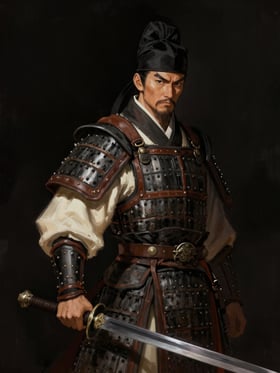
Shi Huan, a commander under Cao Cao, helped kill Sui Gu; the novel says he died at Cangting, but the Records of the Three Kingdoms gives no cause.
Life
In the novel: 4 chapters · In the Records: 5 volumes
Life?–209
Allegiance
Appearances
By chapter (9)
Novel
- 19
- 30
- 31
- 32
Records
- 1
- 8
- 9
- 10
- 17
- Cao Wei
- Hatched: dated by chapter
On the boards
Compare with someone →Where this person ranks on each board.
Historical Record
Shi Huan, courtesy name Gongliu, was from Pei Commandery. In his youth, he was a gallant man with a bold and forceful spirit. When Cao Cao first raised an army, Shi Huan followed him as a guest-retainer and served as a Colonel of the Central Army on Campaign. He accompanied the army on its campaigns and was often entrusted with supervising and leading the generals. Cao Cao held him close and trusted him; later, he was appointed Central Army Commander. Shi Huan and Han Hao were both known for their loyalty and courage. They later took charge of the palace guard troops and were enfeoffed as marquises. In the fourteenth year of Jian’an, Shi Huan died, and his son Shi Jing inherited his title.
In the fourth year of Jian’an, Cao Cao sent Shi Huan and Cao Ren across the river to attack Sui Gu. Sui Gu had first killed Yang Chou, then led his troops north, intending to submit to Yuan Shao. The two sides fought at Quancheng, where Shi Huan and the others routed Sui Gu and killed him. Cao Cao then crossed the river and surrounded Shequan; Xue Hong and Miu Shang led their followers in surrender. Volume 8 of the Records of the Three Kingdoms also records that Cao Cao sent Shi Huan to intercept Sui Gu, defeated him at Quancheng, killed him, and took over his forces. The biography of Yu Jin records the same campaign, stating that Yu Jin, Shi Huan, and Cao Ren attacked Sui Gu at Shequan, defeated him, and killed him.
During the Battle of Guandu, Yuan Shao’s grain convoys repeatedly became targets of Cao Cao’s forces. Cao Cao adopted Xun You’s plan and sent Xu Huang and Shi Huan to intercept Yuan Shao’s grain wagons. They routed the enemy and burned the wagons. The biography of Xun You further records that Xu Huang and Shi Huan defeated the grain convoy led by Han Meng and burned its supplies; the biography of Xu Huang says that the two attacked Yuan Shao’s wagons at Gushi and won considerable credit. Biographical materials on Shi Huan also record that he took part with Han Hao in a discussion about a campaign against Liucheng: Han Hao advocated pressing the advantage and advancing, while Shi Huan initially argued that a deep advance over a long distance was not a prudent course. He nevertheless accompanied the army on the campaign.
In the Novel
Romance of the Three Kingdoms portrays Shi Huan as a brave general under Cao Cao, often joining Xu Huang in pursuit operations and attacks on grain supplies. Chapter 19 relates that after Zhang Yang was killed by Yang Chou, Sui Gu in turn killed Yang Chou and fled to Quancheng, whereupon Cao Cao immediately sent Shi Huan to pursue and kill Sui Gu. This broadly accords with the historical account that Cao Cao sent Shi Huan and others to defeat and kill Sui Gu at Quancheng, though the novel depicts Shi Huan as acting alone under orders to pursue him.
In Chapter 30, Shi Huan is portrayed as a subordinate of Xu Huang. He captures a Yuan army spy and learns that Han Meng’s grain convoy is on its way. He then joins Xu Huang in intercepting the convoy, scattering the men escorting the grain and setting the wagons on fire. The novel goes on to say that Zhang Liao and Xu Chu arrive to support them, and the four generals drive off Yuan Shao’s reinforcements. Historical accounts do record that Shi Huan and Xu Huang intercepted Yuan Shao’s wagons and burned the supplies, but the captured spy, the specific nighttime raid, and the other generals’ arrival are details added by the novel and are not explicitly recorded in the Records of the Three Kingdoms.
Chapter 31 has Shi Huan challenge Yuan Shang before the battle lines at Cangting. As he pursues Yuan Shang, the latter turns and shoots him in the left eye, knocking him from his horse and killing him. Here, Shi Huan is depicted as a brave warrior who dies in battle; his manner of death, the battlefield, and his clash with Yuan Shang are all unique to the novel. The Records of the Three Kingdoms says that Shi Huan died in the fourteenth year of Jian’an, but does not say that he was killed by Yuan Shang.
Key Relationships
Shi Huan served Cao Cao for many years. He first joined the army as a guest-retainer and later became Central Army Commander, making him a trusted veteran of Cao Cao’s. He was known, along with Han Hao, for his loyalty and courage; the two also jointly commanded the palace guard troops and were enfeoffed as marquises. On the battlefield, Shi Huan repeatedly worked alongside Xu Huang: during the Battle of Guandu, they intercepted Yuan Shao’s grain wagons. The novel further casts Shi Huan as Xu Huang’s subordinate and elaborates on his efforts to gather intelligence and help burn the enemy’s grain. Shi Huan and Sui Gu were enemies. Historical accounts say Shi Huan took part in defeating and killing Sui Gu, and the novel also depicts him as being ordered to pursue and kill Sui Gu.
Notable Scenes
The defeat of Sui Gu at Quancheng. After killing Yang Chou, Sui Gu led his followers north, intending to join Yuan Shao. By Cao Cao’s order, Shi Huan and Cao Ren crossed the river to meet him in battle, routing his army at Quancheng and killing him. This campaign shows that Shi Huan was entrusted with important military operations and established his battlefield opposition to Sui Gu.
The attack on Yuan Shao’s grain wagons at Guandu. Yuan Shao’s grain convoys were crucial to the campaign. Shi Huan and Xu Huang were ordered to intercept them and burn the supplies. The novel makes the operation more specific: Shi Huan recognizes the intelligence provided by a spy, scatters the men escorting the grain, and sets the wagons alight. The former is found in the historical accounts; the latter details are unique to the novel.
Shot in the battle lines at Cangting (unique to the novel). The novel says that Shi Huan rides out with his spear to challenge Yuan Shang. As he pursues him, Yuan Shang turns and shoots him in the left eye, knocking him from his horse and killing him. This ending heightens the tragic quality of the novel’s battlefield scenes. The Records of the Three Kingdoms only says that Shi Huan later died; it does not mention the Battle of Cangting or the cause of his death.
- Friends
- Enemies
Who is Shi Huan connected to?
Pick someone to see how many steps lie between them and Shi Huan.
History vs. novel
6 points · 1 novel-only
| History | Novel |
|---|---|
| Pursuit of Sui GuNovel embellishes | |
After killing Yang Chou, Sui Gu gathered his followers and intended to join Yuan Shao. Cao Cao sent Shi Huan to defeat and kill Sui Gu at Quan City, and absorbed his followers into his own forces. vol. 8 | The novel says that after killing Yang Chou, Sui Gu went to Quan City, where Cao Cao immediately sent Shi Huan to pursue and kill him. This incident is placed within the story of the siege of Xiapi, when Cao Cao considered withdrawing his troops. ch. 19 |
| Yang Feng during the siege of Lü BuNovel embellishes | |
Yang Feng was on good terms with Lü Bu. When Cao Cao besieged Lü Bu, Yang Feng wanted to come to his aid but failed; he merely sent troops to Dongshi to make a show of force from afar. vol. 8 | The novel identifies the person who sent troops to Dongshi intending to rescue Lü Bu as Zhang Yang, the governor of Henei, and says that he was later killed by his subordinate Yang Chou. ch. 19 |
| Shi Huan’s officesHistory only | |
In his early years, Shi Huan followed Cao Cao as a retainer. He served as Colonel of the Central Army, often overseeing the generals, and was later promoted to Commandant of the Central Army, in charge of the palace guard. He was enfeoffed as a marquis. vol. 9 | — |
| Advising against the campaign to LiuchengHistory only | |
When Cao Cao planned to campaign against Liucheng, Shi Huan considered a deep advance over such a long distance an imprudent course and wanted to advise against it together with Han Hao. Han Hao opposed undermining the troops’ morale, so Shi Huan ultimately joined the expedition. vol. 9 | — |
| Killed by an arrowNovel only | |
| — | The novel says that Shi Huan, serving as a subordinate of Xu Huang, fought against Yuan Shang. Before three exchanges had passed, he pursued the enemy and was struck by an arrow; hit in the left eye, he fell from his horse and died. ch. 31 |
| Shi Huan’s deathHistory only | |
Shi Huan died in the fourteenth year of Jian'an, and his son Shi Jing inherited his title. vol. 9 | — |
- Pursuit of Sui GuNovel embellishes
- History
After killing Yang Chou, Sui Gu gathered his followers and intended to join Yuan Shao. Cao Cao sent Shi Huan to defeat and kill Sui Gu at Quan City, and absorbed his followers into his own forces.
vol. 8
- Novel
The novel says that after killing Yang Chou, Sui Gu went to Quan City, where Cao Cao immediately sent Shi Huan to pursue and kill him. This incident is placed within the story of the siege of Xiapi, when Cao Cao considered withdrawing his troops.
ch. 19
- Yang Feng during the siege of Lü BuNovel embellishes
- History
Yang Feng was on good terms with Lü Bu. When Cao Cao besieged Lü Bu, Yang Feng wanted to come to his aid but failed; he merely sent troops to Dongshi to make a show of force from afar.
vol. 8
- Novel
The novel identifies the person who sent troops to Dongshi intending to rescue Lü Bu as Zhang Yang, the governor of Henei, and says that he was later killed by his subordinate Yang Chou.
ch. 19
- Shi Huan’s officesHistory only
- History
In his early years, Shi Huan followed Cao Cao as a retainer. He served as Colonel of the Central Army, often overseeing the generals, and was later promoted to Commandant of the Central Army, in charge of the palace guard. He was enfeoffed as a marquis.
vol. 9
- Advising against the campaign to LiuchengHistory only
- History
When Cao Cao planned to campaign against Liucheng, Shi Huan considered a deep advance over such a long distance an imprudent course and wanted to advise against it together with Han Hao. Han Hao opposed undermining the troops’ morale, so Shi Huan ultimately joined the expedition.
vol. 9
- Killed by an arrowNovel only
- Novel
The novel says that Shi Huan, serving as a subordinate of Xu Huang, fought against Yuan Shang. Before three exchanges had passed, he pursued the enemy and was struck by an arrow; hit in the left eye, he fell from his horse and died.
ch. 31
- Shi Huan’s deathHistory only
- History
Shi Huan died in the fourteenth year of Jian'an, and his son Shi Jing inherited his title.
vol. 9
Combat
On the field
Duels, kills and executions as the texts tell them, counted separately for the Records and the Romance.
Records
- Duels
- 0W 0L 0D
By their troops 1
Romance
- Duels
- 0W 1L 0D
DeathKilled by Yuan ShangDuel · Ch. 31
- RecordsJuan 1Struck downSui GuWon「交戰,大破之,斬固」
- RomanceCh. 19Struck downSui GuWon「即遣史渙追斬眭固」
- RomanceCh. 31DuelYuan ShangLost「正中史渙左目,墜馬而死」
Events
Events (3)
Battles and events the texts place this person in, by date.
Battles
Places
Continue
Xu Huang
Friend
Relationship timeline3 entries ▸
History · vol. 8
- Sui Gu§30
Enemy
Taizu sent Shi Huan to intercept and attack them; he defeated them at Quancheng and beheaded Gu.
Novel · ch. 19
- Sui Gu§30
Fights
was ordered by Cao Cao to pursue and kill him
Novel · ch. 31
- Xu Huang§12
Slayer
A subordinate of Xu Huang; rode out with spear raised to pursue Yuan Shang before the battle lines, but was shot in the left eye from behind as [the enemy] turned, and died
Inner monologues · AI-generated1 monologue ▸
- I am Shi Huan, courtesy name Gongliu. In my youth, I was a chivalrous man with a bold spirit. When the Grand Ancestor fi