Cao Wei · Military Advisor to the General-in-Chief
Du Xi
courtesy name 子绪
Not to be confused with Du Xi (杜锡)
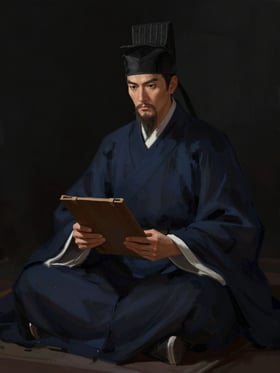
Du Xi, a Cao Wei strategist, was known for defending Xi’e and urging Cao Cao not to attack Xu You; the novel depicts his retreat at Mount Dingjun.
Appearances
In the novel: 2 chapters · In the Records: 1 volume
- Liu Biao's faction· Undated
- Cao Wei· Undated
On the boards
Compare with someone →Where this person ranks on each board.
Historical Record
Du Xi, courtesy name Zixu, was from Dingling in Yingchuan. His great-grandfather Du An and grandfather Du Gen were both renowned for their virtue and reputation. Du Xi fled the turmoil to Jing Province, where Liu Biao treated him as an honored guest. He urged his fellow townsman Fan Qin not to serve Liu Biao, then traveled south to Changsha. In the early Jian'an period, Du Xi returned to his home region, and Cao Cao appointed him chief of Xie'e County. The area lay on the southern frontier, where bandits were active. The county officials had previously gathered the people to defend the city, leaving the fields barren and the granaries empty. Du Xi sent the old and weak out to work the fields and kept the able-bodied men to guard the city, earning the support of both officials and people. When Jing Province’s forces attacked, he made a pact with more than fifty officials and residents who were willing to defend the city, and personally fought with arrows and stones. They resisted fiercely and, despite suffering heavy casualties, he led the wounded in a breakout and moved to Mopi. The people who followed him gradually gathered there as well.
Zhong Yao submitted a memorial recommending Du Xi for appointment as Gentleman of the Palace and military aide. Xun Yu also recommended him to Cao Cao, and Du Xi was consequently appointed Libationer of the Chancellor’s Army. After the establishment of the Kingdom of Wei, he served as Palace Attendant alongside Wang Can and He Qia. Later, Du Xi accompanied Cao Cao's Campaign Against Zhang Lu. When Cao Cao returned east, Du Xi remained behind to oversee military affairs in Hanzhong, reassuring and guiding the people; more than eighty thousand people moved to Luoyang and Ye. After Xiahou Yuan was killed by Liu Bei’s forces and the army was left without a commander, Du Xi, Zhang He, and Guo Huai together reorganized the troops and, as a temporary measure, put Zhang He in command to steady the army. Cao Cao then appointed Du Xi Chief Clerk of the Retained Office, stationed in Chang'an to oversee affairs in Guanzhong.
Du Xi was mild-mannered but principled, and dared to speak frankly. Xu You commanded troops, refused to submit to Cao Cao, and spoke insolently, so Cao Cao at one point wanted to attack him. Du Xi pointed out that sending a large army against Xu You would make Cao Cao appear to avoid the strong and attack the weak. He urged Cao Cao to hold back for the moment, saying, “A crossbow capable of drawing a thousand jun is not fired at a shrew.” Cao Cao heeded him, treated Xu You generously, and Xu You submitted. After Emperor Wen ascended the throne, Du Xi successively served as Inspector overseeing military provisions, Commissioner overseeing military provisions, and Minister. During Emperor Ming’s reign, he served as military adviser to the General-in-Chief. Later, illness brought him back to the capital, where he was appointed Grand Master of the Palace. After his death, he was posthumously awarded the title of Minister of the Household and given the posthumous title Marquis Ding. His son Du Hui inherited his title, while his elder brother Du Ji was granted the title of Marquis within the Passes.
In the Novel
Romance of the Three Kingdoms retains Du Xi’s image as a court attendant of Cao Cao, but places particular emphasis on him in scenes involving Cao Wei politics and the fighting in Hanzhong. In Chapter 66, after Cao Cao establishes schools and honors scholars, Du Xi discusses with fellow Palace Attendants Wang Can, Wei Kai, He Qia, and others the proposal to honor Cao Cao as King of Wei. Xun You opposes the promotion, angering Cao Cao. Here Du Xi is portrayed as a court official who supports Cao Cao’s elevation; the novel does not expand on episodes from the historical accounts that more clearly show his cautious candor, such as his remonstrance over Xu You.
Chapter 71 casts Du Xi as a subordinate commander under Xiahou Yuan, ordering him to lead several hundred men to defend a hill beside Mount Dingjun. When Huang Zhong launches a night attack, Du Xi abandons the hill and flees. After Xiahou Yuan is killed, Du Xi joins Zhang He, tells him that Mount Dingjun has fallen, and retreats with him to the Han River. The novel also depicts him accompanying Zhang He to welcome Cao Cao and advising that the grain be moved and stored elsewhere. Here Du Xi serves a dramatic role in reporting the defeat and assisting with troop movements. Unlike the account in the Records of the Three Kingdoms, which says that after Xiahou Yuan’s death he helped stabilize the troops and put Zhang He in command, the novel adds details of defending and abandoning the hill and retreating to the Han River; these are all elements of the novel’s portrayal.
Key Relationships
Du Xi’s relationship with Cao Cao involved both recommendation and appointment, as well as frank remonstrance. Cao Cao appointed him to posts including county magistrate, Libationer of the Army, Palace Attendant, and Chief Clerk of the Retained Office. In the Xu You incident, Du Xi did not fall silent simply because Cao Cao had already declared his intention. Instead, he urged him to reconsider by appealing to military reputation and the proper use of force. Cao Cao accepted his advice, showing that although Du Xi spoke firmly, he could persuade through reason.
His relationship with Zhang He and Guo Huai is seen in the crisis in Hanzhong: after Xiahou Yuan fell in battle, the three gathered the troops together, and Du Xi put Zhang He in command to steady the army. His relationship with Fan Qin involved their shared experience of fleeing turmoil in Jing Province: Du Xi did not want Fan Qin to use his talent and reputation to attach himself to Liu Biao. His ties to Du Ji and Du Hui appear in family records noting his brother’s ennoblement and his son’s inheritance of his title.
Defining Scenes
The defense of Xie'e best illustrates Du Xi’s approach to governance. Rather than keeping the people penned inside the city, he had the old and weak return to farming while the able-bodied men guarded the city. When Jing Province’s forces besieged it, he personally took up arms and joined the county officials and residents in resisting the enemy. The defenders suffered heavy casualties, yet no one deserted. After breaking out, people followed him in the migration, reflecting the trust he had built through taking responsibility in practice.
The Xu You incident reveals his style of remonstrance. When Cao Cao, enraged, wanted to attack Xu You, Du Xi first made clear that a subordinate should not abandon his judgment simply because his lord forbade him to speak. He then compared the matter to not firing a powerful crossbow at a small mouse, urging Cao Cao not to waste his strength on this man. Cao Cao consequently changed course and treated Xu You generously. Through a gentle but steadfast approach, Du Xi prevented a campaign driven by wounded pride.
When the commander in Hanzhong was killed, Du Xi, Zhang He, and Guo Huai rallied the troops in the crisis and put Zhang He in command—another key example of Du Xi handling an emergency in military affairs. The novel separately depicts Du Xi defending a hill beside Mount Dingjun, abandoning it at night, and retreating to the Han River, forming part of the fictional account of the army’s retreat; the historical accounts do not record the same events. (Unique to the novel)
Quotes
5 lines in the books · 3 featured
「吾所以與子俱來者,徒欲龍蟠幽藪,待時鳳翔。豈謂劉牧當爲撥亂之主,而規長者委身哉?子若見能不已,非吾徒也。吾其與子絕矣!」
This line shows Du Xi's unwillingness to submit to Governor Liu and his lofty aspirations—an expression of his core character.
「若殿下計是邪,臣方助殿下成之;若殿下計非邪,雖成宜改之。殿下逆臣,令勿言之,何待下之不闡乎?」
This line embodies Du Xi's courage to remonstrate directly, unafraid of power—a portrait of his loyalty and wisdom.
「夫惟賢知賢,惟聖知聖,凡人安能知非凡人邪?方今豺狼當路而狐狸是先,人將謂殿下避彊攻弱,進不爲勇,退不爲仁。臣聞千鈞之弩不爲鼷鼠發機,萬石之鍾不以莛撞起音,今區區之許攸,何足以勞神武哉?」
Using the metaphor that "a crossbow of a thousand jun is not triggered for a mouse," this line urges Cao Cao not to lose the great over the small, with strong cultural resonance.
- Family
- Friends
- Other
Who is Du Xi connected to?
Pick someone to see how many steps lie between them and Du Xi.
History vs. novel
8 points · 2 novel-only
| History | Novel |
|---|---|
| Jing Province: Stay or LeaveHistory only | |
Although Du Xi was treated with courtesy by Liu Biao while taking refuge in Jing Province, he believed Liu Biao was not a leader capable of bringing order to a troubled age. He urged Fan Qin not to attach himself to Liu Biao, then headed to Changsha. vol. 23 | — |
| Defending Xie CountyHistory only | |
When Du Xi served as magistrate of Xie County, he assigned the people to farm and kept able-bodied men behind to defend the city. When Jing Province’s forces attacked, he led the officials and people in battle. After the city fell, he broke through the encirclement, and the people continued to follow him as they moved to Mobei. vol. 23 | — |
| Earns Respect in a Late-Night ConversationHistory only | |
While serving as Palace Attendant, Du Xi was deeply esteemed by Cao Cao and once spoke with him alone until midnight. Wang Can was consequently consumed by envy, while He Qia urged him not to insist on having everything. vol. 23 | — |
| Pacifying the People of HanzhongHistory only | |
Du Xi remained behind to oversee military affairs in Hanzhong, reassuring and instructing the people. More than eighty thousand willingly moved to Luoyang and Ye. vol. 23 | — |
| After Xiahou Yuan’s DeathNovel embellishes | |
After Xiahou Yuan was killed by Liu Bei’s forces, Du Xi, Zhang He, and Guo Huai reorganized the troops and, as a temporary measure, recommended Zhang He as their commander, thereby restoring morale. vol. 23 | The Romance of the Three Kingdoms relates that after Huang Zhong killed Xiahou Yuan, Zhang He retreated in defeat. Du Xi told him that Mount Dingjun had been seized by Liu Feng and Meng Da, and withdrew with him to the Han River. ch. 71 |
| Urging Cao Cao Not to Attack Xu YouHistory only | |
When Cao Cao wanted to punish Xu You for speaking disrespectfully, Du Xi urged him not to launch a campaign over Xu You while a powerful enemy remained at hand. Cao Cao heeded him and treated Xu You generously, and Xu You submitted. vol. 23 | — |
| Debate Over Elevating Cao Cao to King of WeiNovel only | |
| — | The Romance of the Three Kingdoms relates that Du Xi, Wang Can, Wei Kai, and He Qia discussed honoring Cao Cao as King of Wei. When Xun You objected, Cao Cao flew into a rage; Xun You died of grief and indignation, and the matter of Cao Cao taking the title of king was temporarily set aside. ch. 66 |
| Moving the Grain SuppliesNovel only | |
| — | The Romance of the Three Kingdoms relates that after Cao Cao reached the Han River, Zhang He and Du Xi proposed moving the grain from Micang Mountain to a camp on North Mountain for storage, then continuing the advance. Cao Cao agreed. ch. 71 |
- Jing Province: Stay or LeaveHistory only
- History
Although Du Xi was treated with courtesy by Liu Biao while taking refuge in Jing Province, he believed Liu Biao was not a leader capable of bringing order to a troubled age. He urged Fan Qin not to attach himself to Liu Biao, then headed to Changsha.
vol. 23
- Defending Xie CountyHistory only
- History
When Du Xi served as magistrate of Xie County, he assigned the people to farm and kept able-bodied men behind to defend the city. When Jing Province’s forces attacked, he led the officials and people in battle. After the city fell, he broke through the encirclement, and the people continued to follow him as they moved to Mobei.
vol. 23
- Earns Respect in a Late-Night ConversationHistory only
- History
While serving as Palace Attendant, Du Xi was deeply esteemed by Cao Cao and once spoke with him alone until midnight. Wang Can was consequently consumed by envy, while He Qia urged him not to insist on having everything.
vol. 23
- Pacifying the People of HanzhongHistory only
- History
Du Xi remained behind to oversee military affairs in Hanzhong, reassuring and instructing the people. More than eighty thousand willingly moved to Luoyang and Ye.
vol. 23
- After Xiahou Yuan’s DeathNovel embellishes
- History
After Xiahou Yuan was killed by Liu Bei’s forces, Du Xi, Zhang He, and Guo Huai reorganized the troops and, as a temporary measure, recommended Zhang He as their commander, thereby restoring morale.
vol. 23
- Novel
The Romance of the Three Kingdoms relates that after Huang Zhong killed Xiahou Yuan, Zhang He retreated in defeat. Du Xi told him that Mount Dingjun had been seized by Liu Feng and Meng Da, and withdrew with him to the Han River.
ch. 71
- Urging Cao Cao Not to Attack Xu YouHistory only
- History
When Cao Cao wanted to punish Xu You for speaking disrespectfully, Du Xi urged him not to launch a campaign over Xu You while a powerful enemy remained at hand. Cao Cao heeded him and treated Xu You generously, and Xu You submitted.
vol. 23
- Debate Over Elevating Cao Cao to King of WeiNovel only
- Novel
The Romance of the Three Kingdoms relates that Du Xi, Wang Can, Wei Kai, and He Qia discussed honoring Cao Cao as King of Wei. When Xun You objected, Cao Cao flew into a rage; Xun You died of grief and indignation, and the matter of Cao Cao taking the title of king was temporarily set aside.
ch. 66
- Moving the Grain SuppliesNovel only
- Novel
The Romance of the Three Kingdoms relates that after Cao Cao reached the Han River, Zhang He and Du Xi proposed moving the grain from Micang Mountain to a camp on North Mountain for storage, then continuing the advance. Cao Cao agreed.
ch. 71
Events
Events (1)
Battles and events the texts place this person in, by date.
Battles
Places
Continue
Du Hui
Kin
Relationship timeline3 entries ▸
History · vol. 23
- Cao Cao§27
Advised
accompanied Taizu in campaigning against Zhang Lu; after Xiahou Yuan died at Hanzhong, coordinated the armies with Zhang He and Guo Huai; advised Taizu not to attack Xu You
- Xu You§28
Advised
urged Taizu not to attack Xu You; Taizu then treated him generously, and Xu You immediately submitted
Novel · ch. 66
- Cao Cao§17
Advised
In segment 17, discussed together honoring Cao Cao as King of Wei
Inner monologues · AI-generated1 monologue ▸
- I am Du Xi, courtesy name Zixu, from Dingling in Yingchuan. In these troubled times of war, looking back on half my life