Liu Biao's faction · Administrator of Jiangxia
Liu Qi
–209
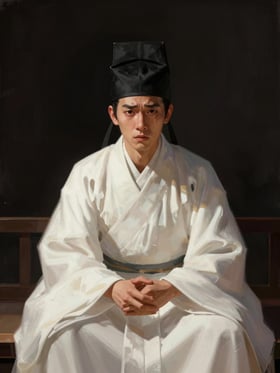
A white robe and silver armor.

Life
In the novel: 12 chapters · In the Records: 3 volumes
Life?–209
206 CE (Jian'an 11)
208 CE (Jian'an 13)
210 CE (Jian'an 15)
Allegiance
- Liu Bei's faction
- Liu Biao's faction
- Hatched: dated by chapter
- Life event
- Death
On the boards
Compare with someone →Where this person ranks on each board.
Who they were
Character profile
- Appearance
- A white robe and silver armor.
- Character
- Timid and weak in character, relying on his uncle for support; though worthy in nature, he was gentle and irresolute.
- Manner of speech
- He appealed plaintively for guidance, once saying, "My stepmother, Lady Cai, ever harbors a murderous intent; your nephew has no means to escape disaster—I beg you, uncle, to instruct me."
- Life
- Liu Biao's wife favored her younger son Cong, and so sent Qi out as Grand Administrator of Jiangxia, whereupon Qi and Cong became enemies. After Changban, he led over ten thousand men to join the Former Lord at Hanjin and on to Xiakou; later the Former Lord memorialized him as Inspector of Jing Province, and he soon died of illness.
- Anecdotes
- The eldest son of Liu Biao, born to Liu Biao's former wife, Lady Chen. He once raised troops from Jiangxia to support Xuande, and invited Xuande to come to Jiangxia for a while to regroup. At Kongming's charge, he led his troops to guard the riverbank at Wuchang to seize any who fled there.
Historical Record
Liu Qi was Liu Biao’s eldest son and Liu Cong’s older brother, and belonged to Liu Biao’s faction. Liu Biao and his wife favored their younger son, Liu Cong, while Cai Mao and Zhang Yun also supported Liu Cong. Liu Biao therefore appointed Liu Qi Administrator of Jiangxia, while others backed Liu Cong as heir; the brothers became estranged as a result. The Dianlun, cited in Pei Songzhi’s annotations, also records that Liu Qi once returned to Xiangyang to visit his ill father, but Cai Mao and Zhang Yun barred him from entering, and he had no choice but to leave in tears.
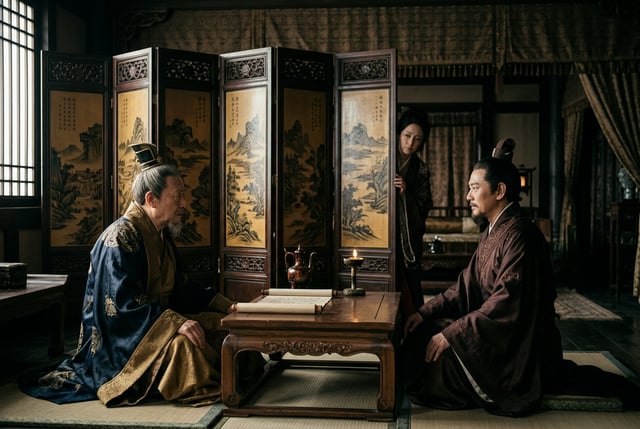
Liu Qi once asked Zhuge Liang how he might keep himself safe, but at first Zhuge Liang offered him no plan. Later, Liu Qi went up to a tall building with Zhuge Liang, ordered the stairs removed, and sought a private conversation. Zhuge Liang invoked the examples of Shen Sheng, who remained in his homeland and met with danger, and Chong’er, who went into exile and found safety. Liu Qi understood his meaning. Just then, Huang Zu died, allowing Liu Qi to take up the post of Administrator of Jiangxia. In the thirteenth year of Jian’an, after Cao Cao campaigned south and Liu Biao died of illness, Liu Cong surrendered to Cao Cao, while Liu Bei withdrew to Xiakou. Liu Qi, then serving as Administrator of Jiangxia, led a force of more than ten thousand men to join Liu Bei at Hanjin, and together they reached Xiakou.
Liu Bei later recommended Liu Qi for appointment as Inspector of Jing Province, but Liu Qi died of illness not long afterward. This is also how the historical accounts record his end.
In the Novel
Romance of the Three Kingdoms portrays Liu Qi as a worthy but meek eldest son, repeatedly seeking help because he is pushed aside by his stepmother Lady Cai’s faction. The novel has Liu Biao discuss with Liu Bei the dilemma of choosing an heir, and Liu Bei advises him not to depose the eldest in favor of the youngest. Liu Qi also tearfully tells Liu Bei that he fears Lady Cai is plotting against him, and is counseled to “be careful to fulfill his filial duties.” These family conversations and Liu Bei’s specific advice are episodes from the novel; the historical accounts contain no corresponding record. They do record the discord between Liu Qi and Liu Cong, and Liu Qi’s appointment as Administrator of Jiangxia.
The novel further elaborates on the “removing the ladder to seek advice” episode: Liu Qi invites Zhuge Liang up to a building, has the ladder removed, and then asks for guidance. Zhuge Liang uses the stories of Shen Sheng and Chong’er to advise him to request command of Jiangxia. Liu Qi then makes his request, and Liu Biao orders him to lead three thousand troops to Jiangxia. The historical accounts also record Liu Qi’s consultation with Zhuge Liang in a high building and the analogy of Shen Sheng and Chong’er, but the novel expands the episode into a dramatic scene involving repeated requests for an audience and the contrivance of removing the ladder.
The novel also has Liu Qi hurry back to visit Liu Biao when his father is critically ill, only to be stopped at the door by Cai Mao. After Liu Biao dies, Lady Cai’s faction fabricates a deathbed decree to install Liu Cong. When Liu Qi hears the news, he sends Yi Ji to report the death; later, he also dispatches troops to aid Liu Bei in his flight and discusses joining forces with Wu against Cao Cao with Liu Bei and Zhuge Liang in Jiangxia. These specific episodes and conversations are novelistic elaborations. The Records of the Three Kingdoms records Liu Qi joining forces with Liu Bei, but does not recount the novel’s forged decree, visit to Liu Biao at the door, or details of the relief effort.
Key Relationships
- Liu Biao: Father and son. Liu Biao favored Liu Cong and sent Liu Qi to serve in Jiangxia, causing Liu Qi and Liu Cong to become estranged; after his father’s death, Liu Qi later led his troops to join Liu Bei.
- Liu Cong: Brother and political rival. The historical accounts explicitly state that the brothers “became enemies.” Liu Cong succeeded Liu Biao and surrendered during Cao Cao’s southern campaign.
- Zhuge Liang: One seeking counsel and a strategist. Liu Qi asked how he could keep himself safe. Zhuge Liang used Shen Sheng and Chong’er as examples, helping him understand that serving in an outlying command could keep him from harm; the novel makes the ladder-removal scene more dramatic.
- Liu Bei: Ally, addressed as “uncle” in kinship terms. The historical accounts record Liu Qi joining Liu Bei with his Jiangxia forces; the novel portrays Liu Bei as the person Liu Qi repeatedly turns to for help and an important ally in their later resistance to Cao Cao.
- Cai Mao and Zhang Yun: Supporters of Liu Cong. The historical accounts record that they belonged to Liu Cong’s faction and prevented Liu Qi from visiting his sick father; the novel expands their efforts to sideline Liu Qi into episodes of barring him from visiting his father and manipulating the succession.
Signature Scenes
- Seeking counsel in the tower: Liu Qi and Zhuge Liang ascend a tall building, have the ladder removed, and speak in private. Zhuge Liang uses the circumstances of Shen Sheng and Chong’er as an analogy, and Liu Qi thereby understands that he should leave to avoid danger. This core consultation appears in the historical accounts; the novel additionally depicts Liu Qi repeatedly seeking advice, pressuring Zhuge Liang by removing the ladder, and nearly drawing his sword to kill himself—dramatic details unique to the novel.
- Rendezvous at Hanjin: After his defeat at Changban, Liu Bei made his way toward Hanjin and met up with Guan Yu’s boats to cross the Mian River. He then encountered Liu Qi, who was leading more than ten thousand men from Jiangxia, and they traveled together to Xiakou. This was a key turning point in Liu Qi’s shift from serving as an outlying administrator to becoming an important source of military support for Liu Bei.
- Coming to the rescue in white robes and silver armor: The novel has Liu Qi set out from Jiangxia and meet Liu Bei at Hanjin as he is trapped by Cao Cao’s pursuing forces, saying, “I am late in coming to your aid.” His appearance in white robes and silver armor casts him as a young general who arrives in time to help. These details of his appearance and the dialogue at the scene are unique to the novel.
- Illness and death: The historical accounts say only that Liu Qi died of illness not long afterward. The novel, by contrast, has Liu Bei weep bitterly when news of Liu Qi’s death arrives, and uses Liu Qi’s status and the question of who should hold Jing Province to introduce later disputes; these specific episodes are unique to the novel.
Quotes
20 lines in the books · 3 featured
「琦欲求教良策,先生恐有泄漏,不肯出言;今日上不至天,下不至地,出君之口,入琦之耳,可以賜教矣。」
This line is the classic scene of Zhuge Liang's private counsel with Liu Qi before the Longzhong Plan, showcasing Zhuge Liang's wisdom.
「今日上不至天,下不至地,言出子口,入於吾耳,可以言不?」
This line is drawn from the official histories and echoes the scene of Zhuge Liang's private talk with Liu Qi in the romance, carrying historical significance.
「繼母蔡氏,常懷謀害之心;姪無計免禍,幸叔父指教。」
This line reveals Liu Qi's predicament in Jing Province, a core defining feature of his character.
- Family
- Other
Who is Liu Qi connected to?
Pick someone to see how many steps lie between them and Liu Qi.
History vs. novel
7 points · 4 novel-only
| History | Novel |
|---|---|
| Seeking Advice in the TowerNovel embellishes | |
Liu Qi invited Zhuge Liang to stroll in the rear garden and climb a tall tower. After having the stairs removed, he asked for advice. Zhuge Liang cited Shen Sheng and Chong'er as examples, prompting Liu Qi to secretly plan to take up a post in Jiangxia. vol. 35 | The novel adds a scene in which Liu Qi threatens to kill himself with a drawn sword, and describes in detail Zhuge Liang’s advice that he ask to be posted to Jiangxia, making the exchange more dramatic. ch. 39 |
| Weeping to His UncleNovel only | |
| — | Liu Qi wept to Liu Bei, saying that his stepmother, Lady Cai, could not tolerate him and that his life was in danger, and asked his uncle for guidance. Liu Bei urged him to be cautious and dutiful. ch. 35 |
| Taking Up a Post in JiangxiaNovel embellishes | |
After Huang Zu’s death, Liu Qi was able to take up the post of Administrator of Jiangxia; the Records of the Three Kingdoms does not record him requesting this from Liu Biao, nor does it give the number of troops involved. vol. 35 | Liu Qi submitted a request to be posted to Jiangxia. After Liu Bei persuaded him, Liu Biao ordered him to lead three thousand troops there. ch. 39 |
| Joining Forces at ChangbanNovel embellishes | |
After Cao Cao routed Liu Bei at Changban, Liu Bei veered toward Hanjin and joined Guan Yu’s fleet, crossing the Mian River. Liu Qi arrived with more than ten thousand men from Jiangxia, and they went together to Xiakou. vol. 32 | The novel depicts Liu Qi arriving by boat from the southern bank of the Yangtze to reinforce Liu Bei, and emphasizes his timely appearance with details such as his white robe and silver armor and his calls from the bow of the boat. ch. 42 |
| Deliberating Together at ChibiNovel only | |
| — | After Liu Bei and Liu Qi joined forces, the novel has the two men and Zhuge Liang discuss a plan to defeat Cao Cao, as well as the idea of garrisoning Xiakou and returning to Jiangxia to reorganize their troops and form a mutually supporting position. ch. 42 |
| Lu Su Pays His RespectsNovel only | |
| — | When Lu Su came to pay his respects, Zhuge Liang used Liu Qi’s words to explain that Jiangdong and the Liu family were enemies, and that Lu Su had come under the pretext of paying his respects to gather military intelligence. The Records of the Three Kingdoms does not record this exchange. ch. 42 |
| Refusing to Return Jing Province While Gravely IllNovel only | |
| — | When Lu Su demanded Jing Province, Zhuge Liang had the gravely ill Liu Qi appear in person, using Liu Qi’s continued presence as grounds to delay its return. This exchange appears in the novel. ch. 52 |
- Seeking Advice in the TowerNovel embellishes
- History
Liu Qi invited Zhuge Liang to stroll in the rear garden and climb a tall tower. After having the stairs removed, he asked for advice. Zhuge Liang cited Shen Sheng and Chong'er as examples, prompting Liu Qi to secretly plan to take up a post in Jiangxia.
vol. 35
- Novel
The novel adds a scene in which Liu Qi threatens to kill himself with a drawn sword, and describes in detail Zhuge Liang’s advice that he ask to be posted to Jiangxia, making the exchange more dramatic.
ch. 39
- Weeping to His UncleNovel only
- Novel
Liu Qi wept to Liu Bei, saying that his stepmother, Lady Cai, could not tolerate him and that his life was in danger, and asked his uncle for guidance. Liu Bei urged him to be cautious and dutiful.
ch. 35
- Taking Up a Post in JiangxiaNovel embellishes
- History
After Huang Zu’s death, Liu Qi was able to take up the post of Administrator of Jiangxia; the Records of the Three Kingdoms does not record him requesting this from Liu Biao, nor does it give the number of troops involved.
vol. 35
- Novel
Liu Qi submitted a request to be posted to Jiangxia. After Liu Bei persuaded him, Liu Biao ordered him to lead three thousand troops there.
ch. 39
- Joining Forces at ChangbanNovel embellishes
- History
After Cao Cao routed Liu Bei at Changban, Liu Bei veered toward Hanjin and joined Guan Yu’s fleet, crossing the Mian River. Liu Qi arrived with more than ten thousand men from Jiangxia, and they went together to Xiakou.
vol. 32
- Novel
The novel depicts Liu Qi arriving by boat from the southern bank of the Yangtze to reinforce Liu Bei, and emphasizes his timely appearance with details such as his white robe and silver armor and his calls from the bow of the boat.
ch. 42
- Deliberating Together at ChibiNovel only
- Novel
After Liu Bei and Liu Qi joined forces, the novel has the two men and Zhuge Liang discuss a plan to defeat Cao Cao, as well as the idea of garrisoning Xiakou and returning to Jiangxia to reorganize their troops and form a mutually supporting position.
ch. 42
- Lu Su Pays His RespectsNovel only
- Novel
When Lu Su came to pay his respects, Zhuge Liang used Liu Qi’s words to explain that Jiangdong and the Liu family were enemies, and that Lu Su had come under the pretext of paying his respects to gather military intelligence. The Records of the Three Kingdoms does not record this exchange.
ch. 42
- Refusing to Return Jing Province While Gravely IllNovel only
- Novel
When Lu Su demanded Jing Province, Zhuge Liang had the gravely ill Liu Qi appear in person, using Liu Qi’s continued presence as grounds to delay its return. This exchange appears in the novel.
ch. 52
Events
Events (7)
Battles and events the texts place this person in, by date.
Battles
- 208Battle of JianglingWitness
- 208Battle of Red Cliffs
Places
- Governed
- JiangxiaRecords
- Jing ProvinceRecords
Continue
The Succession Dispute of Liu Biao
Relationship timeline6 entries ▸
History · vol. 35
- Liu Cong§5
Sibling
brothers
Advised
went upstairs and had the ladder removed, seeking a way to secure his own safety
Novel · ch. 34
- Liu Bei§26
Kin
Called Xuande uncle; told him, “Father’s illness has flared up and he cannot move, so I have specially asked uncle to receive the guests.”
Novel · ch. 35
- Liu Bei§14
Kin
Called Liu Bei “uncle” and asked for his guidance to avoid disaster.
Novel · ch. 39
- Liu Biao§12
Kin
father and son; memorialized, requesting that troops be stationed in Jiangxia
Novel · ch. 42
- Liu Bei§19
Kin
hearing that his uncle was trapped by Cao Cao, came especially to assist him; referred to himself as “your humble nephew”
Inner monologues · AI-generated3 monologues ▸
- I am Liu Qi; my courtesy name is unknown. While my father, Liu Jingsheng, was alive, my stepmother’s words found their w
- I am Liu Qi; my courtesy name is unknown. I recall that my stepmother did not accept me, while my father was still at co
- While my father was ill and unable to walk, he ordered me to welcome my uncle Xuande in his stead and to comfort and enc