Lü Bu's faction · Family member
Lady Tian
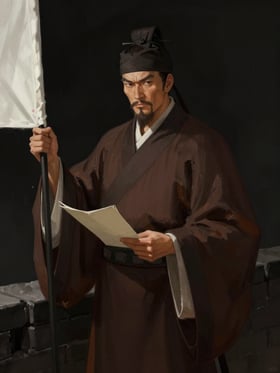
Lady Tian, a prominent Puyang family, aided Cao Cao's entry as a double agent; the novel has him lure Cao Cao into an ambush, then defect.
On the boards
Compare with someone →Where this person ranks on each board.
Historical Record
Pei Songzhi’s annotation cites Yuan Wei’s Spring and Autumn Annals of Emperor Xian, which says that when Cao Cao besieged Puyang, the prominent Tian clan of Puyang acted as double agents, enabling Cao Cao to enter the city. After entering, Cao Cao burned the eastern gate to show that he had no intention of rebelling. Fighting broke out afterward, and Cao Cao’s forces were defeated. During his escape, Lü Bu’s cavalrymen demanded to know who he was. Cao Cao pointed to a man fleeing on a yellow horse and said that he was Cao Cao. The cavalrymen let him go and pursued the man on the yellow horse instead. This passage gives no specific name, family background, or later deeds for the Tian clan. The account of the Tian clan appears only in the material cited by Pei Songzhi’s annotation and should not be conflated with the novel’s narrative.
In the Novel
Romance of the Three Kingdoms portrays the Tian clan as wealthy residents of Puyang, saying that their household had hundreds or thousands of servants and was one of the region’s great families. It places them at the center of the schemes by which Lü Bu, Chen Gong, and Cao Cao contended for Puyang. In the novel, Chen Gong instructs the Tian clan to send someone to Cao Cao’s camp with the false claim that Lü Bu has gone to Liyang and the city is undefended. They agree to use a white flag bearing the character “righteousness” as a signal, luring Cao Cao into the city before ambushing him and setting fires. Although Cao Cao heeds Liu Ye’s advice to send troops to provide support, he still leads his army into the city himself. The Tian clan then sends a messenger to arrange for the gates to be opened at the first watch, drawing Cao Cao’s forces farther inside. The novel goes on to depict Cao Cao trapped by fires at all four gates and attacked by ambushing troops, making the Tian clan’s feigned surrender a perilous episode in the fighting at Puyang.
The novel also has the Tian clan raise the drawbridge when Lü Bu returns to Puyang in defeat, refusing to open the gates and declaring that they have already surrendered to Cao Cao. Lü Bu therefore turns toward Dingtao, and after Cao Cao takes Puyang, he pardons the Tian clan’s past offense. This full sequence—from first setting a trap for Lü Bu, to switching sides during battle in favor of Cao Cao, and finally receiving a pardon—is the novel’s elaboration of the character. The Records of the Three Kingdoms and the text cited in Pei Songzhi’s annotation merely mention the Tian clan briefly as double agents; they do not record the white-flag signal, the refusal to admit Lü Bu, or Cao Cao’s pardon.
Key Relationships
In the account cited in Pei Songzhi’s annotation, the Tian clan’s relationship with Cao Cao centers on their double-dealing at Puyang: they helped Cao Cao enter the city but did not prevent his forces from being defeated. In the novel, they initially follow the arrangements of Lü Bu and Chen Gong, feigning surrender to lure Cao Cao into the city. Later, they claim to have surrendered to Cao Cao, becoming the party that bars Lü Bu from entering as he retreats in defeat. The novel thus portrays the Tian clan as a local powerful family that turns to Cao Cao amid the conflict between the two armies, and concludes this relationship with Cao Cao pardoning their past offense. This pardon is unique to the novel.
Signature Scenes
The scene that best represents the Tian clan’s deeds in the historical account is their double-dealing during Cao Cao’s siege of Puyang, which enabled him to enter the city, followed by the defeat in battle. As Cao Cao broke out, he misled Lü Bu’s cavalry by pointing them toward a man fleeing on a yellow horse, then rushed out while the gate fires were still burning. The novel expands this brief account into a series of stratagems involving the white flag bearing the character “righteousness,” a gong sounded at the first watch, Cao Cao leading his troops into the city, and an ambush with fires at all four gates. Another signature scene comes when Lü Bu returns to the city in defeat: the Tian clan orders the drawbridge raised and declares that they have surrendered to Cao Cao. Puyang then falls to Cao Cao, and the Tian clan is pardoned. The details of their refusal to admit Lü Bu and their pardon are unique to the novel.
In the sources
Where the books name Lady Tian
History · vol. 1Records of the Three Kingdoms
…〈袁暐《獻帝春秋》曰:太祖圍濮陽,濮陽大姓田氏爲反閒,太祖得入城。…
Read the whole paragraph
會張邈與陳宮叛迎呂布,郡縣皆應。荀彧、程昱保鄄城,范、東阿二縣固守,太祖乃引軍還。布到,攻鄄城不能下,西屯濮陽。太祖曰:「布一旦得一州,不能據東平,斷亢父、泰山之道,乘險要我,而乃屯濮陽,吾知其無能爲也。」遂進軍攻之。布出兵戰,先以騎犯青州兵。青州兵奔,太祖陣亂,馳突火出,墜馬,燒左手掌。司馬樓異扶太祖上馬,遂引去。〈袁暐《獻帝春秋》曰:太祖圍濮陽,濮陽大姓田氏爲反閒,太祖得入城。燒其東門,示無反意。及戰,軍敗。布騎得太祖而不知是,問曰:「曹操何在?」太祖曰:「乘黃馬走者是也。」布騎乃釋太祖而追黃馬者。門火猶盛,太祖突火而出。〉未至營止,諸將未與太祖相見,皆怖。太祖乃自力勞軍,令軍中促爲攻具,進復攻之,與布相守百餘日。蝗蟲起,百姓大餓,布糧食亦盡,各引去。
Novel · ch. 12Romance of the Three Kingdoms
…宮曰:「濮陽城中有富戶田氏,家僮千百,為一郡之巨室;可令彼密使人往操寨中下書,言呂溫侯殘暴不仁,民心大怨,今欲移兵黎陽,止有高順在城內,可連夜進兵,我為內應。…
Read the whole paragraph
卻說呂布到寨,與陳宮商議。宮曰:「濮陽城中有富戶田氏,家僮千百,為一郡之巨室;可令彼密使人往操寨中下書,言呂溫侯殘暴不仁,民心大怨,今欲移兵黎陽,止有高順在城內,可連夜進兵,我為內應。操若來,誘之入城,四門放火,外設伏兵。曹操雖有經天緯地之才,到此安能得脫也?」呂布從其計,密諭田氏使人逕到操寨。操因新敗,正在躊躇,忽報田氏人到,呈上密書云:「呂布已往黎陽,城中空虛。萬望速來,當為內應。城上插白旗,大書『義』字,便是暗號。」操大喜曰:「天使吾得濮陽也!」重賞來人,一面收拾起兵。劉曄曰:「布雖無謀,陳宮多計。只恐其中有詐,不可不防。明公欲去,當分三軍為三隊:兩隊伏城外接應,一隊入城方可。」
Novel · ch. 12Romance of the Three Kingdoms
…數內有軍人乘勢混過陣來見操,說是田氏之使,呈上密書。約云:「今夜初更時分,城上鳴鑼為號,便可進兵。…
Read the whole paragraph
操從其言,分軍三隊,來至濮陽城下。操先往觀之,見城上遍豎旗旛,西門角上,有一「義」字白旗,心中暗喜。是日午牌,城門開處,兩員將引軍出戰:前軍侯成,後軍高順。操即使典韋出馬,直取侯成。侯成抵敵不過,回馬望城中走。韋趕到弔橋邊,高順亦攔擋不住,都退入城中去了。數內有軍人乘勢混過陣來見操,說是田氏之使,呈上密書。約云:「今夜初更時分,城上鳴鑼為號,便可進兵。某當獻門。」操撥夏侯惇引軍在左,曹洪引軍在右,自己引夏侯淵,李典,樂進,典韋四將,率兵入城。李典曰:「主公且在城外,容某等先入城去。」操喝曰:「我不自往,誰肯向前!」遂當先領兵直入。
Quotes
3 lines in the books · 2 featured
「呂布已往黎陽,城中空虛。萬望速來,當為內應。城上插白旗,大書『義』字,便是暗號。」
This stratagem displays Lady Tian's crucial role as an inside collaborator, driving the plot forward.
「吾已降曹將軍。」
This line directly declares Lady Tian's betrayal of Lü Bu and surrender to Cao Cao, the turning point of her fate.
Family, lords and rivals
2 relationships

Who is Lady Tian connected to?
Pick someone to see how many steps lie between them and Lady Tian.
Events
Events (2)
Battles and events the texts place this person in, by date.
Other events
Continue
Cao Cao
Lord
Relationship timeline2 entries ▸
Inner monologues · AI-generated1 monologue ▸
- In Puyang, people called me, Lady Tian, one of the great households of the commandery, with hundreds of household retain