Cao Wei · Commander of the Tiger and Leopard Cavalry
Cao Chun
courtesy name 子和 · c. 170–210
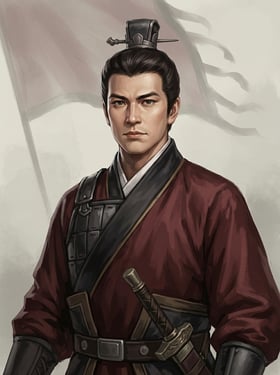
Cao Chun was the younger brother of Cao Ren and commanded the Tiger-Leopard Cavalry. He pursued Liu Bei at Changban together with Wen Ping, and in the Romance received Cao Ren and besieged Yiling.

Life
In the novel: 1 chapter · In the Records: 2 volumes
Life170–210
205 CE (Jian'an 10)
- Battle of NanpiNanpiWarrior
208 CE (Jian'an 13)
- Battle of JianglingJianglingWarrior
209 CE (Jian'an 14)
- Gan Ning Holds YilingYilingWarrior
Appearances
By chapter (3)
Novel
- 51
Records
- 9
- 18
- Cao Wei· Undated
- Life event
List all 3 stops
On the boards
Compare with someone →Where this person ranks on each board.
Who they were
Character profile
- Character
- Cao Chun was the younger brother of Cao Ren and commanded the Tiger-Leopard Cavalry. He pursued Liu Bei at Changban together with Wen Ping, and in the Romance received Cao Ren and besieged Yiling.
- Life
- Cao Chun lost his father at fourteen and inherited the family fortune, becoming immensely wealthy with a great host of servants and retainers. He first took part in the military affairs of the Minister of Works as a Court Gentleman for Consultation, then commanded the Tiger-Leopard Cavalry. He beheaded Yuan Tan at Nanpi, and on the northern campaign against the three commanderies captured the Chanyu Tadun; at Changban he pursued Liu Bei and seized his baggage train. He was enfeoffed as Marquis of Gaoling Village with a fief of three hundred households, and died in the fifteenth year of Jian'an; after Emperor Wen ascended the throne, he was given the posthumous name Marquis Wei.
- Anecdotes
- The Tiger-Leopard Cavalry that Cao Chun commanded was an elite force, and Cao Cao held that no one could replace Cao Chun in leading these horsemen.
Historical Record
Cao Chun, courtesy name Zihe, was Cao Ren’s younger brother. The Records of Heroes recounts that he lost his father at the age of fourteen and set up a separate household from his elder brother Cao Ren, who shared the same mother. He inherited his father’s estate and had considerable family wealth. Skilled at supervising and managing servants and guests, he was also fond of learning and respectful toward scholars, earning praise both locally and from people farther afield. At eighteen, he became an Attendant of the Yellow Gate; at twenty, he accompanied Cao Cao to Xiangyi to recruit troops. Thereafter, he regularly joined military campaigns.
Cao Chun initially served as an Attendant Gentleman and participated in the military affairs of the Minister of Works. He later took command of the Tiger and Leopard Cavalry. During the siege of Nanpi, Yuan Tan sallied out, and many Cao army soldiers were wounded or killed. Cao Cao considered easing the assault for a time, but Cao Chun argued that the army had advanced deep into enemy territory, and that retreating without victory would damage its prestige. They should press the attack while the enemy was arrogant from victory and their own troops were fearful after defeat. Cao Cao accepted his advice and launched a fierce assault on Nanpi. Yuan Tan was defeated and killed, and cavalrymen under Cao Chun cut off his head.
Later, Cao Chun accompanied Cao Cao on the northern campaign against the Three Commanderies, and his cavalry captured the chanyu Tadun. During the campaign against Jing Province, he pursued Liu Bei at Changban, capturing Liu Bei’s two daughters and baggage train, and gathering up his scattered troops. For his accumulated achievements, Cao Chun was enfeoffed as Marquis of Gaolingting, with a fief of three hundred households. He died in the fifteenth year of Jian’an; after Cao Pi took the throne, he was posthumously granted the title Marquis Wei. The Book of Wei, cited in Pei Songzhi’s annotations, says that the Tiger and Leopard Cavalry consisted mostly of the finest warriors in the realm, and that Cao Cao considered it difficult to find a suitable commander for them. After Cao Chun’s death, Cao Cao refused to appoint someone else in his place, saying that Cao Chun could not be replaced.
In the Novel
Chapter 51 of Romance of the Three Kingdoms places Cao Chun amid the campaign in which Cao Ren holds Nan Commandery and contends with Eastern Wu for control of Yiling. In the novel, Cao Chun acts alongside Cao Ren, Niu Jin, and others, taking on tasks such as providing relief, coordinating attacks, and retreating. These battles around Nan Commandery and Yiling, and the specific maneuvers within them, are part of the novel’s narrative elaboration and have no corresponding record in the historical accounts.
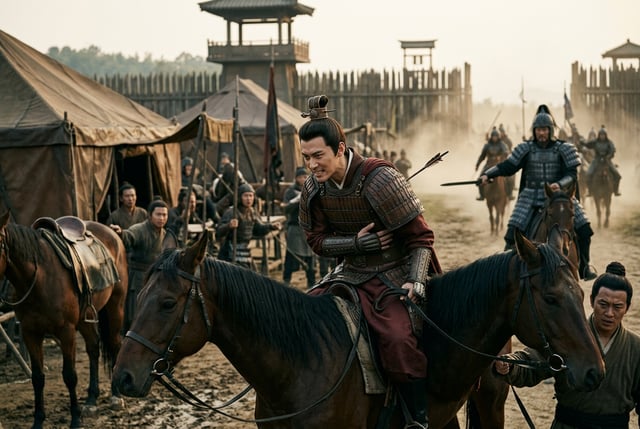
After Gan Ning captures Yiling, Cao Ren orders Cao Chun and Niu Jin to secretly lead troops to relieve Cao Hong. When Zhou Yu leads his forces to attack, Cao Chun again divides his troops with Cao Hong and Niu Jin to meet the enemy. After Wu forces emerge along two routes, the Cao army is defeated and retreats. Cao Chun and his companions enter a narrow path blocked with brushwood, and are forced to abandon their horses and flee on foot. The Wu army captures more than five hundred horses. Through this defeat, the novel portrays Cao Chun’s role in coordinating with other Cao Wei commanders, while showing the effectiveness of the Wu army’s plan to block the route and seize the horses.
The novel also depicts Cao Hong and Cao Chun as rear guards when Cao Ren launches a night raid on Zhou Yu’s camp. The Cao army enters an empty camp and falls into an ambush; surrounded by Wu forces on all sides, its ranks are scattered. In this episode, Cao Chun is one of the participants in Cao Ren’s military action, rather than the narrative’s focus. Historical records say that Cao Chun commanded the Tiger and Leopard Cavalry and took part in the campaigns at Nanpi and Changban, while the novel emphasizes his coordination with other forces and retreat during the campaign for Nan Commandery. The accounts describe different events.
Key Relationships
Cao Chun and Cao Ren were brothers. After their father died when they were young, they set up separate households. Historical accounts record their kinship and Cao Chun’s inheritance of his father’s estate. In the Nan Commandery story in Romance of the Three Kingdoms, Cao Chun, as Cao Ren’s younger brother, is ordered to help defend the city, relieve Yiling, and take part in Cao Ren’s night raid on Zhou Yu. These specific military events appear only in the novel.
Cao Chun served Cao Cao, regularly joining his campaigns, and once commanded the Tiger and Leopard Cavalry. Historical accounts record that he accompanied Cao Cao on the campaign against Jing Province and pursued Liu Bei at Changban. Volume 18 of the Records of the Three Kingdoms also records that Cao Cao assigned troops to Wen Ping, who joined Cao Chun in pursuing Liu Bei at Changban. In the novel, Cao Chun acts alongside Cao Hong, Niu Jin, and others, and his relationships with them are conveyed mainly through their cooperation on the battlefield.
Signature Scenes
The assault on Nanpi is the historical episode that best illustrates Cao Chun’s judgment. After the Cao army suffered a setback, Cao Cao initially wanted to ease the attack, but Cao Chun urged him to press on while the enemy was arrogant and his own troops fearful. Cao Cao followed his advice, attacked fiercely, and took the city; cavalrymen under Cao Chun killed Yuan Tan. The pursuit at Changban, meanwhile, shows Cao Chun fighting alongside the army: historical accounts say that he pursued Liu Bei, captured his two daughters and baggage train, and gathered up scattered troops. The record that Wen Ping joined Cao Chun in pursuing Liu Bei also provides corroboration of this campaign.
Abandoning their horses and retreating after the fall of Yiling is a striking scene featuring Cao Chun in the novel. Wu forces block the narrow path, preventing the Cao army’s horses from passing. Cao Chun and the others are forced to abandon their mounts, allowing the Wu army to capture more than five hundred horses. This episode appears in the novel and should not be conflated with the historical pursuit at Changban or the Tiger and Leopard Cavalry’s achievements. (Unique to the novel)
Family, lords and rivals
2 relationships
Who is Cao Chun connected to?
Pick someone to see how many steps lie between them and Cao Chun.
History vs. novel
7 points · 1 novel-only
| History | Novel |
|---|---|
| Nanpi OffensiveHistory only | |
During the siege of Nanpi, Yuan Tan led his troops out to fight, and Cao Cao’s forces suffered heavy casualties. Cao Chun urged them to press the attack, arguing that the enemy was arrogant while their own troops, though fearful, should intensify their assault. Cao Cao accepted his advice, and Yuan Tan was defeated and killed. vol. 9 | — |
| Beheading Yuan TanHistory only | |
During the Battle of Nanpi, cavalrymen under Cao Chun beheaded Yuan Tan; the historical records clearly document this outcome. vol. 9 | — |
| Capture of TadunHistory only | |
Cao Chun accompanied Cao Cao on the northern campaign against the Three Commanderies, and his cavalry captured the Chanyu Tadun. This achievement led to his being enfeoffed as the Marquis of Gaoling Ting. vol. 9 | — |
| Pursuit at ChangbanHistory only | |
During the campaign against Jing Province, Cao Chun pursued Liu Bei as far as Changban, capturing Liu Bei’s two daughters and baggage, and gathering up his scattered troops. vol. 9 | — |
| Commander of the Tiger and Leopard CavalryHistory only | |
The Book of Wei records that Cao Chun commanded the Tiger and Leopard Cavalry, whose troops were all brave and elite. He comforted his men and won their deep loyalty; after his death, Cao Cao did not appoint another commander. vol. 9 | — |
| Relief at Nan CommanderyNovel only | |
| — | During the Battle of Nanjun, Cao Ren rescued Niu Jin, then returned to the battlefield to save the cavalrymen who were trapped. Cao Chun subsequently led troops to support them, and the Wu army retreated in defeat. ch. 51 |
| Early YearsHistory only | |
Cao Chun was fourteen when his father died. He lived separately from his elder brother, Cao Ren, and inherited the family estate. Skilled at managing household affairs, he loved learning and respected scholars. At eighteen, he was appointed Gentleman of the Yellow Gate. vol. 9 | — |
- Nanpi OffensiveHistory only
- History
During the siege of Nanpi, Yuan Tan led his troops out to fight, and Cao Cao’s forces suffered heavy casualties. Cao Chun urged them to press the attack, arguing that the enemy was arrogant while their own troops, though fearful, should intensify their assault. Cao Cao accepted his advice, and Yuan Tan was defeated and killed.
vol. 9
- Beheading Yuan TanHistory only
- History
During the Battle of Nanpi, cavalrymen under Cao Chun beheaded Yuan Tan; the historical records clearly document this outcome.
vol. 9
- Capture of TadunHistory only
- History
Cao Chun accompanied Cao Cao on the northern campaign against the Three Commanderies, and his cavalry captured the Chanyu Tadun. This achievement led to his being enfeoffed as the Marquis of Gaoling Ting.
vol. 9
- Pursuit at ChangbanHistory only
- History
During the campaign against Jing Province, Cao Chun pursued Liu Bei as far as Changban, capturing Liu Bei’s two daughters and baggage, and gathering up his scattered troops.
vol. 9
- Commander of the Tiger and Leopard CavalryHistory only
- History
The Book of Wei records that Cao Chun commanded the Tiger and Leopard Cavalry, whose troops were all brave and elite. He comforted his men and won their deep loyalty; after his death, Cao Cao did not appoint another commander.
vol. 9
- Relief at Nan CommanderyNovel only
- Novel
During the Battle of Nanjun, Cao Ren rescued Niu Jin, then returned to the battlefield to save the cavalrymen who were trapped. Cao Chun subsequently led troops to support them, and the Wu army retreated in defeat.
ch. 51
- Early YearsHistory only
- History
Cao Chun was fourteen when his father died. He lived separately from his elder brother, Cao Ren, and inherited the family estate. Skilled at managing household affairs, he loved learning and respected scholars. At eighteen, he was appointed Gentleman of the Yellow Gate.
vol. 9
Combat
On the field
Duels, kills and executions as the texts tell them, counted separately for the Records and the Romance.
Stratagems
Plans this person devised or saw through, as the texts tell them.
- Romance
- 1 carried out · 1 worked · 0 turned down · 0 seen through
- RomanceLure the EnemyLureWorkedCh. 51「曹純先使人報知曹洪,令洪出城誘敵」
Events
Events (5)
Battles and events the texts place this person in, by date.
Battles
- 205Battle of NanpiWarrior
- 208Battle of JianglingWarrior
- 208Battle of Changban
- 222Battle of Ruxu
Other events
- 209Gan Ning Holds YilingWarrior
Continue
Battle of Jiangling
Relationship timeline2 entries ▸
Inner monologues · AI-generated1 monologue ▸
- I am Cao Chun, courtesy name Zihe. The highest point I reached in life was not the day I was enfeoffed as a marquis, nor