Shu Han · Minister of Ceremonies
Lai Gong
Not to be confused with Lai Gong (赖厷) — Lai Gong, an official under Shu Han chancellor Zhuge Liang, accompanied him to Hanzhong and died young, to Zhuge Liang’s regret.
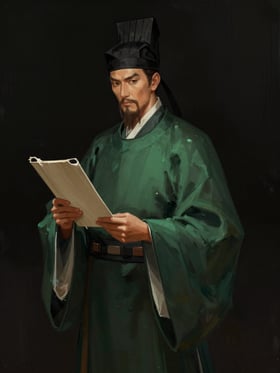
Lai Gong served Liu Biao and Liu Bei, held office in Jiaozhou, and joined petitions for Liu Bei’s Hanzhong kingship and Lady Gan’s rites.

Life
In the novel: 1 chapter · In the Records: 5 volumes
Life?–?
210 CE (Jian'an 15)
Allegiance
Appearances
By chapter (6)
Novel
- 80
Records
- 32
- 34
- 45
- 49
- 53
- Shu Han
- Liu Biao's faction· Undated
- Life event
- Death
List all 2 stops
- LinglingBirthplace
- Cangwu210Bu Zhi Pacifies Jiao Province
On the boards
Compare with someone →Where this person ranks on each board.
Historical Record
Lai Gong was from Lingling. Early in his career, he was sent by Liu Biao, governor of Jing Province, to replace Zhang Jin as Inspector of Jiaozhou. After arriving in Jiaozhou, he served in the same area as Wu Ju, the Cangwu Administrator appointed by Liu Biao. The Records of the Three Kingdoms describes Lai Gong as “benevolent and cautious,” but “unfamiliar with the affairs of the age.” Wu Ju, meanwhile, was rash and fierce and would not submit to Lai Gong. The two resented each other, and Wu Ju eventually drove Lai Gong out of Jiaozhou, forcing him to flee back to Lingling. Another account also says that Wu Ju raised troops and drove Lai Gong out, relating the outcome of the conflict.
Lai Gong later entered Liu Bei’s administration. After Liu Bei pacified Yi Province and assumed the office of governor of Yi Province, Lai Gong served as General Who Guards Afar. When Liu Bei became King of Hanzhong, he appointed this former official from Jing-Chu as Grand Master of Ceremonies. Lai Gong was among those named in the memorial submitted by Liu Bei’s ministers urging him to accept the title of King of Hanzhong; his office was recorded as General Who Guards Afar. Citing the crisis facing the Han house, the memorial asked Liu Bei to proclaim himself King of Hanzhong, command the army, and eliminate Cao Cao’s forces. After Liu Bei Proclaims Himself Emperor, Lai Gong continued to participate in court deliberations on ritual matters in his capacity as Grand Master of Ceremonies. On the matter of Lady Gan’s reburial, Zhuge Liang proposed that she be posthumously honored and buried with Liu Bei, saying that he had settled the arrangements together with Grand Master of Ceremonies Lai Gong and others: Lady Gan was to receive the posthumous title Empress Zhaolie and be buried with Liu Bei.
The Records of the Three Kingdoms also records that Lai Gong’s son, Lai Gong, once served as Director of the Left Section of the Secretariat in the Chancellor’s office, accompanied Zhuge Liang in Hanzhong, and died young. Zhuge Liang was deeply saddened when he learned of his death, and in a letter to Zhang Yi and Jiang Wan he called the loss of Lai Gong a great loss to the court. As for Lai Gong himself, the sources show that he served in Jiaozhou, returned to Lingling, and then served Liu Bei’s administration as Grand Master of Ceremonies; the cited passages from the Records of the Three Kingdoms provide no further account of his year of death or specific achievements.
In the Novel
Chapter 80 of Romance of the Three Kingdoms portrays Lai Gong as one of the court officials who urged Liu Bei, as King of Hanzhong, to proclaim himself emperor. It calls him “Grand Master of Ceremonies” and lists him among Wen Wu officials such as Xu Jing, Mi Zhu, and Huang Quan. The novel depicts Zhuge Liang explaining to Liu Bei why he should proclaim himself emperor, after which the assembled officials enter, prostrate themselves, and ask Liu Bei to ascend the throne. Lai Gong does not speak independently, but takes part in this collective appeal in his capacity as Grand Master of Ceremonies.
The novel then describes Liu Bei building an altar south of Wudan in Chengdu and ascending the throne. The officials arrange the ceremonial guard and invite him to take his place; Qiao Zhou reads the sacrificial text, Zhuge Liang leads the assembly in presenting the imperial seal, and Liu Bei accepts after repeatedly declining, adopting the era name Zhangwu. Lai Gong is given no independent actions or lines during this altar ceremony, appearing chiefly as a court ritual official and one of the assembled ministers. This appointment accords with the historical account that Lai Gong was Grand Master of Ceremonies when Liu Bei was King of Hanzhong. However, the details in Chapter 80 that explicitly identify him as Grand Master of Ceremonies and place him in the scene of Liu Bei’s proclamation are the novel’s literary presentation of the historical figure and his court role; they cannot be used to supply specific ceremonial details absent from the historical record.
Key Relationships
- Liu Biao: Lai Gong was sent by Liu Biao to replace Zhang Jin as Inspector of Jiaozhou, reflecting his early ties to the Jing Province regime.
- Wu Ju: The two served in Jiaozhou but did not get along. Wu Ju refused to submit to Lai Gong and eventually drove him out, forcing Lai Gong to flee back to Lingling; the historical account describes Lai Gong as benevolent and cautious but unfamiliar with the affairs of the age.
- Liu Bei: Lai Gong went on to serve Liu Bei’s administration, holding posts including General Who Guards Afar and Grand Master of Ceremonies; his name appears in the ministers’ memorial urging Liu Bei to become King of Hanzhong.
- Zhuge Liang and Lady Gan: In his capacity as Grand Master of Ceremonies, Lai Gong joined Zhuge Liang and others in deliberating on the posthumous title of Empress Zhaolie for Lady Gan and her burial with Liu Bei.
- Lai Gong: Lai Gong’s son served as Director of the Left Section of the Secretariat in the Chancellor’s office and died young; Zhuge Liang mourned his death.
- The Appeal for Liu Bei to Proclaim Himself Emperor: The novel lists Lai Gong among the Grand Masters of Ceremonies and the ministers urging Liu Bei to take the throne; his specific words and actions in the scene are unique to the novel.
Signature Scenes
- Driven from Jiaozhou and returning to Lingling: After Liu Biao sent Lai Gong to replace Zhang Jin, Lai Gong fell out with Wu Ju. Wu Ju drove him out, and Lai Gong fled back to Lingling. This was the clearest turning point in his early career and shows that his appointment in Jiaozhou was far from secure or smooth.
- Joining the appeal to make Liu Bei King of Hanzhong: After Liu Bei defeated Cao Cao in Hanzhong, Lai Gong joined Zhuge Liang, Guan Yu, Zhang Fei, and 120 other officials in submitting a memorial urging Liu Bei to accept the title of King of Hanzhong and unite military and governmental authority.
- Deliberating on Lady Gan’s title and burial: After Liu Bei’s death, when Lady Gan’s coffin arrived, Lai Gong took part in the ritual deliberations as Grand Master of Ceremonies. They agreed to honor Lady Gan as Empress Zhaolie and requested that she be buried with Liu Bei.
- The appeal at the Wudan altar and Liu Bei’s accession: Romance of the Three Kingdoms places Lai Gong among the Grand Masters of Ceremonies urging Liu Bei to take the throne, and uses the assembled ministers’ entreaties, the construction of the altar, and the presentation of the imperial seal to develop the scene of Liu Bei’s proclamation as emperor. Lai Gong is simply one of the assembled ministers in this scene; the specific details of his participation in the ceremony are unique to the novel.
Family, lords and rivals
1 relationships
Who is Lai Gong connected to?
Pick someone to see how many steps lie between them and Lai Gong.
Events
Events (2)
Battles and events the texts place this person in, by date.
Other events
Places
- Native of
- LinglingRecords
- Governed
- Jiao ProvinceRecords

Continue
Bu Zhi Pacifies Jiao Province
Inner monologues · AI-generated1 monologue ▸
- I am Lai Gong, and my courtesy name is unknown. I now serve as General Who Pacifies the Far Reaches, but the burdens of