Yuan Shao's Faction · Military Supervisor; General Who Displays Martial Prowess
Ju Shou
courtesy name 公与 · –200
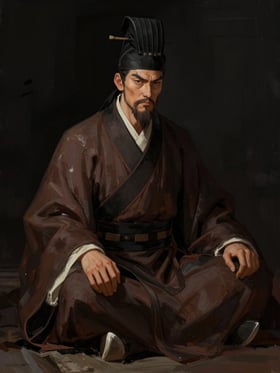
Ju Shou, courtesy name Gongyu, was Yuan Shao’s advisor, known for urging him to welcome the emperor and resist Cao for the long term.

Life
In the novel: 7 chapters · In the Records: 1 volume
Life?–200
200 CE (Jian'an 5)
- Battle of BomaBaimaAdvisor
- Yuan Shao's Faction
- Hatched: dated by chapter
- Life event
- Death
On the boards
Compare with someone →Where this person ranks on each board.
Historical Record
Ju Shou, courtesy name Gongyu, was from Guangping. Early in his career, he served as an aide to the provincial governor, was recommended as a Maocai, and held several county magistrate posts before becoming an aide to Han Fu. After Yuan Shao took control of Jizhou, he recruited Ju Shou and memorialized the court to appoint him Inspector of the Army and General Who Inspires Might. Ju Shou excelled at strategy: he advised Yuan Shao on expanding into Hebei and repeatedly urged him to pursue a measured policy in managing the realm.
Ju Shou once urged Yuan Shao to consolidate the forces of Jizhou and the surrounding regions, recruit talent, expand his troops, and welcome the Son of Heaven to restore the court’s proper order, thereby commanding the other lords. Yuan Shao agreed for a time but failed to act on the proposal. Later, Ju Shou again advocated welcoming the emperor and moving the capital to Ye, arguing that this would accord with the greater cause and give Yuan Shao the political initiative. Guo Tu and Chunyu Qiong opposed the plan, and Yuan Shao ultimately rejected it. Cao Cao then brought the emperor to Xu.
When Yuan Shao decided to campaign south against Cao Cao, Ju Shou and Tian Feng urged him to delay military action, first calm the people and prepare ships and equipment, then wear down the enemy through sustained harassment. Ju Shou also pointed out that, since Cao Cao Receives and Serves the Emperor, Yuan’s southward advance would be unjustifiable. Yuan Shao followed the advice of those favoring war. Moreover, after his advisers slandered Ju Shou, he divided command of the army among Ju Shou, Guo Tu, and Chunyu Qiong, each leading separate forces. Before the Battle of Boma, Ju Shou warned that Yan Liang was narrow-minded and should not be given sole responsibility. Yuan Shao ignored him, and Yan Liang was later defeated and killed by Cao Cao. During the standoff at Guandu, Ju Shou argued that Yuan’s forces should rely on their ample supplies and hold out patiently. He also proposed assigning Jiang Qi to protect the supply route and intercept Cao’s grain transports, but neither proposal was accepted.
After Yuan Shao’s defeat, Ju Shou was unable to cross the river and was captured and brought before Cao Cao. He declared that he had not surrendered of his own accord. Because they had known each other previously, Cao Cao treated him generously and still hoped they could work together to bring the realm under their control. Ju Shou said that his family remained in Yuan Shao’s hands and asked to be executed quickly so as not to endanger them. Later, Ju Shou plotted to return to the Yuan family and was killed.
In the Novel
Romance of the Three Kingdoms portrays Ju Shou as a loyal and upright adviser who sees the situation clearly and repeatedly offers sound counsel, only to be rebuffed by Yuan Shao. The novel depicts him taking part in the administration of Jizhou after Yuan Shao seized it, and opposing a hasty call to arms. He favors first reporting the victory to the emperor, then preparing for a southward campaign through a long-term strategy. This broadly accords with the advice recorded in the historical accounts. The novel also has him give away his entire estate and take leave of his clan after Tian Feng is imprisoned, highlighting his gloomy foreboding about Yuan’s army’s prospects. The historical accounts also record this farewell, while the novel presents it in a more dramatic scene.
Before the Battle of Boma, the novel has Ju Shou once again warn that Yan Liang should not be given sole responsibility. After Guan Yu kills Yan Liang, Ju Shou recognizes Guan Yu and points out that he may be Liu Bei’s younger brother, nearly causing Liu Bei to be killed by Yuan Shao. After Liu Bei defends himself, Yuan Shao instead blames Ju Shou for believing and repeating false reports. This chain of events is the novel’s invention: the historical accounts record Ju Shou’s warning about Yan Liang and Yan Liang’s defeat and death, but not Liu Bei’s interrogation.
In its account of the Battle of Guandu, the novel weaves Ju Shou’s counsel to Yuan Shao to hold out patiently, his confinement in the army, his warning after observing the heavens that Wuchao would be attacked, and his attempt to return on horseback after being captured in the defeat—ending with Cao Cao killing him—into a single tragic arc. The Records of the Three Kingdoms records his advice to hold out and defend Wuchao, his capture, and his eventual death, but not the star-gazing or the attempt to escape on horseback. The novel further reinforces his image of loyalty and righteousness with the closing inscription, “Tomb of the Loyal and Valiant Lord Ju.”
Key Relationships
- Yuan Shao: Ju Shou’s lord and the principal recipient of his counsel. Ju Shou devised strategies for him to expand into Hebei, welcome the emperor, and wage a protracted campaign against Cao Cao. Yuan Shao repeatedly rejected his advice and, before Guandu, reduced his command over the troops.
- Tian Feng: Another of Yuan Shao’s advisers. The two shared the view that Yuan Shao should avoid a hasty southern campaign and make long-term preparations. In the novel, Ju Shou takes leave of his clan after Tian Feng is imprisoned, showing that they shared the same concern for the fate of Yuan’s forces.
- Cao Cao: After Guandu, Cao Cao captured Ju Shou, treated him generously because they had known each other previously, and urged him to help. Ju Shou declared that he would not surrender; later, he plotted to return to the Yuan family and was killed. The novel additionally has Cao Cao execute him after he tries to escape on horseback, and depicts Cao Cao regretting that he killed a loyal and righteous man. (The attempted escape on horseback is unique to the novel.)
- Yan Liang: Ju Shou once warned Yuan Shao that Yan Liang was narrow-minded and should not be entrusted with a major responsibility alone. Yuan Shao ignored him, and Yan Liang was ultimately defeated and killed at Baima.
Notable Scenes
- Urging Yuan Shao to welcome the emperor: Ju Shou advocated bringing the emperor to Ye and stabilizing the realm in the court’s name. Yuan Shao did not accept the proposal; Cao Cao later brought the emperor to Xu, and Yuan Shao regretted his decision.
- Warning before Baima: When Yuan Shao sent Yan Liang to attack Baima, Ju Shou pointed out his weaknesses and warned against entrusting him with the task alone. The historical accounts record this warning and Yan Liang’s death; the novel adds the episode in which Liu Bei narrowly escapes execution.
- The prediction by the Yellow River: As Yuan Shao prepared to cross the river, Ju Shou advised him to leave troops stationed at Yanjin and divide his forces between there and Guandu. He feared that if circumstances changed, the whole army would be unable to retreat. Yuan Shao ignored him, and Ju Shou sighed, feigned illness, and stopped taking part in discussions.
- Captured but refusing to surrender: After the defeat at Guandu, Ju Shou was captured by Cao Cao’s forces and publicly declared that he had not surrendered. Cao Cao treated him generously, but Ju Shou remained devoted to the Yuan family and was ultimately killed for plotting to return to it. The novel turns this into a loyal and valiant ending: Ju Shou is killed after trying to escape on horseback, remains composed as he dies, and receives an elaborate burial. (The attempted escape on horseback and the tomb inscription are unique to the novel.)
Quotes
15 lines in the books · 3 featured
「將軍弱冠登朝,則播名海內;值廢立之際,則忠義奮發;單騎出奔,則董卓懷怖;濟河而北,則勃海稽首。振一郡之卒,撮冀州之衆,威震河朔,名重天下。雖黃巾猾亂,黑山跋扈,舉軍東向,則青州可定;還討黑山,則張燕可滅;回衆北首,則公孫必喪;震脅戎狄,則匈奴必從。橫大河之北,合四州之地,收英雄之才,擁百萬之衆,迎大駕於西京,復宗廟於洛邑,號令天下,以討未復,以此爭鋒,誰能敵之?比及數年,此功不難。」
These words display Ju Shou's outstanding strategic vision, mapping out a grand blueprint for Yuan Shao's hegemony.
「我軍雖眾,而勇猛不及彼軍;彼軍雖精,而糧草不如我軍。彼軍無糧,利在急戰;我軍有糧,宜且緩守。若能曠以日月,則彼軍不戰自敗矣。」
This stratagem precisely analyzes the strengths and weaknesses of both sides, embodying Ju Shou's far-sighted military talent.
「授不降也!」
This line displays Ju Shou's unbending integrity—a classic portrait of his character.
- Enemies
- Other
Who is Ju Shou connected to?
Pick someone to see how many steps lie between them and Ju Shou.
History vs. novel
8 points · 2 novel-only
| History | Novel |
|---|---|
| Welcoming the Son of HeavenNovel embellishes | |
Ju Shou urged Yuan Shao to welcome the Son of Heaven and establish him in Ye, using the court’s name to command the various lords. Yuan Shao was initially pleased and inclined to agree, but ultimately did not adopt the proposal. vol. 6 | The account says that after Yuan Shao took control of Jizhou, Ju Shou was appointed as an adviser sharing responsibility for the province’s affairs; it does not mention him urging Yuan Shao to welcome the Son of Heaven. ch. 7 |
| Long-term StrategyNovel embellishes | |
Before the Battle of Guandu, Ju Shou and Tian Feng advised first focusing on farming and giving the people respite, then gradually advancing to Liyang and developing Henan. By conserving their strength and waiting for the enemy to tire, they could secure their great enterprise within three years. vol. 6 | Ju Shou advocated making use of Yuan’s army’s ample supplies to hold back cautiously, delay matters, and wait for Cao Cao’s army to be defeated by shortages of food. Yuan Shao rebuked him for undermining the army’s morale with his hesitation. ch. 30 |
| Yan Liang Goes into BattleNovel embellishes | |
Ju Shou warned Yuan Shao that Yan Liang was hasty and narrow-minded: though brave, he should not be entrusted with a command on his own. Yuan Shao ignored the warning, and Yan Liang was later defeated and killed by Cao Cao. vol. 6 | Ju Shou likewise warned that Yan Liang was narrow-minded and should not be given an independent command, but Yuan Shao ignored him. The novel then elaborates on Yan Liang’s attack on Baima and Guan Yu’s entry into battle. ch. 25 |
| Farewell to His ClanNovel embellishes | |
Before Yan Liang set out on campaign, Ju Shou summoned his clan, gave away all his possessions, and predicted that when Yuan’s army was doomed, he himself would not be spared. He also explained that Cao Cao was astute and resourceful, while Yuan’s army was exhausted and its commanders arrogant and its ruler self-indulgent. vol. 6 | The novel places the farewell after Tian Feng is imprisoned, depicting Ju Shou giving away all his possessions to bid farewell to his clan and lamenting that campaigning with the army would be perilous whether they won or lost. ch. 25 |
| Advance at YanjinNovel embellishes | |
Before Yuan Shao crossed the river, Ju Shou advised him to remain garrisoned at Yanjin and divide his forces between there and Guandu, so that the whole army could retreat if circumstances changed. Yuan Shao ignored him, and Ju Shou resigned on the pretext of illness; his troops were transferred to Guo Tu. vol. 6 | When Yuan Shao wanted to cross the river in pursuit of Cao Cao, Ju Shou proposed remaining garrisoned at Yanjin and dividing the forces between there and Guandu. Yuan Shao angrily accused him of undermining the army’s morale, and Ju Shou then pleaded illness and stopped taking part in deliberations. ch. 26 |
| Guan Yu’s IdentityNovel only | |
| — | A report from Yan Liang’s defeated troops said that the general who had slain him was a brave warrior with a red face, a long beard, and a great blade. Ju Shou judged that the man must be Guan Yu, which caused Yuan Shao to turn his anger on Liu Bei. ch. 25 |
| Warning of an Attack on WuchaoNovel only | |
| — | Imprisoned, Ju Shou observed the night sky and believed that the grain stores at Wuchao might be attacked. He repeatedly asked Yuan Shao through the night to strengthen the patrols and defenses, but Yuan Shao dismissed his words as nonsense and kept him imprisoned. ch. 30 |
| Capture and DeathNovel embellishes | |
After being captured by Cao Cao’s army, Ju Shou said that he had not surrendered. Cao Cao treated him generously and urged him to join in achieving great things. Ju Shou still plotted to return to the Yuan clan and was later killed. vol. 6 | The novel says that after being captured, Ju Shou refused to surrender. Cao Cao treated him with courtesy and praised his talent; Ju Shou stole a horse in an attempt to return to the Yuan clan, but Cao Cao had him killed. The novel also says that Cao Cao gave him a lavish burial and erected a tomb for him. ch. 30 |
- Welcoming the Son of HeavenNovel embellishes
- History
Ju Shou urged Yuan Shao to welcome the Son of Heaven and establish him in Ye, using the court’s name to command the various lords. Yuan Shao was initially pleased and inclined to agree, but ultimately did not adopt the proposal.
vol. 6
- Novel
The account says that after Yuan Shao took control of Jizhou, Ju Shou was appointed as an adviser sharing responsibility for the province’s affairs; it does not mention him urging Yuan Shao to welcome the Son of Heaven.
ch. 7
- Long-term StrategyNovel embellishes
- History
Before the Battle of Guandu, Ju Shou and Tian Feng advised first focusing on farming and giving the people respite, then gradually advancing to Liyang and developing Henan. By conserving their strength and waiting for the enemy to tire, they could secure their great enterprise within three years.
vol. 6
- Novel
Ju Shou advocated making use of Yuan’s army’s ample supplies to hold back cautiously, delay matters, and wait for Cao Cao’s army to be defeated by shortages of food. Yuan Shao rebuked him for undermining the army’s morale with his hesitation.
ch. 30
- Yan Liang Goes into BattleNovel embellishes
- History
Ju Shou warned Yuan Shao that Yan Liang was hasty and narrow-minded: though brave, he should not be entrusted with a command on his own. Yuan Shao ignored the warning, and Yan Liang was later defeated and killed by Cao Cao.
vol. 6
- Novel
Ju Shou likewise warned that Yan Liang was narrow-minded and should not be given an independent command, but Yuan Shao ignored him. The novel then elaborates on Yan Liang’s attack on Baima and Guan Yu’s entry into battle.
ch. 25
- Farewell to His ClanNovel embellishes
- History
Before Yan Liang set out on campaign, Ju Shou summoned his clan, gave away all his possessions, and predicted that when Yuan’s army was doomed, he himself would not be spared. He also explained that Cao Cao was astute and resourceful, while Yuan’s army was exhausted and its commanders arrogant and its ruler self-indulgent.
vol. 6
- Novel
The novel places the farewell after Tian Feng is imprisoned, depicting Ju Shou giving away all his possessions to bid farewell to his clan and lamenting that campaigning with the army would be perilous whether they won or lost.
ch. 25
- Advance at YanjinNovel embellishes
- History
Before Yuan Shao crossed the river, Ju Shou advised him to remain garrisoned at Yanjin and divide his forces between there and Guandu, so that the whole army could retreat if circumstances changed. Yuan Shao ignored him, and Ju Shou resigned on the pretext of illness; his troops were transferred to Guo Tu.
vol. 6
- Novel
When Yuan Shao wanted to cross the river in pursuit of Cao Cao, Ju Shou proposed remaining garrisoned at Yanjin and dividing the forces between there and Guandu. Yuan Shao angrily accused him of undermining the army’s morale, and Ju Shou then pleaded illness and stopped taking part in deliberations.
ch. 26
- Guan Yu’s IdentityNovel only
- Novel
A report from Yan Liang’s defeated troops said that the general who had slain him was a brave warrior with a red face, a long beard, and a great blade. Ju Shou judged that the man must be Guan Yu, which caused Yuan Shao to turn his anger on Liu Bei.
ch. 25
- Warning of an Attack on WuchaoNovel only
- Novel
Imprisoned, Ju Shou observed the night sky and believed that the grain stores at Wuchao might be attacked. He repeatedly asked Yuan Shao through the night to strengthen the patrols and defenses, but Yuan Shao dismissed his words as nonsense and kept him imprisoned.
ch. 30
- Capture and DeathNovel embellishes
- History
After being captured by Cao Cao’s army, Ju Shou said that he had not surrendered. Cao Cao treated him generously and urged him to join in achieving great things. Ju Shou still plotted to return to the Yuan clan and was later killed.
vol. 6
- Novel
The novel says that after being captured, Ju Shou refused to surrender. Cao Cao treated him with courtesy and praised his talent; Ju Shou stole a horse in an attempt to return to the Yuan clan, but Cao Cao had him killed. The novel also says that Cao Cao gave him a lavish burial and erected a tomb for him.
ch. 30
Combat
On the field
Duels, kills and executions as the texts tell them, counted separately for the Records and the Romance.
- RomanceCh. 30ExecutionCao CaoLost「操怒,乃殺之」
Stratagems
Plans this person devised or saw through, as the texts tell them.
- Records
- 0 carried out · 0 worked · 1 turned down · 0 seen through
- RecordsSend a Detachment to Cut Supply RoutesOtherTurned downJuan 6「可遣將蔣奇別爲支軍於表,以斷曹公之鈔」
Events
Events (3)
Battles and events the texts place this person in, by date.
Battles
- 200Battle of Guandu
- 200Battle of BomaAdvisor
Other events
Continue
Battle of Boma
Relationship timeline7 entries ▸
History · vol. 6
- Yuan Shao§32
Advised
advised Shao, “Unite the lands of the four provinces … and command the realm”; Shao was pleased and appointed him Supervising Army and General Who Displays Martial Prowess
- Yan Liang§35
Advised
Ju Shou remonstrated: “Liang is narrow-minded by nature; though brave, he cannot be entrusted with a command alone”
- Cao Cao§35
Betrayer
after Shao was defeated and crossed the river, he was captured by someone; the Grand Ancestor treated him generously; later, when he plotted to return to the Yuan clan, he was killed
Novel · ch. 25
- Yuan Shao§26
Advised
advised that Yan Liang's narrow temperament made him unsuitable for sole command; the advice was not accepted
Novel · ch. 26
Advised
urged staying garrisoned at Yanjin and dividing the troops at Guandu, but was angrily rebuked by Yuan Shao; sighed, "Those above indulge their ambitions, while those below strive for achievement," and feigned illness to avoid appearing
Novel · ch. 27
- Yuan Shao§18
Enemy
Dismissed and not employed
Novel · ch. 30
- Cao Cao§37
Enemy
After being defeated, [he] was captured; preferring death to surrender, he stole a horse and tried to return to the Yuan clan, but was killed by Cao Cao
Inner monologues · AI-generated3 monologues ▸
- I am Ju Shou, courtesy name Gongyu. At this point, looking back to when the Yuan clan held Hebei and commanded a large,
- The waters of the Yellow River still surge on without cease. Though I am trapped in Cao’s camp, my heart remains bound t
- I am Ju Shou, courtesy name Gongyu, a native of Guangping. From a young age, I had great ambitions and was resourceful.