Tao Qian's Faction · General
Cao Bao
–196
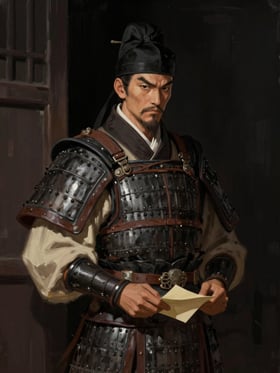
Cao Bao, Tao Qian's general, helped Lü Bu take Xiapi; the Romance says he opened its gates after Zhang Fei flogged him.

Life
In the novel: 3 chapters · In the Records: 3 volumes
Life?–196
193 CE (Chuping 4)
196 CE (Jian'an 1)
- Lü Bu Seizes Xu ProvinceXiapiInstigator
- Tao Qian's Faction
- Lü Bu's faction· Undated
- Hatched: dated by chapter
- Life event
- Death
List all 2 stops
On the boards
Compare with someone →Where this person ranks on each board.
Historical Record
Cao Bao was a general under Tao Qian. In the first year of Xingping, Cao Cao marched east against Tao Qian over the death of his father, Cao Song, in Xu Province. After advancing into Donghai, Cao Cao passed through Tan County, where Cao Bao and Liu Bei camped east of Tan in an attempt to intercept him. Cao Cao defeated them, then captured Xiangben and carried out a great slaughter along his route. The Records of the Three Kingdoms does not record Cao Bao’s specific actions, troop strength, or fate in this engagement, nor does it say whether he continued to serve under Tao Qian afterward. Cao Bao appears in the record again later as the commander defending Xiapi: while Liu Bei was locked in a standoff with Yuan Shu, Lü Bu seized the opportunity to attack Xiapi, and Cao Bao rebelled and secretly welcomed Lü Bu. The account from Yingxiong Ji cited in Pei Songzhi’s commentary adds that Cao Bao was a longtime general of Tao Qian, and that Zhang Fei once wanted to kill him. Cao Bao’s men held their camp, however, and sent someone to summon Lü Bu; Lü Bu consequently captured Xiapi, and Zhang Fei fled after being defeated. The historical accounts thus portray Cao Bao as a Xu Province general who first took part in the stand against Cao Cao east of Tan and later sided with Lü Bu at Xiapi. The sources do not explain his precise motives or what became of him afterward.
In the Novel
The Romance of the Three Kingdoms portrays Cao Bao as a subordinate general of Tao Qian and further elaborates on his battlefield actions, which the Records of the Three Kingdoms does not record. When Cao Cao’s forces reached Xu Province, Cao Bao volunteered to fight, saying he could not simply wait to die with his hands bound. Tao Qian went out to negotiate with Cao Cao, and Xiahou Dun pursued him; Cao Bao leveled his spear and went to meet Xiahou Dun. Just as the two armies clashed, a fierce wind sprang up, sending sand and stones flying, and both sides had no choice but to withdraw. This episode casts Cao Bao as a martial officer brave enough to take the field and protect his commander, but the specific encounter and the windstorm that brought it to a close are fictional.
The novel then makes Cao Bao part of the chain of events that leads to Xu Province changing hands. Cao Bao refused to drink, but Zhang Fei still forced him to do so. When Zhang Fei urged him again, Cao Bao said he truly could not drink, and Zhang Fei threatened to beat him for disobeying orders. Cao Bao begged Zhang Fei to spare him out of consideration for his son-in-law Lü Bu, but Zhang Fei instead flogged him fifty times. Bearing a grudge, Cao Bao sent a letter to Lü Bu that night, urging him to seize Xu Province while Zhang Fei was drunk. Lü Bu followed his advice and arrived at the city by night. Cao Bao ordered the guards to open the gates, and Lü Bu’s troops entered the city. Cao Bao later led men in pursuit of Zhang Fei as he fled the city. After fighting Zhang Fei for three bouts, Cao Bao was defeated and fled; Zhang Fei pursued him to the river and killed him with a thrust of his spear. These details—his flogging, the secret letter, the opening of the gates, and his death in battle—are the novel’s dramatic elaboration of the historical account that he “rebelled and secretly welcomed Lü Bu”; they should not be conflated with the historical record.
The novel also says that Cao Bao’s daughter married Lü Bu as his second wife, but died before him and bore no children. This family relationship appears in the Romance of the Three Kingdoms material as well, but has no corresponding account in the historical sources.
Key Relationships
- Tao Qian: Historical accounts describe Cao Bao as a subordinate and longtime general of Tao Qian. When Cao Cao passed through Tan County, Cao Bao and Liu Bei camped east of Tan to block him.
- Liu Bei: The two once camped together east of Tan. While Liu Bei was in control of Xu Province, Cao Bao served as the commander defending Xiapi, but later rebelled and welcomed Lü Bu.
- Lü Bu: Historical accounts say Cao Bao secretly welcomed Lü Bu into Xiapi. The novel also portrays them as father-in-law and son-in-law, and has Cao Bao inform Lü Bu of Zhang Fei’s actions after being flogged by him. (Exclusive to the Romance of the Three Kingdoms.)
- Zhang Fei: The historical account in Yingxiong Ji says Zhang Fei wanted to kill Cao Bao. The novel, by contrast, has Zhang Fei flog Cao Bao first, after which Cao Bao pursues Zhang Fei but is killed by him. (The novel’s account differs from the brief historical record.)
Notable Scenes
The stand against Cao Cao east of Tan: In the first year of Xingping, Cao Bao and Liu Bei camped east of Tan and fought Cao Cao as he passed through Tan County. They were ultimately defeated. This is a military action by Cao Bao explicitly recorded in the historical accounts, though the record is brief and does not describe the course of the battle.
Welcoming Lü Bu into Xiapi: Historical accounts say that Cao Bao, as the commander defending Xiapi, rebelled and secretly welcomed Lü Bu, playing a key role in Lü Bu’s seizure of the city. Yingxiong Ji adds that Cao Bao’s men held their camp and sent someone to summon Lü Bu, but it does not include the novel’s specific dialogue about opening the gates.
The drunken flogging, the gates opening, and the death by the river: The Romance of the Three Kingdoms strings together Cao Bao’s flogging by Zhang Fei, his nighttime letter, his order to open the gates, and his death after pursuing Zhang Fei into a continuous sequence, emphasizing the dramatic turn from humiliation to helping Lü Bu enter the city. These specific events and his manner of death are exclusive to the novel. The Records of the Three Kingdoms only says that Cao Bao rebelled and secretly welcomed Lü Bu; it does not say Zhang Fei killed him. (Exclusive to the Romance of the Three Kingdoms.)
Quotes
5 lines in the books · 3 featured
「曹兵既至,豈可束手待死!某願助使君破之。」
This line shows Cao Bao's loyalty and courage in the early days, forming a contrast with his later image.
「我從天戒,不飲酒。」
Cao Bao's refusal to drink sets the stage for Zhang Fei's drunken flogging, the turning point of his fate.
「翼德公,看我女婿之面,且恕我罷。」
Cao Bao invokes his son-in-law Lü Bu to plead for mercy, highlighting his dependence and foreshadowing the conflict between Lü Bu and Liu Bei.
Family, lords and rivals
2 relationships


Who is Cao Bao connected to?
Pick someone to see how many steps lie between them and Cao Bao.
History vs. novel
6 points · 4 novel-only
| History | Novel |
|---|---|
| Cao Bao confronts Xiahou DunNovel only | |
| — | Cao Bao volunteered to fight Xiahou Dun. As the two armies clashed, a violent wind suddenly arose, and both sides eventually withdrew. ch. 10 |
| Zhang Fei urges drinking at a banquetNovel only | |
| — | Zhang Fei held a banquet and demanded that all the officials drink until they were drunk. Cao Bao declined, citing his vow to abstain from alcohol, but Zhang Fei still forced him to drink a cup. ch. 14 |
| Cao Bao is flogged by Zhang FeiNovel only | |
| — | Cao Bao again refused to drink. Zhang Fei angrily accused him of disobeying orders and said he would have him beaten a hundred times. After the others pleaded for mercy, Cao Bao was flogged fifty times. ch. 14 |
| Cao Bao becomes Lü Bu’s in-lawNovel only | |
| — | Cao Bao said that Lü Bu was his son-in-law. The novel also says that when Lü Bu was living in Xiaopei, he married Cao Bao’s daughter as his secondary wife; Cao later died young without children. ch. 16 |
| Cao Bao summons Lü BuNovel embellishes | |
When Liu Bei left Zhang Fei to defend Xiapi, Cao Bao and Zhang Fei were at odds. Cao Bao held his camp with his men and sent someone to summon Lü Bu, who then captured Xiapi. vol. 32 | The novel attributes Cao Bao’s decision to summon Lü Bu to Zhang Fei flogging him while drunk. Resentful, Cao Bao summoned Lü Bu, leading to the fall of Xiapi. ch. 14 |
| Cao Bao defects at XiapiNovel embellishes | |
While Liu Bei and Yuan Shu were at a standoff, Lü Bu seized the opportunity to attack Xiapi. Cao Bao, the garrison commander there, rebelled and secretly welcomed Lü Bu, who captured Liu Bei’s wife and children. vol. 32 | The novel also says that Lü Bu took Xiapi while Liu Bei was away on campaign, but adds that Cao Bao, resentful after Zhang Fei flogged him, led Lü Bu into the city. ch. 14 |
- Cao Bao confronts Xiahou DunNovel only
- Novel
Cao Bao volunteered to fight Xiahou Dun. As the two armies clashed, a violent wind suddenly arose, and both sides eventually withdrew.
ch. 10
- Zhang Fei urges drinking at a banquetNovel only
- Novel
Zhang Fei held a banquet and demanded that all the officials drink until they were drunk. Cao Bao declined, citing his vow to abstain from alcohol, but Zhang Fei still forced him to drink a cup.
ch. 14
- Cao Bao is flogged by Zhang FeiNovel only
- Novel
Cao Bao again refused to drink. Zhang Fei angrily accused him of disobeying orders and said he would have him beaten a hundred times. After the others pleaded for mercy, Cao Bao was flogged fifty times.
ch. 14
- Cao Bao becomes Lü Bu’s in-lawNovel only
- Novel
Cao Bao said that Lü Bu was his son-in-law. The novel also says that when Lü Bu was living in Xiaopei, he married Cao Bao’s daughter as his secondary wife; Cao later died young without children.
ch. 16
- Cao Bao summons Lü BuNovel embellishes
- History
When Liu Bei left Zhang Fei to defend Xiapi, Cao Bao and Zhang Fei were at odds. Cao Bao held his camp with his men and sent someone to summon Lü Bu, who then captured Xiapi.
vol. 32
- Novel
The novel attributes Cao Bao’s decision to summon Lü Bu to Zhang Fei flogging him while drunk. Resentful, Cao Bao summoned Lü Bu, leading to the fall of Xiapi.
ch. 14
- Cao Bao defects at XiapiNovel embellishes
- History
While Liu Bei and Yuan Shu were at a standoff, Lü Bu seized the opportunity to attack Xiapi. Cao Bao, the garrison commander there, rebelled and secretly welcomed Lü Bu, who captured Liu Bei’s wife and children.
vol. 32
- Novel
The novel also says that Lü Bu took Xiapi while Liu Bei was away on campaign, but adds that Cao Bao, resentful after Zhang Fei flogged him, led Lü Bu into the city.
ch. 14
Combat
On the field
Duels, kills and executions as the texts tell them, counted separately for the Records and the Romance.
- RomanceCh. 10DuelXiahou DunBroken off「兩馬相交,忽然狂風大作,飛沙走石,兩軍皆亂,各自收兵」
- RomanceCh. 14DuelZhang FeiLost3 bouts「一槍正刺中曹豹後心」
Stratagems
Plans this person devised or saw through, as the texts tell them.
- Romance
- 1 carried out · 1 worked · 0 turned down · 0 seen through
- RomanceTrick Them into Opening the City GatesDeceptionWorkedagainst Xu ProvinceCh. 14「布到城門邊叫曰:「劉使君有機密使人至。」」
Events
Events (2)
Battles and events the texts place this person in, by date.
Other events
- 193Cao Cao's Campaign Against Xu ProvinceWarrior
- 196Lü Bu Seizes Xu ProvinceInstigator
Places

Continue
Lü Bu Seizes Xu Province
Relationship timeline2 entries ▸
Inner monologues · AI-generated1 monologue ▸
- I am Cao Bao; my courtesy name is not recorded in historical sources. At this moment, Xu Province is caught between oppo