Cao Ang
courtesy name 子修 · –197
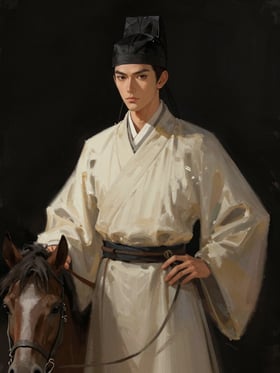
Cao Ang, Cao Cao’s eldest son, was killed campaigning against Zhang Xiu; only the novel says he gave his horse to save Cao Cao.

Life
In the novel: 4 chapters · In the Records: 3 volumes
Life?–197
197 CE (Jian'an 2)
- Battle of WanchengWanKilled in action
- Zhang Xiu's Night Raid on WanchengWanKilled in action
Appearances
By chapter (7)
Novel
- 16
- 18
- 68
- 78
Records
- 1
- 5
- 20
- Life event
- Death
On the boards
Compare with someone →Where this person ranks on each board.
Historical Record
Cao Ang, courtesy name Zixiu, was Cao Cao’s eldest son, born to Lady Liu. Historical accounts say that at the age of twenty he was recommended as a Filial and Incorrupt candidate. He later accompanied Cao Cao on a southern campaign and was killed when Zhang Xiu rebelled. He had no sons, and Cao Wan was later appointed to continue his line.
In the second year of Jian’an, Cao Cao arrived at Wancheng. Zhang Xiu initially surrendered, then rebelled. Cao Cao engaged Zhang Xiu’s forces, but his army was defeated. Cao Cao was struck by a stray arrow, and Cao Ang and Cao Anmin were killed alongside him. Cao Cao withdrew to Wuyin, where he defeated Zhang Xiu’s pursuing troops, then returned to Xu. The Shiyu, quoted in Pei Songzhi’s annotation, adds that Cao Ang could not ride a horse, so he gave his own to Cao Cao; Cao Cao thus escaped, while Cao Ang was killed. This is the account in the source cited by Pei Songzhi’s annotation; the main text of the Records of the Three Kingdoms merely records that Cao Ang was killed in this battle.
After Cao Ang’s death, Cao Cao later spoke of the defeat, acknowledging that it had been a mistake not to detain Zhang Xiu as a hostage in time, and saying that he understood the reason for the loss. Cao Ang was posthumously named Duke Fengdao, and later received the title King Fengdao; in the third year of Taihe, his posthumous name was changed to King Min. As he had no sons, Cao Wan was appointed to continue Cao Ang’s line and inherited his title.
In the Novel
The Romance of the Three Kingdoms depicts the retreat from Wancheng as a series of urgent escape scenes: after fleeing the camp, Cao Cao gallops to the Yushui River, while Cao Anmin is killed by pursuing troops. Cao Cao’s horse is struck by an arrow and falls, so Cao Ang gives his own mount to his father and is himself shot dead by a hail of arrows. The episode of giving up his horse to save his father accords with the account in the Shiyu quoted in Pei Songzhi’s annotation. The details of Cao Ang being killed by a hail of arrows and Cao Cao’s horse falling by the Yushui River, however, are elaborations in the novel; the Records of the Three Kingdoms gives no such details.
The novel also incorporates Cao Ang’s death into Cao Cao’s later acts of remembrance and arrangements for succession. When Cao Cao passes by the Yushui River, he weeps in sacrifice to Dian Wei and also makes offerings to Cao Anmin, Cao Ang, and the fallen soldiers. On his deathbed, he recalls that his eldest son died at Wancheng years earlier and explains that Cao Pi will inherit his enterprise. Elsewhere, in its account of Cao Pi’s appointment as heir to the throne of Wei, the novel states that Cao Ang was born to Lady Liu and died at Wancheng during the campaign against Zhang Xiu. These later passages make Cao Ang, though he died young and takes no part in the events at hand, an important absent figure in the narratives of Cao Cao’s family and succession. The Records of the Three Kingdoms does not record these sacrifices or deathbed conversations.
Key Relationships
Cao Cao was Cao Ang’s father, and the man Cao Ang saved by giving up his horse during the breakout from Wancheng; the episode of giving up the horse appears in the Shiyu quoted in Pei Songzhi’s annotation and is elaborated in the novel. Lady Liu was Cao Ang’s birth mother; the Records of the Three Kingdoms records that among Cao Cao’s sons, Ang, King Fengmin, was born to Lady Liu. Cao Ang and Cao Anmin were both killed in the Battle of Wancheng, and the novel also names them together in its account of Cao Cao’s sacrifices. Cao Ang had no sons; Cao Wan later continued his line and inherited his title.
Signature Scenes
Giving up his horse and being killed at Wancheng. After Zhang Xiu rebelled, Cao Cao’s army was defeated and he was wounded. The Shiyu quoted in Pei Songzhi’s annotation says that Cao Ang could not ride a horse, so he gave his horse to his father and was killed. The novel expands this act into a scene by the Yushui River: Cao Cao’s mount is struck by an arrow and falls, and after giving his horse to his father, Cao Ang is killed by a hail of arrows.
Sacrifices at the Yushui River. The novel depicts Cao Cao returning to the Yushui River and weeping aloud in sacrifice to Dian Wei, then making offerings to Cao Anmin, Cao Ang, and the fallen soldiers. He even offers a sacrifice to the Dayuan horse that was shot dead. The scene emphasizes Cao Cao’s grief over Cao Ang’s death and is unique to the Romance of the Three Kingdoms; the historical accounts in the Records of the Three Kingdoms record Cao Ang’s death but not this sacrifice.
Posthumous honors and succession. In contrast to the novel’s tragic narrative, the historical accounts record the arrangements for Cao Ang’s lineage and title after his death: Cao Wan continued his line, and Cao Ang received successive posthumous honors and a revised posthumous name, ultimately becoming King Fengmin.
- Family
- Other
Who is Cao Ang connected to?
Pick someone to see how many steps lie between them and Cao Ang.
History vs. novel
6 points · 2 novel-only
| History | Novel |
|---|---|
| Death at WanchengNovel embellishes | |
Cao Ang accompanied Cao Cao on his southern campaign and was killed during the campaign against Zhang Xiu; the Records of the Three Kingdoms does not give the specific circumstances. vol. 20 | Cao Ang died during the pursuit at Wancheng; the novel specifies that he was killed by a volley of arrows. ch. 16 |
| Giving Up His Horse to Save His FatherNovel only | |
| — | After Cao Cao’s horse was struck by an arrow and fell, Cao Ang gave his own horse to his father, allowing Cao Cao to escape; Cao Ang was then shot dead by a volley of arrows. ch. 16 |
| Recommended as a Filial and Incorrupt OfficialHistory only | |
When Cao Ang was nearly twenty, he was recommended as a filial and incorrupt official; the historical account records this early episode in his life. vol. 20 | — |
| No Son to Succeed HimHistory only | |
Cao Ang had no sons. Cao Wan, the son of Cao Jun, was adopted as his heir and later succeeded to his title. vol. 20 | — |
| Posthumous TitlesHistory only | |
After Cao Ang’s death, he was first posthumously titled Duke Dao of Feng, then elevated to King Dao of Feng; his posthumous title was later changed to King Min. vol. 20 | — |
| Birth Mother and SuccessionNovel only | |
| — | As Cao Cao lay dying, he said that Cao Ang was born to Lady Liu and had died young at Wancheng; he then designated Cao Pi as his successor. ch. 78 |
- Death at WanchengNovel embellishes
- History
Cao Ang accompanied Cao Cao on his southern campaign and was killed during the campaign against Zhang Xiu; the Records of the Three Kingdoms does not give the specific circumstances.
vol. 20
- Novel
Cao Ang died during the pursuit at Wancheng; the novel specifies that he was killed by a volley of arrows.
ch. 16
- Giving Up His Horse to Save His FatherNovel only
- Novel
After Cao Cao’s horse was struck by an arrow and fell, Cao Ang gave his own horse to his father, allowing Cao Cao to escape; Cao Ang was then shot dead by a volley of arrows.
ch. 16
- Recommended as a Filial and Incorrupt OfficialHistory only
- History
When Cao Ang was nearly twenty, he was recommended as a filial and incorrupt official; the historical account records this early episode in his life.
vol. 20
- No Son to Succeed HimHistory only
- History
Cao Ang had no sons. Cao Wan, the son of Cao Jun, was adopted as his heir and later succeeded to his title.
vol. 20
- Posthumous TitlesHistory only
- History
After Cao Ang’s death, he was first posthumously titled Duke Dao of Feng, then elevated to King Dao of Feng; his posthumous title was later changed to King Min.
vol. 20
Combat
On the field
Duels, kills and executions as the texts tell them, counted separately for the Records and the Romance.
- RecordsJuan 20Struck downZhang XiuLost「隨太祖南征,爲張繡所害」
Events
Events (2)
Battles and events the texts place this person in, by date.
Battles
- 197Battle of WanchengKilled in action
Other events
- 197Zhang Xiu's Night Raid on WanchengKilled in action
Places
- Died at
- WanRecords
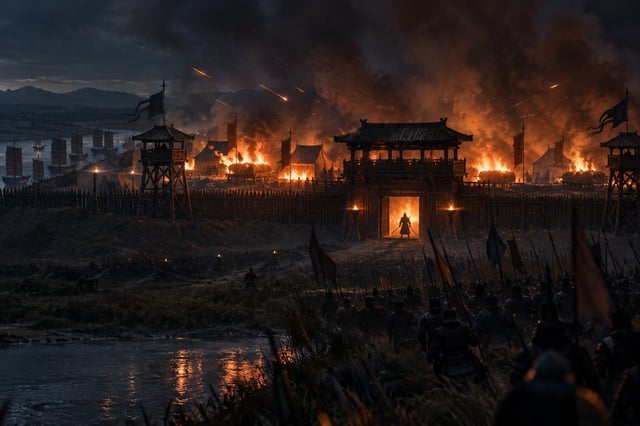
Continue
The Battle of Wancheng in 3D
Replay the Battle of Wancheng phase by phase on real terrain: troop strengths, movements and turning points at a glance, each marked as coming from the Records of the Three Kingdoms or the Romance.
Relationship timeline5 entries ▸
Inner monologues · AI-generated1 monologue ▸
- If this body were still in Wancheng, the so-called “pinnacle” would likely not mean victory and reward, but having to ch