Records
Cao forces won
- Commanders
- Wu forcesSun Quan
Vol. 17「自旦戰至日中,吳人奪氣,還修守備」
215 CE (Jian'an 20) · Xiaoyao Ford
In 215, the twentieth year of Jian’an, Sun Quan led an army to attack Hefei. Cao Cao’s forces, led by Zhang Liao, Li Dian, Yue Jin, and others, defended the city. Zhang Liao and the others sallied out to meet the enemy, but Sun Quan’s army failed to capture Hefei and subsequently withdrew. This battle consolidated Cao Cao’s defenses along the Huainan–Hefei line and also highlighted Hefei’s importance as a strategic stronghold in the Jianghuai region, influencing the military deployments of Sun and Cao forces in the area thereafter.
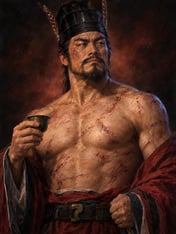 Zhou TaiWarriorTalk to me
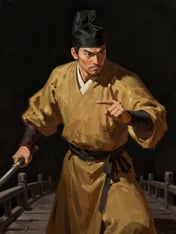 Gu LiWarriorTalk to me
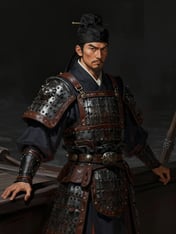 Jiang QinWarriorTalk to me
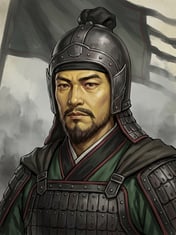 Chen WuKilled in actionTalk to me
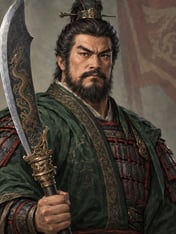 Pan ZhangWarriorTalk to me
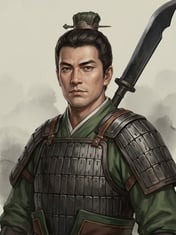 Han DangWarriorTalk to me
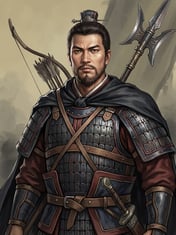 Zhang LiaoCommanderTalk to me
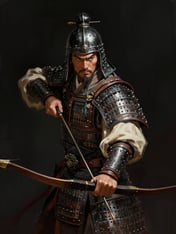 Yue JinWarriorTalk to me
Who won, as each book tells it; commanders as the text names them.
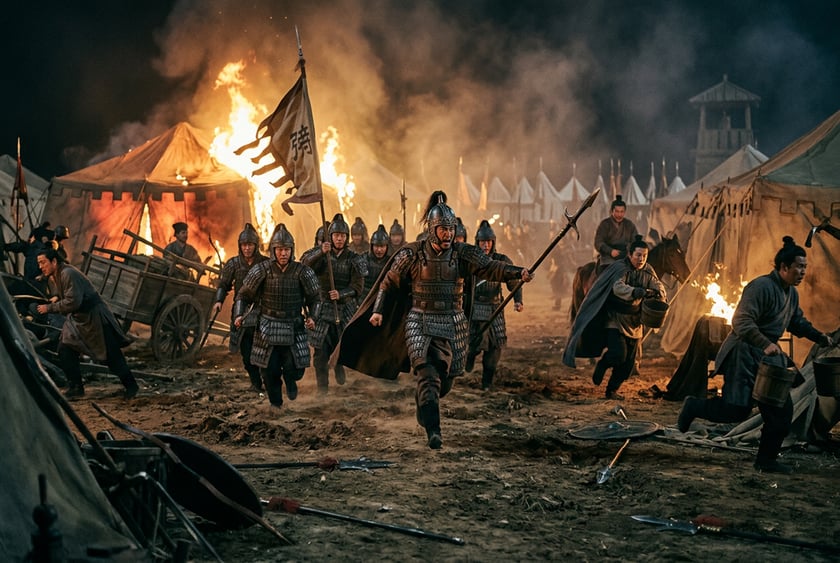
Scene
In the darkness, Zhang Liao leads eight hundred picked troops in a surprise attack on the Wu army’s main camp. Flames surge through the tents as soldiers scramble in confusion.
Featured people: Zhang Liao
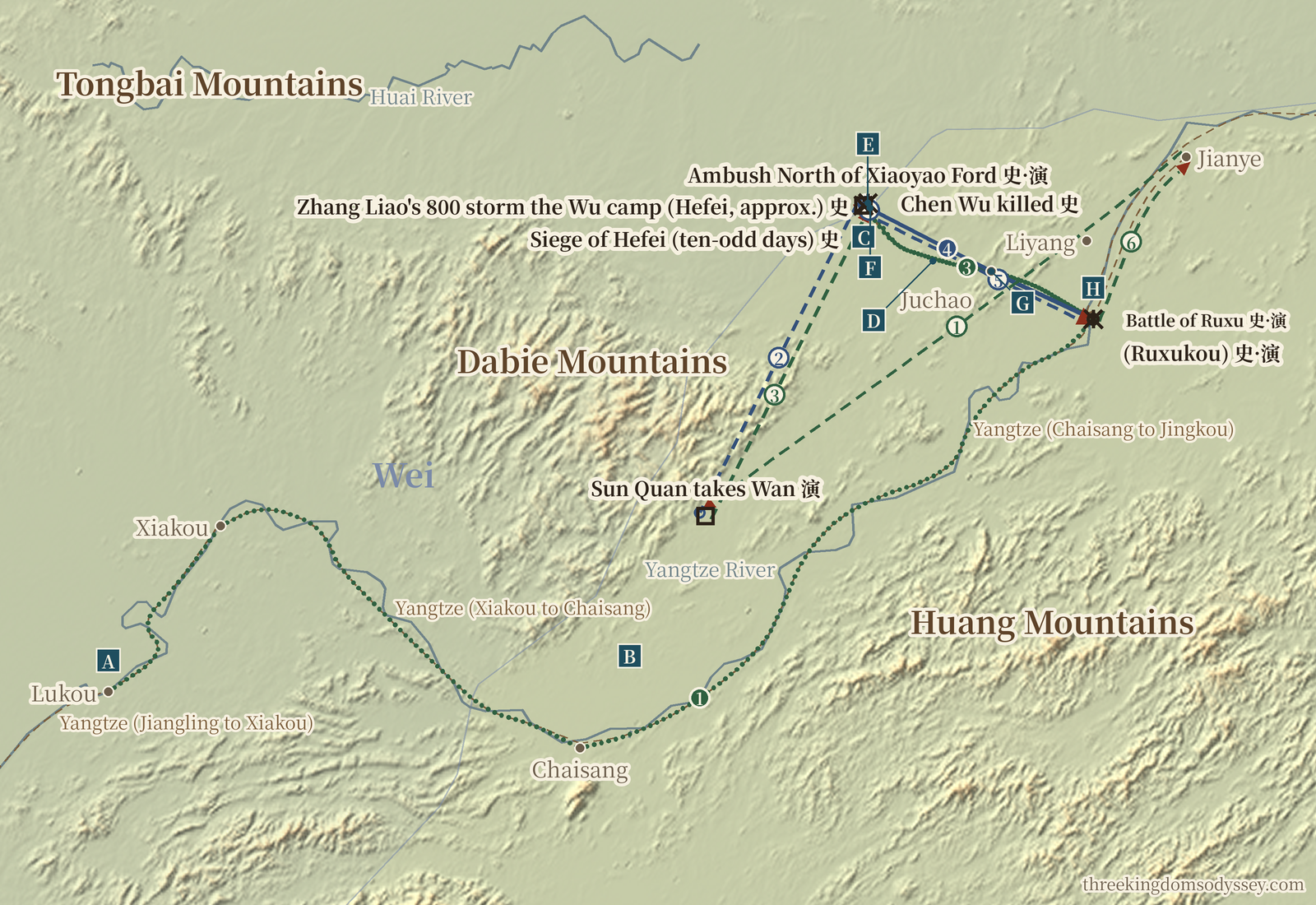
Swipe to see the whole map
The novel has Sun Quan set out from Moling, take Wan first, and ride into an ambush laid at a cut bridge; in the Sanguozhi Zhang Liao falls on him as he lifts the siege.
The books mostly say only where an army set out and arrived: a Records line is solid between the places they name and dotted where it follows a reconstructed road between them; an open ring marks an end the books don't give.
Base map: Natural Earth; terrain: AWS Terrain Tiles (SRTM and others). Roads and marches reconstructed from the sources listed; positions approximate.
Replay the battles on this map in 3D, phase by phase:▶ Battle of Xiaoyao Ford
Continue
Replay the Battle of Xiaoyao Ford phase by phase on real terrain: troop strengths, movements and turning points at a glance, each marked as coming from the Records of the Three Kingdoms or the Romance.
2167 people in common
2086 people in common
2144 people in common
2084 people in common
2133 people in common
2013 people in common
2152 people in common
2152 people in common
The strategic core of the Battle of Xiaoyao Ford was not simply the Wu army’s siege of Hefei and the Wei army’s defense of the city, but the contest for control of the initiative. Sun Quan hoped to use his numerical advantage to put Hefei under pressure, while Cao Cao’s forces had to avoid being forced onto the defensive as reinforcements campaigned far from home and the city’s defenses came under strain. The novel recounts that Sun Quan led an army of one hundred thousand to attack, while Cao Cao had left a secret order in advance: “Wait until the enemy arrives, then act.” It also assigned Zhang Liao and Li Dian to go out and fight, with Yue Jin defending the city. This reflects the defenders’ approach of holding their strongpoint while seeking to weaken the attackers’ momentum. However, this is a deployment as presented in a literary text and should not be equated directly with verifiable battlefield records.
At the operational level, Hefei was both a key point in the defensive line and a narrow focal point that forced both sides to take risks. If Sun Quan used his numerical advantage to maintain the siege, he could turn the pressure into a drain on the city’s defenses. If Cao Cao’s forces simply shut the gates and held out, however, they might lose the initiative and undermine their own morale. Zhang Liao’s proposal to fight first, blunt the enemy’s momentum, steady his own troops, and then shift to defense treated a tactical strike as part of strategic defense. It is worth noting that the cited passages come from chapters 53, 67, and 68 of Romance of the Three Kingdoms, and their narrative scenes do not fit together seamlessly. They are therefore best treated as material on the campaign’s literary portrayal and decision-making logic, rather than used to construct a continuous chronicle.
The Cao army’s deployment reflects a division of roles and complementary responsibilities: Zhang Liao and Li Dian were tasked with sorties beyond the city, Yue Jin defended the city, and Xue Ti was responsible for conveying Cao Cao’s secret order. This arrangement separated the field force from the city’s defenses, preserving the city’s basic protection while allowing the sortie force to concentrate its attack on Sun Quan’s army. Zhang Liao’s proposal to take the initiative suggests that he considered morale and tempo early in the campaign more important than simply relying on the city walls. Li Dian and Yue Jin take part in the discussion in the text, but the cited passage offers too little information to establish the precise command relationships among the three or the actual composition of their forces.
On the Wu side, Sun Quan was at the center of events, both in the overall action against Hefei and in the literary depiction of him taking the field in person. Chapter 53 describes Sun Quan leading his troops into battle, escorted by Song Qian and Jia Hua, while Taishi Ci goes forth to engage Zhang Liao. Chapter 68 places Zhou Tai, Chen Wu, and others in a battle narrative by the waters of Ruxu, and depicts Zhang Liao and Xu Huang surrounding Sun Quan. The list of participants also includes Gu Li, Jiang Qin, Pan Zhang, Han Dang, Lü Meng, Gan Ning, Ling Tong, and others, but the passages provided do not detail each of their actions on the battlefield at Xiaoyao Ford. The roster alone should not be mistaken for evidence of specific deployments.
The first key decision was whether Cao Cao’s forces would accept the passive option of “holding out and waiting for reinforcements.” Zhang Liao reasoned that the main force was campaigning far away and that the Wu army would expect to take the city, making it all the more necessary to strike first and shatter its confidence. This reasoning incorporated the enemy’s psychology into the plan of operations: the purpose of the sortie was not simply to destroy enemy troops, but to “blunt their momentum” and improve the prospects for defending the city afterward. The advantage was the possibility of regaining the initiative through a localized strike. The cost was that the troops leaving the city would be exposed to a much larger enemy force; if the attack faltered, both the defenses and the field force could face greater risks.
The second decision was how Sun Quan would respond to provocation and risk. In chapter 53, Sun Quan is angered by Zhang Liao’s challenge and decides to take the field in person. Taishi Ci then proposes using men inside the city to start a fire and coordinate an attack from within and without, while Zhuge Jin warns that Zhang Liao is resourceful and advises against acting rashly. Sun Quan ultimately approves Taishi Ci’s plan to lead troops in support, showing that anger and the desire to seize an opportunity outweighed the counsel of caution. As a decision, the plan to use men inside the city could, if successful, unsettle the defenders and widen a breach. If the intelligence was false or the operation exposed, however, it could disperse the forces and weaken pressure on the front. The novel does not give the plan’s full outcome in the cited passage, so it should not be presented as having definitively changed the course of the battle.
The outcome of the campaign should be treated as “unclear.” The available material depicts Zhang Liao and other commanders meeting the enemy at Hefei and Sun Quan taking the field in person, but chapter 68 also recounts a melee near Ruxu and Sun Quan being surrounded. These fragments do not form a clear and consistent account of the campaign’s conclusion in terms of location, cast of characters, or sequence of events. In particular, the chapter 68 account of Zhang Liao and Xu Huang surrounding Sun Quan, followed by Cao Cao ordering Xu Chu to break through and rescue him, cannot be accepted without scrutiny as a reliable record of the final phase of the Battle of Xiaoyao Ford.
Even if these passages cannot establish who won, they still highlight the campaign’s military themes: the struggle for a city depended not only on numbers, but also on whether commanders could turn a defensive posture into the initiative and manage the risks of their own commander-in-chief appearing at the front. Zhang Liao’s decision to engage proactively represents the logic behind Cao Cao’s forces’ actions; Sun Quan’s personal participation and approval of a surprise attack reflect the Wu army’s pressure to secure a quick victory. The inclusion of Chen Wu and other commanders in chapter 68’s melee shows how the novel portrays the battlefield as a conflict unfolding along multiple intersecting fronts. It does not, however, support conclusions about the actual casualties, results, or command responsibilities of each participant.
If Cao Cao’s forces had chosen to keep the gates shut entirely, they might have avoided a concentrated attack on their sortie force in the short term. But Sun Quan’s army might also have been able to besiege the city with greater ease, putting the defenders under sustained pressure. This would not necessarily have led to the city’s fall, but it would have handed more of the initiative to Wu. Conversely, if Zhang Liao’s sortie had failed to deliver a swift blow, Cao Cao’s forces might have lost their field troops while also struggling to maintain the city’s defenses. The value of taking the initiative therefore depended on the timing and coordination of the strike, as well as the ability to withdraw; the decision to “go out and fight” alone does not determine the outcome.
If Sun Quan had followed Zhuge Jin’s cautious advice and not sent Taishi Ci deep into the city to carry out the plan to use men inside, the Wu army might have kept its forces concentrated and reduced the disruption caused by a failed surprise attack. At the same time, it would have given up a chance to create confusion from within the city. If Sun Quan had also avoided placing himself in danger, he could have reduced the risk of the army’s command being disrupted if he were surrounded, though this might have weakened morale at the front and his direct control over the siege. Since the cited passages do not say how these plans would actually have played out, counterfactuals can only clarify the trade-offs the decisions involved; they cannot replace a judgment about the campaign’s outcome.