Li Kan
–211
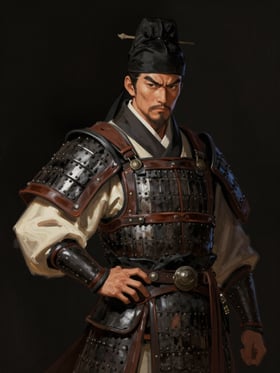
Li Kan, a Guanzhong rebel general, was slain after defeat; in Romance, he urged Ma Chao to make peace and was mistakenly shot by Yu Jin.

Life
In the novel: 2 chapters · In the Records: 3 volumes
Life?–211
211 CE (Jian'an 16)
- Battle of Tong PassTong PassWarrior
Appearances
By chapter (5)
Novel
- 58
- 59
Records
- 1
- 8
- 36
- Life event
- Death
List all 2 stops
- Hedong CommanderyBirthplace
- Tong Pass211Battle of Tong Pass
On the boards
Compare with someone →Where this person ranks on each board.
Historical Record
Li Kan was a general who took part in the Guanzhong rebellion. After Ma Chao rose in revolt with Han Sui, Yang Qiu, Li Kan, Cheng Yi, and others, Cao Cao led a western expedition, and the two sides fought around Tong Pass and Weinan. Cao Cao’s forces first sent Xu Huang and Zhu Ling to cross the Pu Ban Ford by night and occupy the west bank of the Yellow River. Cao Cao then crossed north and set up camp at Weinan. Ma Chao and the others repeatedly challenged him, but Cao Cao temporarily declined battle and used negotiations and conversation to sow suspicion between Ma Chao and Han Sui. When the day for battle came, Cao Cao first sent light troops to engage the enemy, then ordered elite cavalry to attack from both flanks. The rebels were routed, and Li Kan and Cheng Yi were beheaded. After the battle, Han Sui and Ma Chao fled to Liang Province, and Guanzhong was pacified.
The Records of the Three Kingdoms also records that Ma Chao and Han Sui formed an alliance, and Li Kan and others joined them as they advanced on Tong Pass. Cao Cao met Han Sui and Ma Chao on horseback, and Ma Chao once refrained from acting because Xu Chu was at Cao Cao’s side. Later, Cao Cao adopted Jia Xu’s scheme to sow discord, causing Han Sui and Ma Chao to suspect each other, and their forces were routed. This passage lists Li Kan among the generals of Guanzhong, but does not describe any personal actions he took in battle. Taken together, the two accounts show that Li Kan’s main recorded deed was taking part in the Guanzhong rebellion and being killed during Cao Cao’s campaign to pacify the region; no record survives of his personal words or deeds, or of any specific military achievements.
In the Novel
Romance of the Three Kingdoms portrays Li Kan as one of Han Sui’s eight subordinate generals, who rose in revolt with Han Sui and Ma Chao and took part in the Xiliang Army’s attack on Chang'an. During the fighting at Tong Pass, he is depicted as a subordinate who offers Ma Chao advice on military strategy. When Ma Chao learns that Cao Cao’s forces have camped on the west bank of the Yellow River and fears being attacked from both front and rear, Li Kan advocates ceding territory and seeking peace, then suspending hostilities until spring before deciding what to do next. Han Sui agrees, while Ma Chao hesitates. This detail of Li Kan taking the initiative to offer advice is a fictional invention; the Records of the Three Kingdoms does not record him urging peace.
The novel also places Li Kan amid the suspicions and conflict between Han Sui and Ma Chao. After Han Sui speaks with Cao Hong before the battle, Ma Chao mistakenly believes Han Sui has turned against him, and Han Sui’s generals immediately discuss what to do next; Li Kan takes part in their deliberations. During the melee at Weiqiao, Li Kan leads his troops beneath the bridge as Ma Chao pursues them. Yu Jin shoots from behind, and the arrow mistakenly hits Li Kan, knocking him from his horse and killing him. Unlike the historical account, which says “Li Kan was beheaded,” the novel changes the manner of his death, having him killed by Yu Jin’s misdirected arrow—a literary invention.
Key Relationships
- Ma Chao: The historical account records that Li Kan joined Ma Chao and other Guanzhong generals in advancing on Tong Pass, and ultimately fell with the rebel forces to Cao Cao. The novel goes further, depicting their relationship as one between commander and subordinate and showing them interacting during the campaign: Li Kan urges Ma Chao to seek a temporary peace, but Ma Chao does not decide immediately.
- Han Sui: The historical account lists Li Kan alongside Han Sui and Ma Chao as a rebel general. In the novel, Li Kan is one of Han Sui’s eight subordinate generals and takes part in deliberations during the breakdown of relations between Han Sui and Ma Chao.
- Cao Cao and Yu Jin: The historical account says Li Kan was beheaded during Cao Cao’s campaign to pacify Guanzhong. The novel gives his specific cause of death as being accidentally hit by an arrow shot by Yu Jin. (Unique to the novel)
Signature Scenes
The scene that best sums up Li Kan’s fate in the historical account is Cao Cao’s decisive battle against the Guanzhong rebels: Cao Cao first uses a stratagem to make Ma Chao and Han Sui suspicious of each other, then attacks when the opportunity arises. The rebels are routed, and Li Kan and Cheng Yi are both killed. The account treats him as one of the defeated generals and offers no details of his performance in battle.
The novel, by contrast, places his death amid the chaos of the fighting at Weiqiao. Li Kan leads his troops beneath the bridge as Ma Chao pursues them with his spear raised. Yu Jin shoots an arrow from behind Ma Chao; it misses Ma Chao but hits Li Kan in front, knocking him from his horse and killing him. This scene uses the misdirected shot and the pursuit to emphasize the confusion of battle, while making Li Kan part of Ma Chao’s escape; this differs from the historical account, which says he was beheaded. (Unique to the novel)
Combat
On the field
Duels, kills and executions as the texts tell them, counted separately for the Records and the Romance.
Events
Events (2)
Battles and events the texts place this person in, by date.
Battles
- 211Battle of Tong PassWarrior
Other events
Places
- Native of
- Hedong CommanderyRecords
Continue
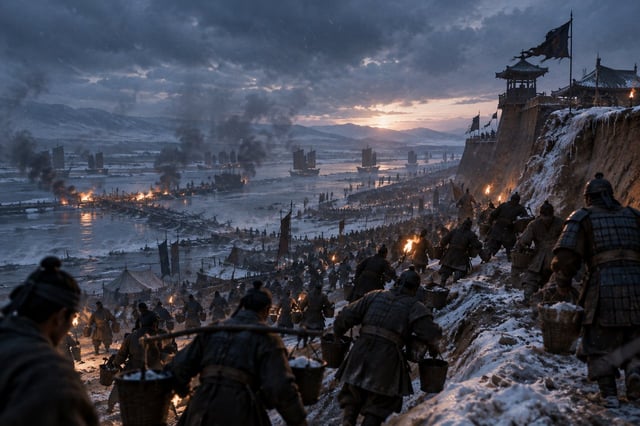
The Battle of Tong Pass in 3D
Replay the Battle of Tong Pass phase by phase on real terrain: troop strengths, movements and turning points at a glance, each marked as coming from the Records of the Three Kingdoms or the Romance.