Cao Wei · Chief of Jian; Chief Justice; Intendant of Henan; Grand Minister of Agriculture
Sima Zhi
courtesy name 子华
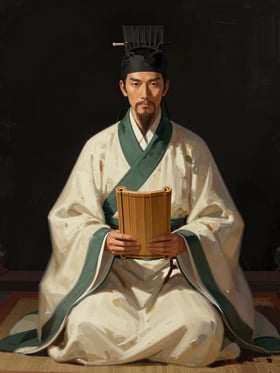
Sima Zhi was a Cao Wei official known for filial piety, fearless law enforcement, and promoting farming while remaining incorruptible.
On the boards
Compare with someone →Where this person ranks on each board.
Historical Record
Sima Zhi, courtesy name Zihua, was from Wen, Henei. As a young man, he was a scholar. He fled the unrest to Jing Province, where he encountered bandits on Luyang Mountain. His fellow travelers abandoned the old and weak and fled, but he alone stayed behind to protect his aged mother. When the bandits held knives to him, he kowtowed and begged them to spare his mother, who was old. Calling him a filial son, the bandits let him live. Afterward, he carried his mother in a deer cart and lived in the south for more than ten years, farming with his own hands and upholding his principles.
After Cao Cao pacified Jing Province, he appointed Sima Zhi chief of Jian. At the time, Liu Jie, a commandery registrar backed by a powerful clan, had many retainers and routinely evaded labor service. Sima Zhi conscripted Liu Jie’s retainers, including Wang Tong, for military service. Liu Jie, however, hid Wang Tong and the others, then used military affairs as a pretext to falsely accuse the county officials. Sima Zhi did not yield to Liu Jie’s influence. He sent an urgent dispatch to Jinan, laying out Liu Jie’s offenses. In the end, the administrator Hao Guang ordered Liu Jie to serve in place of Wang Tong and the others. This gave rise in Qing Province to the saying, “The commandery registrar was made a soldier.” Later, when General Who Conquers the Caitiffs Liu Xun sent a letter requesting a favor, Sima Zhi did not reply and continued to handle everything according to the law. Liu Xun later incurred guilt for treasonous conduct, and Sima Zhi was praised for upholding the law.
When Sima Zhi was transferred to serve as Director of the Court of Judicial Review, some official silk was stolen. Officials suspected the female workers and took them into custody. He held that unjust punishments often stemmed from excessive harshness. Though the stolen goods had been found, the women should not be beaten during interrogation beforehand, lest they be forced into false confessions. He advocated pardoning those whose guilt was in doubt, and Cao Cao accepted his recommendation. Sima Zhi later served as administrator of Ganling, Pei, and Yangping, and distinguished himself in each post. During the Huangchu era, he entered the court as Intendant of Henan. He curbed the powerful and aided the weak, and accepted no private requests. He also encouraged his subordinate officials through instructions to fulfill their respective duties, and once stopped them from pursuing a case further when a single hairpin had aroused suspicion.
After Emperor Ming ascended the throne, Sima Zhi was granted the title Marquis Within the Pass and later became Minister of Agriculture. He submitted a request to end the practice of various agricultural officials seeking profits through commerce, arguing that they should focus exclusively on farming and sericulture and increase harvests by bringing more land under cultivation. Emperor Ming followed his advice. He died in office, leaving no surplus wealth in his household.
In the Novel
The materials provided contain no portrayal of Sima Zhi in novels such as Romance of the Three Kingdoms, so they do not support adding any appearances, words, or dramatic episodes for him in fiction; he does not appear in the novel.
Key Relationships
Sima Zhi’s relationship with Cao Cao involved both being appointed by him as chief of Jian and Director of the Court of Judicial Review, and serving as a subordinate who dared to speak frankly on government affairs and propose leniency in criminal cases. In the stolen-silk case, Cao Cao followed his recommendation. His conflict with Liu Jie, the commandery registrar, shows that he would not abandon principles of labor service and official governance in the face of a powerful clan. Nor did he show favoritism when Liu Xun asked him for a favor. As Intendant of Henan, he accepted no private requests and used instruction to discipline his subordinates. As Minister of Agriculture, he made policy recommendations with the state’s granaries and the fundamentals of agriculture and sericulture in mind.
Defining Scenes
The encounter with bandits on Luyang Mountain was the episode from Sima Zhi’s early life that best exemplified his filial devotion: while the others scattered in flight, he alone stayed to protect his mother. Even with a blade at his throat, he first pleaded for her life, and the bandits let him go.
“The commandery registrar was made a soldier” became a striking emblem of his refusal to shrink from enforcing the law against the powerful. When Liu Jie hid retainers liable for service, Sima Zhi refused to heed the clerks’ remonstrances, reported Liu Jie’s offense directly, and ultimately secured his replacement in service. In the stolen-silk case, he put careful judgment and lenient punishment into practice: he did not let suspicion take the place of evidence, nor allow beatings to manufacture confessions, and advocated “pardoning those whose guilt is in doubt.” Cao Cao accepted his recommendation. Together, these episodes depict an official who valued the law without being harsh, and was loyal and upright without seeking recognition. He served with integrity, and when he died, his household had no surplus wealth.
In the sources
Where the books name Sima Zhi
History · vol. 12Records of the Three Kingdoms
== 司馬芝 ==
History · vol. 12Records of the Three Kingdoms
司馬芝字子華,河内温人也。少爲書生,避亂荆州,於魯陽山遇賊,同行者皆棄老弱走,芝獨坐守老母。…
Read the whole paragraph
司馬芝字子華,河内温人也。少爲書生,避亂荆州,於魯陽山遇賊,同行者皆棄老弱走,芝獨坐守老母。賊至,以刃臨芝,芝叩头曰:『母老,唯在諸君!』賊曰:『此孝子也,殺之不義。』遂得免害,以鹿车推載母。居南方十餘年,躬耕守節。
History · vol. 12Records of the Three Kingdoms
太祖平荆州,以芝爲菅長。時天下草创,多不奉法。郡主簿劉節,舊族豪侠,賓客千餘家,出爲盗賊,入亂吏治。…
Read the whole paragraph
太祖平荆州,以芝爲菅長。時天下草创,多不奉法。郡主簿劉節,舊族豪侠,賓客千餘家,出爲盗賊,入亂吏治。顷之,芝差節客王同等爲兵,掾史据白:『節家前后未嘗给繇,若至時藏匿,必爲留负。』芝不聽,與節書曰:『君爲大宗,加股肱郡,而賓客每不與役,既眾庶怨望,或流聲上聞。今(条)同等爲兵,幸時发遣。』兵已集郡,而節藏同等,因令督郵以軍兴诡责縣,縣掾史穷困,乞代同行。芝乃馳檄濟南,具陳節罪。太守郝光素敬信芝,即以節代同行,青州號芝『以郡主簿爲兵』。遷广平令。征虏將軍劉勛,貴寵骄豪,又芝故郡將,賓客子弟在界數犯法。勛與芝書,不著姓名,而多所属讬,芝不報其書,一皆如法。后勛以不轨誅,交关者皆獲罪,而芝以見稱。〈《魏略》曰:勛字子臺,琅邪人。中平末,爲沛國建平長,與太祖有舊。后爲庐江太守,爲孫策所破,自歸太祖,封列侯,遂從在散伍議中。勛兄爲豫州刺史,病亡。兄子威,又代從政。勛自恃與太祖有宿,日骄慢,數犯法,又誹謗。爲李申成所白,收治,並免威官。〉
Quotes
7 lines in the books · 3 featured
夫刑罪之失,失在苛暴。今赃物先得而后讯其辭,若不勝掠,或至诬服。诬服之情,不可以折獄。且簡而易從,大人之化也。不失有罪,庸世之治耳。今宥所疑,以隆易從之義,不亦可乎!
These words embody Sima Zhi's regard for judicial fairness and his opposition to extracting confessions by torture, carrying far-reaching historical significance.
蓋君能設教,不能使吏必不犯也。吏能犯教,而不能使君必不聞也。夫設教而犯,君之劣也;犯教而聞,吏之祸也。君劣於上,吏祸於下,此政事所以不理也。可不各勉之哉!
These words incisively point out the relationship of responsibility between a ruler and his subordinates, laying bare the crux of political governance.
王者之治,崇本抑末,务农重谷。王制:「無三年之儲,國非其國也。」……自黄初以來,聽諸典农治生,各爲部下之計,誠非國家大体所宜也。……臣愚以爲不宜復以商事杂亂,专以农桑爲务,於國計爲便。
These words stress the governing philosophy of taking agriculture and sericulture as the foundation, reflecting ancient China's economic thought of favoring farming over commerce.
Family, lords and rivals
2 relationships


Who is Sima Zhi connected to?
Pick someone to see how many steps lie between them and Sima Zhi.
Places
- Governed
- Henan Commandery (Henan Yin)Records
Continue
Sima Qi
Child
Relationship timeline1 entry ▸
History · vol. 12
- Sima Qi§86
Child
Sima Zhi's son and heir
Inner monologues · AI-generated1 monologue ▸
- I am Sima Zhi, courtesy name Zihua, from Wen, Henei. I recall that when I fled the turmoil of the time and entered Jing