Cao Wei · Central Guard Commander
Han Hao
courtesy name 元嗣 · –c. 216
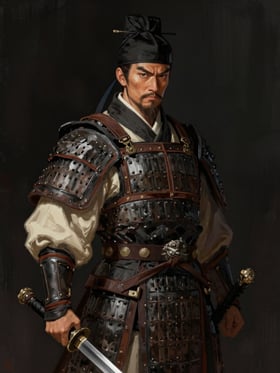
Han Hao, a Cao Wei general, took part in tuntian; the Romance depicts him defeated by Huang Zhong.

Life
In the novel: 3 chapters · In the Records: 2 volumes
Life?–216
196 CE (Jian'an 1)
Allegiance
- Cao Wei
- Hatched: dated by chapter
- Life event
On the boards
Compare with someone →Where this person ranks on each board.
Historical Record
Han Hao, courtesy name Yuansi, was from Henei. When armed uprisings broke out at the end of the Han dynasty, his county lay near mountains, forests, lakes, and marshes, where bandits were numerous. He gathered followers to defend his home county. The Administrator Wang Kuang appointed him as an aide, and Han Hao led troops to resist Dong Zhuo at Mengjin. His maternal uncle, Du Yang, served as the Magistrate of Heyin. Dong Zhuo detained Du Yang and sent someone to summon Han Hao, but Han Hao refused to comply. Yuan Shu heard of this, praised him, and appointed him Cavalry Commandant. Later, Xiahou Dun admired his reputation and invited him to meet, taking a strong liking to him and ordering him to lead troops on campaign. When Cao Cao discussed the merits and drawbacks of military and government affairs, Han Hao advocated that farming should be taken up in good time. Cao Cao accepted the proposals of Zao Zhi, Han Hao, and others, and began establishing agricultural colonies. He recruited people to farm at Xuxia, where they harvested a million hu of grain; gradually, agricultural officials were appointed in the provinces and commanderies, and grain was stockpiled.
Han Hao was later promoted to Military Protector and accompanied Cao Cao on the campaign against Liucheng. Shi Huan thought that advancing deep into distant territory was not a prudent plan and intended to remonstrate with Cao Cao together with Han Hao. Han Hao, however, believed that the army was at the height of its strength and that Cao Cao should not be hindered from eliminating future threats while the momentum was in their favor. He therefore joined the army in capturing Liucheng. His post was subsequently changed to Central Military Protector, and the offices of Chief Clerk and Sima were established. During the campaign against Zhang Lu, Zhang Lu surrendered. Some believed that Han Hao was a capable strategist who could be left to command the armies and guard Hanzhong, but Cao Cao said he could not do without his Military Protector and brought him back with the army. Cao Cao held Han Hao in close trust and regard, and deeply regretted his death. Han Hao had no son, so his adopted son, Han Rong, succeeded him. The Records of the Three Kingdoms also states that Han Hao became Central Military Protector and, together with Shi Huan, commanded the imperial guard troops; both were enfeoffed as marquises.
In the Novel
The Romance of the Three Kingdoms portrays Han Hao as a general who accompanied Cao Cao’s forces on campaign, with particular emphasis on his service under Xiahou Dun. At the Battle of Bowang Slope, he served as a deputy general. When Zhao Yun feigned defeat to lure the enemy in, Han Hao promptly warned Xiahou Dun that there might be an ambush. Xiahou Dun ignored him and continued the pursuit, ultimately falling into a fire attack. Amid the rout, Han Hao went to rescue the provisions and encountered Zhang Fei. Xiahou Lan was killed by Zhang Fei, while Han Hao fought his way out and escaped. This portrayal combines alertness in battle with a struggle to survive amid a defeated army. Both the battle and Han Hao’s actions at Bowang Slope are episodes from the novel; the Records of the Three Kingdoms does not record them.
The novel also places him in the fighting in Hanzhong and changes his background, making him Han Xuan’s younger brother. Han Hao claims to have incurred Huang Zhong’s enmity in Changsha and says he seeks revenge. He repeatedly pursues Huang Zhong with Xiahou Shang, dismissing Zhang He’s warnings that Huang Zhong is a man of strategy. Even after Huang Zhong’s successful night raid, Han Hao still asks for three thousand troops to go into battle, and is ultimately cut down by Huang Zhong with a single stroke. His identity as Han Xuan’s younger brother, his old grievance in Changsha, and his death in the Dangshan Mountains are all inventions of the novel. The Han Hao recorded in the Records of the Three Kingdoms was from Henei, and the account describes his official career, his proposal for agricultural colonies, and his post as Central Military Protector; it does not mention these episodes.
Key Relationships
Cao Cao: Han Hao accompanied Cao Cao on campaigns as Military Protector and Central Military Protector, and took part in discussions of military and government affairs. His proposal for agricultural colonies was adopted. After the campaign against Zhang Lu, Cao Cao refused to leave him behind to guard Hanzhong and insisted on bringing him back with the army, demonstrating how much he relied on Han Hao.
Xiahou Dun: The historical account says that Xiahou Dun admired Han Hao, invited him to meet, and ordered him to lead troops on campaign. On another occasion, when Zhang Miao welcomed Lü Bu and officers seized Xiahou Dun, Han Hao led troops to secure the camp gates, rebuked the captors, and ordered them executed. Cao Cao praised his action as something that could serve as a “model for ten thousand generations” and ordered that, in future, anyone who took hostages should be attacked regardless of the hostages. The novel, by contrast, portrays Han Hao as Xiahou Dun’s deputy at Bowang Slope, placing him in a different role and perilous situation.
Zao Zhi and Shi Huan: Han Hao took part with Zao Zhi and others in discussions about agricultural colonies. Before the campaign against Liucheng, Shi Huan wanted to join Han Hao in trying to dissuade Cao Cao, but Han Hao chose to support the expedition.
Huang Zhong and Han Xuan: The novel makes Han Hao Han Xuan’s younger brother and has him become Huang Zhong’s enemy over an old dispute in Changsha, ultimately dying by Huang Zhong’s sword. These elements appear only in the novel.
Signature Scenes
The handling of Xiahou Dun’s captors: The captors seized Xiahou Dun and demanded valuables, briefly throwing the army into turmoil. Han Hao did not yield because a hostage was involved. Instead, he first put the camp in order and sealed the gates, then rebuked the captors and ordered the soldiers to attack. The captors kowtowed and begged for mercy, but Han Hao still had them executed. Cao Cao consequently established an order for dealing with those who took hostages. This is the scene in the historical account that best illustrates Han Hao’s decisiveness in a crisis.
The warning and escape at Bowang Slope: In the novel, Han Hao suspects that Zhao Yun is luring the enemy in and urges Xiahou Dun to exercise caution, but fails to change the decision to pursue. After the fire breaks out, with the provisions under attack and the army in disarray, he fights his way out and escapes. The scene portrays him as a deputy general who can recognize danger but cannot sway his commander’s decisions; it appears only in the novel.
His death after volunteering to fight at Dangshan: In the novel, Han Hao, driven by his grudge, volunteers to lead troops against Huang Zhong, but is killed after exchanging only one blow on the battlefield. Before this, he had pursued Huang Zhong for days alongside Xiahou Shang, yet failed to see through Huang Zhong’s ruse of feigning weakness to lure the enemy in. This ending differs from the historical account, which records Han Hao’s death without saying that he died in battle; it is an invention of the novel.
Quotes
4 lines in the books · 2 featured
「趙雲誘敵,恐有埋伏。」
This line displays Han Hao's prudence and military insight, embodying his character.
「我在長沙知此老賊利害。他和魏延獻了城池,害吾親兄,今既相遇,必當報讎。」
This line reveals the enmity between Han Hao and Huang Zhong and Wei Yan, the core of his character conflict.
- Family
- Enemies
- Other
Who is Han Hao connected to?
Pick someone to see how many steps lie between them and Han Hao.
History vs. novel
7 points · 4 novel-only
| History | Novel |
|---|---|
| Rescuing Xiahou Dun at PuyangHistory only | |
After Xiahou Dun was seized by Lü Bu’s officers, Han Hao first restored order in the camp, then rebuked and executed the kidnappers, rescuing Xiahou Dun; Cao Cao said this should serve as a model for all generations. vol. 9 | — |
| Han Hao’s Early CareerHistory only | |
Han Hao gathered men to defend his home region and served under Wang Kuang, resisting Dong Zhuo at Mengjin. When Dong Zhuo seized Han Hao’s maternal uncle, Du Yang, and tried to force Han Hao’s surrender, Han Hao refused. Later, Yuan Shu appointed him Cavalry Commandant. vol. 9 | — |
| Advice on the Campaign Against LiuchengHistory only | |
When Cao Cao was preparing to campaign against Liucheng, Shi Huan feared the risks of a deep expedition and wanted to join Han Hao in advising against it. Han Hao believed they should not unsettle the troops, and later accompanied the army in capturing Liucheng. vol. 9 | — |
| Warning at Bowang SlopeNovel only | |
| — | Zhao Yun feigned defeat to lure the enemy in. Han Hao warned Xiahou Dun that an ambush might lie ahead, but Xiahou Dun ignored him and continued the pursuit to Bowang Slope. ch. 39 |
| Han Hao Appointed Deputy GeneralNovel only | |
| — | Cao Cao appointed Xiahou Dun commander and named Han Hao, Yu Jin, Li Dian, and Xiahou Lan as deputy generals, leading 100,000 troops to Bowang City to scout Xinye. ch. 39 |
| Han Xuan’s Brother Seeks RevengeNovel only | |
| — | In the novel, Han Hao is portrayed as Han Xuan’s younger brother. Angered by Huang Zhong and Wei Yan for causing Han Xuan’s death, he vows revenge. ch. 70 |
| Huang Zhong Lures the Enemy with Repeated DefeatsNovel only | |
| — | Han Hao and Xiahou Shang repeatedly defeated Huang Zhong and captured his camps. Zhang He warned them that Huang Zhong’s repeated defeats might be a ruse, but the two refused to listen. ch. 70 |
- Rescuing Xiahou Dun at PuyangHistory only
- History
After Xiahou Dun was seized by Lü Bu’s officers, Han Hao first restored order in the camp, then rebuked and executed the kidnappers, rescuing Xiahou Dun; Cao Cao said this should serve as a model for all generations.
vol. 9
- Han Hao’s Early CareerHistory only
- History
Han Hao gathered men to defend his home region and served under Wang Kuang, resisting Dong Zhuo at Mengjin. When Dong Zhuo seized Han Hao’s maternal uncle, Du Yang, and tried to force Han Hao’s surrender, Han Hao refused. Later, Yuan Shu appointed him Cavalry Commandant.
vol. 9
- Advice on the Campaign Against LiuchengHistory only
- History
When Cao Cao was preparing to campaign against Liucheng, Shi Huan feared the risks of a deep expedition and wanted to join Han Hao in advising against it. Han Hao believed they should not unsettle the troops, and later accompanied the army in capturing Liucheng.
vol. 9
- Warning at Bowang SlopeNovel only
- Novel
Zhao Yun feigned defeat to lure the enemy in. Han Hao warned Xiahou Dun that an ambush might lie ahead, but Xiahou Dun ignored him and continued the pursuit to Bowang Slope.
ch. 39
- Han Hao Appointed Deputy GeneralNovel only
- Novel
Cao Cao appointed Xiahou Dun commander and named Han Hao, Yu Jin, Li Dian, and Xiahou Lan as deputy generals, leading 100,000 troops to Bowang City to scout Xinye.
ch. 39
- Han Xuan’s Brother Seeks RevengeNovel only
- Novel
In the novel, Han Hao is portrayed as Han Xuan’s younger brother. Angered by Huang Zhong and Wei Yan for causing Han Xuan’s death, he vows revenge.
ch. 70
- Huang Zhong Lures the Enemy with Repeated DefeatsNovel only
- Novel
Han Hao and Xiahou Shang repeatedly defeated Huang Zhong and captured his camps. Zhang He warned them that Huang Zhong’s repeated defeats might be a ruse, but the two refused to listen.
ch. 70
Combat
On the field
Duels, kills and executions as the texts tell them, counted separately for the Records and the Romance.
Romance
- Duels
- 0W 1L 0D
DeathKilled by Huang ZhongDuel · Ch. 70
- RomanceCh. 39DuelZhang FeiLost「張飛一槍刺夏侯蘭於馬下」
- RomanceCh. 70DuelHuang ZhongBroken off10 bouts「黃忠力戰二將,各鬥十餘合,黃忠敗走」
- RomanceCh. 70DuelHuang ZhongBroken off「忠又出陣,戰數合,又敗走」
- RomanceCh. 70DuelHuang ZhongLost1 bouts「黃忠揮刀直取浩,只一合,斬浩於馬下」
Events
Events (2)
Battles and events the texts place this person in, by date.
Battles
Other events
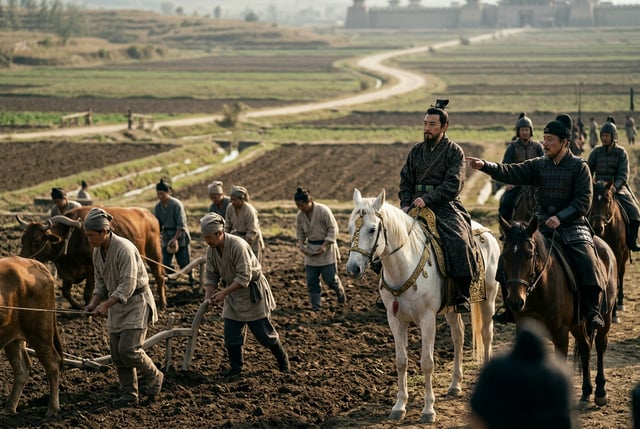
Continue
Beginning of the Tuntian Military-Agricultural Colonies
Relationship timeline3 entries ▸
History · vol. 9
Advised
Subordinate general of Xiahou Dun; resolved the danger of the hostage crisis
Novel · ch. 70
- Han Xuan§13
Sibling
Han Xuan’s younger brother; said of himself, “I harmed my own elder brother.”
- Huang Zhong§13
Enemy
because of an old matter in Changsha, was determined to take revenge; was killed by Huang Zhong in a single exchange during a night battle
Inner monologues · AI-generated1 monologue ▸
- I am Han Hao, a native of Henei, courtesy name Yuansi. At the end of the Han dynasty, armed uprisings broke out. My home