Cao Wei · Palace Attendant
Han Song
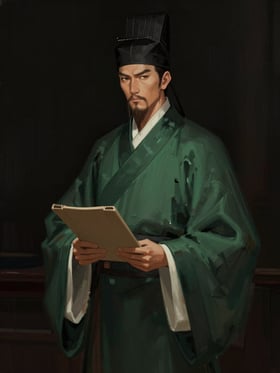
Han Song, a Jing Province notable under Liu Biao, was known for urging Liu Biao and Liu Cong to join Cao and rebutting suspicions.
Life
In the novel: 2 chapters · In the Records: 3 volumes
Appearances
- Cao Wei
- Liu Biao's faction
- Hatched: dated by chapter
On the boards
Compare with someone →Where this person ranks on each board.
Historical Record
Han Song, courtesy name Degao, was from Yiyang. A noted Jing Province scholar and Attendant Gentleman in Liu Biao's faction, he is described in the Biographies of Former Worthies, cited in Pei's commentary, as having loved learning from a young age and maintained his principles despite his family's poverty. He once fled south to escape turmoil. Liu Biao used his power to compel him to serve as an aide-de-camp, and he was later made an Attendant Gentleman. When Liu Biao offered sacrifices to Heaven and Earth in the suburbs, Han Song once spoke frankly in remonstrance, but his advice was not accepted, and the two gradually fell into disagreement.
During the Battle of Guandu, Yuan Shao sent an emissary to ask Liu Biao for help. Liu Biao agreed but sent no troops, nor did he assist Cao Cao; his aim was to retain control of the Jianghan region and observe how events unfolded. Han Song and Liu Xian urged Liu Biao to assess the situation: worthy and talented men were rallying to Cao Cao, who was likely to defeat Yuan Shao, after which his forces might turn toward the Jianghan region. If Liu Biao did not choose a side soon, it would be difficult for him to remain neutral. They therefore advised him to submit all of Jing Province to Cao Cao in order to secure his position.
Liu Biao did not decide immediately, but sent Han Song to Xu to assess Cao Cao's strength and intentions. After returning to Jing Province, Han Song praised Cao Cao's authority and virtue and urged Liu Biao to send his son to court as a hostage. Suspecting Han Song of changing his allegiance, Liu Biao grew angry and wanted to kill him; but after establishing that Han Song had no ulterior motive, he let the matter drop. Pei's commentary cites the Fuzi, which further records that before accepting the mission, Han Song explained the implications of his official allegiance: if the Son of Heaven appointed him to office after his mission, he would become the Son of Heaven's subject and could no longer give his life for Liu Biao as one of his former subordinates. After his mission to Xu, Han Song was appointed Palace Attendant and promoted to Administrator of Lingling. He continued to praise the court and Cao Cao's virtue to Liu Biao. Suspecting him of divided loyalties, Liu Biao once confronted him with troops. Han Song stood firm, saying, “The general has betrayed Han Song; Han Song has not betrayed the general.” He was ultimately imprisoned but not killed.
After Liu Biao's death, Liu Cong succeeded him. Han Song, Kuai Yue, Fu Xun, and others urged Liu Cong to submit to Cao Cao. When Cao Cao's army reached Xiangyang, Liu Cong surrendered the province. After Jing Province was pacified, Han Song, who was ill, was awarded the seal and ribbon of office as Grand Herald there, becoming a former Jing Province official employed by Cao Cao's regime.
In the Novel
Chapter 23 of The Romance of the Three Kingdoms places Han Song amid the political struggle between Cao Cao and Liu Biao for Jing Province. He uses the situation, “with the two powers locked in a standoff,” to urge Liu Biao to submit Jing Province to Cao Cao. He explicitly warns that if Cao Cao turns his forces toward the Jianghan region after pacifying Yuan Shao, Liu Biao will likely be unable to resist him. When Liu Biao orders him to go to Xu to assess the situation, the novel has Han Song first spell out the implications of the relationship between ruler and subject: if the Son of Heaven appoints him to office, he will become the Son of Heaven's subject and can no longer fulfill his duty as a subject to Liu Biao. This advance clarification makes him appear upright and measured when Liu Biao later grows suspicious of him.
The novel goes on to say that Han Song was appointed Palace Attendant and made Administrator of Lingling in Xu. After returning to Jing Province, he praises the court and urges Liu Biao to send his son to attend it. Suspecting Han Song of divided loyalties, Liu Biao wants to execute him. Han Song cries to his face, “The general has betrayed Han Song; Han Song has not betrayed the general.” Kuai Liang then testifies on his behalf, and Liu Biao finally pardons him. The central conflict is similar to the mission, appointment, suspicion, and defense described in the Pei commentary to the Records of the Three Kingdoms. However, the novel has Kuai Liang intervene to save him, an incident not recorded in the Records of the Three Kingdoms. The novel also portrays Han Song as a former Jing Province official imprisoned by Liu Cong, then released and promoted to Grand Herald by Cao Cao after he entered Jiangling. The historical sources say that Han Song was awarded the seal and ribbon of office as Grand Herald after Jing Province was pacified due to his illness; they do not mention Liu Cong imprisoning him or Cao Cao releasing him from prison after entering the city.
Key Relationships
- Liu Biao: Han Song was Liu Biao's Attendant Gentleman and had also served as an aide-de-camp. He advised Liu Biao to submit to Cao Cao and was later sent on a mission to Xu. Liu Biao relied on his judgment, yet grew suspicious of him after he received an appointment from the court. Their relationship shifted from cooperation between lord and adviser to mutual suspicion.
- Cao Cao: Han Song advocated that Liu Biao follow the prevailing tide and submit to Cao Cao. After his mission, he praised Cao Cao's authority and virtue. Following the pacification of Jing Province, he was appointed Grand Herald, showing that his political allegiance had shifted to Cao Cao's side.
- Liu Cong: After Liu Biao's death, Han Song joined Kuai Yue, Fu Xun, and others in urging Liu Cong to surrender. Liu Cong ultimately surrendered the province to Cao Cao.
- Liu Xian, Kuai Yue, and Fu Xun: Liu Xian joined Han Song in urging Liu Biao to submit to Cao Cao. Kuai Yue, Fu Xun, and others took part in urging Liu Cong to surrender, reflecting the growing consensus within Jing Province about how to read the situation.
Notable Scenes
- Urging Liu Biao to choose a side during the standoff at Guandu: Han Song points out that Liu Biao cannot evade danger indefinitely by keeping his troops in reserve and watching events unfold. If Cao Cao advances toward the Jianghan region after defeating Yuan Shao, Jing Province will be hard pressed to resist. Han Song's proposal to “submit the whole province to Cao Cao” is a representative example of his judgment and decisiveness.
- Clarifying the terms of allegiance before his mission: Han Song explains that he is undertaking the mission at Liu Biao's command, but if he receives an appointment from the Son of Heaven, his status will change, and he cannot serve two lords at once. This enables him to defend himself on principle when suspicion later falls on him, and presents him as someone who is clear-eyed about the proper relationship between ruler and subject.
- Defending himself before Liu Biao: Liu Biao angrily accuses Han Song of divided loyalties, but Han Song refuses to yield and declares, “The general has betrayed Han Song; Han Song has not betrayed the general.” The Fuzi records that Liu Biao ultimately imprisoned him but did not kill him; in the novel, Liu Biao pardons him after Kuai Liang comes forward to testify. Kuai Liang's intervention is unique to the novel.
Quotes
3 lines in the books · 3 featured
「今兩雄相持,將軍若欲有為,乘此破敵可也。如其不然,將擇其善者而從之。今曹操善能用兵,賢俊多歸,其勢必先取袁紹,然後移兵向江東,恐將軍不能禦;莫若舉荊州以附操,操必重待將軍矣。」
This remark displays Han Song's precise judgment of the grand trend of the realm, with great strategic vision.
「君臣各有定分。嵩今事將軍,雖赴湯蹈火,一唯所命。將軍若能上順天子,下從曹公,使嵩可也;如持疑未定,嵩到京師,天子賜嵩一官,則嵩為天子之臣,不得復為將軍死矣。」
This line embodies Han Song's principle of loyalty to his lord and love of country, shaping his image as upright and unyielding.
「將軍負嵩,嵩不負將軍!」
This remark, concise and forceful, displays Han Song's disappointment and resolve at Liu Biao's breach of faith.
- Lord & vassal
- Friends
Who is Han Song connected to?
Pick someone to see how many steps lie between them and Han Song.
History vs. novel
7 points
| History | Novel |
|---|---|
| Urging Liu Biao to Submit to Cao CaoNovel embellishes | |
While the armies were locked in a standoff at Guandu, Han Song and Liu Xian urged Liu Biao to seize the opportunity to choose submission. They pointed out that Cao Cao might defeat Yuan Shao and threaten the Jianghan region, and that submitting to Cao Cao was the safest course. vol. 6 | The novel retains Han Song’s assessment of the situation between Cao Cao and Yuan Shao, but describes Cao Cao’s subsequent direction of advance as Jiangdong. Han Song advises Liu Biao to submit Jing Province to Cao Cao. ch. 23 |
| The Proper Distinction Between Ruler and SubjectNovel embellishes | |
The Fuzi records Han Song as saying that he remained true to his principles: if the emperor appointed him to office, he would become the emperor’s subject and could no longer give his life in service to Liu Biao. vol. 6 | Before departing for Xu, Han Song explains to Liu Biao the proper distinction between ruler and subject, and predicts that if the emperor appoints him to office, he will no longer be able to die for Liu Biao. ch. 23 |
| Appointment in XuNovel embellishes | |
After Han Song’s mission, the emperor appointed him Attendant-in-Ordinary and then promoted him to Administrator of Lingling. The Records of the Three Kingdoms does not record any objection from Cao Cao to the appointment. vol. 6 | Cao Cao appointed Han Song Attendant-in-Ordinary and Acting Administrator of Lingling, then arranged for him to return to Jing Province to persuade Liu Biao. The novel also adds a scene in which Xun Yu questions whether the appointment is too generous. ch. 23 |
| Liu Biao Wants to Execute Han SongNovel embellishes | |
Liu Biao arrayed his troops and prepared to execute Han Song. Han Song remained unmoved and repeated what he had said before. After Cai Shi urged Liu Biao to reconsider, Liu Biao did not kill him but had him imprisoned. vol. 6 | Enraged, Liu Biao wanted to execute Han Song, who shouted, “General, you have betrayed Song!” After Kuai Liang bore witness, Liu Biao pardoned him. ch. 23 |
| Early LifeHistory only | |
Han Song, courtesy name Degao, was fond of learning in his youth. Though poor, he never compromised his principles. He declined summonses from the Three Excellencies and once lived in seclusion with like-minded companions on Mount Lixi. After the Yellow Turban uprising began, he fled south to escape the turmoil. vol. 6 | — |
| Admonition at the Suburban SacrificeHistory only | |
The Xianxian Xingzhuang, cited in the historical sources, states that when Liu Biao performed sacrifices to Heaven and Earth in the suburbs, Han Song admonished him frankly. Liu Biao did not heed him, and the two gradually fell out afterward. vol. 6 | — |
| Cao Cao Releases the Prisoner and Appoints HimNovel embellishes | |
After Jing Province was pacified, Han Song, who was ill, received the seal and ribbons of office as Grand Herald there. The historical sources do not describe Cao Cao entering the city to pacify the people at this point. vol. 6 | After Cao Cao entered the city and pacified the people, he released the imprisoned Han Song and appointed him Grand Herald. ch. 42 |
- Urging Liu Biao to Submit to Cao CaoNovel embellishes
- History
While the armies were locked in a standoff at Guandu, Han Song and Liu Xian urged Liu Biao to seize the opportunity to choose submission. They pointed out that Cao Cao might defeat Yuan Shao and threaten the Jianghan region, and that submitting to Cao Cao was the safest course.
vol. 6
- Novel
The novel retains Han Song’s assessment of the situation between Cao Cao and Yuan Shao, but describes Cao Cao’s subsequent direction of advance as Jiangdong. Han Song advises Liu Biao to submit Jing Province to Cao Cao.
ch. 23
- The Proper Distinction Between Ruler and SubjectNovel embellishes
- History
The Fuzi records Han Song as saying that he remained true to his principles: if the emperor appointed him to office, he would become the emperor’s subject and could no longer give his life in service to Liu Biao.
vol. 6
- Novel
Before departing for Xu, Han Song explains to Liu Biao the proper distinction between ruler and subject, and predicts that if the emperor appoints him to office, he will no longer be able to die for Liu Biao.
ch. 23
- Appointment in XuNovel embellishes
- History
After Han Song’s mission, the emperor appointed him Attendant-in-Ordinary and then promoted him to Administrator of Lingling. The Records of the Three Kingdoms does not record any objection from Cao Cao to the appointment.
vol. 6
- Novel
Cao Cao appointed Han Song Attendant-in-Ordinary and Acting Administrator of Lingling, then arranged for him to return to Jing Province to persuade Liu Biao. The novel also adds a scene in which Xun Yu questions whether the appointment is too generous.
ch. 23
- Liu Biao Wants to Execute Han SongNovel embellishes
- History
Liu Biao arrayed his troops and prepared to execute Han Song. Han Song remained unmoved and repeated what he had said before. After Cai Shi urged Liu Biao to reconsider, Liu Biao did not kill him but had him imprisoned.
vol. 6
- Novel
Enraged, Liu Biao wanted to execute Han Song, who shouted, “General, you have betrayed Song!” After Kuai Liang bore witness, Liu Biao pardoned him.
ch. 23
- Early LifeHistory only
- History
Han Song, courtesy name Degao, was fond of learning in his youth. Though poor, he never compromised his principles. He declined summonses from the Three Excellencies and once lived in seclusion with like-minded companions on Mount Lixi. After the Yellow Turban uprising began, he fled south to escape the turmoil.
vol. 6
- Admonition at the Suburban SacrificeHistory only
- History
The Xianxian Xingzhuang, cited in the historical sources, states that when Liu Biao performed sacrifices to Heaven and Earth in the suburbs, Han Song admonished him frankly. Liu Biao did not heed him, and the two gradually fell out afterward.
vol. 6
- Cao Cao Releases the Prisoner and Appoints HimNovel embellishes
- History
After Jing Province was pacified, Han Song, who was ill, received the seal and ribbons of office as Grand Herald there. The historical sources do not describe Cao Cao entering the city to pacify the people at this point.
vol. 6
- Novel
After Cao Cao entered the city and pacified the people, he released the imprisoned Han Song and appointed him Grand Herald.
ch. 42
Events
Events (2)
Battles and events the texts place this person in, by date.
Battles
Other events
Places
- Governed
- LinglingRecords
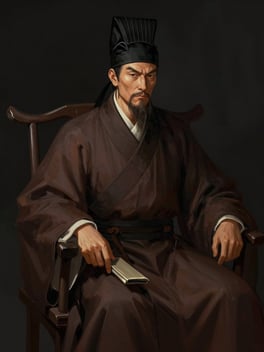
Continue
Liu Biao
Lord
Relationship timeline6 entries ▸
History · vol. 1
- Cao Cao§73
Lord
Recruited after Cao Cao pacified Jing Province; rose to Grand Herald
History · vol. 6
History · vol. 41
- Xiang Lang§16
Friend
Xiang Lang was on close terms with him (as cited in Pei Songzhi’s annotations from the Xiangyang Records)
Novel · ch. 23
- Liu Biao§13
Lord
Staff Zhonglangjiang under Liu Biao
Novel · ch. 42
- Cao Cao§24
Lord
Cao Cao released him from prison and appointed him Grand Herald
Inner monologues · AI-generated1 monologue ▸
- I am Han Song, courtesy name De Gao, a native of Yiyang. In my youth I loved learning, and though my family was poor, I