Records
Cao forces won
- Commanders
- Cao forcesCao Cao
Vol. 1「公到新野,琮遂降,備走夏口」
208 CE (Jian'an 13) · Jing Province
According to chapters 32 through 41 of San Guo Yanyi, in the summer of Jian'an 13 (208), after pacifying the northern territories and consolidating control over the north, Cao Cao officially launched a southern campaign. Before setting out, he had the Xuanwu Pool constructed at Yecheng for naval training and abolished the Three Excellencies, appointing himself Chancellor (Chengxiang) to complete the military and political preparations. In the seventh month of that year, Cao Cao raised an army of five hundred thousand: Cao Ren and Cao Hong commanded the first column; Zhang Liao and Zhang He the second; Xiahou Yuan and Xiahou Dun the third; Yu Jin and Li Dian the fourth; Cao Cao himself led the fifth column, with Xu Chu serving as vanguard general, and the great host moved south into Jingzhou. Before departure, Kong Rong submitted a remonstrance arguing that "Liu Bei and Liu Biao are both kinsmen of the Han house and must not be lightly attacked"; Cao Cao rebuked him and issued an order that anyone who remonstrated further would be executed — Kong Rong was subsequently put to death. By the time the army entered Jingzhou, Liu Biao had already died and Liu Cong had surrendered the territory; Cao Cao took possession of the Jingzhou heartland almost without a fight. He then pursued Liu Bei to Dangyangchangban and laid siege to Fancheng, meeting an early setback from fire attacks by Zhuge Liang at Xinye. This southern campaign was the critical step in Cao Cao's bid to reunify the empire, but its ultimate outcome was defeat at Chibi — only the northern part of Jingzhou and the Xiangyang line were brought under Wei control, while the four southern commanderies went to Liu Bei, and the tripartite balance of the San Guo period began to take definite shape.
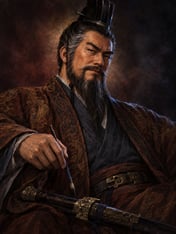 Cao CaoLivedCommanderTalk to me
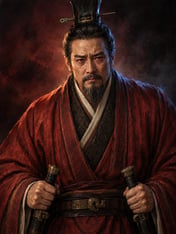 Liu BeiLivedCommanderTalk to me
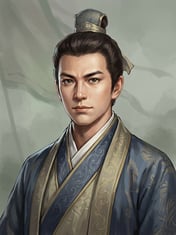 Liu CongParticipantTalk to me
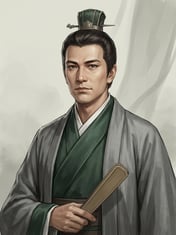 Xun YouAdvisorTalk to me
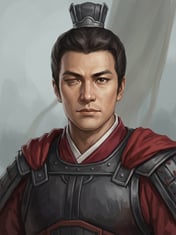 Xiahou DunWarriorTalk to me
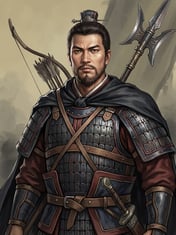 Zhang LiaoWarriorTalk to me
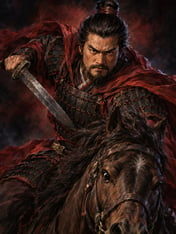 Cao RenWarriorTalk to me
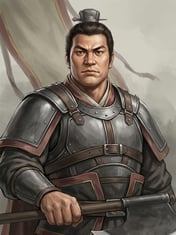 Xu ChuWarriorTalk to me
Who won, as each book tells it; commanders as the text names them.
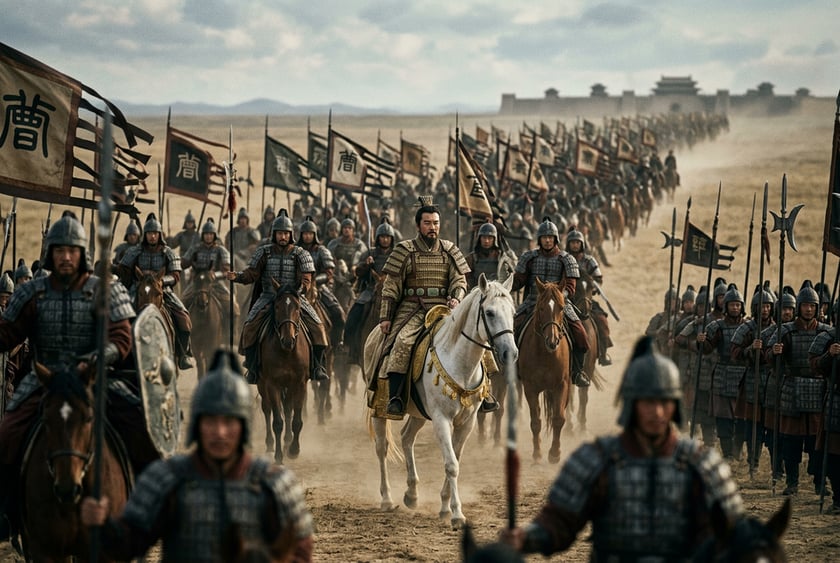
Scene
Armored and mounted, Cao Cao leads a vast army of five hundred thousand southward, its banners blotting out the sun. The outline of Jing Province's city walls can be seen in the distance.
Featured people: Cao Cao
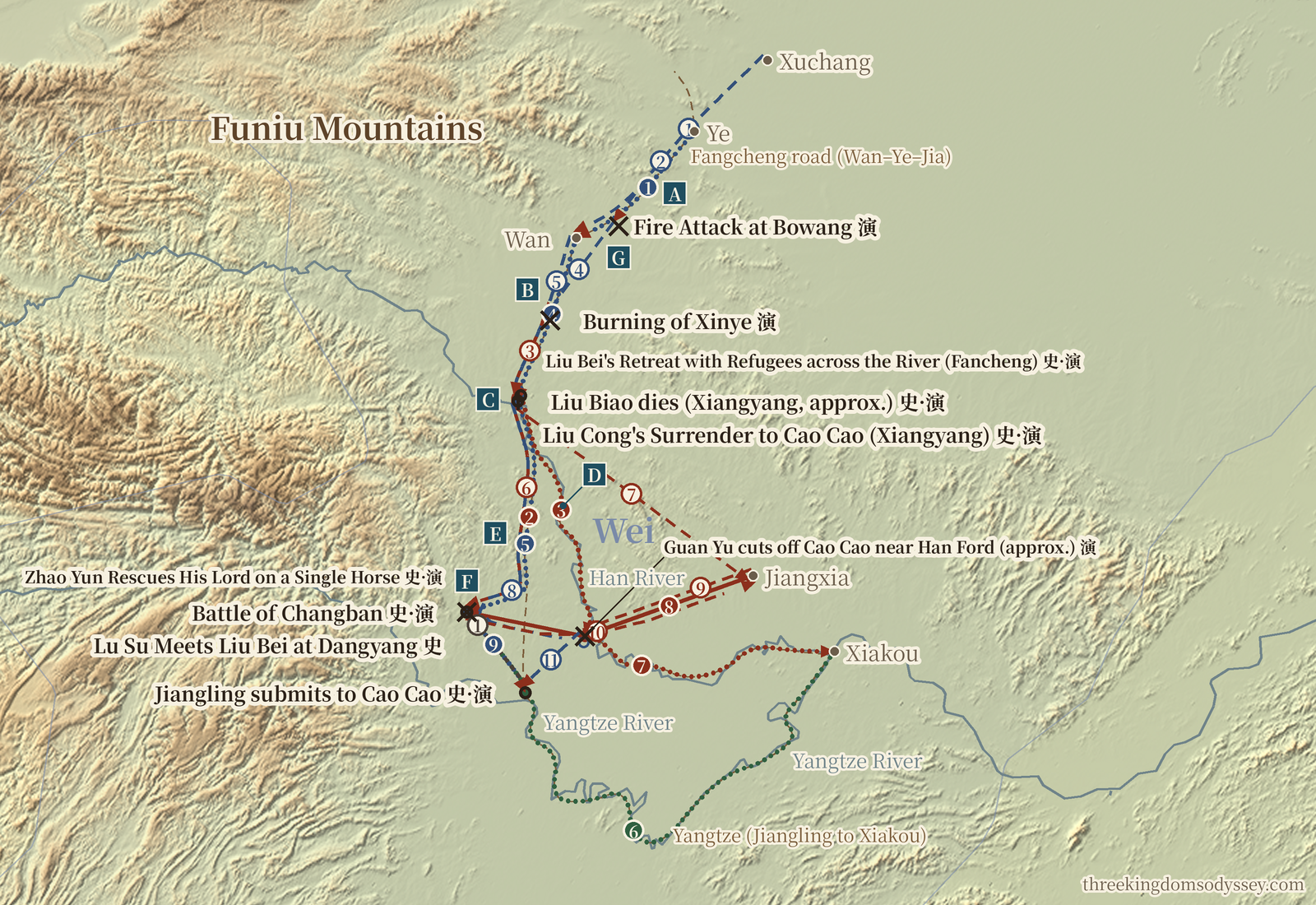
Swipe to see the whole map
In the Records the fight at Bowang came years before this campaign and Guan Yu went down the Han by boat; the burning of Xinye and Guan Yu cutting Cao Cao off by land are the novel's.
The books mostly say only where an army set out and arrived: a Records line is solid between the places they name and dotted where it follows a reconstructed road between them; an open ring marks an end the books don't give.
Base map: Natural Earth; terrain: AWS Terrain Tiles (SRTM and others). Roads and marches reconstructed from the sources listed; positions approximate.
Replay the battles on this map in 3D, phase by phase:▶ Battle of Changban
Continue
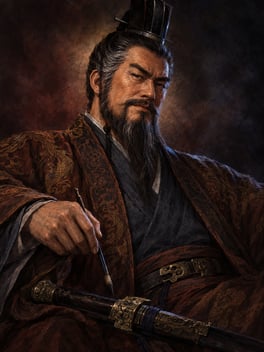
Cao Cao stood seven chi tall, with narrow eyes and a long beard, riding a white horse with a golden saddle, in a jade belt and brocade robe.
2014 people in common
2014 people in common
2014 people in common
1984 people in common
1894 people in common
2073 people in common
2003 people in common
1993 people in common
The thirteenth year of Jian'an was the year Cao Cao came closest to "unifying the realm." The year before, he had completed the campaign against the Wuhuan, bringing the north to complete stability; though the death of Guo Jia brought losses in intelligence and strategic planning, Cao Cao's faction's overall military-political apparatus had matured enough to launch a full-scale offensive across the Yangtze River. Geopolitically, Jingzhou was the strategic hub connecting the Jiangnan region, Bashu, and the Central Plains: to control Jingzhou was to press eastward on Sun Quan in Jiangdong and peer westward at Liu Zhang in Yizhou, bringing virtually the entire Yangtze basin within reach from the south. Politically, Liu Biao was aged, Liu Cong was young and weak, and the Cai clan consorts dominated court politics — Jingzhou's internal divisions were pronounced, presenting an optimal window for outside intervention. The hesitation Cao Cao reportedly expressed — gazing at star charts from the tower in Yecheng and telling Xun You that the "southern aura blazed brilliantly" — reads more like a narrative foreshadowing device than a genuine concern: his judgment was entirely consistent with Cheng Yu's urging to "establish the strategy of going down to the Jiangnan region without delay."
Cao Cao's deployment reflected the scale of a force already approaching a national army: the Romance records five hundred thousand men organized into five columns, with a vanguard of three thousand under Xu Chu, advancing south along the route through Wan and Ye, bypassing Xiangyang's front, and pressing deep into Jingzhou's heartland with a rapid, converging advance. Behind this operational form lay Yecheng's mobilization capacity — before departing Cao Cao had first abolished the Three Excellencies and appointed himself Chancellor, then assigned Mao Jie, Cui Yan, and Sima Yi to direct the three major staff bureaus of the Eastern Aide, Western Aide, and Literary Aide, concentrating military and political command authority in his own hands. On the opposing side, Liu Biao's forces consisted mainly of Xiangyang local troops and the Cai clan's private soldiers from Nanyang, with naval forces concentrated along the Jiangxia line. After Liu Biao's death, Liu Cong — persuaded by Kuai Yue and Cai Mao — chose to surrender without fighting, allowing Cao Cao to take over Jingzhou's northern territory along with its most intact armies and naval forces virtually without bloodshed. This was also the material foundation that allowed Cao Cao to attempt a combined "naval and land advance" at the later Battle of Chibi. Liu Bei's faction was a refugee force encamped at Xinye and Fancheng, with fewer than twenty thousand men; their only real assets were the recently recruited Zhuge Liang and core commanders like Guan Yu, Zhang Fei, and Zhao Yun, buying time through mobile retreat and mass civilian migration to establish an alliance with Sun Quan.
This campaign had four critical decision points. The first was the handling of Kong Rong before the expedition departed — Kong Rong remonstrated that "the Han imperial kinsmen must not be lightly attacked," whereupon Cao Cao not only rebuked him but had him immediately executed, declaring to the realm that "no one can any longer veto the military decisions of the Han Chancellor". This was an extreme test of political posture; the result confirmed that the aristocratic clans, even with their prestige, were no longer capable of blocking Cao Cao's military decisions. The second was the strategy for winning over Liu Cong: Liu Ye argued for "first winning the hearts of the people," proposing pacification rather than slaughter as the means of receiving Jingzhou, a recommendation Cao Cao adopted, allowing the bulk of Jingzhou to submit within a matter of days. The third was the handling of Liu Bei: after Cao Cao's initial engagement at Xinye ended in defeat at the hands of Zhuge Liang's fire attacks, he furiously drove eight columns of troops to flood down south of the Bai River toward Fancheng — this emotionally driven acceleration deprived him of the opportunity to advance steadily, allowing Liu Bei to take his time crossing the river with the civilian population. The fourth, and most fatal, was that throughout the southern campaign Cao Cao never allowed his naval forces time to train: the naval exercises at Xuanwu Lake in Yecheng were nothing more than political theater; actual combat capability was far below that of Jiangdong's, sowing the seeds of the disastrous fire-attack defeat at the later Battle of Chibi.
In terms of surface campaign results, Cao Cao's southern campaign against Jingzhou achieved major victories: the receipt of Xiangyang, the occupation of Jiangling, the reorganization of Jingzhou's naval forces, and the extension of his power to the northern bank of the Yangtze. But in terms of strategic objectives, the southern campaign was a failure — he had originally hoped to "conquer Jiangnan in a single blow," yet was defeated at Chibi by the Sun-Liu allied forces and compelled to retreat and defend the north, never again able to breach the Yangtze line. Jingzhou itself was also not truly won: after the war, Cao Cao retained only the Xiangfan line and Nanyang; the four commanderies of Nanjun, Changsha, Lingling, Guiyang, and Wuling transferred to Liu Bei, while Jiangxia went to Sun Quan. The tripartite balance that defined the San Guo period took shape precisely in the space between the victories and defeats of this southern campaign. Cao Cao's own abolition of the Three Excellencies to make himself Chancellor in Yecheng had originally been preparation for replacing Han following a successful southern campaign; the defeat at Chibi delayed that timetable by a full seven years — it was not until the twenty-first year of Jian'an that he was elevated to King of Wei, and he died in the twenty-fifth year, ultimately failing to complete the replacement of Han.
If Cao Cao had chosen to spend a year training his naval forces after receiving Liu Cong's surrender before crossing the Yangtze — changing the winter crossing of the thirteenth year of Jian'an to a combined naval-land assault in the summer of the fourteenth — the plague and weather conditions would have been entirely different, and Sun Quan's faction might not have had time to hastily organize the Lu Su–Zhou Yu plan of uniting with Liu Bei against Cao Cao. The window in which Lu Su actively traveled north and formed a pact with Liu Bei at Dangyang was very brief; give Cao Cao half a year more of training time, and the entire southern alliance might never have formed. Alternatively, if Cao Cao had not furiously accelerated his advance after the Xinye defeat but instead proceeded steadily according to his original plan, Liu Bei would very likely have been annihilated at the defeat of Changban, and without Liu Bei there was no leverage for an alliance with Wu — Sun Quan would almost certainly have chosen to preserve his territory and watch from the sidelines, and Cao Cao would have had a better chance of a great southward push after composing his forces north of the river. The reason this southern campaign slid from its spectacular opening victories into the disaster at Chibi was rooted in one of Cao Cao's rare losses of strategic rhythm — he rushed to turn the "blazing southern aura" of prophecy into the reality of "a unified north," and in doing so helped his enemies complete their coalition.