Gu Cheng
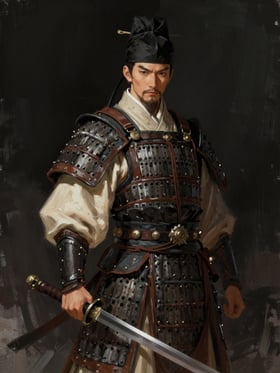
Gu Cheng was a Wu general, relocated to Jiaozhou with Gu Tan and Zhang Xiu over disputed merits at Shaobei, and died at 37.

On the boards
Compare with someone →Where this person ranks on each board.
Historical Record
Gu Cheng, courtesy name Zizhi, was the son of Gu Shao and younger brother of Gu Tan. He was also the nephew of Lu Mao. During the Jiahe era, he and his maternal uncle Lu Mao were summoned to serve. Sun Quan once wrote to Gu Yong, saying that Gu Yong’s grandson Zizhi had an excellent reputation, and that after meeting him, he found the man even better than his reputation suggested. Gu Cheng was then appointed Cavalry Commandant and placed in charge of the Yulin troops. Later, he served as Western Commandant of Wu Commandery and, together with Zhuge Ke and others, helped pacify the Shanyue. He also acquired eight thousand elite troops, returned with them to garrison at Zhangkeng, and was subsequently appointed General Who Proclaims Righteousness before entering court as Attendant-in-Ordinary.
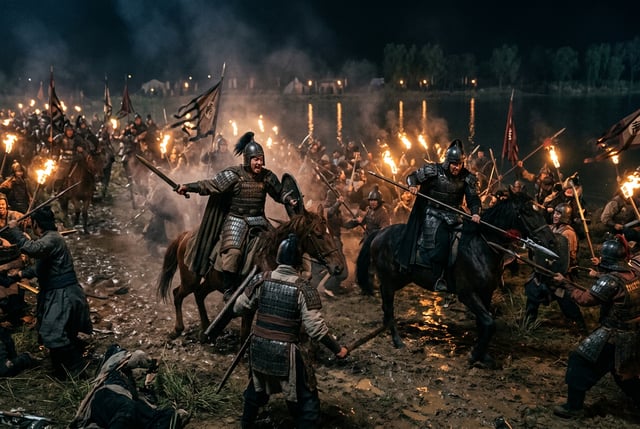
During the Battle of Shaobei, Gu Cheng was appointed General Who Displays Might and served as commander at Jingxia. In the battle, when Wei forces attacked and Wu forces were being driven back, Zhang Xiu and Gu Cheng fought back fiercely, temporarily halting the Wei advance. Quan Cong’s sons Quan Xu and Quan Duan then pressed their advantage and attacked, forcing the Wei army to retreat. When the contributions were assessed, the Wu court judged that halting the enemy’s advance was more valuable than driving it back. Gu Cheng and Zhang Xiu were therefore granted miscellaneous general titles, while Quan Xu and Quan Duan received only subordinate general appointments. Quan Cong and his sons were displeased and went on to frame Gu Tan.
According to the Wu lu, cited in Pei’s commentary, Quan Cong and his sons accused Gu Cheng, Zhang Xiu, and Chen Xun, a military officer, of colluding to inflate their battle merits. As a result, Gu Cheng was exiled to Jiaozhou along with his elder brother Gu Tan and Zhang Xiu, and died there at the age of thirty-seven. Lu Xun submitted a memorial opposing the parity of status between the Crown Prince and the Prince of Lu. He also mentioned that his nephews, including Gu Tan and Gu Cheng, had been exiled for supporting the Crown Prince, providing a further glimpse of this political upheaval.
In the Novel
The materials provided contain no account of Gu Cheng in Romance of the Three Kingdoms or other novels, so he does not appear in the fictional narrative. Accounts of his participation in pacifying the Shanyue and fighting at Shaobei, as well as his exile to Jiaozhou amid disputes over merit and blame, all come from historical biographies; they do not warrant adding fictional episodes.
Key Relationships
Gu Cheng’s family was closely intertwined with Wu’s literati and political figures. His father, Gu Shao, was renowned for his ability to recognize talent, and Gu Cheng and his elder brother Gu Tan both belonged to the Gu clan. His maternal uncle Lu Mao was summoned to serve alongside him, while Lu Xun was also an uncle on his mother’s side. Sun Quan not only recruited Gu Cheng but also praised his reputation and talent.
His military and political ties came to a head after the assessment of merit at Shaobei. Gu Cheng and Zhang Xiu fought side by side and received joint rewards. Dissatisfied with the allocation of credit, Quan Cong and his sons implicated Gu Cheng, Zhang Xiu, and Gu Tan in allegations that Chen Xun had helped inflate their achievements. Gu Tan refused to apologize to Sun Quan, and the people connected to the family were ultimately exiled. The dispute also unfolded against the backdrop of the struggle for influence between Crown Prince Sun He and the Prince of Lu, Sun Ba.
Defining Episodes
The episode that best illustrates Gu Cheng’s military career is the counterattack on the battlefield at Shaobei. As Wu forces suffered a setback and the victorious Wei army pressed its attack on the five camps, Gu Cheng and Zhang Xiu fought fiercely, temporarily checking the Wei advance. After the enemy paused, Quan Xu and Quan Duan launched another attack, which finally drove back Wang Ling’s forces. In the postwar distribution of rewards, contributions for “holding the enemy” were ranked above those for “driving the enemy back.” Gu Cheng received a miscellaneous general title of the kind represented by General Who Displays Might, while the Quan generals received lower rewards. The battlefield achievement thus became the spark for later disputes.
Another defining moment was Gu Cheng’s exile to Jiaozhou and early death. In Wu, he had served as Cavalry Commandant, Attendant-in-Ordinary, and General Who Displays Might, among other posts, and had also taken part in pacifying the Shanyue. Yet the dispute over his merits at Shaobei became entangled with factional attacks at court. In the end, he was exiled along with Gu Tan, Zhang Xiu, and others, and died in Jiaozhou at the age of thirty-seven. Historical accounts thus portray Gu Cheng both as a Wu general with military achievements and as a member of the Gu clan caught up in Eastern Wu’s succession politics.
In the sources
Where the books name Gu Cheng
History · vol. 52Records of the Three Kingdoms
承字仲嗣,少以才學知名,與諸葛瑾、歩騭、嚴畯相友善。權爲驃騎將軍,辟西曹掾,出爲長沙西部都尉。…
Read the whole paragraph
承字仲嗣,少以才學知名,與諸葛瑾、歩騭、嚴畯相友善。權爲驃騎將軍,辟西曹掾,出爲長沙西部都尉。討平山寇,得精兵萬五千人。後爲濡須都督、奮威將軍,封都鄕侯,領部曲五千人。承爲人壯毅忠讜,能甄識人物,拔彭城蔡款、南陽謝景於孤微童幼,後並爲國士,款至衞尉,景豫章太守。〈吴录曰:款字文德,历位内外,以清贞显於当世。后以卫尉领中书令,封留侯。二子,条、机。条孙皓时位至尚书令、太子少傅。机为临川太守。谢景事在〈孙登传〉。〉又諸葛恪年少時,眾人奇其英才。承言終敗諸葛氏者,元遜也。勤於長進,篤於物類,凡在庶幾之流,無不造門,年六十七,赤烏七年卒,謚曰定侯。子震嗣。初,承喪妻,昭欲爲索諸葛瑾女,承以相與有好,難之,權聞而勸焉,遂爲婿。〈臣松之案:承与诸葛瑾同以赤乌中卒,计承年小瑾四岁耳。〉生女,權爲子和納之。權數令和修敬於承,執子婿之禮。震諸葛恪誅時亦死。
History · vol. 52Records of the Three Kingdoms
…〈吴录曰:全琮父子屡言芍陂之役为典军陈恂诈增张休、顾承之功,而休、承与恂通情。…
Read the whole paragraph
由是霸與譚有隙。時長公主婿衞將軍全琮子寄爲霸賓客,寄素傾邪,譚所不納。先是,譚弟承與張休俱北征壽春,全琮時爲大都督,與魏將王淩戰於芍陂,軍不利,魏兵乘勝陷沒五營將(秦兒),軍,休、承奮擊之。遂駐魏師。時琮群子緒、端亦並爲將,因敵既住,乃進擊之。淩軍用退。時論功行賞。以爲功駐敵之功大,退敵之功小。休、承並爲雜號將軍,緒、端偏裨而已。寄父子益恨,共構會譚。〈吴录曰:全琮父子屡言芍陂之役为典军陈恂诈增张休、顾承之功,而休、承与恂通情。休坐系狱,权为谭故,沉吟不决,欲令谭谢而释之。及大会,以问谭,谭不谢,而曰:「陛下,谗言其兴乎!」江表传曰:有司奏谭诬罔大不敬,罪应大辟。权以雍故,不致法,皆徙之。〉譚坐徙交州,幽而發憤,著《新言》仁十篇。其《知難篇》蓋以自悼傷也。見流二年,年四十二,卒於交阯。
History · vol. 58Records of the Three Kingdoms
…既不聽許,而遜外生顧譚、顧承、姚信,工以親附太子,枉見流徙。…
Read the whole paragraph
先是,二宮並闕,中外職司,多遣子弟給侍。全琮報遜,遜以為“子弟苟有才,不憂不用,不宜私出以要榮利。若其不佳,終為取禍。且聞二宮勢敵,必有彼此,此古人之厚忌也。”琮子寄,果阿附魯王,輕為交構。遜書與琮曰:「卿不師日磾,而宿留阿寄,終為足下門戶致禍矣。」琮既不納,更以致隙。及太子有不安之儀,遜上疏陳:「太子正統,宜有磐石之固,魯王藩臣,當使寵秩有差,彼此得所,上下獲安。謹叩頭流血以聞。」書三四上,及求詣都,欲口論適庶之分,以匡得失。既不聽許,而遜外生顧譚、顧承、姚信,工以親附太子,枉見流徙。太子太傅吾粲坐數與遜交書,下獄死。權累遣中使責讓遜,遜憤恚致卒,時年六十三。家無餘財。
Family, lords and rivals
1 relationships
Who is Gu Cheng connected to?
Pick someone to see how many steps lie between them and Gu Cheng.
Events
Events (1)
Battles and events the texts place this person in, by date.
Battles
- 241Battle of QuebeiWarrior
Places
- Was at
- JingkouRecords
- Wu CommanderyRecords
- Moved to
- Jiao ProvinceRecords
Continue