
Background
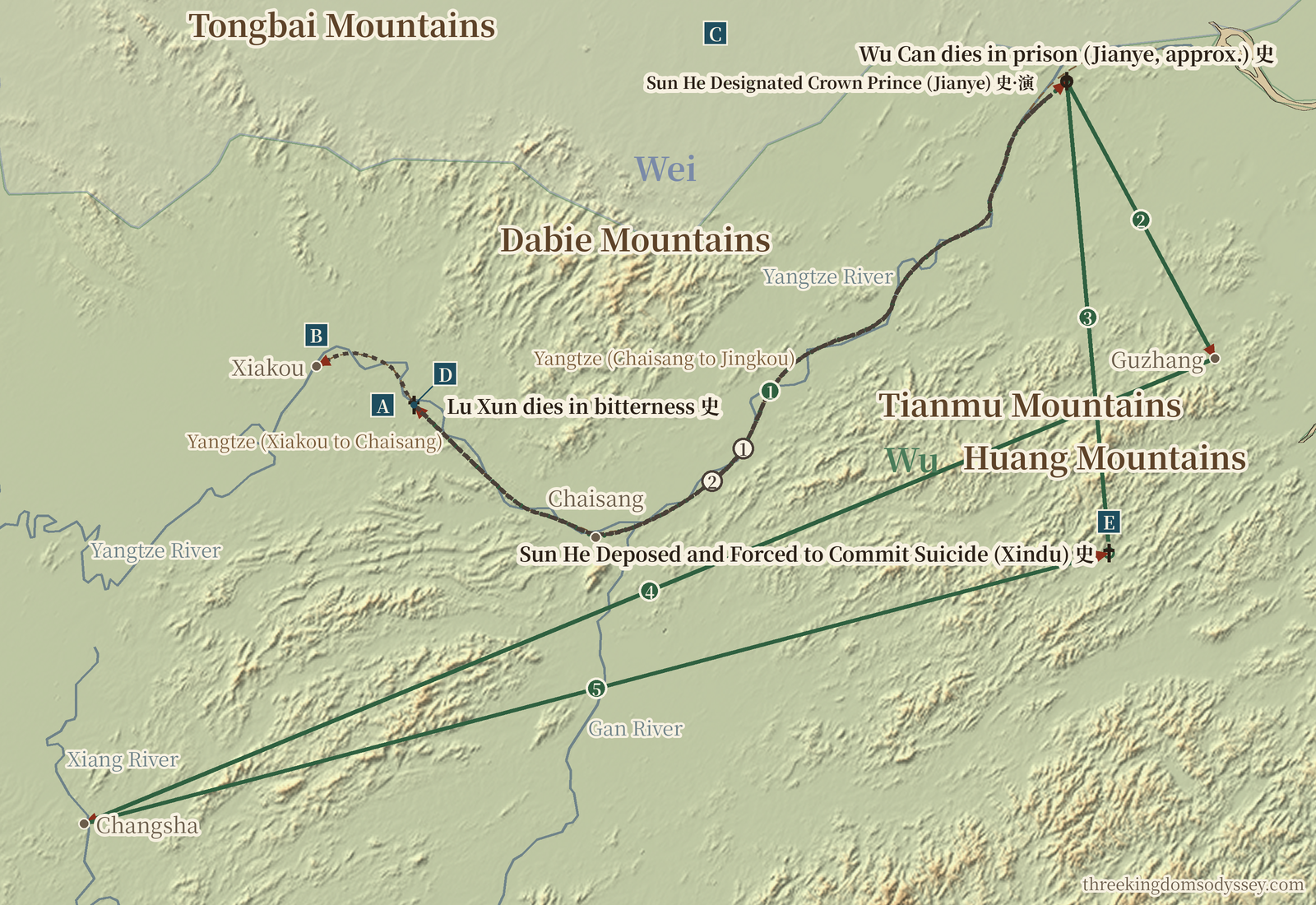
After Sun Quan Proclaims Himself Emperor, his eldest son, Sun Deng, was made crown prince and groomed for many years; both the court and the populace had no doubts about his succession. Sun Deng died young in the fourth year of Chiwu (241), disrupting Eastern Wu’s otherwise stable succession arrangements. The following year, Sun Quan instead made his third son, Sun He, crown prince. A smooth transition seemed possible, but at almost the same time he enfeoffed his fourth son, Sun Ba, as Prince of Lu, making no distinction between the prince and the crown prince in ceremonial rank, treatment, or the assignment of close attendants. In an era of imperial rule, the clear distinction in status between a crown prince and the other princes was a cornerstone of political stability. Sun Quan’s arrangement, in which the “two palaces stood side by side and received equal treatment,” effectively blurred the distinction between the principal and secondary lines of succession, planting institutional seeds of danger for a struggle over the throne.
Key Figures
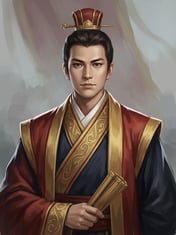
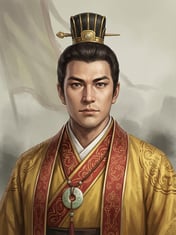
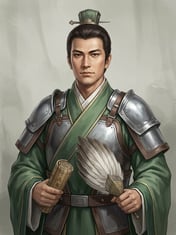
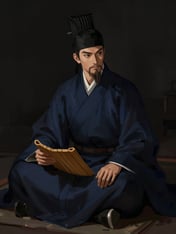
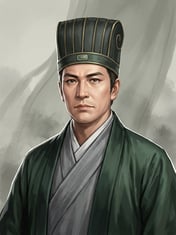
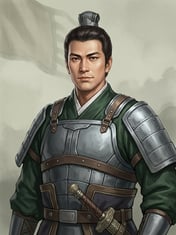
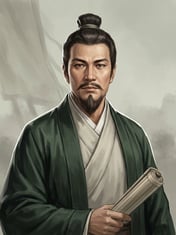
The true architect of events was Sun Quan himself: he created the situation in which the two palaces stood opposed, then ultimately decided the fate of both sons with his own hands. The crown prince, Sun He, and Prince of Lu, Sun Ba, stood at the two poles of the succession struggle: the former held the position of heir but fell out of favor, while the latter harbored ambitions and built a faction. The court officials split in turn. Chancellor Lu Xun, Gu Tan, Wu Can, Zhu Ju, Zhuge Ke, and others upheld the distinction between the principal and secondary lines of succession and sided with the crown prince; Bu Zhi, Quan Cong, Lü Dai, and others attached themselves to the Prince of Lu. Quan Cong’s faction was especially active, serving as the main force behind the fabrication of charges against the crown prince’s supporters. Sun Quan’s eldest daughter, Sun Luban, was at odds with Lady Wang, the crown prince’s birth mother, and fanned the flames with slanderous accusations, making her a key force in intensifying the conflict. The faction of the veteran official Gu Yong—Gu Tan was his grandson—was also caught up in the factional struggle and banished, demonstrating how widely the conflict implicated the meritorious officials.
Core Issue
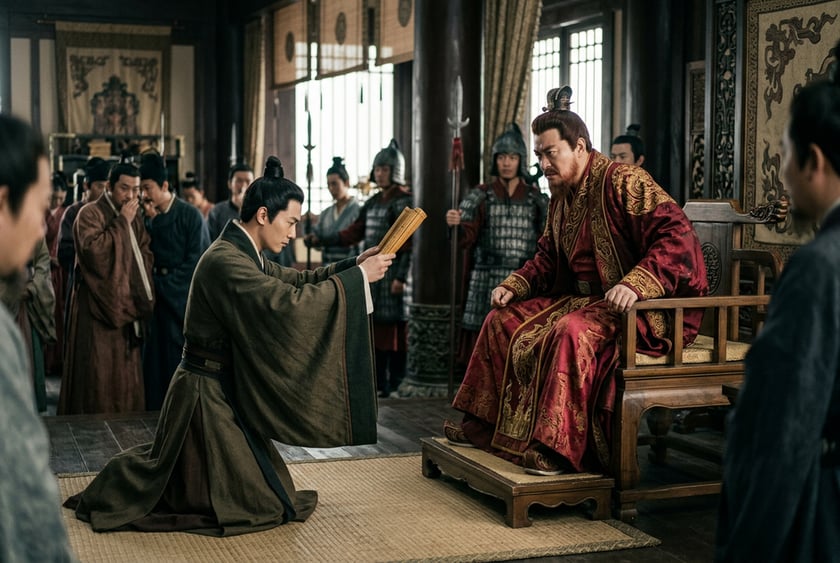
At its heart, the Struggle of the Two Palaces was not simply about which prince would succeed to the throne, but about how the relationship between Eastern Wu’s sovereign power and its meritorious-official bloc would be resolved. Lu Xun and others repeatedly petitioned for “a clear distinction between the principal and secondary lines of succession.” On the surface, they were defending the crown prince’s position; in effect, they were calling on the ruler to abide by predictable succession rules and restrain the arbitrary exercise of imperial power. Sun Quan was deeply wary of this. In his later years, he already feared the excessive strength of the great Jiangdong clans, represented by Lu Xun. The succession dispute provided a convenient pretext for him to purge high-ranking officials who “interfered” in imperial affairs and were deeply entrenched among the local clans. Thus, what began as a question of succession quickly turned into a crackdown by imperial power on the meritorious-official bloc.
Political Consequences
The outcome was a purge in which both sides suffered: Sun Quan deposed the crown prince, Sun He, and banished him to Nanyang; he also ordered the Prince of Lu, Sun Ba, put to death and executed his followers, before making the young Sun Liang crown prince. High-ranking officials who had supported the crown prince were either demoted or executed. After repeated severe reprimands, Lu Xun died of grief and indignation, and Eastern Wu’s most prestigious generation of meritorious officials and strategists was devastatingly weakened. The succession of a young ruler also sowed the seeds of regent usurpation. Sun Jun and Sun Chen later seized power in succession, palace coups became frequent, and Eastern Wu’s central government remained in turmoil for a long time. The Struggle of the Two Palaces can be seen as the turning point in Eastern Wu’s decline from prosperity; later generations have widely regarded Sun Quan’s actions in his final years as the greatest political failure of his life.
Counterfactual
Suppose that after Sun Deng’s death, Sun Quan had made only Sun He crown prince, strictly lowered the Prince of Lu’s ceremonial rank, and clearly established the distinction in status. The factional struggle might never have begun. Even if the brothers had been at odds, it would have been difficult for court officials to split into factions; Eastern Wu’s meritorious-official bloc could have remained intact, and the chain of events leading to a young ruler’s succession and regents’ misrule might not have unfolded. Yet perhaps the root of the problem lay not in the succession arrangements, but in Sun Quan’s deep suspicion of the great Jiangdong clans in his later years. As long as that suspicion persisted, he would sooner or later have sought a pretext to purge Lu Xun’s faction; the Struggle of the Two Palaces was simply the pretext that happened to be at hand. If so, the damage to Eastern Wu’s central government was nearly unavoidable; only the pretext and the year in which it erupted would have differed.