Dong Zhuo's Faction · Grand Commandant
Huang Wan
courtesy name 子琰 · 141–192
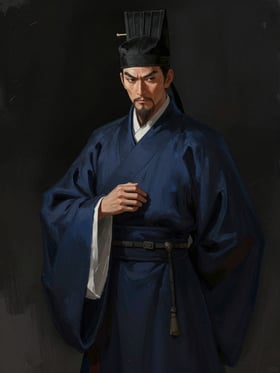
In the novel, Huang Wan, a late Han official, opposed moving the capital and joined a plot to kill Dong Zhuo.
Life
In the novel: 3 chapters · In the Records: 4 volumes
Life?–192
Appearances
By chapter (7)
Novel
- 6
- 9
- 57
Records
- 8
- 29
- 42
- 49
- Dong Zhuo's Faction
- Hatched: dated by chapter
On the boards
Compare with someone →Where this person ranks on each board.
Historical Record
In relevant accounts in the Records of the Three Kingdoms, Huang Wan appears in positions such as Grand Commandant and Minister over the Masses. Hua Tuo was once summoned by Grand Commandant Huang Wan, but did not answer the summons; the records do not say whether Huang Wan and Hua Tuo had any other dealings. Later, when Ding Gong was Minister over the Masses, he summoned Shi Yi. But before Shi Yi arrived, Ding Gong had already been dismissed, and Huang Wan succeeded him as Minister over the Masses, treating Shi Yi with great courtesy. The Wu Shu, cited in Pei Songzhi’s annotations, also says that Huang Wan and Dong Zhuo were hostile to one another, while Shi Yi devoted himself wholeheartedly to Huang Wan and thereby gained considerable renown. Dong Zhuo disliked Shi Yi and once ordered that he not be appointed to office. These accounts show Huang Wan serving at court, recruiting talent, and treating Shi Yi with courtesy, but do not provide a full account of his conflict with Dong Zhuo.
In the Novel
Romance of the Three Kingdoms portrays Huang Wan as an official who opposed Dong Zhuo’s arbitrary rule and took part in secret court schemes. During the debate over moving the capital to Chang'an, he pointed to Chang'an’s ruin and the people’s displacement after the Wang Mang rebellion as a warning. Supporting Yang Biao’s opposition to the move, he argued that abandoning the palaces and heading for a wasteland was unwise. Dong Zhuo ignored their remonstrances and that same day dismissed Yang Biao, Huang Wan, and Xun Shuang, reducing them to commoners. This episode highlights Huang Wan invoking historical lessons to restrain a powerful figure; the Records of the Three Kingdoms does not record this remonstrance against moving the capital or the dismissals.
The novel then draws him into Wang Yun’s plot to kill Dong Zhuo. Wang Yun invited Huang Wan and Shisun Rui to discuss the matter. Huang Wan took part in deliberations over a plan to send Li Su to Meiwu with an imperial decree to lure Dong Zhuo to court, where Lü Bu would ambush and kill him. During the discussion, Huang Wan also asked who would dare undertake the mission to Meiwu. Here, Huang Wan is not merely an adviser but a participant in the conspiracy. However, the surviving Records of the Three Kingdoms contains no account of this secret meeting or of Huang Wan’s participation in the plot against Dong Zhuo; the novel’s episode should not be treated as historical fact.
Key Relationships
Huang Wan’s connection with Hua Tuo appears in the account of his recruiting him: as Grand Commandant, Huang Wan summoned Hua Tuo, who declined. His connection with Shi Yi was one of official succession and courtesy: after succeeding Ding Gong as Minister over the Masses, Huang Wan treated Shi Yi with great courtesy. The Wu Shu, cited in Pei Songzhi’s annotations, further describes Shi Yi as being ostracized by Dong Zhuo because of his devotion to Huang Wan. In the novel, Huang Wan also joins Yang Biao and Xun Shuang in opposing the move of the capital, and discusses the plot against Dong Zhuo with Wang Yun and Shisun Rui. These specific political actions appear only in the novel and are not recorded in the Records of the Three Kingdoms.
In Chapter 57 of the novel, Huang Kui says that Huang Wan was his father and died during the upheaval involving Li Jue and Guo Si. This is background to the story in which Huang Kui persuades Ma Teng to oppose Cao Cao, and is unique to the novel. This episode continues the novel’s portrayal of the Huang family, but should not be conflated with the historical accounts of Huang Wan summoning Hua Tuo and treating Shi Yi with courtesy.
Defining Scenes
The scene that best captures the novel’s portrayal of Huang Wan is the debate when Dong Zhuo proposes moving the capital. Huang Wan recalls how Chang'an was burned and its population scattered during the upheavals of Wang Mang, the Later Gengshi regime, and the Red Eyebrows, and supports Yang Biao’s remonstrance. Dong Zhuo rejects their advice and dismisses all three men. The scene depicts Huang Wan as a court official concerned for the people and brave enough to oppose a powerful minister to his face; it is unique to the novel.
Another scene is Wang Yun’s secret meeting to plot against Dong Zhuo. Huang Wan and Shisun Rui help devise a plan to lure Dong Zhuo to court with a secret imperial decree and kill him in an ambush, showing Huang Wan shift from open opposition to covert action. This episode, too, is unique to the novel. In contrast to the novel’s vivid portrayal of resistance to Dong Zhuo, the historical record presents a more limited picture of Huang Wan: he served as Grand Commandant and summoned Hua Tuo, and later treated Shi Yi with courtesy as Minister over the Masses.
Lines
- 演 ch.9 §8→ Shisun Rui📍 Chang'an
「何人敢去?」
- Family
- Other
Who is Huang Wan connected to?
Pick someone to see how many steps lie between them and Huang Wan.
History vs. novel
7 points · 6 novel-only
| History | Novel |
|---|---|
| Historical RecordsHistory only | |
The surviving material in the Records of the Three Kingdoms lists only the entry on Lai Min in juan 42; it contains no account of Huang Wan’s deeds. His life details therefore cannot be confirmed on this basis. vol. 42 | — |
| Strongly Opposes the Move of the CapitalNovel only | |
| — | The novel depicts Huang Wan agreeing with Yang Biao’s opposition to moving the capital and trying to dissuade Dong Zhuo by citing Chang'an’s former devastation and the people’s displacement. In the end, he is stripped of his status as a commoner along with Yang Biao and Xun Shuang. ch. 6 |
| Reasons for Opposing the Move of the CapitalNovel only | |
| — | In the novel, Huang Wan cites the destruction of Chang'an during the Wang Mang and Gengshi-Chimei periods, arguing that abandoning Luoyang and moving to Chang'an would be unwise. ch. 6 |
| Dong Zhuo Dismisses Huang WanNovel only | |
| — | Dong Zhuo rejects the ministers’ remonstrances, declaring that he does not care about the common people. That same day, he dismisses Huang Wan and the others, reducing them to commoners. ch. 6 |
| Takes Part in the Secret Plot to Kill Dong ZhuoNovel only | |
| — | The novel depicts Huang Wan discussing a plan to kill Dong Zhuo with Wang Yun and Shisun Rui, and agreeing to the scheme of using a secret edict to set an ambush. ch. 9 |
| Recommends Li SuNovel only | |
| — | Huang Wan asks who would dare go to Meiwu to summon Dong Zhuo. Shisun Rui then proposes sending Li Su, who harbors a grudge, thereby keeping the plan to kill Dong Zhuo moving forward. ch. 9 |
| Huang Wan’s DeathNovel only | |
| — | Chapter 57 of the novel mentions that Huang Wan died during the turmoil caused by Li Jue and Guo Si, and has his son Huang Kui invoke his father’s death to express his displeasure with Cao Cao. ch. 57 |
- Historical RecordsHistory only
- History
The surviving material in the Records of the Three Kingdoms lists only the entry on Lai Min in juan 42; it contains no account of Huang Wan’s deeds. His life details therefore cannot be confirmed on this basis.
vol. 42
- Strongly Opposes the Move of the CapitalNovel only
- Novel
The novel depicts Huang Wan agreeing with Yang Biao’s opposition to moving the capital and trying to dissuade Dong Zhuo by citing Chang'an’s former devastation and the people’s displacement. In the end, he is stripped of his status as a commoner along with Yang Biao and Xun Shuang.
ch. 6
- Reasons for Opposing the Move of the CapitalNovel only
- Novel
In the novel, Huang Wan cites the destruction of Chang'an during the Wang Mang and Gengshi-Chimei periods, arguing that abandoning Luoyang and moving to Chang'an would be unwise.
ch. 6
- Dong Zhuo Dismisses Huang WanNovel only
- Novel
Dong Zhuo rejects the ministers’ remonstrances, declaring that he does not care about the common people. That same day, he dismisses Huang Wan and the others, reducing them to commoners.
ch. 6
- Takes Part in the Secret Plot to Kill Dong ZhuoNovel only
- Novel
The novel depicts Huang Wan discussing a plan to kill Dong Zhuo with Wang Yun and Shisun Rui, and agreeing to the scheme of using a secret edict to set an ambush.
ch. 9
- Recommends Li SuNovel only
- Novel
Huang Wan asks who would dare go to Meiwu to summon Dong Zhuo. Shisun Rui then proposes sending Li Su, who harbors a grudge, thereby keeping the plan to kill Dong Zhuo moving forward.
ch. 9
Events
Events (1)
Battles and events the texts place this person in, by date.
Other events
Places
- Governed
- Yu ProvinceRecords
Continue
Lai Min
Kin
Inner monologues · AI-generated1 monologue ▸
- I am Huang Wan, courtesy name Ziyan. I held office at court and ought to have laid before the Son of Heaven what I had s