He Ding
–272
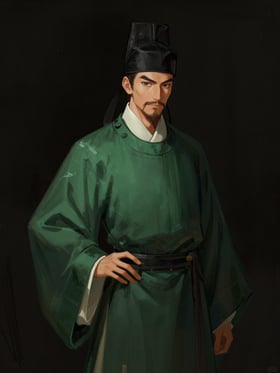
He Ding, a favored aide of Sun Hao in Eastern Wu’s later years, was known for abusing power, slander, hunts, and execution; absent from the novel.
Life
In the Records: 6 volumes
Life?–272
Appearances
By chapter (6)
Records
- 48
- 51
- 53
- 58
- 61
- 65
On the boards
Compare with someone →Where this person ranks on each board.
Historical Record
He Ding was a close attendant favored by Sun Hao in the later years of Eastern Wu. The Jiangbiao Zhuan, cited in Pei Songzhi’s commentary, says that he had originally served as a personal attendant to Sun Quan, was later sent out to serve as an official, and then claimed to be an old retainer of the late emperor and requested a post back at court. Sun Hao appointed him Commandant Below the Tower, putting him in charge of such matters as the sale of wine and grain. He later also allowed him to take part in government affairs, and He Ding rose to the position of General of the Palace. Historical accounts describe him as having won favor through sycophancy and abusing the ruler’s trust to wield power arbitrarily, making him a target of criticism among the court officials.
He Ding once framed Li Xu, the Superintendent of the Household, out of personal spite. He asked Li Xu for his daughter’s hand in marriage for his son, and when Li Xu refused, He Ding slandered him to Sun Hao. As a result, Li Xu and the family of Xu Cun were executed. He Ding also ordered various generals to travel far afield in search of good hunting dogs for catching rabbits in the palace. The expense was immense, while the results were meager. The people of Wu blamed him, but Sun Hao still considered him loyal and diligent, and granted him the rank of marquis. He Shao submitted a memorial criticizing Sun Hao for favoring He Ding and entrusting him with authority, allowing him to wield power arbitrarily. He also condemned He Ding for forcing the garrison troops along the river to hunt deer and repair the imperial tombs, exhausting the soldiers and provoking resentment among the people.
In the second year of Jianheng, He Ding led five thousand men to Xiakou to hunt. At the time, rumors were circulating among the people that Sun Hao planned to move against Sun Xiu. Alarmed, Sun Xiu fled to Jin under cover of night with his wife and children and several hundred personal troops. When Lu Kai was gravely ill, he also urged Sun Hao not to employ He Ding, but to assign him to an outside post and keep him out of state affairs. In a memorial, Lu Kang likewise cited “He Ding’s abuse of power and eunuchs’ interference in government” as one of the problems facing the state. In the first year of Fenghuang, He Ding was executed for “his wicked and corrupt conduct having come to light.” Sun Hao considered his misdeeds similar to those of Zhang Bu and posthumously changed his name to “Bu.”
In the Novel
The Romance of the Three Kingdoms does not mention him. The available material provides no account of He Ding’s story or characterization in novels such as Romance of the Three Kingdoms, so it cannot be used as a basis for adding any fictional words, deeds, experiences, or fate to his story. Accounts of He Ding can only follow the Records of the Three Kingdoms and the sources cited in Pei Songzhi’s commentary.
Key Relationships
He Ding’s relationship with Sun Hao centered on favor and trust: Sun Hao gave him official posts, entrusted him with responsibilities, and even granted him a title when the people of Wu blamed him. At the same time, He Ding’s abuse of power and sycophancy provoked remonstrances from senior officials. His conflict with Li Xu began when his marriage proposal was rejected; he then slandered Li Xu, leading to his execution. This shows how personal resentment could be turned into political harm through the power of a close attendant. Lu Kai once warned He Ding to his face, accusing him of sycophancy and subversion of government, and predicting that disaster would befall him. He Ding consequently resented Lu Kai and plotted to discredit him. Even on his deathbed, Lu Kai maintained that He Ding should be assigned to an outside post and not entrusted with state affairs. He Shao criticized He Ding’s indulgence in his favored position from the perspectives of governance and the waste of the people’s labor; Lu Kang also cited his abuse of power as an example of eunuchs interfering in government.
Signature Scenes
Using influence to settle a personal grudge. He Ding failed to secure a marriage with the daughter of Li Xu, the Superintendent of the Household, for his son, and then slandered Li Xu to Sun Hao. Li Xu and the family of Xu Cun were executed. The incident demonstrates He Ding’s influence at court and explains why he became a target of criticism in officials’ remonstrances.
Leading troops to Xiakou to hunt. In the second year of Jianheng, He Ding took five thousand men to Xiakou to hunt. Sun Xiu had already grown fearful because of rumors among the people. When He Ding arrived from afar, Sun Xiu fled to Jin overnight with his family and personal troops. Thus, in the account given in the Records of the Three Kingdoms, the hunting expedition is followed by Sun Xiu’s flight, but the sources do not say that He Ding had been ordered to capture Sun Xiu directly.
Rebuked and executed. Lu Kai denounced He Ding to his face for usurping power, and even while ill, memorialized Sun Hao urging him to send He Ding away to an outside post. He Shao, meanwhile, cited He Ding’s use of troops to hunt deer and work on the imperial tombs as examples of imposing burdens and wasting resources. In the first year of Fenghuang, He Ding was ultimately executed, and Sun Hao posthumously changed his name to Bu, marking his fall from favored official to condemned man.
Family, lords and rivals
2 relationships


Who is He Ding connected to?
Pick someone to see how many steps lie between them and He Ding.
Combat
On the field
Duels, kills and executions as the texts tell them, counted separately for the Records and the Romance.
- RecordsJuan 48ExecutionLost「何定姦穢發聞,伏誅」
Places
- Native of
- RunanRecords
Continue
Lu Kai
Enemy