Guo Yong
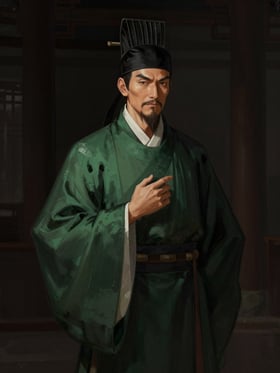
Guo Yong was Cao Wei’s governor of Nan Commandery; histories call his daughter “king among women,” as does the novel.
On the boards
Compare with someone →Where this person ranks on each board.
Guo Yong was from Guangzong, Anping, Cao Wei, and rose to the post of Administrator of Nan Commandery; Chapter 91 of the Romance of the Three Kingdoms identifies him as the father of Guo Guifei.
Deeds
Pei Songzhi’s annotations to the Records of the Three Kingdoms state that Guo Yong rose to the post of Administrator of Nan Commandery and was posthumously titled Marquis Jing. Believing that his daughter would become the queen of women, he gave her the courtesy name “Nüwang” (“Queen of Women”). (According to historical records)
Chapter 91 of the Romance of the Three Kingdoms says that Guo Yong called his daughter “the queen of women,” and thus she was known as “Nüwang.” (Romance)
Relationships
- Father: Empress Guo (called Guo Guifei in the Romance), courtesy name Nüwang.
In the sources
Where the books name Guo Yong
History · vol. 5Records of the Three Kingdoms
… 〈《魏書》曰:父永,官至南郡太守,諡敬侯。母姓董氏,即堂陽君,生三男二女:長男浮,高唐令,次女昱,次即后,后弟都,弟成。…
Read the whole paragraph
文德郭皇后,安平廣宗人也。祖世長吏。 〈《魏書》曰:父永,官至南郡太守,諡敬侯。母姓董氏,即堂陽君,生三男二女:長男浮,高唐令,次女昱,次即后,后弟都,弟成。后以漢中平元年三月乙卯生,生而有異常。 〉后少而父永奇之曰:「此乃吾女中王也。」遂以女王為字。早失二親,喪亂流離,沒在銅鞮侯家。太祖為魏公時,得入東宮。后有智數,時時有所獻納。文帝定為嗣,后有謀焉。太子即王位,后為夫人,及踐阼,為貴嬪。甄后之死,由后之寵也。黃初三年,將登后位,文帝欲立為后,中郎棧潛上疏曰:「在昔帝王之治天下,不惟外輔,亦有內助,治亂所由,盛衰從之。故西陵配黃,英娥降媯,並以賢明,流芳上世。桀奔南巢,禍階末喜;紂以砲烙,怡悅妲己。是以聖哲慎立元妃,必取先代世族之家,擇其令淑以統六宮,虔奉宗廟,陰教聿修。易曰:『家道正而天下定。』由內及外,先王之令典也。春秋書宗人釁夏云,無以妾為夫人之禮。齊桓誓命於葵丘,亦曰『無以妾為妻』。今后宮嬖寵,常亞乘輿。若因愛登后,使賤人暴貴,臣恐後世下陵上替,開張非度,亂自上起也。」文帝不從,遂立為皇后。 〈《魏書》曰:后上表謝曰:「妾無皇、英釐降之節,又非姜、任思齊之倫,誠不足以假充女君之盛位,處中饋之重任。」后自在東宮,及即尊位,雖有異寵,心愈恭肅,供養永壽宮,以孝聞。是時柴貴人亦有寵,后教訓獎導之。后宮諸貴人時有過失,常彌覆之,有譴讓,輒為帝言其本末,帝或大有所怒,至為之頓首請罪,是以六宮無怨。性儉約,不好音樂,常慕漢明德馬后之為人。 〉
Novel · ch. 91Romance of the Three Kingdoms
…後丕又納安平廣宗人郭永之女為貴妃,甚有顔色。其父嘗曰:「吾女乃女中之王也。」…
Read the whole paragraph
卻說魏主曹丕,在位七年,即蜀漢建興四年也。丕先納夫人甄氏,即袁紹次子袁熙之婦,前破鄴城時所得。後生一子,名叡,字元仲,自幼聰明,丕甚愛之。後丕又納安平廣宗人郭永之女為貴妃,甚有顔色。其父嘗曰:「吾女乃女中之王也。」故號為「女王」。自丕納為貴妃,因甄夫人失寵,郭貴妃欲謀為后,卻與幸臣張韜商議。時丕有疾,韜乃詐稱於甄夫人宮中掘得桐木偶人,上書天子年月日時,為魘鎮之事。丕大怒,遂將甄夫人賜死,立郭貴妃為后。因無出,養曹叡為己子。雖甚愛之,不立為嗣。叡年至十五歲,弓馬熟嫻。當年春二月,丕帶叡出獵。行於山塢之間,趕出子母二鹿,丕一箭射倒母鹿,回觀小鹿馳於曹叡馬前。丕大呼曰:「吾兒何不射之?」叡在馬上泣告曰:「陛下已殺其母,安忍復殺其子也。」丕聞之,擲弓於地曰:「吾兒真仁德之主也!」於是遂封叡為平原王。
Quotes
3 lines in the books · 2 featured
「吾女乃女中之王也。」
This line captures Guo Yong's distinctive expectations for his daughter, marking a vivid personal trait.
「此乃吾女中王也。」
This line, recorded in the histories, is Guo Yong's classic appraisal of his daughter and carries historical significance.
Family, lords and rivals
2 relationships

Who is Guo Yong connected to?
Pick someone to see how many steps lie between them and Guo Yong.
History vs. novel
8 points · 2 novel-only
| History | Novel |
|---|---|
| Father’s Office and TitleHistory only | |
The Book of Wei records that Guo Yong rose to the post of Administrator of Nan Commandery and was posthumously given the title Marquis Jing. The Romance makes no mention of his office or posthumous title. vol. 5 | — |
| Appraisal of His DaughterNovel embellishes | |
When Guo Yong was young, he already thought highly of his daughter, calling her “the king among women” and giving her the courtesy name Nüwang. vol. 5 | The Romance also says that Guo Yong called his daughter “the queen of women” and named her Nüwang, adding that she was exceptionally beautiful. ch. 91 |
| Early Years of DisplacementHistory only | |
Empress Guo lost both parents at a young age and was displaced amid the turmoil of war. She was later taken into the household of the Marquis of Tongdi. vol. 5 | — |
| Entry into the Eastern PalaceHistory only | |
When Cao Cao was Duke of Wei, Guo entered the Eastern Palace. She was resourceful, often advising Cao Pi and taking part in plans to secure his position as heir. vol. 5 | — |
| Plot Against Lady ZhenNovel only | |
| — | The Romance portrays Guo Guifei conspiring with the favored courtier Zhang Tao. Zhang falsely claimed that a wooden effigy used for a curse had been dug up in Lady Zhen’s palace, thereby framing the Zhen family. ch. 91 |
| Lady Zhen’s DeathNovel embellishes | |
Historical records state that Empress Zhen’s death was connected to Guo’s favor at court, but give no details of what happened. vol. 5 | The Romance says Cao Pi flew into a rage over the accusation involving the wooden effigy, ordered Lady Zhen to die, and then made Guo Guifei empress. ch. 91 |
| Appointment as Empress and RemonstranceHistory only | |
When Cao Pi intended to make Guo empress, Zhonglang Zhan Qian submitted a memorial in opposition, arguing that a concubine should not be made a wife. Cao Pi did not heed him and made Guo empress all the same. vol. 5 | — |
| Cao Rui Enfeoffed as KingNovel only | |
| — | The Romance says Cao Pi took Cao Rui hunting. Cao Rui could not bring himself to shoot a fawn that had lost its mother, so Cao Pi praised his benevolence and enfeoffed him as King of Pingyuan. ch. 91 |
- Father’s Office and TitleHistory only
- History
The Book of Wei records that Guo Yong rose to the post of Administrator of Nan Commandery and was posthumously given the title Marquis Jing. The Romance makes no mention of his office or posthumous title.
vol. 5
- Appraisal of His DaughterNovel embellishes
- History
When Guo Yong was young, he already thought highly of his daughter, calling her “the king among women” and giving her the courtesy name Nüwang.
vol. 5
- Novel
The Romance also says that Guo Yong called his daughter “the queen of women” and named her Nüwang, adding that she was exceptionally beautiful.
ch. 91
- Early Years of DisplacementHistory only
- History
Empress Guo lost both parents at a young age and was displaced amid the turmoil of war. She was later taken into the household of the Marquis of Tongdi.
vol. 5
- Entry into the Eastern PalaceHistory only
- History
When Cao Cao was Duke of Wei, Guo entered the Eastern Palace. She was resourceful, often advising Cao Pi and taking part in plans to secure his position as heir.
vol. 5
- Plot Against Lady ZhenNovel only
- Novel
The Romance portrays Guo Guifei conspiring with the favored courtier Zhang Tao. Zhang falsely claimed that a wooden effigy used for a curse had been dug up in Lady Zhen’s palace, thereby framing the Zhen family.
ch. 91
- Lady Zhen’s DeathNovel embellishes
- History
Historical records state that Empress Zhen’s death was connected to Guo’s favor at court, but give no details of what happened.
vol. 5
- Novel
The Romance says Cao Pi flew into a rage over the accusation involving the wooden effigy, ordered Lady Zhen to die, and then made Guo Guifei empress.
ch. 91
- Appointment as Empress and RemonstranceHistory only
- History
When Cao Pi intended to make Guo empress, Zhonglang Zhan Qian submitted a memorial in opposition, arguing that a concubine should not be made a wife. Cao Pi did not heed him and made Guo empress all the same.
vol. 5
Places
- Governed
- Nan CommanderyRecords
Continue
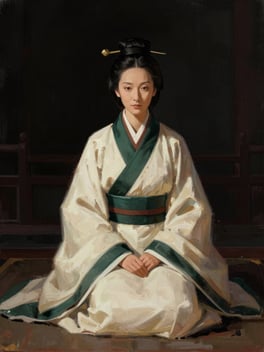
Empress Guo
Child
Relationship timeline1 entry ▸
Novel · ch. 91
- Empress Guo§10
Child
father and daughter (“Guo Yong's daughter”)
Inner monologues · AI-generated1 monologue ▸
- My name was Yong; my courtesy name and deeds are unknown. I lived at the end of the Han, and what I can say of myself is